



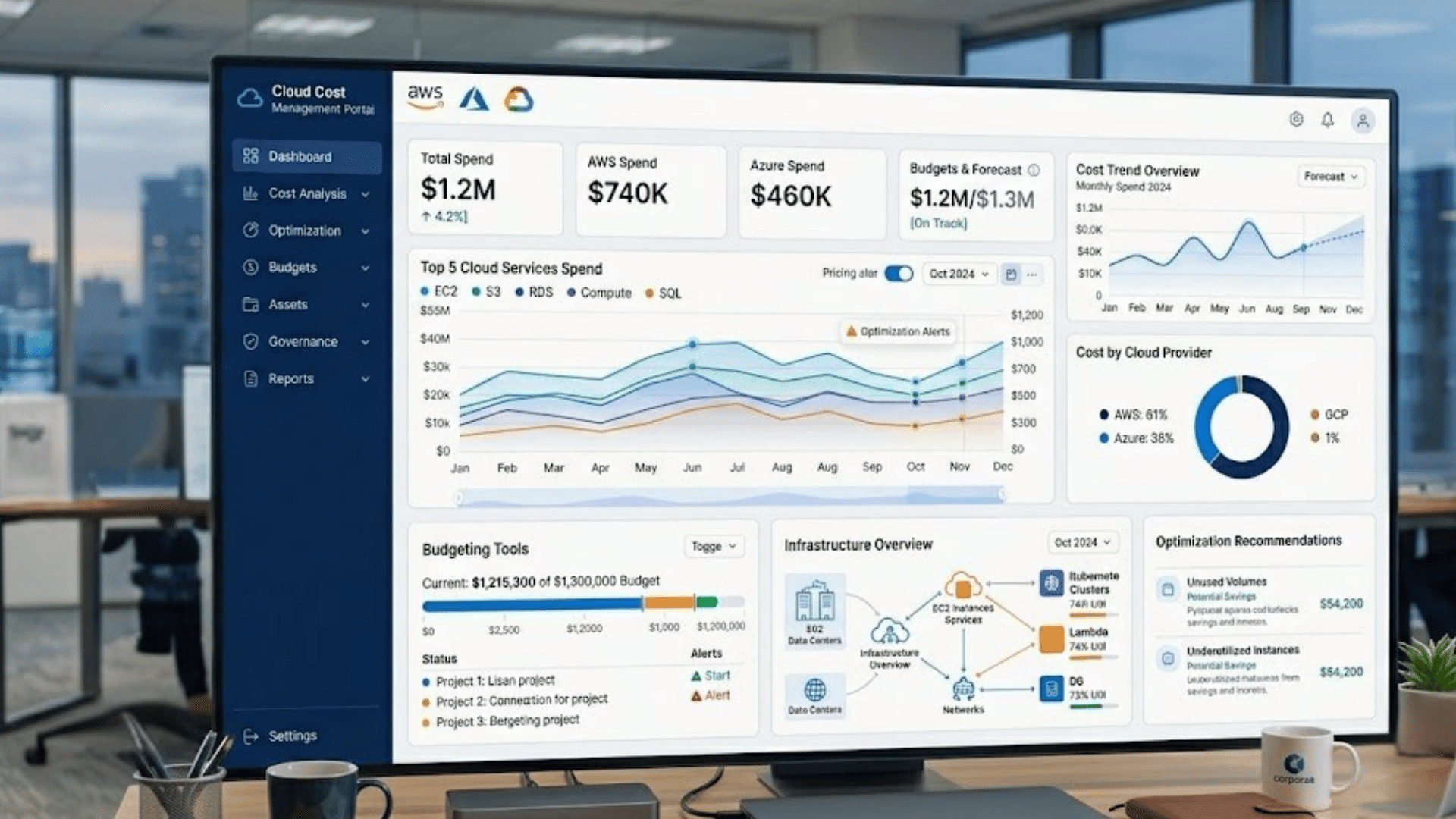
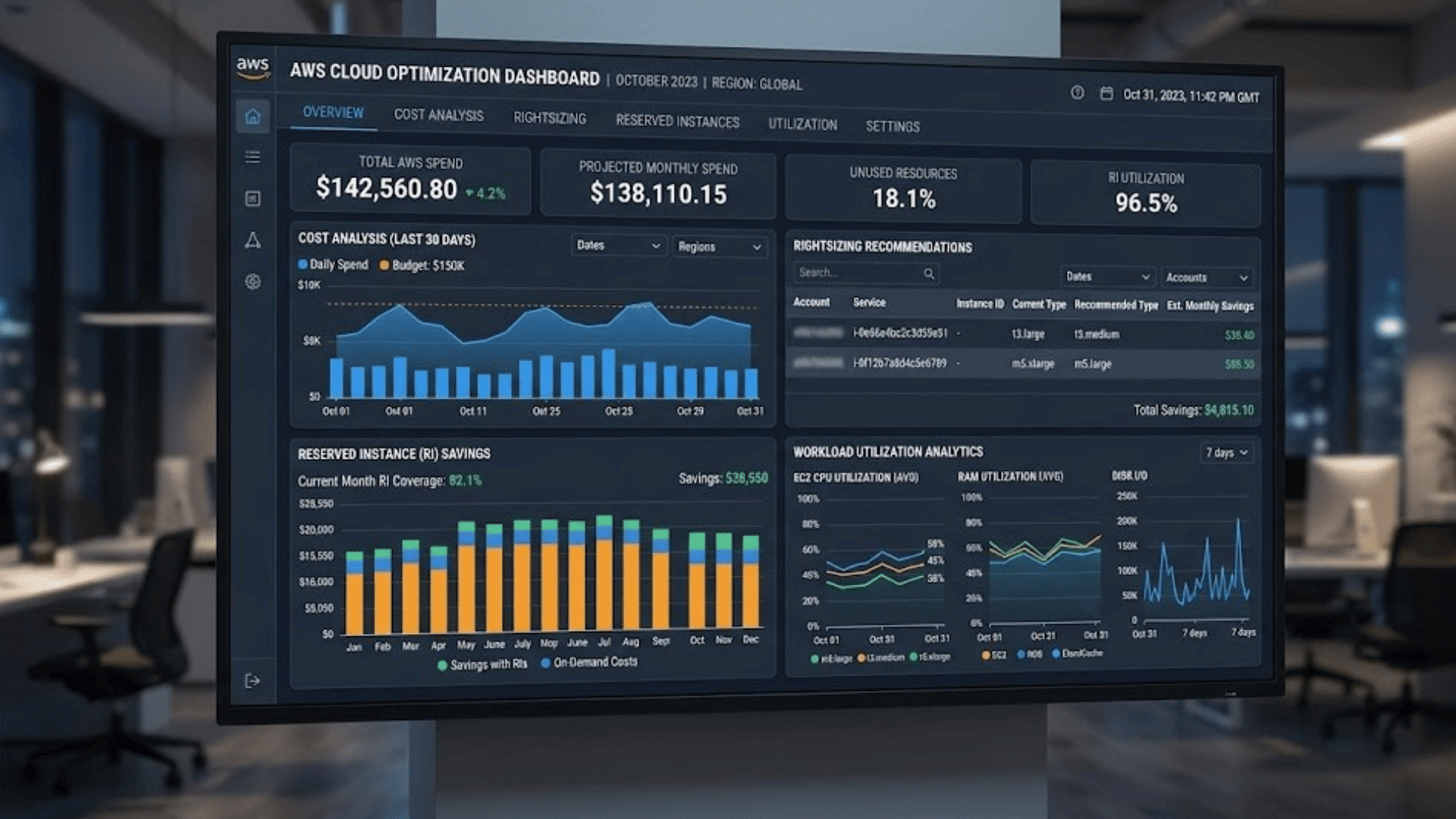


Most cloud projects do not fail because of bad technology. They fail because teams start moving before they have a clear plan.
A structured cloud adoption roadmap gives every stakeholder a shared view of what is being done, why, and in what order.
Without it, migrations drift, budgets expand without warning, and IT teams spend months correcting decisions that should have been made at the start.
This guide walks through what a roadmap includes, how to build one phase by phase, and what consistently separates programs that deliver measurable business value from those that stall mid-execution.
It also helps to understand early on that a roadmap only performs when it is backed by the right cloud transformation solutions, because structure without the capability to execute it still leads to the same outcome.
A well-defined roadmap also reduces risk by aligning business goals, security requirements, and operational priorities before major cloud decisions are made.
What a Cloud Adoption Roadmap Actually Is
Understanding the definition prevents the most common mistake: treating a migration checklist as a full roadmap. They serve different purposes and operate at different levels of the organization.
A cloud adoption roadmap is a phased, outcome-oriented plan that guides an organization from its current IT state to a target cloud operating model.
It is not a project plan or a migration checklist. It is a strategic document that links technology decisions to business goals, sets sequencing priorities, defines governance rules, and creates accountability across teams.
The distinction matters because many organizations confuse activity with progress.
Roadmaps prevent this by tying every phase to a measurable outcome, not just a task completed.
According to Gartner, 60% of infrastructure leaders experience avoidable cloud cost overruns, most of which stem from inadequate planning rather than poor execution.
Why Most Cloud Projects Stall Without a Roadmap
The failure patterns are consistent enough across industries that they are largely predictable and preventable with the right structure in place before execution begins.
- Scope creep mid-project: Hidden application dependencies surface during migration, expanding the scope at a time when the timeline and budget commitments are already fixed.
- Misaligned success definitions: IT measures progress by workloads moved; finance measures it by cost reduction. Without shared metrics agreed upfront, both sides report conflicting status.
- Deferred governance conversations: Security policies, access controls, and compliance rules that are not designed before migration get retrofitted after, at significantly higher cost and complexity.
- No executive accountability: Cloud programs without C-level sponsorship lose priority when competing with quarterly business demands, leading to stalls that compound over time.
Organizations that invest in a formal discovery phase before migration often face far fewer scope changes during execution. Roadmaps reviewed regularly also tend to perform better, since cloud priorities shift quickly. Bringing finance teams into the planning process early helps create stronger business cases and reduces budget conflicts later in the project.
The 5 Phases of a Cloud Adoption Roadmap
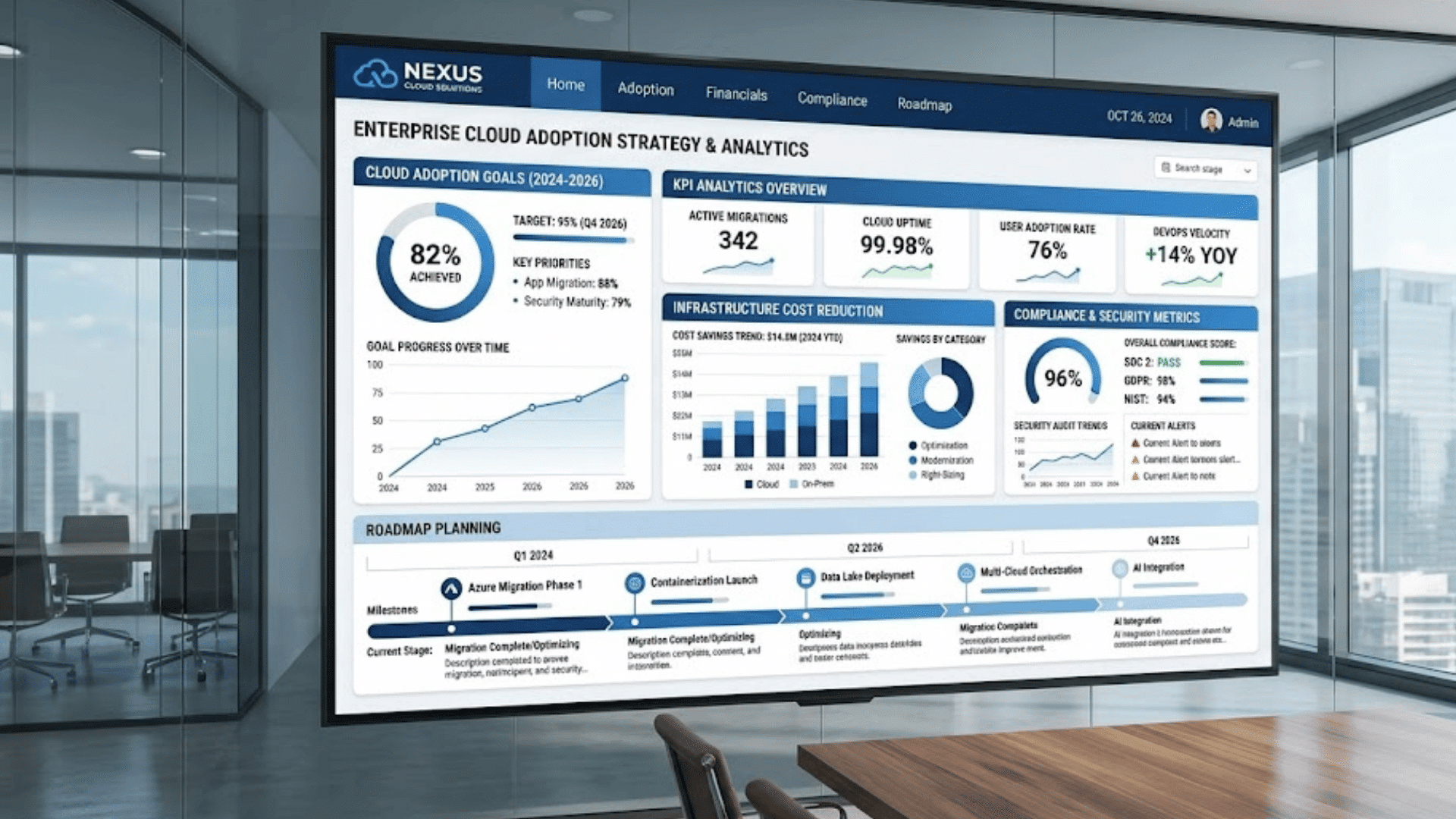
Each phase builds on the last, and skipping any one of them creates the exact problems the roadmap is designed to prevent. The sequence is deliberate, not arbitrary.
1. Business Alignment and Goal Setting
The cloud needs a business reason, not just a technology mandate, before any planning work begins in earnest.
This phase defines measurable outcomes in business language: faster release cycles, lower infrastructure costs, improved compliance posture, or reduced time-to-market.
Vague goals like “move to the cloud” produce vague results. Teams map stakeholders, confirm executive sponsorship, and connect cloud objectives to company KPIs.
What gets agreed here becomes the filter for every trade-off decision made in later phases, making the time invested non-negotiable.
Also Worth Knowing:
- Business outcomes should be quantified: “reduce infrastructure spend by 25% over 24 months” is a goal; “save money on servers” is not.
- Sponsorship at the VP level or above significantly reduces mid-project stalls caused by resource competition.
2. Discovery and Portfolio Assessment
This is where the real picture of the application estate emerges, and it almost always differs from what teams assume going in.
Teams inventory every application, document dependencies, classify data sensitivity, and flag technical debt.
The applications that look easiest to migrate often turn out to be the most complex in this phase. Workloads get sorted into four categories: move, modernize, retire, or retain.
This classification directly drives the cost and timeline of every subsequent phase; organizations that skip discovery reprice their projects mid-execution, which is far more expensive than the assessment itself.
Also Worth Knowing:
- AWS Migration Evaluator, Azure Migrate, and Google Cloud’s StratoZone are purpose-built tools for automated discovery and dependency mapping.
- Most portfolios contain 15–30% of applications that can be retired, eliminating them before migration reduces scope and cost immediately
3. Environment Readiness and Landing Zone Design
The cloud environment must be secure, governed, and compliant before the first workload arrives, not after.
This phase establishes identity and access management, network topology, security guardrails, logging baselines, and compliance policy enforcement.
Landing zone design done here prevents retrofitting security controls post-migration, which is structurally harder and significantly more expensive.
Teams that build governance into the environment first run cleaner migrations and face fewer compliance audit findings after go-live.
It is one of the highest-return investments in the entire roadmap.
4. Pilot, Prove, and Iterate
A focused pilot tests the full approach on a real workload before the organization commits to scaling the model across hundreds of applications.
Pilot workload selection matters. The best pilots represent the broader portfolio, neither the most complex system nor a trivial test application.
The goal is to validate tooling, refine operational runbooks, and surface surprises while the blast radius is small and adjustments are cheap.
Teams that skip directly to full-scale migration based on early confidence consistently encounter compounded errors that are far more costly to correct at scale.
5. Scale, Govern, and Optimize
Once the model is validated, transformation expands across the organization in structured waves, with governance and cost management running in parallel throughout.
Wave-based migration sequences applications by dependency and risk. FinOps practices track and control cloud spend as workloads accumulate.
Security monitoring runs continuously rather than as a periodic audit. The roadmap itself is reviewed quarterly and updated as business priorities shift.
Treating the roadmap as a living document rather than a signed-off deliverable is what separates organizations that sustain cloud value from those that stall after the initial migration push.
Key Roles Needed to Execute a Cloud Adoption Roadmap
A roadmap without accountable owners does not get executed; it gets filed. Each role below addresses a distinct failure mode that appears when the function is absent.
| Role | Primary Responsibility | Why It Fails Without This Role |
|---|---|---|
| Cloud Program Manager | Overall delivery, stakeholder coordination, and timeline ownership | Milestones drift; no single owner escalates blockers |
| Cloud Architect | Technical design, landing zone, workload placement | Architecture decisions made ad hoc; inconsistent environments |
| FinOps Lead | Cost visibility, budget governance, and reserved capacity planning | Spend grows unchecked; no unit cost accountability |
| Security and Compliance Lead | Guardrails, audit readiness, shared responsibility enforcement | Compliance gaps found post-migration at high remediation cost |
| Change Management Lead | Team enablement, operating model updates, training | Technology changes; people and processes do not follow |
Common Mistakes When Building a Cloud Adoption Roadmap
These mistakes appear repeatedly across enterprise cloud programs, and most are recognizable early enough to correct before they become expensive.
- Treating the roadmap as a one-time document: Cloud environments and business priorities change faster than annual planning cycles. Roadmaps need quarterly review cadences, not a single sign-off event.
- Skipping the discovery phase: Dependency surprises mid-migration are the leading cause of budget overruns. Every dollar saved by skipping assessment costs three to five dollars to fix during execution.
- No FinOps practice from day one: Cost governance added after migration is always retroactive and incomplete. By the time overruns are visible, the spending patterns that caused them are already established.
- Underestimating change management: Technology changes faster than people and processes do. Teams without structured adoption support revert to old operating patterns, undermining the cloud investment.
- Roadmap owned entirely by IT: Business stakeholders excluded from roadmap design become blockers during execution. Joint ownership from the start prevents this friction at the worst possible time.
Catching these patterns early is what separates programs that stay on track from those that reprice mid-execution.
And before committing to a roadmap timeline, most teams find it useful to get a realistic picture of the cost of moving to the cloud, because scope and budget decisions are not independent.
Cloud Adoption Frameworks Worth Knowing
Each major provider publishes a structured adoption framework, and each reflects the priorities and tooling of that ecosystem. Knowing the differences helps teams choose the right starting poin.t
| Framework | Provider | Strongest Area | Best Used When |
|---|---|---|---|
| Cloud Adoption Framework (CAF) | AWS | People, process, and technology alignment in parallel | Primary cloud target is AWS; needs broad organizational guidance alongside technical planning |
| Cloud Adoption Framework | Microsoft Azure | Governance, landing zone tooling, enterprise scale | Heavy Microsoft workload environment; strong existing Azure or M365 integration |
| Cloud Adoption Framework | Google Cloud | Data workloads, AI/ML readiness, multi-cloud optimization | Data-heavy environments or organizations prioritizing analytics and machine learning at scale |
Most enterprises adapt these frameworks rather than adopting them verbatim, using the structure while adjusting for their compliance environment and portfolio characteristics.
In a multi-cloud or hybrid strategy, referencing all three frameworks in parallel is a legitimate and increasingly common practice.
How to Know If the Roadmap Is Working
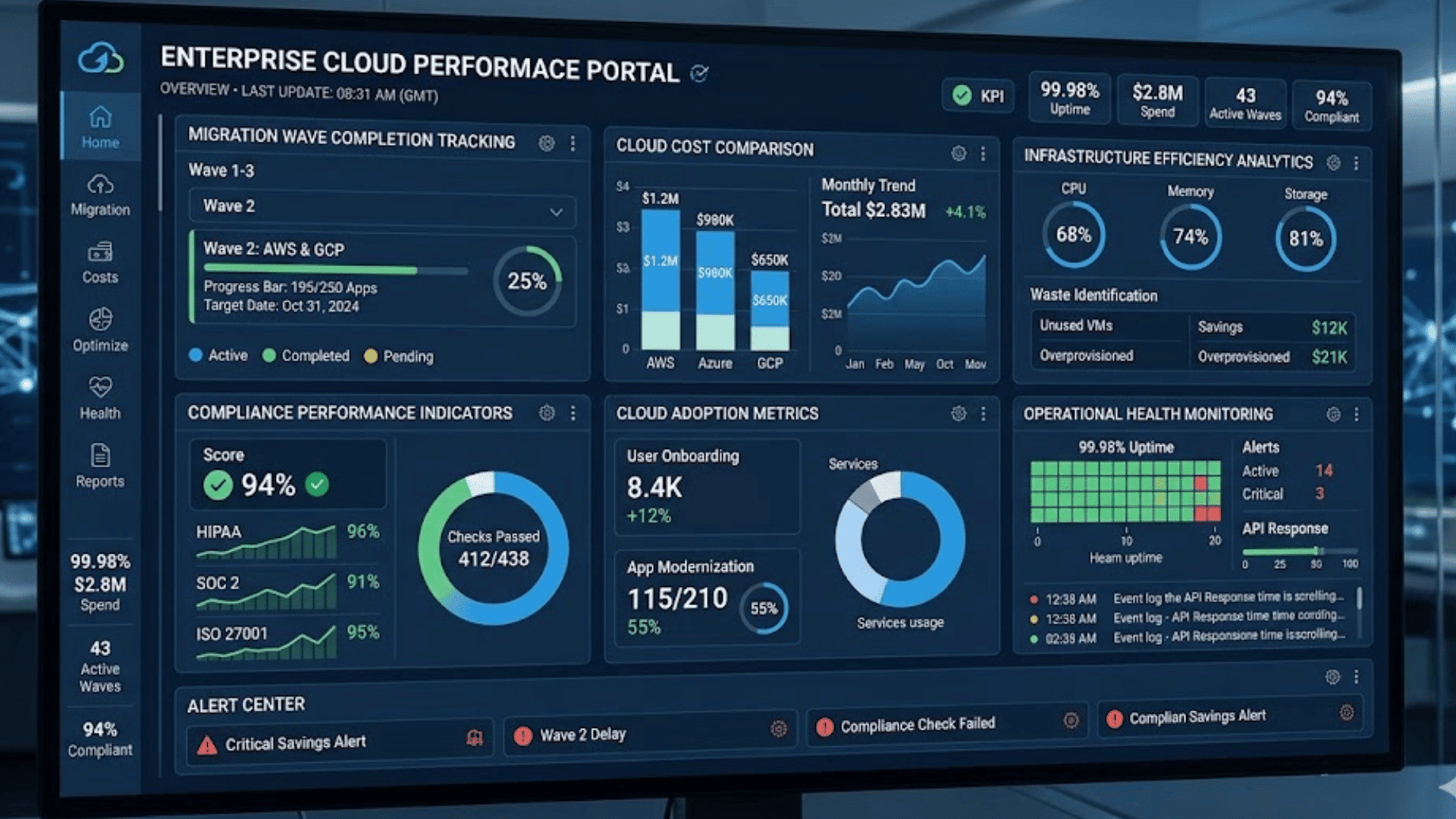
Progress is visible through both technical signals and business outcomes, and when those two sets of indicators tell different stories, the roadmap needs a closer look.
- Wave Completion Rate: Tracks whether migration waves stay on schedule and highlights scope or staffing issues early.
- Business Outcome Tracking: Measures impact through metrics like release speed, infrastructure efficiency, and compliance performance.
- Cost Variance vs. Baseline: Compares actual cloud spend against forecasts to identify governance or optimization gaps.
- Team Adoption Indicators: Measures cloud adoption by increasing cloud-native usage, reducing manual tasks, and decreasing incidents.
Conclusion
A cloud adoption roadmap is not a document you complete and archive; it is the operating framework that keeps cloud investment aligned with business direction at every stage of execution.
The organizations that get sustained value from the cloud are the ones that treat the roadmap as a living plan.
Updated as priorities shift, reviewed on a regular cadence, and jointly owned by technology and business leadership.
Starting with a thorough assessment, validating the approach through a structured pilot, and maintaining governance from the first workload to the last wave are the practices that determine if transformation delivers on its original business case.
If your program does not yet have these foundations, a structured cloud assessment is the right starting point before making any further commitments.
Have questions about building a practical cloud adoption roadmap? Share your thoughts or challenges in the comments below.
Frequently Asked Questions
What Is the First Step in Building a Cloud Adoption Roadmap?
Start by aligning cloud goals with business objectives and defining measurable outcomes before any migration planning begins.
How Long Does It Take to Build a Cloud Adoption Roadmap?
Most organizations take 4–8 weeks to create a roadmap, while full execution can take several months or longer.
Who Should Own a Cloud Adoption Roadmap?
The roadmap should be jointly owned by IT leadership and business stakeholders to keep priorities aligned.
What Is the Difference Between a Roadmap and a Migration Plan?
A migration plan focuses on moving systems, while a roadmap covers strategy, governance, costs, and long-term goals.
How Often Should a Cloud Adoption Roadmap Be Updated?
Roadmaps should be reviewed at least every quarter or whenever major business priorities change.