







Many businesses no longer keep everything in one place. Some data fits private servers, while other tasks run better in the cloud.
This shift is why hybrid cloud setups are becoming more common.
Managed hybrid cloud hosting gives teams more control, better speed, and room to grow without rebuilding everything from scratch.
That setup still has challenges. Managing two environments can be complex and costly without the right support. This is where managed hybrid cloud hosting helps.
It eases the load on internal teams by managing security, updates, and performance across both systems.
In this article, you will learn how this works and why it matters for modern businesses.
The post also compares top hybrid cloud hosting solutions, showing what each offers and who they fit best to help you choose with confidence.
What Is Managed Hybrid Cloud Hosting?
Managed hybrid cloud hosting is a service that helps businesses run their systems across both private servers and public cloud platforms, with expert support handling the setup and daily work.
It combines on-site infrastructure with cloud services so companies can place data and apps where they work best.
Private clouds often store sensitive data, while public clouds handle flexible workloads like scaling and backups.
A managed provider takes care of monitoring, security, updates, and performance across both environments. This removes the need for in-house teams to manage complex systems on their own.
In real-world use, businesses rely on managed hybrid cloud hosting to stay flexible, control costs, and reduce downtime.
It also helps teams focus on core work instead of IT tasks.
The goal is simple: smoother operations, better control, and reliable support without added stress.
Leading Managed Hybrid Cloud Hosting Solutions
These providers offer reliable hybrid cloud services with managed support. Each solution helps businesses balance control, scale, and performance based on real needs.
1. Microsoft Azure Hybrid Cloud Solutions
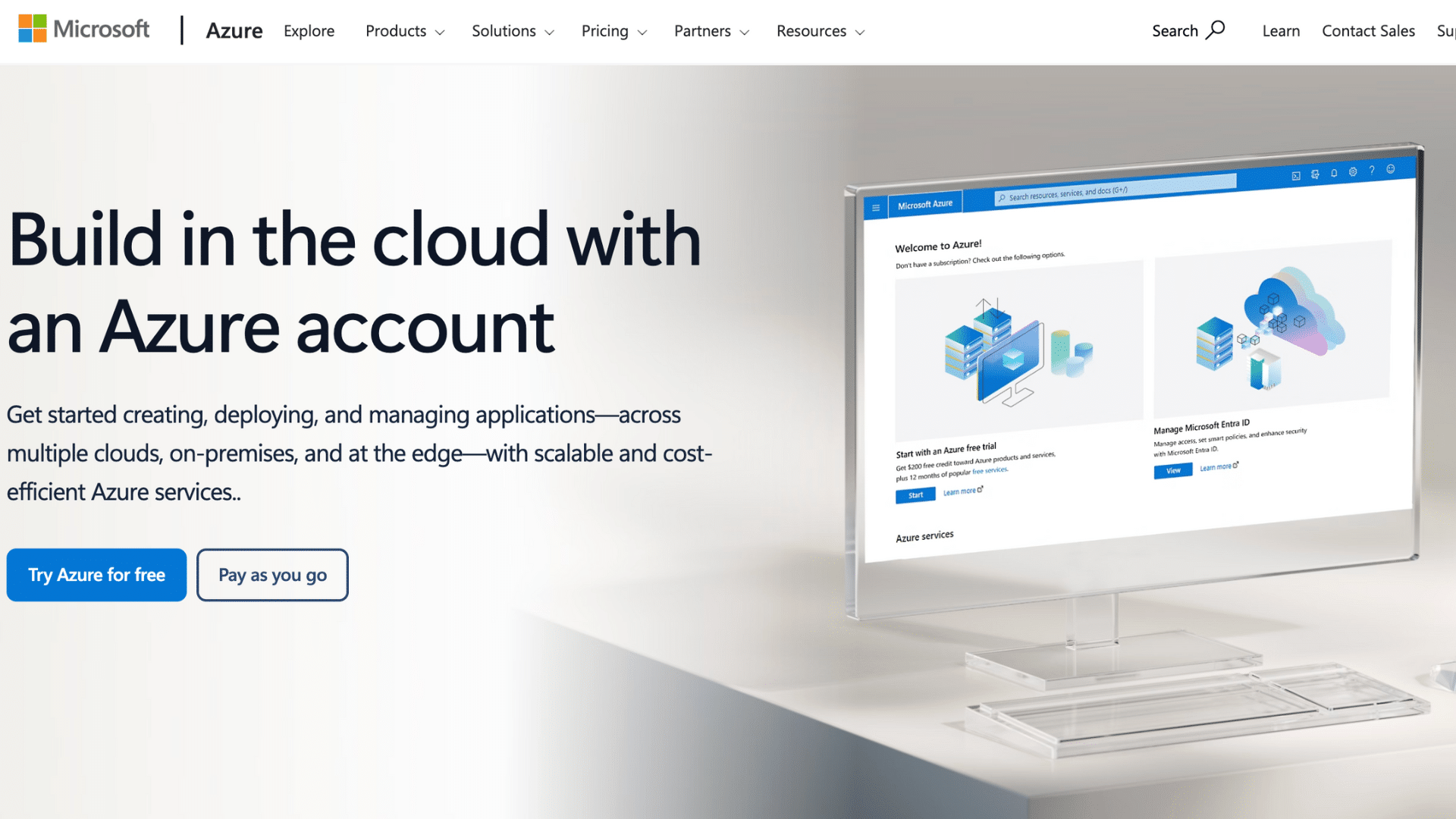
Microsoft Azure Hybrid Cloud Solutions help businesses connect on-premise systems with the Azure public cloud using tools like Azure Arc and Azure Stack.
This setup allows workloads to move smoothly between environments while staying centrally managed.
Azure works well for businesses already using Microsoft tools, making integration easier. Managed services handle monitoring, updates, and security across systems.
Companies benefit from strong scalability, built-in compliance support, and flexible pricing.
This solution suits enterprises that want tight control without losing access to cloud-based services.
2. Amazon Web Services (AWS) Outposts
AWS Outposts brings AWS infrastructure and services directly into a company’s data center.
It allows businesses to run cloud workloads locally while still using AWS management tools. Sensitive data stays on-site, while other tasks connect with the AWS cloud for scale and storage.
This managed hybrid cloud hosting support covers monitoring, maintenance, and security updates.
This solution works well for businesses that rely heavily on AWS and need low latency or local data control. It offers a consistent experience across both private and public environments.
3. IBM Hybrid Cloud Solutions
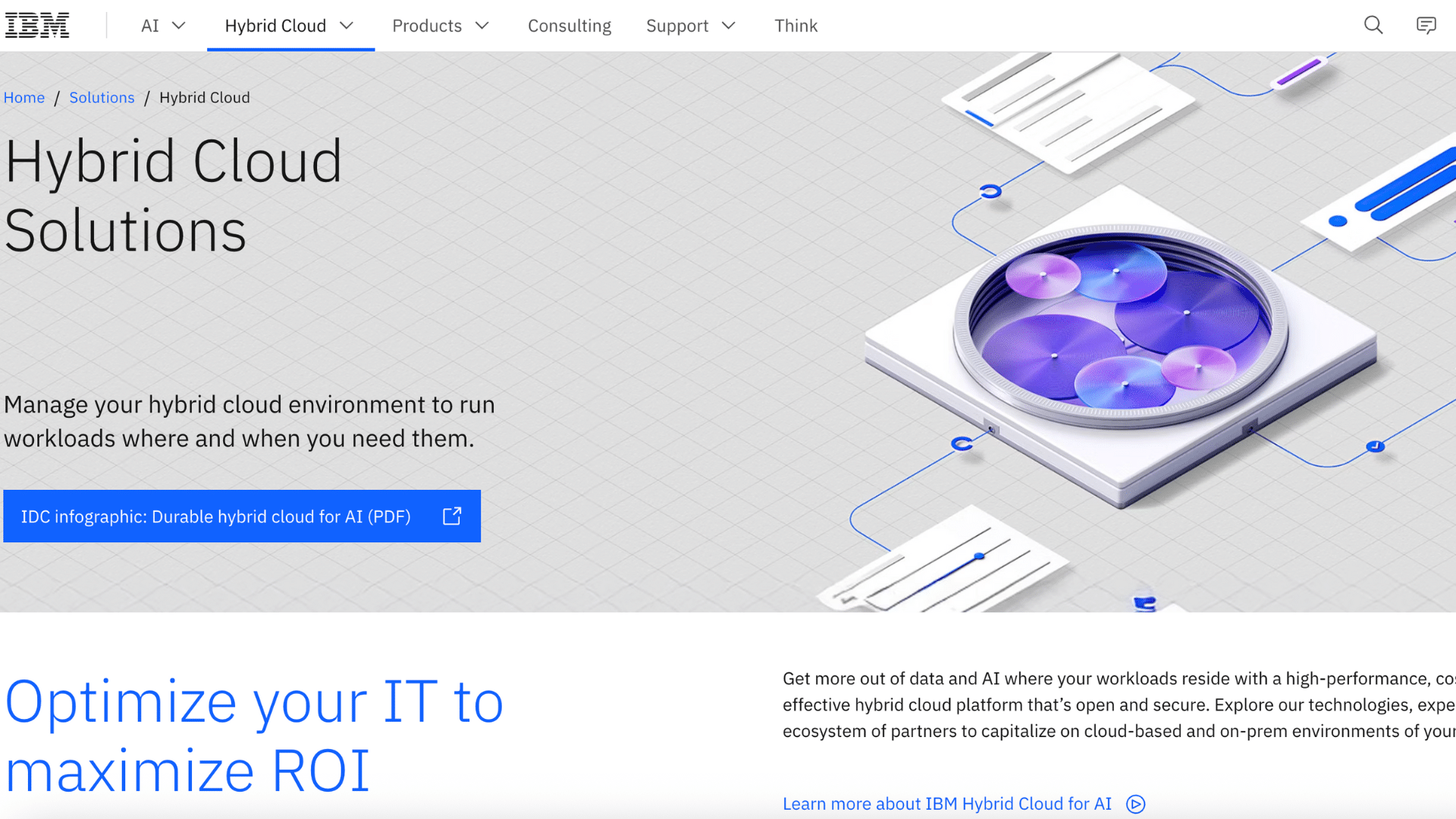
IBM Hybrid Cloud Solutions combine private infrastructure with IBM Cloud services.
Using tools like IBM Cloud Satellite and Red Hat OpenShift, businesses can run applications across on-premises and cloud environments with unified management.
Managed support includes performance monitoring, security updates, and configuration help so internal teams don’t have to handle every detail.
This solution is suited for enterprises with complex workloads and strict compliance needs.
It also works well for organizations that want strong container support and consistent operations across locations without extra overhead.
4. VMware Hybrid Cloud
VMware Hybrid Cloud helps businesses run and manage workloads across private data centers and public clouds using familiar VMware tools.
It lets teams move virtual machines and apps without restructuring systems.
This managed hybrid cloud hosting support handles updates, security monitoring, and system integration so IT teams can focus on other priorities.
This solution fits companies that already use VMware in their data centers and want to expand into cloud services without losing control or adding complexity.
5. Nutanix Hybrid Cloud Services
Nutanix Hybrid Cloud Services offer a unified platform that brings private and public cloud infrastructure together with a single management view.
Businesses can run apps where they make the most sense, scale resources easily, and keep operations consistent.
Managed support includes automated maintenance, performance monitoring, and security layers across all environments.
This solution suits companies that want simple operations and centralized control without using multiple tools. It also supports hybrid cloud use without major system changes.
6. Google Anthos Hybrid Cloud
Google Anthos Hybrid Cloud lets businesses run apps across on-premises environments and Google Cloud with the same tools and processes.
It uses Kubernetes to keep applications consistent, no matter where they run.
Managed support includes automated updates, performance monitoring, and security checks so teams don’t handle every detail themselves.
This managed hybrid cloud hosting suits organizations that want a container-based hybrid setup with easy scaling.
7. ByteGrid Hybrid Cloud Hosting
ByteGrid Hybrid Cloud Hosting combines private data center resources with public cloud services to give businesses flexible infrastructure and reliable performance.
The provider manages monitoring, security, backups, and updates across both environments.
This lets internal teams focus on core work while supporting businesses that need tailored hosting and scalable cloud services.
It’s suited for teams that want strong service levels and hands-on management without complexity.
How Managed Hybrid Cloud Hosting Works?
Managed hybrid cloud hosting connects private systems with public cloud services and keeps them running smoothly. A service provider handles daily operations so teams can focus on business goals.
- Workload Assessment: The provider reviews apps and data to decide what stays on private servers and what moves to the public cloud.
- Environment Setup: Private and public cloud systems are connected so they can share data and work together without delays.
- Workload Distribution: Sensitive or critical tasks run on private infrastructure, while flexible workloads use the public cloud for scale.
- Monitoring and Management: The provider tracks performance, uptime, and usage to prevent issues before they affect operations.
- Security and Compliance: Security rules, access controls, and updates are applied across both environments to keep data protected.
- Ongoing Support: Teams receive regular maintenance, updates, and support to ensure stable and reliable performance.
Benefits of Managed Hybrid Cloud Hosting
Managed hybrid cloud hosting helps businesses balance control, flexibility, and performance. It reduces daily IT pressure while supporting growth and changing needs.
1. Better Flexibility and Control
Managed hybrid cloud hosting gives businesses more choice in how they run systems and store data. Sensitive workloads can stay on private servers, while less critical tasks run in the public cloud.
This setup allows teams to adjust resources based on demand without major changes.
With expert management in place, businesses keep control over key systems while still gaining the flexibility to scale when needed.
This balance supports smoother operations and long-term planning without locking companies into a single environment.
2. Improved Security and Compliance
Security is a major reason many businesses choose managed hybrid cloud hosting.
Private environments help protect sensitive data, while managed providers apply security rules across both cloud types.
This includes regular updates, access controls, and monitoring to catch issues early. Many providers also help meet compliance needs for industries with strict data rules.
With expert oversight, businesses reduce security risks and avoid gaps from split or unmanaged systems.
3. Cost Efficiency and Smarter Spending
Managed hybrid cloud hosting help businesses avoid paying for resources they do not need.
Private servers handle steady workloads, while public cloud resources scale up or down as demand changes. Managed providers also track usage and performance to prevent waste.
This approach helps control costs and makes spending more predictable.
Instead of large upfront investments, businesses pay for what they use while still maintaining reliable performance across both environments.
4. Reduced IT Workload
Managing multiple environments can overwhelm internal teams.
Managed hybrid cloud hosting removes much of this burden by handling monitoring, updates, and maintenance.
Providers watch systems around the clock and resolve issues before they cause downtime. This frees internal staff to focus on projects that support business growth instead of routine IT tasks.
With less pressure on in-house teams, operations stay smoother and response times improve.
5. Improved Performance and Reliability
Hybrid cloud hosting supports better performance by placing workloads where they run best.
Managed providers fine-tune systems to reduce delays and improve uptime. They also monitor traffic and resource use to prevent slowdowns during peak times.
With backup systems and ongoing support, businesses experience fewer disruptions.
This reliable setup helps ensure applications stay available and users get a consistent experience across platforms.
How to Choose the Right Managed Hybrid Cloud Solution?
Choosing the right provider depends on business goals, current systems, and future plans. A clear approach helps avoid costly changes later.
- Business Needs: Review current workloads, data types, and performance needs to decide what should run on private or public systems.
- Security and Compliance: Check that the provider supports required security standards and compliance rules for your industry.
- Scalability Options: Make sure the solution can grow or scale back as demand changes without service issues.
- Management and Support: Look for 24/7 monitoring, clear support channels, and fast response times.
- Pricing Structure: Compare pricing models to ensure costs stay predictable and match long-term budgets.
Conclusion
Managed hybrid cloud hosting suits businesses that need control and flexibility. It keeps sensitive data secure while allowing teams to scale, control costs, and avoid daily IT slowdowns.
Instead, systems run more smoothly and issues get handled before they grow.
Choosing the right provider matters just as much as choosing the setup itself. A strong partner will match your goals, support growth, and keep operations steady as needs change.
Before deciding, it helps to compare features, pricing, and support options side by side.
If you are considering a hybrid cloud move, review your options carefully.
If you have used managed hybrid cloud hosting, share your experience in the comments to help others choose wisely.