

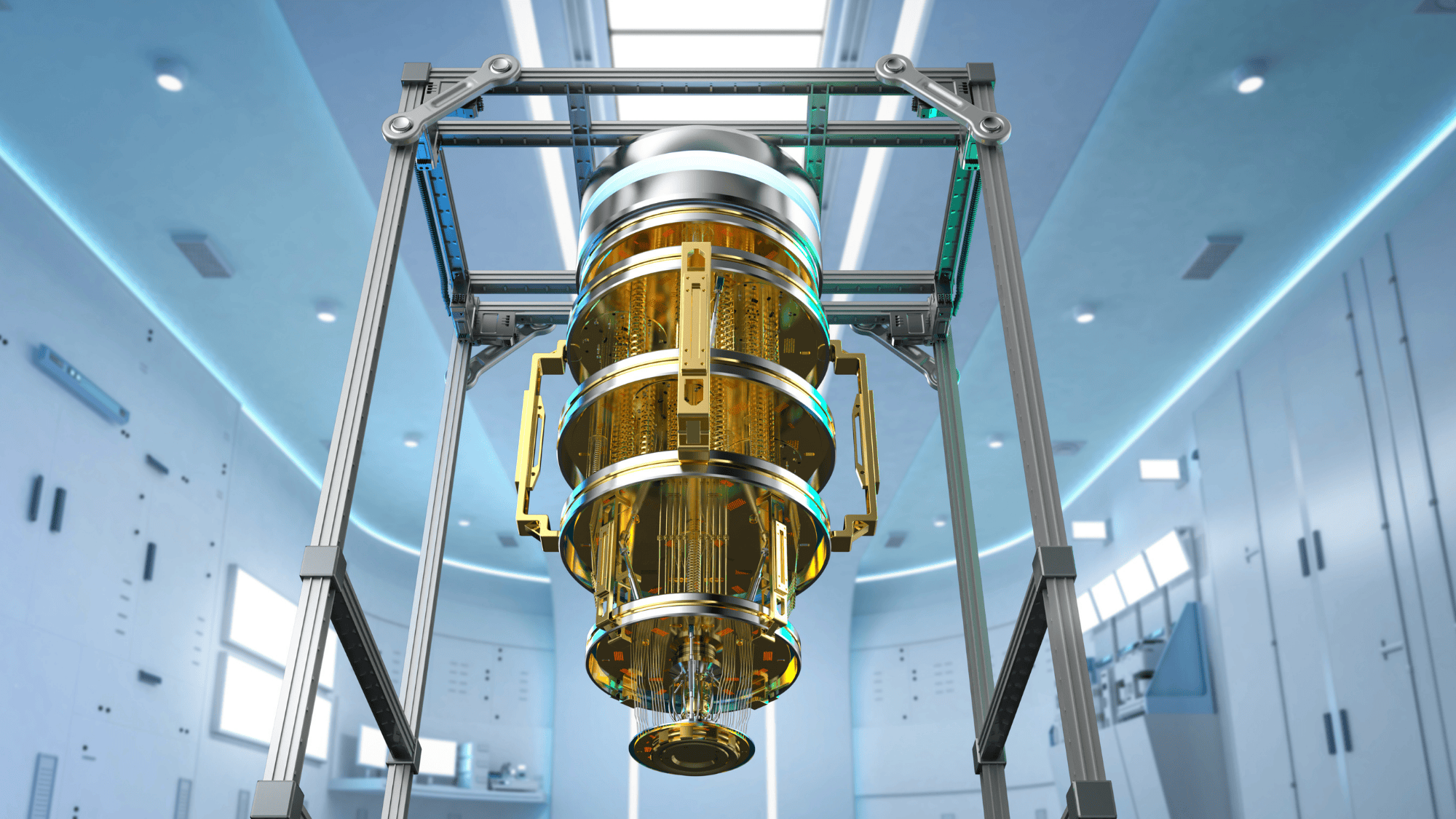





Ever wondered how quantum computers actually work? You’ve probably heard they’re super powerful and totally different from regular computers, but what does that really mean?
Don’t worry, you don’t need a physics degree to understand the basics. Quantum computing might sound complicated, but once you break it down, the core ideas are pretty interesting.
In this guide, we’ll walk through what quantum computers are, how they’re different from the laptop you’re using right now, and why they matter.
You’ll learn about qubits, superposition, entanglement, and the real-world problems quantum computing can solve. By the end, you’ll have a solid grasp of quantum computing basics, no complex math required. Let’s get right in!
What is Quantum Computing?
Quantum computing is a completely new way of processing information that uses the strange rules of quantum physics, the science of super tiny particles, to solve problems.
Unlike your regular computer, which processes tasks one step at a time using bits (0s or 1s), a quantum computer uses qubits.
These qubits can be 0, 1, or both at the same time, which sounds weird but gives them incredible power.
Why Does This Matter?
Because quantum computing can tackle problems that would take traditional computers thousands of years to solve, it can help with tasks such as discovering new medicines, cracking complex codes, or modeling how molecules behave.
As technology advances and these machines become more practical, they could change entire industries and solve challenges we can’t currently handle.
What Is a Quantum Computer?
Think of a quantum computer as a special type of machine that follows completely different rules than the computer you’re using right now. Here’s what makes it unique:
- Different building blocks: Quantum computers use qubits, which can be 0, 1, or both simultaneously, unlocking massive processing power.
- Parallel processing power: Classical computers check one solution at a time, like walking through a maze step-by-step. Quantum computers explore all paths at once, finding the exit way faster.
- Probability-based results: Quantum computers work with probabilities, running calculations multiple times to find the most likely correct answer through quantum mechanics.
- Extreme operating conditions: These machines need to be kept colder than outer space to work properly. The qubits are incredibly delicate and require special environments to maintain their quantum states.
It’s this unique approach to processing information that gives quantum computers their potential to solve problems classical computers simply can’t handle efficiently.
What is Classical Computing?

Classical computing is the kind of computing we use every day on laptops, phones, tablets, and servers. It’s based on bits, the smallest unit of information. A bit can only be in one of two states at a time: 0 or 1.
How Classical Computers Work
Classical computers solve problems by following clear, step-by-step instructions:
- Bits Store Information: Everything, photos, apps, emails, videos, gets translated into 0s and 1s.
- Logic Gates Process Data: Inside the CPU, logic gates (like AND, OR, NOT) manipulate bits to perform calculations.
- One Path at A Time: A classical computer tests and calculates in a direct sequence, moving from one step to the next.
- Predictable Results: If you run the same program with the same input, you get the same output every time.
Why Classical Computing Still Matters
Classical computers are fast, reliable, and great for:
- Web browsing, streaming, gaming, and apps
- Business software, databases, and cloud services
- Everyday tasks where results must be consistent
- Most real-world computing problems today
Quantum Computing vs Classical Computing
Here’s a simple side-by-side look to help you understand how these two computing approaches differ in how they think, work, and solve problems.
| Aspect | Classical Computing | Quantum Computing |
|---|---|---|
| Basic Unit | Bits (0 or 1) | Qubits (0, 1, or both at once) |
| Processing Style | Sequential: solves problems step-by-step, one calculation at a time | Probabilistic; searches multiple solutions simultaneously using superposition |
| Results | The same input always gives the same output | Runs multiple times to find the most likely answer |
| Best For | Everyday tasks like browsing, emails, videos, games, and most software applications | Complex problems like molecular simulation, cryptography, optimization, and drug discovery |
| When Quantum Shines | Struggles with problems that have too many possible combinations to check efficiently | Excels at problems where you need to analyze countless possibilities at once |
Classical computers aren’t going anywhere; they’re perfect for daily tasks. Quantum computers are specialized tools for tackling specific, extremely complex challenges that would take regular computers far too long to solve.
Core Principles of Quantum Computing Basics
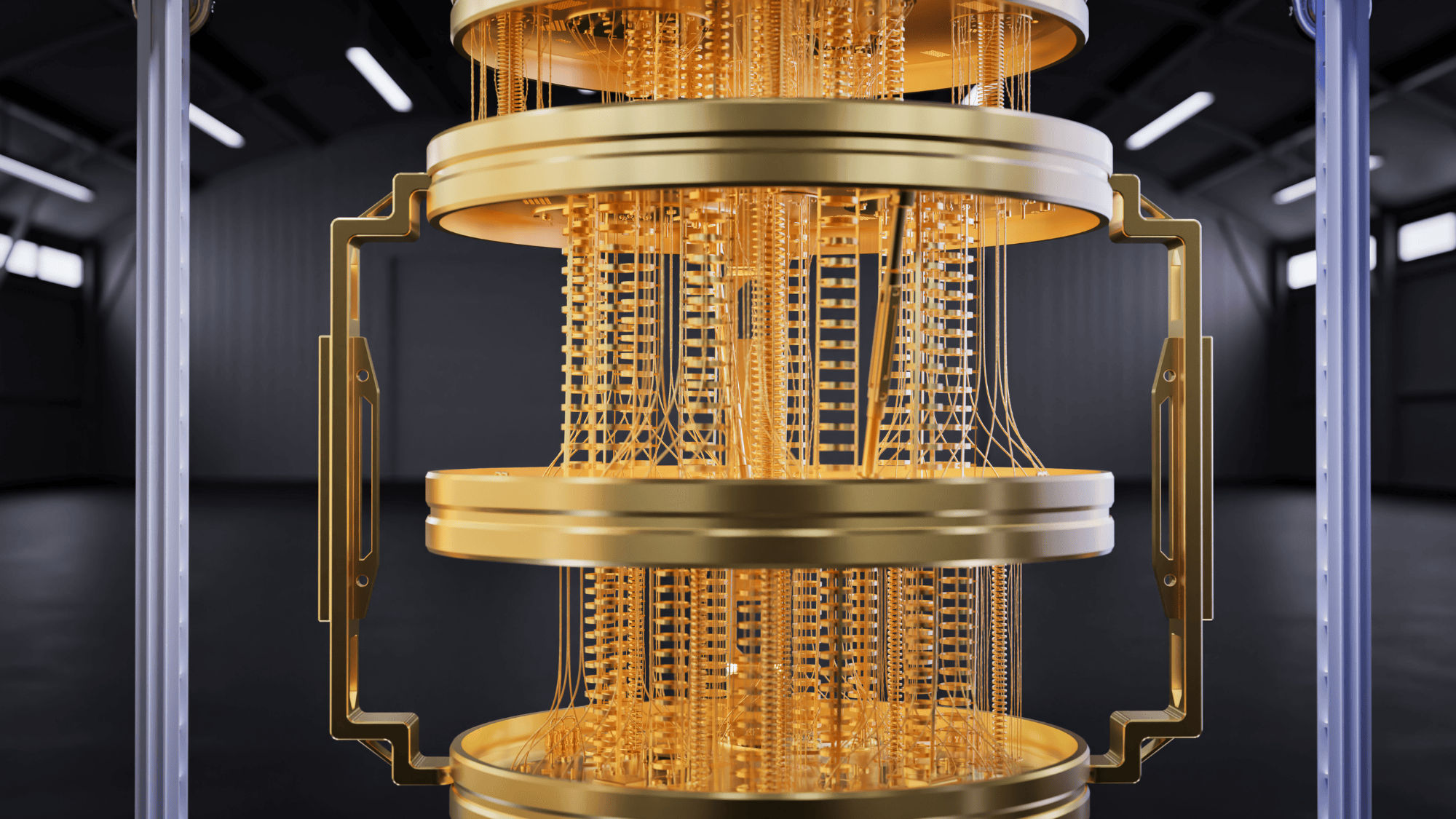
Understanding quantum computing comes down to grasping five key concepts. These principles work together to give quantum computers their unique abilities. Let’s break them down one by one.
1. Qubits (Quantum Bits)
Qubits are the quantum version of regular computer bits, but with a superpower. While a normal bit can only be 0 or 1, a qubit can be both at the same time thanks to quantum physics.
This might sound impossible, but it’s what makes quantum computers so powerful.
| Number of Qubits | Possible States | What This Means |
|---|---|---|
| 2 qubits | 4 states at once | Can process 4 calculations simultaneously |
| 3 qubits | 8 states at once | Can process 8 calculations simultaneously |
| 100 qubits | 1,267,650,600,228,229,401,496,703,205,376 states | More processing power than all classical computers on Earth combined |
This exponential growth is what gives quantum computers their incredible potential. Add just one more qubit, and you double the processing power.
2. Superposition
Superposition is the ability of a qubit to exist in multiple states at the same time until it’s measured. Think of it like a coin spinning in the air, it’s neither heads nor tails until it lands.
- Why It Matters for Computation: While a classical computer has to check each possible answer one by one, quantum computers can check many answers simultaneously because qubits exist in superposition.
- The Parallel Processing Advantage: This means a quantum computer with 10 qubits can search 1,024 different possibilities at the exact same moment, drastically speeding up certain types of calculations.
Superposition is the foundation that allows quantum computers to tackle problems in entirely new ways.
3. Entanglement
Entanglement happens when two or more qubits become connected in a special quantum way. Once entangled, measuring one qubit instantly affects the others, no matter how far apart they are. Einstein famously called this “spooky action at a distance.”
Why Entangled Qubits Are Powerful:
- They can share information in ways classical bits never could
- Changes to one qubit immediately influence its entangled partners
- This connection allows quantum computers to solve complex, interconnected problems more efficiently
- Entanglement creates correlations that help quantum algorithms find patterns and solutions faster
Without entanglement, quantum computers would lose much of their computational advantage. It’s what allows qubits to work together as a unified system rather than just individual units.
4. Quantum Interference
Quantum interference is the technique quantum computers use to find the right answer among all the possibilities. It works by amplifying correct solutions and canceling out wrong ones, like tuning a radio to get a clear signal.
Here’s how it works in practice:
- Amplifying Correct Answers: Quantum algorithms are designed so that the paths leading to correct solutions reinforce each other, making those answers more likely to appear.
- Canceling Wrong Answers: At the same time, the paths leading to incorrect solutions interfere destructively and cancel each other out, making them less likely.
- The Result: After running the quantum circuit, the correct answer has the highest probability of being measured, while wrong answers effectively disappear.
This is why quantum algorithms must be carefully designed: they manipulate interference patterns to guide the system toward the solution.
5. Measurement
Measurement is the moment when a qubit’s superposition collapses, and it becomes either 0 or 1. Once you measure a qubit, it loses its quantum properties and behaves like a regular bit.
| Before Measurement | During Measurement | After Measurement |
|---|---|---|
| Qubit exists in superposition (both 0 and 1) | Quantum state collapses instantly | Qubit becomes definitively 0 or 1 |
| Holds multiple possibilities | Observer effect forces a choice | Can be read like a classical bit |
Why Results Are Probabilistic?
Because qubits are in superposition, you can’t predict exactly what you’ll get, only the probability.
That’s why quantum computers run the same calculation many times and look for the answer that appears most frequently.
The quantum algorithm designs these probabilities so the correct answer shows up far more often than the wrong ones.
This probabilistic nature is actually a feature, not a bug; it’s what allows quantum computers to explore vast solution spaces efficiently.
Types of Qubits Used in Quantum Computers

Not all qubits are created equal. Scientists have developed several different types, each with unique strengths and challenges. Here are the main ones being used today:
- Superconducting Qubits: Tiny electrical circuits cooled to near absolute zero. Used by IBM and Google because they’re fast and relatively easy to control, though they need extreme cooling.
- Trapped Ion Qubits: Individual atoms held in place by electromagnetic fields. These qubits are incredibly stable and accurate, making them great for precise calculations but harder to scale up.
- Photonic Qubits: Use particles of light (photons) to store information. They operate at room temperature and can travel through fiber-optic cables, making them ideal for quantum communication and networking.
- Quantum Dots: Tiny semiconductor particles that trap single electrons. They’re promising because they could potentially be manufactured using existing computer chip technology, making them easier to produce at scale.
Each qubit type has tradeoffs between stability, speed, scalability, and operating conditions; that’s why researchers are exploring multiple approaches to find the best path forward.
Main Components of a Quantum Computer
Understanding a quantum computer starts with seeing how its pieces fit together, each playing a role in turning abstract ideas into coordinated actions within a single working system.
| Component | What It Does | Why It Matters |
|---|---|---|
| Quantum Processors (QPUs) | The core chip where qubits are stored and quantum calculations happen | Where the actual quantum computing takes place |
| Superconductors and Extreme Cooling | Systems that cool qubits to near absolute zero (-459°F) | Keeps fragile qubits stable and functional |
| Control Electronics | Lasers and microwave pulses that manipulate individual qubits | Controls qubit behavior with extreme precision |
| Quantum Software and SDKs | Programming tools like IBM’s Qiskit that write quantum instructions | Let programmers code without knowing advanced physics |
| Cloud-Based Access | Online platforms connecting users to real quantum computers remotely | Makes quantum computing accessible worldwide without owning the hardware |
These components work as one system, cooling stabilizes qubits, electronics control them, software translates code, and cloud access democratizes quantum power.
How Quantum Computers Actually Work
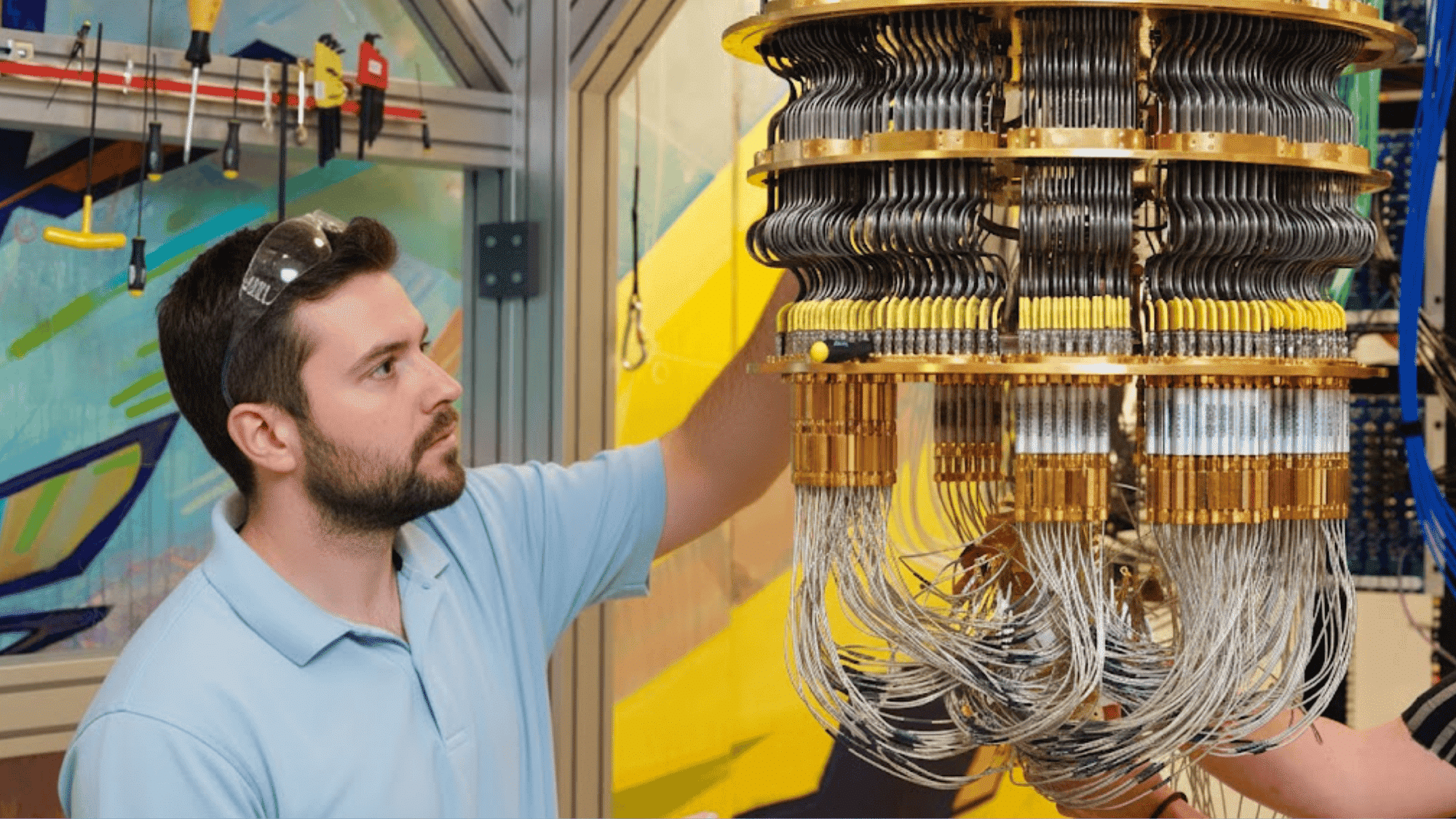
Now that we’ve covered the pieces, let’s see how they all come together. Running a problem on a quantum computer follows a specific workflow that might seem complex at first, but it’s actually pretty logical once you break it down.
1. Initialize Qubits
First, all the qubits get reset to a starting state, usually all set to 0. Think of this like clearing a calculator before starting a new problem. The qubits need a clean slate, so previous calculations don’t interfere with the new ones.
2. Apply quantum gates
Next, quantum gates are applied to the qubits. These gates are like instructions that put qubits into superposition, create entanglement between them, and manipulate their states.
It’s similar to how logic gates work in regular computers, but with quantum properties. Each gate performs a specific operation that moves the qubits toward a solution to the problem.
3. Run Quantum Circuits
The sequence of quantum gates forms what’s called a quantum circuit, basically the complete set of instructions for solving the problem.
The circuit runs, and the qubits go through all their quantum operations, exploring multiple solutions simultaneously through superposition and entanglement.
4. Measure Results
Finally, the qubits get measured, which collapses their superposition into definite 0s and 1s. Because quantum computing is probabilistic, this process typically gets repeated many times (sometimes thousands of times).
The answer that shows up most frequently is usually the correct solution.
The Role of Quantum Algorithms
Quantum algorithms are the special recipes that tell the quantum computer exactly which gates to apply and when.
These aren’t just regular algorithms translated to the quantum domain; they’re completely new approaches designed to leverage quantum properties such as superposition and entanglement.
Famous examples include Shor’s algorithm (for breaking encryption) and Grover’s algorithm (for searching databases).
Each quantum algorithm is carefully crafted to use interference patterns that amplify correct answers while canceling out wrong ones.
Creating these algorithms requires understanding both the problem you’re trying to solve and how to manipulate quantum states to get there.
Why Quantum and Classical Systems Work Together
Here’s something important: quantum computers don’t work alone. They’re actually part of a hybrid system that includes regular classical computers, too.
Why the Partnership Matters:
- Preparation work: Classical computers handle all the setup, loading data, compiling the quantum circuit, and managing the overall workflow.
- Limited quantum runtime: Qubits can only maintain their quantum states for tiny fractions of a second before errors creep in, so quantum computers focus only on the hardest part of the problem.
- Post-processing: After measurement, classical computers take the quantum results and do additional analysis, error correction, and final calculations.
- Best of both worlds: Classical computers are great at routine tasks and managing complexity, while quantum computers tackle the specific calculations that would take classical systems forever.
Think of it like a team where each member plays to their strengths. The classical computer is the project manager handling logistics, while the quantum computer is the specialist brought in for the one task nobody else can do.
Together, they solve problems neither could handle efficiently alone.
This hybrid approach probably shows how quantum computing will function in the near future; quantum computers won’t replace classical ones but will work alongside them as co-processors for specific challenges.
What Can Quantum Computing Be Used For?
Quantum computing isn’t just a cool science experiment; it has the potential to change entire industries. Here are the areas where quantum computers could make the biggest impact.
1. Cryptography & Security

Quantum computers threaten and offer opportunities for cybersecurity. Shor’s algorithm could potentially break many current encryption methods protecting online banking, private messages, and sensitive data.
That sounds scary, but it’s also driving the development of quantum-resistant encryption.
On the flip side, quantum computing enables new forms of ultra-secure communication through quantum key distribution.
This technology uses the laws of quantum physics to create encryption keys that are literally impossible to hack without detection.
Governments and security agencies are racing to prepare for both the risks and benefits of quantum cryptography.
2. Drug Discovery & Molecular Simulation

Discovering new medicines currently takes years and costs billions of dollars because scientists have to test countless molecular combinations.
Quantum computers could dramatically speed this up by simulating how molecules interact at the quantum level, something classical computers struggle with because molecules themselves follow quantum rules.
This means researchers could test virtual drug candidates much faster, predict side effects more accurately, and design medicines tailored to specific diseases.
Pharmaceutical companies are already experimenting with quantum simulations to understand protein folding, enzyme reactions, and how potential drugs bind to their targets in the human body.
3. Material Science & Chemistry

Just like with drug discovery, quantum computers excel at simulating chemical reactions and material properties.
This could revolutionize how we create new materials, from better batteries and more efficient solar panels to stronger construction materials and advanced superconductors.
For example, designing a new battery involves understanding how lithium ions move through different materials at the atomic level.
Classical computers have to make simplifications, but quantum computers can model these interactions with much greater accuracy.
This could lead to breakthroughs in energy storage, carbon capture materials, and catalysts that make chemical manufacturing more efficient and environmentally friendly.
4. Financial Modeling & Optimization

The financial world handles huge amounts of data and complex calculations. Quantum computers may aid in portfolio optimization, risk analysis, fraud detection, and pricing derivatives.
One particularly promising application is Monte Carlo simulations, which banks use to predict market behavior by running thousands of scenarios.
Quantum computers could run these simulations exponentially faster, giving financial institutions better insights for making investment decisions.
They could also optimize trading strategies and detect patterns in market data that classical algorithms might miss.
5. Machine Learning & AI
Quantum computing could boost AI by enabling faster training, better pattern recognition in large datasets, and solving complex optimization problems in machine learning.
For instance, quantum computers could improve recommendation systems, make AI decision-making more accurate, and help process the enormous amounts of data needed for advanced AI applications.
Though early in quantum machine learning, researchers explore how quantum properties like superposition and entanglement might endow AI with capabilities beyond classical computing.
6. Energy Optimization

Power grids, supply chains, and logistics networks all involve complex optimization problems, finding the most efficient routes, the best distribution of resources, or the optimal scheduling of operations.
These problems often have millions of possible solutions, and finding the best one is extremely difficult for classical computers.
Quantum computers could help optimize electrical grids to reduce energy waste, plan more efficient delivery routes for shipping companies, improve traffic flow in cities, and design better renewable energy systems.
Even small improvements in efficiency could save massive amounts of energy and money across entire industries.
Companies in transportation, manufacturing, and energy production are already testing quantum algorithms to tackle these real-world optimization challenges.
The Common Thread
What ties all these applications together? There are problems with a huge number of possible solutions, for which quantum computers can search many options simultaneously.
They involve simulating quantum systems, optimizing complex variables, or searching through enormous datasets, exactly the kinds of tasks where quantum computing’s unique abilities shine brightest.
When is Quantum Computing Better Than Classical Computing?
Quantum computers aren’t better at everything; they’re specialists built for specific types of challenges. Understanding when to use quantum versus classical computing makes all the difference.
- Problems with exponential complexity: Classical computers struggle with exponentially growing solutions, like testing every password, while quantum computers explore options simultaneously.
- Simulating quantum systems: Molecules and atoms follow quantum rules, so classical computers struggle to model them accurately. Quantum computers naturally simulate these systems because they operate on the same principles.
- Optimization with countless variables: Finding the best solution among millions (like optimizing delivery routes for thousands of trucks) would take classical computers forever if they relied on brute-force checking each option.
- Pattern recognition in massive datasets: Searching unsorted databases or finding hidden patterns in large amounts of data becomes exponentially faster with quantum algorithms than with classical search methods.
Molecular Simulation Example
Simulating a caffeine molecule with just 24 atoms requires tracking 10^48 possible quantum states, more calculations than the world’s fastest supercomputer could handle in years. A quantum computer models this naturally in minutes.
Quantum computers tackle specialized, ultra-complex problems but can’t beat your laptop at everyday tasks like browsing or gaming. They’re powerful specialists, not replacements.
Challenges in Quantum Computing Today
Quantum computing is promising, but real progress depends on overcoming practical roadblocks that slow development today and make reliable, large-scale machines tough to build and use.
| Challenge | The Problem | Why It’s Hard |
|---|---|---|
| Decoherence and Error Rates | Qubits lose quantum properties within microseconds due to environmental disturbances | Tiny interference destroys calculations before completion |
| Scaling Qubits | Building systems with thousands of qubits is extremely difficult | More qubits means exponentially more complexity and errors |
| Cooling and Hardware Size | Requires massive refrigeration to reach near absolute zero | Equipment is enormous, expensive, and energy-intensive |
| Quantum Error Correction | Fixing errors requires multiple physical qubits per logical qubit | Useful problems might need millions of physical qubits |
| Software and Algorithm Development | Few quantum algorithms exist; programming requires specialized expertise | Algorithms must be designed from scratch for quantum properties |
These challenges explain why large-scale quantum computing remains years away; each breakthrough reveals new obstacles.
The Future of Quantum Computing
The quantum computing revolution won’t happen overnight, but it’s definitely coming.
In the near term (next 5-10 years), expect quantum computers to tackle specific problems in drug discovery, materials science, and optimization while classical computers handle everything else.
Long-term, quantum computing could transform healthcare, finance, energy, cybersecurity, and AI in ways we’re just beginning to imagine.
Hybrid quantum-classical systems will likely dominate for decades, with both types of computers working together on complex challenges.
That’s exactly why beginners should start learning now; the field is young enough that anyone can get involved.
Understanding quantum computing basics today means being prepared for the jobs, opportunities, and breakthroughs of tomorrow. The quantum future is closer than most people think.
Final Thoughts on Quantum Computing Basics
Quantum computing might seem like something from a sci-fi movie, but it’s real, it’s happening now, and it’s going to reshape how we solve some of humanity’s biggest challenges.
The principles, qubits, superposition, and entanglement might take a minute to wrap your head around, but that’s okay. Even experts are still figuring out the best ways to harness this technology.
The important thing is that quantum computing isn’t just for physicists anymore. With cloud platforms and beginner-friendly tools like Qiskit, anyone curious enough can start experimenting today.
Ready to learn quantum computing hands-on? Check out IBM Quantum Experience or other free quantum simulators and start building your first quantum circuit today.