






Unexpected equipment breakdowns slow work, raise costs, and stress machine-dependent businesses.
That is why many companies now turn to predictive maintenance instead of waiting for failures or following fixed schedules.
With the right data and tools, teams can catch issues early and keep operations running, but choosing the right partner is not always easy.
In this guide, you’ll learn what you need to know before choosing predictive maintenance service providers.
I will share how these services work, the benefits they offer, and how they compare to preventive maintenance.
You will find a list of providers, what makes each one different, and who they are best suited for. By the end, you will have a view that helps you decide which option fits your goals and budget.
What are Predictive Maintenance Services?
Predictive maintenance services help businesses fix equipment problems before they cause breakdowns.
Instead of waiting for a machine to fail or following a fixed service schedule, these services use real-time data to track how equipment performs each day.
Sensors collect details like temperature, vibration, and usage patterns.
Monitoring software then reviews this data to spot changes that signal wear or damage. When an issue starts to form, teams get alerts so they can act early.
This approach helps prevent sudden shutdowns, missed deadlines, and costly repairs.
It also allows maintenance work to happen at the right time, not too early or too late. With ongoing monitoring, businesses gain better control over equipment health and planning.
Predictive maintenance services work best for operations that depend on machines running smoothly and need fewer surprises in daily work.
Key Benefits of Predictive Maintenance Services
Predictive maintenance helps teams stay ahead of equipment problems and plan work with more control. It supports smoother operations and fewer last-minute disruptions.
- Less Downtime: Issues are detected early, so machines stay running longer and unexpected shutdowns are reduced.
- Lower Repair Costs: Small problems get fixed before they turn into major failures that cost more to repair.
- Better Maintenance Planning: Teams can schedule repairs at the right time instead of rushing during emergencies.
- Longer Equipment Life: Regular monitoring helps reduce wear and extends the usable life of machines.
- Improved Safety: Early alerts lower the risk of sudden failures that could cause accidents or injuries.
- Smarter Use of Resources: Maintenance staff, tools, and parts are used only when needed, reducing waste.
Top Predictive Maintenance Service Providers
Below are some of the most trusted companies offering predictive maintenance services today. Each provider stands out based on technology, industry focus, and real-world results.
1. Augury
Augury focuses on machine health and early fault detection using sensors and AI-based analysis.
The platform tracks vibration, temperature, and sound data to spot issues before they turn into failures. Augury works well for manufacturing plants that rely on rotating equipment like motors, pumps, and conveyors.
The system provides clear alerts and insights that maintenance teams can act on quickly.
Augury also offers strong support during setup, making it easier for teams to start using data without great technical skills.
2. Uptake Technologies

Uptake Technologies provides predictive maintenance solutions built around advanced analytics and machine data.
The platform collects data from equipment and turns it into clear insights that help reduce downtime and maintenance costs.
Uptake is often used in industries like manufacturing, energy, and transportation. Its tools help teams understand asset performance and plan repairs more accurately.
Uptake also focuses on scaling solutions across large operations, making it a good fit for businesses managing complex systems and fleets.
3. IBM Maximo
IBM Maximo combines enterprise asset management with predictive maintenance features. It uses IoT data and AI to monitor equipment health and forecast failures.
Maximo is widely used in large industries like utilities, manufacturing, and transportation.
The platform helps teams plan work orders, track parts, and improve uptime. With strong integration capabilities, Maximo can connect with existing systems and sensors.
This makes it easier for businesses to bring data together and act on insights without rebuilding their tech stack.
4. Siemens Mindsphere
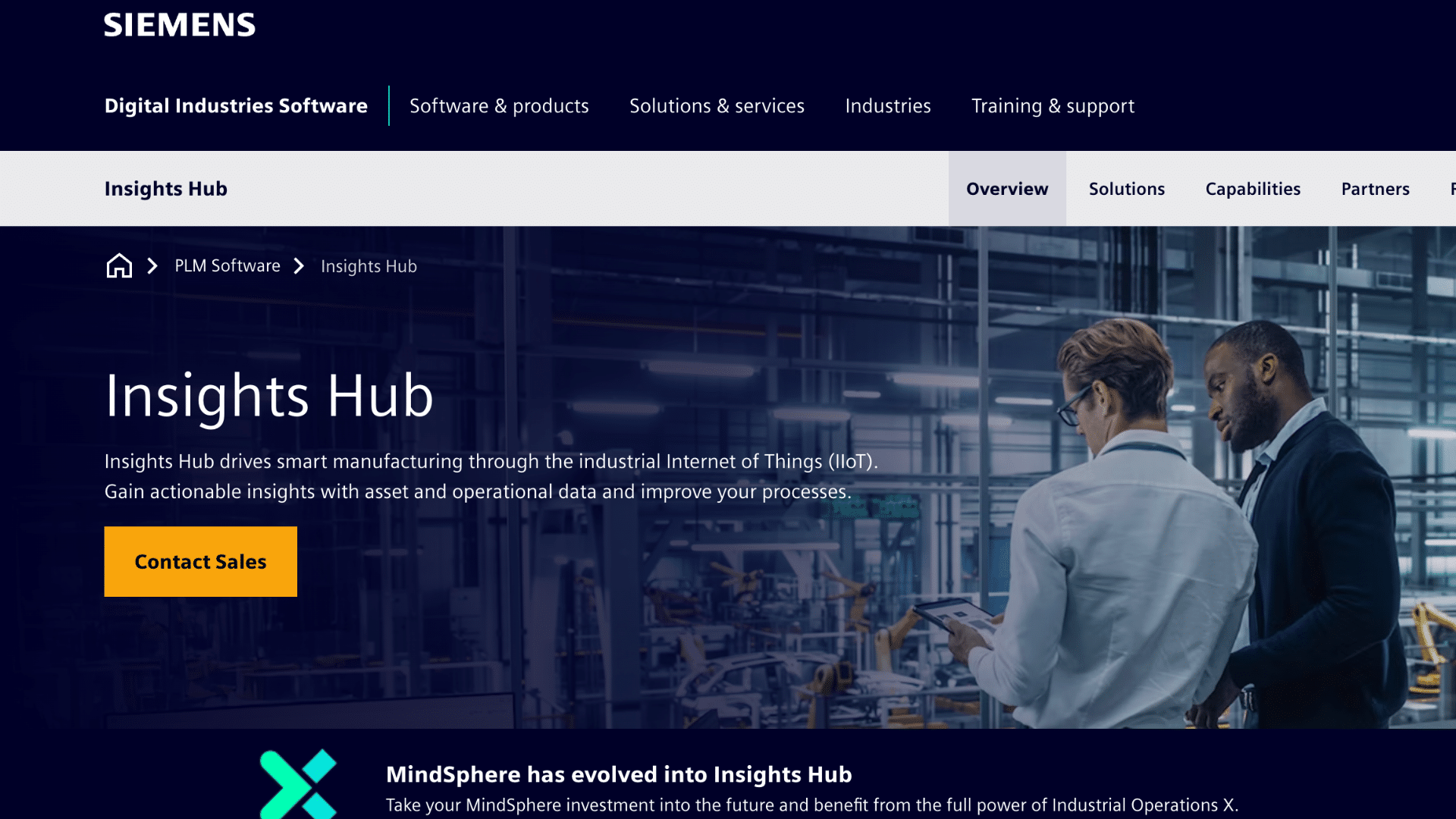
Siemens Mindsphere is an industrial IoT platform that supports predictive maintenance across a range of equipment.
It captures machine data, analyzes patterns, and highlights early warning signs of issues. Mindsphere works well for factories and industrial facilities that use Siemens hardware or other connected assets.
The platform also offers tools for dashboards and custom analytics.
Businesses using Mindsphere can improve reliability and make decisions based on real-time performance data.
5. PTC ThingWorx
PTC ThingWorx is an IoT and analytics platform that supports predictive maintenance functions.
It gathers data from machines and applies analytics to identify trends and possible faults. ThingWorx is used in industries like manufacturing, aerospace, and automotive.
The platform makes it easier to build custom monitoring apps and workflows.
It also supports integration with other systems, helping teams centralize maintenance planning and improve uptime.
6. Advanced Technology Services (ATS)
Advanced Technology Services (ATS) offers predictive maintenance solutions that use data analysis to reveal potential equipment issues before they affect production.
Their services combine sensor-collected data with machine learning and analytics to highlight trends and help teams plan maintenance more accurately.
ATS also supports integration with your existing systems, like CMMS and ERP, for smoother scheduling and reporting.
Their approach aims to reduce unplanned downtime, improve asset performance, and make maintenance planning more strategic for industrial operations.
7. Konux
Konux is a German AI and industrial IoT company that helps businesses identify equipment issues before they cause failures.
The company uses smart sensors and analytics to monitor equipment and help teams spot issues early and plan repairs.
Konux is widely used in heavy infrastructure and industrial environments where reliability matters most.
Its system provides clear, context-based insights that support better decisions, reduce unexpected downtime, and improve overall equipment performance over time.
Predictive Maintenance Services vs Preventive Maintenance
This comparison helps clarify how both approaches handle equipment care in different ways. Understanding these differences makes it easier to choose the right option for your needs.
| Area | Predictive Maintenance Services | Preventive Maintenance |
| Maintenance Timing | Based on real-time data and equipment condition | Based on fixed schedules or time intervals |
| Data Use | Uses sensors, monitoring tools, and performance data | Relies on past usage and set service dates |
| Cost Impact | Helps reduce repair and downtime costs over time | Can lead to extra maintenance or missed issues |
| Downtime Risk | Lowers the chance of sudden breakdowns | Breakdowns can still happen between service checks |
| Best Use Case | Works well for critical or high-value equipment | Fits simpler machines with predictable wear |
| Reason for Demand | Supports better planning and fewer disruptions | Easier to set up but less precise |
Common Challenges with Predictive Maintenance
Choosing a service provider often comes down to more than just features and pricing. It also depends on how well the provider supports setup, data accuracy, and long-term use.
- Initial Setup Costs: Sensors, software, and system setup can require upfront spending, especially for large operations.
- Data Quality Issues: Poor or incomplete data can reduce accuracy and limit useful insights.
- System Integration: Connecting new tools with existing machines or software may take time and testing.
- Skilled Staff Needs: Teams may need training to understand data reports and alerts.
- Ongoing Monitoring Effort: Systems still require regular checks to ensure data stays accurate and reliable.
Is Predictive Maintenance Right for Your Business?
Predictive maintenance may be a good fit if your business relies on machines to run daily work. It works best for medium to large operations with critical equipment and frequent usage.
Ask yourself a few simple questions. Do equipment issues often cause delays or lost time?
Is unplanned downtime affecting costs or output? If the answer is yes, this approach may help.
Predictive maintenance also makes sense if your industry uses complex systems, such as manufacturing, energy, or logistics.
Access to basic data and a team willing to use monitoring tools is another key sign.
You do not need perfect systems to start, but you should be ready to track performance and act on alerts. If you want fewer surprises and better planning, predictive maintenance is worth considering.
Conclusion
Choosing the right predictive maintenance service provider can make a real difference in how smoothly your business runs.
The right partner helps prevent breakdowns, improve repair planning, and extend equipment value.
Since every business has different needs, it helps to compare providers based on industry experience, tools, support, and pricing. Take time to review what each service offers and how well it fits your setup.
A good choice today can save time, reduce stress, and lower costs in the long run.
If you are thinking about making the switch, use this guide as a starting point and move forward with confidence.
Have you worked with a predictive maintenance provider before? Share your experience or questions in the comments below.