




Cloud moves can feel confusing at first, especially when it’s more than just “moving servers.” That’s where cloud transformation solutions help.
They guide a business from old systems to a modern cloud setup that is faster, safer, and easier to scale.
In this blog, you will learn what cloud transformation really means, how it is different from simple migration, and the biggest benefits it can bring.
We will also cover the step-by-step path most teams follow, from planning and pilots to modernization and ongoing management.
Plus, we will also explain what services to look for and how to compare cloud transformation companies using a clear checklist, so choosing the right partner feels less stressful.
What Cloud Transformation Means
Cloud transformation is about improving how a business uses technology, not just changing where systems live. It focuses on making apps faster, data easier to use, and daily operations smoother.
Instead of running everything on old, fixed systems, cloud transformation helps teams work in a more flexible and secure way that can grow as the business grows.
Cloud Transformation vs. Cloud Migration
These two terms are often mixed up, but they are not the same.
- Cloud migration is the process of moving existing systems and workloads from on-site servers to the cloud. The apps usually stay the same, just in a new location.
- Cloud transformation goes much further. It improves applications, updates data systems, streamlines operations, strengthens security, and helps teams learn new cloud skills.
In short, migration is a move. Transformation is an upgrade.
Hybrid Cloud Landing Zones and Workload Placement
Most businesses do not use just one type of cloud. A hybrid cloud setup mixes on-premise systems with public and private clouds. To manage this safely, companies use landing zones.
Landing zones are pre-set cloud environments built with the right security, rules, and access controls.
- Sensitive or regulated workloads often stay in highly secure environments.
- Less-critical workloads can run in flexible, cost-effective cloud spaces.
When deciding where workloads should run, teams usually look at:
- How sensitive is the data is
- How fast the system needs to respond
- How well it must connect with other tools
- Cost and budget limits
- Industry and legal compliance rules
This approach keeps systems balanced, secure, and ready to scale.
Benefits of Cloud Transformation

These benefits show why cloud transformation solutions matter: they help teams build, scale, and protect systems with confidence.
1. Faster Product Releases and Innovation at Scale
Cloud transformation helps teams release new features faster and respond quickly to market changes. Modern build patterns like microservices, containers, and serverless allow updates without breaking entire systems.
Platform accelerators, ready-made templates, and automated pipelines reduce setup time and lower risk.
This makes it easier to test ideas, improve customer experiences, and scale successful products without slowing down daily operations.
2. Lower Total Cost and Stronger Cost Visibility
Cloud transformation makes technology spending clearer and easier to control. FinOps practices such as resource tagging, budgets, and unit cost tracking show exactly where money is going.
Showback and chargeback models help teams understand usage and take responsibility for costs. Over time, this reduces waste, improves planning, and ensures cloud spending supports real business value.
3. Security, Compliance, and Resilience by Design
Security is built into cloud transformation from the start, not added later. Built-in controls, identity management, and automated policies protect systems and data.
Continuous compliance checks help meet industry and legal requirements without manual effort.
Disaster recovery patterns and backups improve resilience, keeping services available even during outages or unexpected events.
The Cloud Transformation Roadmap
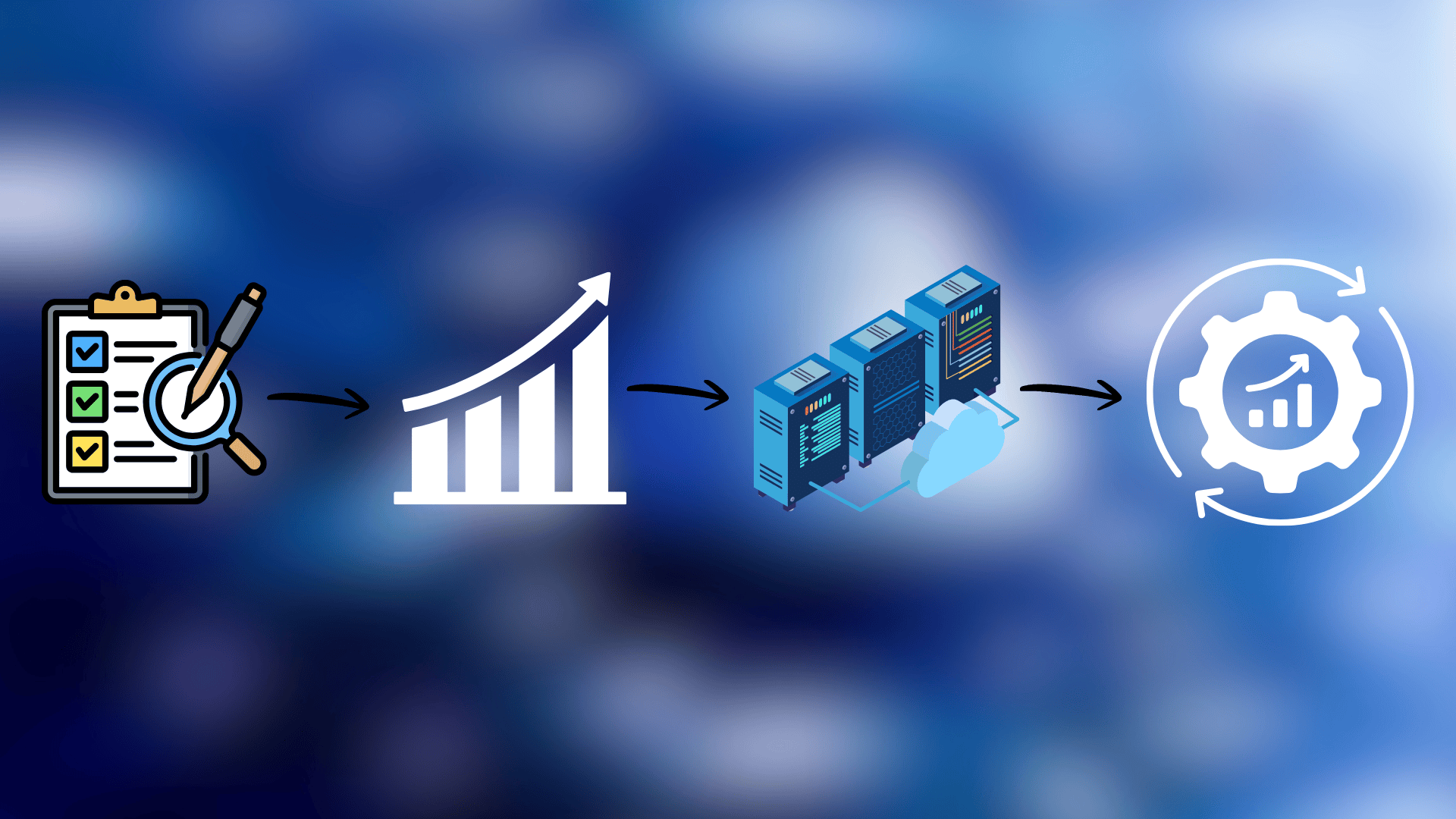
Cloud transformation works best when it follows a clear plan. Instead of trying to change everything at once, most organizations move through simple phases.
This makes the process easier to manage, lowers risk, and delivers value faster.
Phase 1: Assess & Prioritize
This phase focuses on understanding the current setup and deciding what to fix or improve first. Nothing moves yet, this step is all about clarity.
Teams usually review:
- Applications and how well they perform
- Data systems and storage
- Infrastructure and servers
- Identity, access, and security setup
- Network connections and dependencies
From there, high-impact modernization targets and quick wins are identified. A future-ready cloud design is also created, including landing zones that match security and compliance needs.
Phase 2: Prove Value Fast
Before scaling, small pilot projects are used to test ideas and tools. These short cycles help confirm what works and what needs adjustment.
Key activities include:
- Running pilot migrations or modernizations
- Solving real business problems, not test cases
- Working closely with cloud experts
- Reusing proven patterns to save time and reduce risk
This phase builds trust and sets a strong foundation for larger changes.
Phase 3: Modernize & Migrate at Scale
Once the approach is proven, transformation expands across the organization using a repeatable, factory-style model.
Common modernization patterns
| Approach | What it means |
|---|---|
| Rehost | Move apps as-is to the cloud |
| Replatform | Make small changes for better performance |
| Refactor / Re-architect | Redesign apps for cloud-native benefits |
| Repurchase | Replace old software with SaaS tools |
Apps and data are moved in waves to keep operations running smoothly.
Phase 4: Run, Govern, and Optimize
Transformation does not stop after migration. Ongoing management keeps everything working well.
This phase includes:
- Automation and SRE practices for stability
- FinOps to track and control cloud spending
- Continuous security monitoring
- Regular compliance checks and reporting
The result is a cloud environment that stays secure, efficient, and ready for future growth.
Core Cloud Transformation Solutions
Cloud transformation is not a one-size-fits-all service. Different solutions solve different business problems.
Below is a clear breakdown of the core cloud transformation solutions, what each one does, and which types of companies are commonly known for doing them well.
1. Strategy & Transformation
This is where the journey starts. The goal is to align cloud efforts with real business outcomes, not just technology upgrades.
What this includes
Defines measurable business outcomes, creates a phased cloud roadmap, and sets governance rules so teams move faster with less risk and confusion.
Updates operating model, roles, and processes; provides training and change support so teams adopt cloud ways of working smoothly across the organization.
Best-known companies for this
- PwC – Strong at business-led cloud strategy and operating models
- Accenture – Large-scale enterprise transformation and governance
- IBM Consulting – Hybrid cloud strategy and regulated industries
2. Cloud Migration Services
This service focuses on safely moving systems to the cloud with minimal downtime.
What this includes
Builds secure landing zones with identity, networking, policies, and logging, so environments are ready before any applications or data are moved.
Plans migrations in waves, executes cutovers carefully, and validates performance after moves to reduce downtime, data loss, and business disruption
Best-known companies for this
- AWS Professional Services – Cloud-native migrations at scale
- Microsoft Azure Services – Strong for Microsoft-based environments
- Capgemini – Structured enterprise migration programs
3. Application Modernization
This solution upgrades legacy applications to improve performance in the cloud.
What this includes
Modernizes applications using containers and microservices, improving speed, scalability, and resilience while reducing dependence on legacy infrastructure and release bottlenecks.
Uses assessment and refactoring support to break monoliths into services, automate changes, and improve architecture for long-term cloud performance.
Best-known companies for this
- IBM – OpenShift, hybrid cloud, and legacy modernization
- Red Hat – Container and Kubernetes expertise
- Persistent Systems – App modernization and engineering-led services
4. Cloud-Native Build & Innovation
This service is about building new digital products directly in the cloud.
What this includes
Designs and builds cloud-native products, APIs, and event-driven systems that scale easily and support faster releases, better customer experiences, and quick experimentation.
Prepares AI/ML readiness by improving data foundations, governance, and pipelines so analytics and automation can be adopted safely and reliably.
Best-known companies for this
- Google Cloud – Data, AI, and cloud-native innovation
- AWS – Serverless and event-driven architectures
- Thoughtworks – Digital product engineering and innovation
5. Security & Compliance Solutions
Security is built into every stage, especially for regulated industries.
What This Includes
Creates unified security visibility across cloud and hybrid environments, using policies, monitoring, and controls to reduce threats and simplify management.
Adds audit-ready controls for regulated industries, mapping requirements to technical safeguards and producing compliance evidence with less manual work.
Best-Known Companies for This
- IBM – Security-first hybrid cloud and compliance tooling
- ServiceNow – Governance, risk, and compliance automation
- Deloitte – Compliance-heavy and regulated environments
6. Managed Services
After migration, systems must remain reliable, secure, and up to date.
What This Includes
Provides continuous monitoring, incident response, patching, and reliability engineering to keep cloud services stable, secure, and performant every day.
Offers service desk and guided “concierge” support, helping teams resolve issues faster, follow best practices, and improve operations over time.
Best-Known Companies for This
- NTT Data – Large-scale managed cloud operations
- Rackspace – Multi-cloud managed services
- Milestone Technologies – End-to-end cloud operations support
7. Fin Ops & Sustainability
This solution keeps cloud costs under control while reducing waste.
What this includes
Improves cost control using tagging, budgets, right-sizing, and reservation strategies, reducing waste while keeping performance and delivery goals on track.
Supports sustainability reporting where required, tracks usage and emissions signals, and helps teams reduce resource waste through smarter choices.
Best-known companies for this
- CloudZero – FinOps and cost intelligence
- Apptio (IBM) – Cloud financial management
- AWS FinOps tools – Native cost control and optimization
Together, these services form a complete cloud transformation program. The best results usually come from choosing cloud transformation companies that match specific needs, rather than relying on one provider for everything.
Is Your Organization Ready for Cloud Transformation?
Not every organization is at the same starting point. These are the clearest signals that a business is ready, and that delay is costing more than investment would:
- Infrastructure costs keep rising, but capacity feels constrained
- Development and release cycles are measured in months, not weeks
- Security audits regularly flag outdated systems or unpatched infrastructure
- Compliance reporting requires significant manual effort
- Teams are building workarounds because core systems can’t integrate with modern tools
- A competitor has visibly accelerated delivery using cloud-native capabilities
If three or more of these apply, a cloud assessment is likely overdue, not premature
How to choose the right cloud transformation companies
Choosing the right partner can make or break a cloud transformation. The best cloud transformation companies go beyond migration and focus on long-term business value.
Here are the top evaluation points to consider when comparing providers.
| Evaluation Factor | Why It Matters |
|---|---|
| Proven hybrid cloud & landing zone experience | Shows the company can design secure, scalable environments for both regulated and non-regulated workloads without trial and error. |
| Clear transformation roadmap | Confirms the focus is on full transformation, not just moving systems, with defined phases, milestones, and measurable outcomes. |
| Application modernization depth | Ensures strong skills in containers, microservices, and platform engineering to future-proof applications and avoid technical debt. |
| Security & compliance capability | Critical for handling sensitive data, meeting industry regulations, and maintaining audit readiness across cloud and hybrid setups. |
| FinOps maturity | Helps control cloud costs through visibility, optimization, and measurable savings rather than surprise bills. |
| Operating model & workforce enablement | Supports long-term success by preparing teams, updating roles, and managing change, not just delivering technology. |
| Reusable accelerators & automation | Speeds delivery, reduces risk, and lowers costs by using proven tools, templates, and automated processes. |
Using this checklist helps narrow down cloud transformation companies that can deliver real results, not just short-term technical changes.
Final Thoughts
Cloud transformation works best when it is treated like a guided journey, not a one-time tech project. With the right plan, businesses can modernize apps, improve security, control cloud costs, and deliver better digital experiences.
The key is choosing the right mix of services, strategy, migration, modernization, security, managed support, and FinOps, based on real business needs.
It also helps to pick a partner that has strong hybrid cloud experience, proven accelerators, and clear results to show. When these pieces come together, the cloud becomes a growth engine rather than a headache.
Ready to move forward? Talk with a trusted cloud partner and schedule a cloud assessment today.
Frequently Asked Questions
What Is the Difference Between Cloud Transformation and Cloud Migration?
Cloud migration moves systems to the cloud as-is; cloud transformation modernizes applications, operations, and architecture end-to-end.
How Long Does a Typical Cloud Transformation Take?
Pilot phases run 8–12 weeks; full enterprise transformation commonly spans 12–36 months, depending on scope and complexity.
What are the Biggest Risks in a Cloud Transformation Project?
Poor upfront assessment, misaligned business-IT goals, underestimated modernization complexity, weak cost governance, and late-stage security planning are the leading risk factors.
Which Cloud Transformation Solutions Suit Small and Mid-Size Businesses?
Cloud migration services, managed services, and FinOps practices offer the strongest early returns for smaller organizations without deep internal cloud expertise.
How Is AI Changing Modern Cloud Transformation Solutions?
Cloud platforms now serve as the primary environment for AI and ML workloads, making data governance and AI-readiness core transformation objectives rather than future-phase additions.