





Most people don’t think about software quality until something goes wrong. A feature stops working. An update breaks the app.
A bug slips through to production. By that point, fixing the problem costs far more time and money than it should.
The thing is, most of these issues are preventable.
Software quality assurance is the process that helps development teams catch problems early, follow the right standards, and deliver software that actually works.
It’s not just about testing; it covers the entire development process from start to finish.
In this article, I’ll clarify what SQA is, the core principles behind it, the key techniques teams use, how it fits into the development lifecycle, and the real benefits it brings.
By the end, you’ll have a clear understanding of why quality assurance matters and how it makes a difference in every project.
What Is Software Quality Assurance?
Software quality assurance is a structured process that ensures software is built correctly from start to finish. It covers the standards, procedures, and checks that guide development at every stage, not just at the end.
A lot of people confuse SQA with software testing, but they’re not the same thing. Testing finds bugs.
The SQA process focuses on preventing them by improving how the work gets done in the first place.
Think of it like quality control in a factory, where workers don’t just inspect the final product, but also monitor the entire production line.
SQA is also guided by formal standards. ISO 9001 defines quality management system requirements applicable to software development. IEEE 730 specifically addresses SQA plans.
CMMI (Capability Maturity Model Integration) provides a framework for measuring process maturity.
Most enterprise development teams align their SQA programs to at least one of these to ensure consistency and auditability.
Principles of Software Quality Assurance
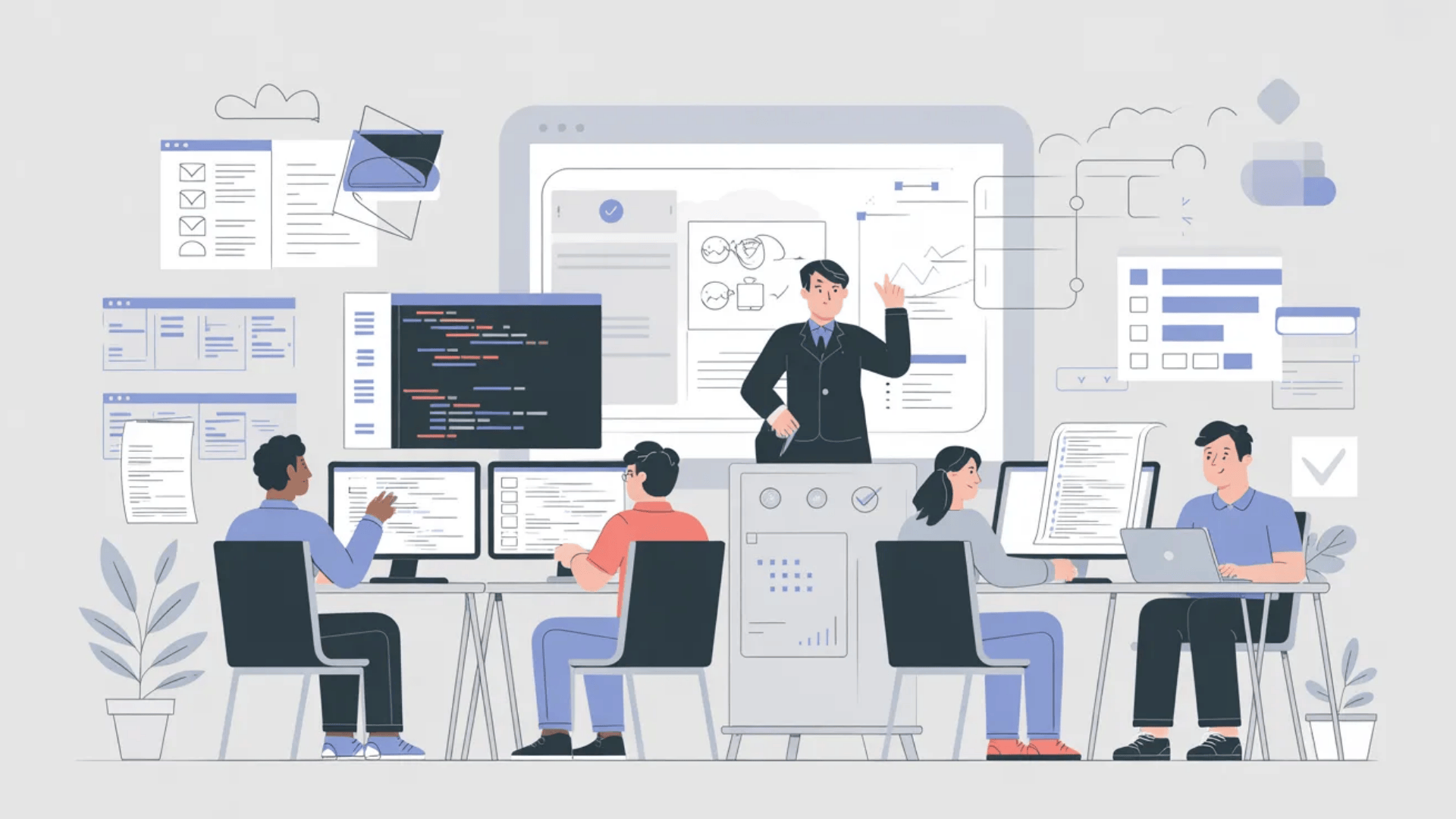
SQA doesn’t just happen; it’s guided by a set of core principles that shape how development teams approach software quality. Understanding these principles helps you see why SQA works the way it does.
- Prevention Over Detection: It’s always easier to fix a problem before the product ships than after. This principle encourages teams to catch issues early during planning or design rather than dealing with them later.
- Process-Oriented Approach: Good SQA focuses on how work gets done, not just what gets delivered. When the process is right, the results tend to follow.
- Continuous Improvement: SQA standards don’t stay the same forever. Teams examine what went wrong, learn from it, and make small changes each cycle to continually improve software quality.
- Traceability: Every requirement should link to a test case. This keeps things clear and helps the team catch any gaps before they become bigger problems.
- Stakeholder Collaboration: SQA works best when everyone is on the same page, developers, testers, and business teams alike. I see it as a shared effort, not just a job for the QA team.
Why Is Software Quality Assurance Important?
A lot of teams treat QA as something you do at the end, almost like a final checkbox. But skipping or delaying it doesn’t save time; it creates bigger problems down the road.
1. It Reduces the Cost of Fixing Bugs
Catching a bug early in development costs far less than fixing it after launch.
According to a widely cited software engineering study on defect cost escalation, the cost of fixing a defect found in production can be up to 30 times more than one caught during design.
I’ve watched teams spend entire sprints firefighting a production issue that a single design review at the start of the cycle would have caught in under an hour.
The math is unforgiving: the later a defect surfaces, the more code it has touched and the more rework it requires.
The earlier you find a problem, the less time, money, and effort it takes to fix it.
2. It Protects Your Brand and User Trust
One bad release can damage how users see your product for a long time. If someone experiences repeated crashes or data loss, they’re unlikely to come back.
Why software quality assurance matters becomes clear when you see how quickly user trust breaks down after a poor experience.
Keeping quality high means users can rely on your product, and that trust is hard to rebuild once it’s gone.
3. It Keeps You Compliant with Industry Standards
Many industries, such as healthcare, finance, and government, have strict rules governing how software should operate and handle data.
Skipping SQA can lead to compliance failures, which come with legal and financial consequences.
A solid SQA process helps your team stay aligned with the required standards from the start. It’s much easier to build compliance in than to add it later.
4. It Improves Team Efficiency Over Time
When teams follow a clear SQA process, they spend less time revisiting old mistakes. Developers know what’s expected, reviewers have clear standards to check against, and everyone moves faster as a result.
A colleague of mine who leads a mid-sized development team shared that after introducing structured code reviews and defect tracking into their process.
Their average rework time per release dropped by roughly 40% within two quarters. The process felt slower at first; it always does.
But the compounding effect of not carrying defects forward changed everything. Over time, this adds up to faster releases and a smoother development cycle.
5. It Lowers the Risk of Product Failure at Launch
A failed launch costs more than money. It can hurt team morale and reduce customer trust. Software quality assurance helps prevent major issues from reaching users.
By testing and reviewing at each stage, teams catch problems early. This lowers the risk of surprises during release.
It also makes the launch process smoother and more controlled. With proper checks in place, teams understand the product’s strengths and limits clearly.
This helps them move forward with better confidence and deliver a more stable experience.
Software Quality Assurance vs. Software Testing
Many people think software quality assurance and software testing mean the same thing. They are related, but they are not the same.
| Aspect | Software Quality Assurance (SQA) | Software Testing |
|---|---|---|
| Definition | A process that ensures quality is built into every stage of development | A process that checks if the software works as expected |
| Focus | Improving processes and preventing defects | Finding and reporting defects in the product |
| Approach | Proactive, works to stop problems before they happen | Reactive, identifies problems after the code is written |
| Scope | Covers the full software development lifecycle (SDLC) | Focused on specific testing phases |
| Goal | Make sure the right process is followed to deliver quality software | Make sure the product meets requirements |
| Responsibility | Shared across the development team | Mainly handled by QA testers |
| Output | Better processes, standards, and workflows | Bug reports, test results, and defect logs |
| Example | Reviewing development standards during the project | Testing if a login feature works correctly |
Key SQA Techniques Your Team Should Know
SQA isn’t a single activity. It’s a collection of techniques that teams apply at different stages of development. The most commonly used ones fall into a few practical categories.
1. Code Reviews and Walkthroughs
Code reviews involve a developer’s peers examining their code before it’s merged. Walkthroughs are more structured: the author walks the team through the code or design, and reviewers raise questions and flag issues in real time.
Both techniques catch logic errors, standards violations, and design problems that automated tools miss.
In my experience working with engineering teams, code reviews are often the highest-ROI quality activity a team can adopt, especially early in a project when patterns are still being established.
2. Audits and Inspections
A software audit is an independent review of a project’s processes, code, or documentation to verify that it meets defined standards.
Inspections are more formal than walkthroughs; they follow a defined process, assign specific roles (moderator, author, reviewer, recorder), and produce a documented output.
Both are especially important in regulated industries like healthcare and finance, where demonstrating process compliance is a legal requirement.
3. Static Analysis
Static analysis tools examine source code without executing it. They flag potential bugs, security vulnerabilities, and code quality issues automatically.
Tools like SonarQube, ESLint, and Checkmarx are widely used in CI/CD pipelines to enforce quality gates before code reaches production.
Static analysis works best as a complement to human review, not a replacement for it.
Benefits of Software Quality Assurance
The benefits of SQA show up across the entire product, from how smoothly your team works to how satisfied your users are. So, what you can expect when quality assurance is built into the process.
- Fewer Bugs Reaching Production: Quality checks at every stage reduce the number of issues that reach the final build. Your team spends less time on fixes and more time on actual work.
- Faster Release Cycles With More Confidence: When checks are done throughout the build, you don’t have to slow down before launch. You ship faster because the hard work is already done.
- Better End-User Experience and Satisfaction: A product that works well keeps users happy. Software quality assurance in software development directly shapes how reliable and smooth that experience feels.
- Lower Long-Term Maintenance Costs: Well-tested code is easier to update and maintain. Teams with strong SQA practices spend far less time dealing with old, broken code.
- Stronger Cross-Team Communication and Accountability: SQA gives everyone, developers, testers, and managers, a shared standard to work toward. It cuts confusion and keeps the whole team on the same page.
- Increased Stakeholder Confidence in the Product: Showing that your software has been tested at every stage builds real trust. That’s one of the most practical benefits of software quality assurance for any team.
Where SQA Fits in the Software Development Lifecycle (SDLC)?
One of the most common misconceptions about SQA is that it starts when development ends. In reality, SQA activities begin at the requirements phase and continue through deployment.
1. Requirements Phase
SQA in this phase focuses on checking that all requirements are clear, complete, and easy to test.
The team looks for missing details, unclear wording, or gaps that may cause confusion later.
Fixing these early helps avoid costly mistakes during development. SQA also makes sure each requirement links to a test case, so nothing gets missed.
This step builds a strong base for the whole project and reduces risks before any coding work begins.
2. Design Phase
During the design phase, SQA reviews the system structure and overall plans. Teams run design checks and walkthroughs to spot weak areas or risks early.
Fixing design issues at this stage saves time and effort later. Poor design can affect many parts of the system, so early review is key.
SQA also checks that the design meets all requirements and follows best practices. This helps create a stable system before development starts.
3. Development Phase
In the development phase, SQA focuses on how code is written and managed.
Teams use code reviews, pair programming, and tools to find issues early. SQA ensures developers follow coding rules and keep proper documentation.
This helps keep the code clean and easy to maintain. Regular checks during this phase reduce bugs and improve overall quality.
It also keeps the team aligned with project standards and reduces errors before testing begins.
4. Testing Phase
This phase is where SQA works closely with testing teams. SQA ensures all requirements are covered in the test plan.
It checks that tests are done properly and that results are recorded clearly.
Defects are tracked and fixed in a structured way. SQA also confirms that all conditions for release are met before approval.
This step ensures the product works as expected and reduces the chance of issues after release.
5. Deployment and Maintenance
After release, SQA focuses on learning and improving processes. Teams review what worked well and what caused issues.
They study defects found in real use and use that data to improve future work. SQA helps update processes to avoid the same problems again.
This phase keeps the product stable and supports long-term quality. It also ensures continuous improvement in how teams build and deliver software.
How Software Quality Assurance Supports Agile and Modern Development?
In Agile and modern development, work moves fast. Software quality assurance helps teams maintain high quality while working in short cycles.
Instead of checking quality only at the end, SQA is part of every step. Teams test features as they build them.
This is called continuous testing. It helps find problems early and fix them quickly. QA and developers work closely together.
They share feedback, review requirements, and improve processes as they go. In DevOps environments, SQA integrates directly into CI/CD pipelines.
Automated quality gates, static analysis, unit tests, and integration tests run on every commit.
Quality checks happen continuously, not just at fixed stages. The shift-left approach means testing and reviews start early in the process.
Shifting left doesn’t just find defects sooner; it changes the team’s relationship with quality from reactive to habitual.
By supporting teamwork, quick feedback, and steady improvement, software quality assurance helps teams deliver better software faster.
Conclusion
Quality doesn’t happen on its own. It takes the right process, the right checks, and a team that cares about getting it right. That’s what SQA brings to the table.
By now, you have a clear idea of what software quality assurance is, how it works, and why it matters.
The goal was never to make this complicated; it’s about building better habits into the way software gets made.
The teams that do this well don’t treat SQA as overhead. They treat it as the mechanism that keeps velocity sustainable. Start small if you need to.
Even adding structured code reviews and basic defect tracking to your process gives you a foundation to build from.
Are you already using SQA in your work? What has been the biggest challenge or win for your team? Leave a comment below.