




Your business data lives in the cloud now. And while that makes work easier, it also puts you at risk. Hackers, data breaches, and compliance violations are real threats that can cost millions and damage your reputation overnight.
That’s where cloud security consulting services come in. Simply, these experts help you lock down your AWS, Azure, or Google Cloud environment before problems happen.
They find vulnerabilities, fix misconfigurations, and make sure you’re following the rules.
In this guide, you’ll find what cloud security consultants actually do and how to choose the right partner. We’ll also cover the top firms and break down the services they offer, from threat detection to Zero Trust implementation.
What Are Cloud Security Consulting Services?
Cloud security consulting services are professional services that help businesses protect their data and systems in the cloud.
These experts work with you to secure your cloud platforms, even if you’re using AWS, Azure, Google Cloud, or Microsoft 365.
They scan for weaknesses, fix security gaps, set up monitoring systems, and ensure you’re complying with industry regulations such as HIPAA and GDPR.
Think of them as your cloud bodyguards. They don’t just respond when something goes wrong—they prevent problems before they start.
They implement Zero Trust security (never trust, always verify), reduce your risk of breaches, and keep your business compliant with the law.
What You Get from Cloud Security Consulting:
- Stronger protection against hackers and data breaches.
- Compliance confidence with regulations like HIPAA, GDPR, and SOC 2.
- 24/7 monitoring to catch threats in real-time.
- Expert guidance without hiring a full in-house security team.
- Peace of mind knowing your cloud infrastructure is secure.
Key Cloud Security Consulting Services Offered
Cloud security consultants offer a wide range of services to keep your business safe. Here’s what they can do for you.
1. Cloud Security Posture Management (CSPM)
Your cloud setup might have security holes you don’t even know about. CSPM services find those weak spots before hackers do.
Consultants scan your entire cloud environment to detect misconfigurations, like accidentally leaving a database open to the public.
They give each risk a score so you know what to fix first, then create a clear roadmap to patch everything up. Think of it as a health checkup for your cloud security.
2. Secure Cloud Architecture & Design
Building your cloud the right way from the start saves headaches later. Security consultants design your cloud infrastructure with protection built in from day one.
They create vendor-agnostic designs that work across any platform, secure your multi-cloud and hybrid setups, and build “secure landing zones”, safe starting points for new projects.
It’s like having an architect who makes sure your house has strong locks before the walls even go up.
3. Cloud Migration Security
Moving to the cloud can be risky if you’re not careful. Consultants perform pre-migration risk assessments to spot problems before you make the switch.
They ensure your workloads transition securely without exposing sensitive data, and they protect cloud-native applications that work differently from traditional software.
You get a smooth, secure migration instead of a security nightmare.
4. Compliance & Cloud Governance
Staying compliant with regulations isn’t optional; it’s the law. Cloud security consultants help you meet standards like HIPAA, GDPR, NIST, ISO, SOC 2, and FedRAMP.
They get you audit-ready so you can pass inspections without stress, and they enforce policies automatically so your team doesn’t accidentally break the rules. No more worrying about massive fines or legal trouble.
5. Zero Trust & Identity Access Management (IAM)
Zero Trust means “never trust, always verify”, even if someone’s already inside your network. Consultants set up least-privileged access, meaning people have access only to what they absolutely need for their jobs.
They implement Zero Trust Network Access (ZTNA) and manage identities across your organization. This stops both external hackers and insider threats in their tracks.
6. Threat Detection & Incident Response
Threats don’t take breaks, and neither should your security. Consultants set up Security Information and Event Management (SIEM) systems that watch your cloud 24/7.
They provide continuous monitoring to catch suspicious activity immediately and create incident response plans so you know exactly what to do when something goes wrong. Fast detection means less damage.
7. Cloud Security Operations (SecOps)
Security needs to be part of everything you build, not an afterthought. Consultants integrate DevSecOps practices so your developers build secure code from the start.
They secure Infrastructure as Code (IaC) so your automated systems don’t create vulnerabilities, and they set up automated remediation that fixes problems without human intervention. Your security runs on autopilot.
Cloud Platforms Covered by Security Consultants
Cloud security consultants work with all major platforms to keep your data safe. Here’s a breakdown of the platforms they cover and what they focus on for each one.
| Cloud Platform | Security Focus Areas |
|---|---|
| Amazon Web Services (AWS) | S3 bucket security, EC2 hardening, IAM management, VPC security, CloudTrail monitoring, compliance automation |
| Microsoft Azure | Active Directory protection, VM security, Security Center setup, storage encryption, Defender for Cloud, multi-tenant controls |
| Google Cloud Platform (GCP) | IAM configuration, Compute Engine security, Cloud Storage permissions, VPC controls, Security Command Center, Kubernetes protection |
| Microsoft 365 | Email and anti-phishing, SharePoint protection, data loss prevention, conditional access, MFA setup, threat monitoring |
| Google Workspace | Gmail security, Drive sharing controls, admin settings, two-factor authentication, device management, data retention |
No matter which platform you use, or if you use several at once, cloud security consultants have the expertise to protect your entire environment.
Best Cloud Security Consulting Firms
Not all cloud security consultants are created equal. Some excel at enterprise-scale projects, while others specialize in boutique services.
Choosing the right partner can mean the difference between bulletproof security and expensive breaches.
1. Nova
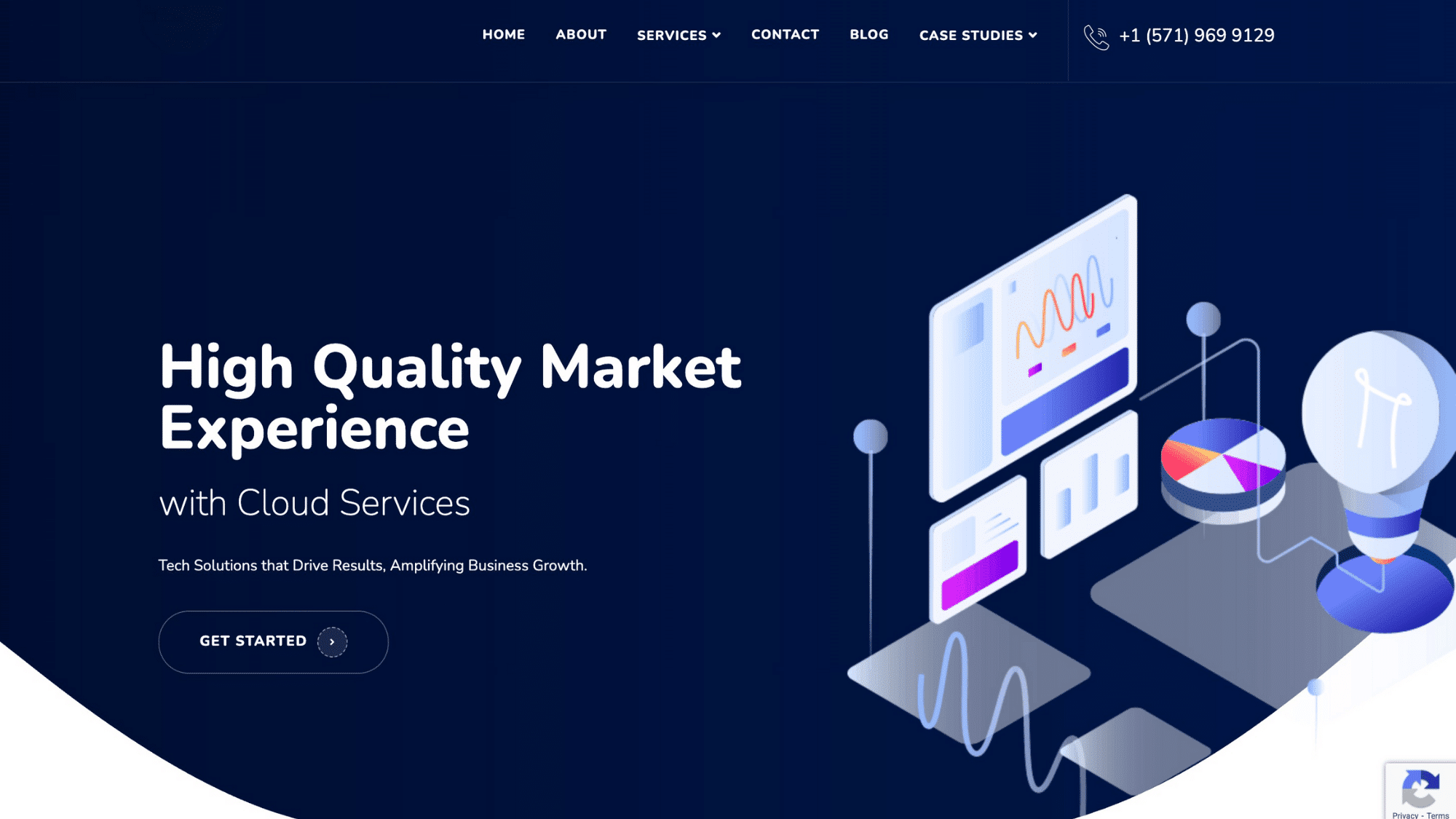
Nova is a specialized cloud security firm that focuses on helping mid-sized to enterprise businesses secure their cloud infrastructure.
They’re known for their hands-on approach and deep technical expertise across AWS, Azure, and GCP. Unlike massive consulting firms, Nova delivers personalized attention with senior experts leading every engagement, not junior staff.
Key Features:
- Advanced threat detection: Real-time monitoring systems that catch suspicious activity before it becomes a breach using AI-powered tools.
- Zero Trust implementation: Complete Zero Trust architecture setup with least privilege access controls across your entire cloud environment.
- Compliance automation: Streamlined compliance for HIPAA, SOC 2, GDPR, and FedRAMP with automated policy enforcement and reporting.
- Cloud migration security: End-to-end security for cloud migrations, including risk assessments, secure transitions, and post-migration hardening.
| Pros | Cons |
|---|---|
| Personalized service with senior consultants on every project | A smaller firm means limited availability for simultaneous large projects |
| Deep technical expertise across all major cloud platforms | May not have a global office presence like Big 4 firms |
| Faster response times and more flexibility than enterprise firms | Fewer industry-specific templates than established consulting giants |
| Transparent pricing with no hidden consultant tier markups | Less brand recognition compared to household consulting names |
Best for: Mid-sized to enterprise companies wanting expert-led, personalized cloud security without Big 4 overhead costs.
2. Accenture
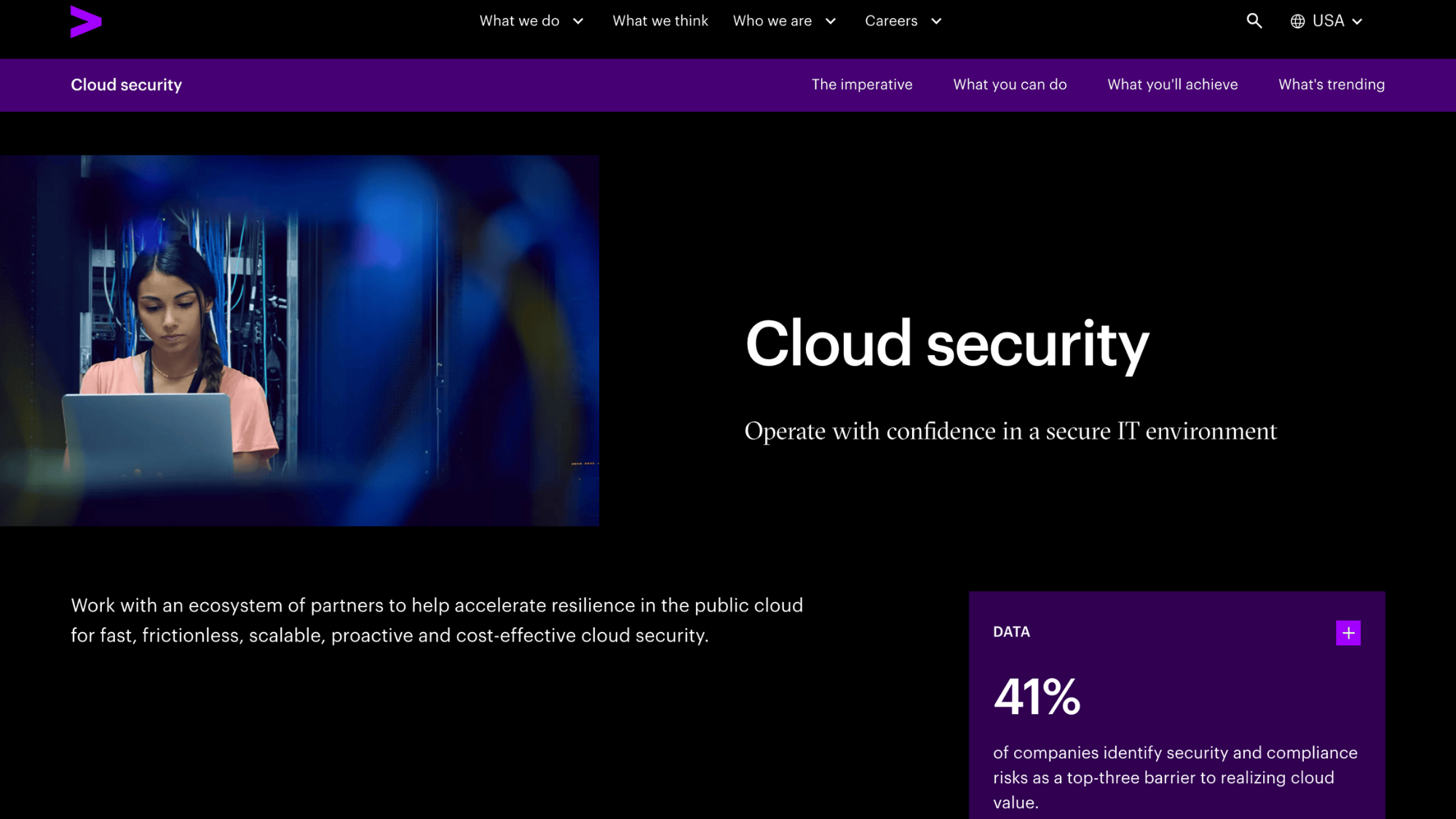
Accenture is a global consulting giant with massive cloud security capabilities and thousands of security professionals worldwide. They handle enterprise-scale transformations for Fortune 500 companies and government agencies.
Their strength lies in combining strategic consulting with hands-on implementation, backed by their own security operations centers and threat intelligence teams.
Key Features
- Enterprise-scale security: Full cloud security transformations for complex, multi-national organizations with thousands of users and applications.
- Managed security services: 24/7 security operations centers across multiple time zones with dedicated teams monitoring your infrastructure constantly.
- Industry specialization: Deep expertise in regulated industries like healthcare, finance, and government with pre-built compliance frameworks.
- Strategic consulting: Executive-level advisory services that align cloud security strategy with overall business goals and digital transformation.
| Pros | Cons |
|---|---|
| Massive global presence with local support in 120+ countries | Higher costs with premium pricing for brand name recognition |
| Deep industry expertise across every major sector | Junior consultants often handle day-to-day work instead of partners |
| Comprehensive end-to-end services from strategy to implementation | Complex engagement processes with lengthy contract negotiations required |
| Strong partnerships with AWS, Azure, and Google Cloud | Can feel impersonal due to large team sizes and turnover |
Best for: Large enterprises and Fortune 500 companies needing global scale, comprehensive services, and extensive industry-specific expertise.
3. Deloitte
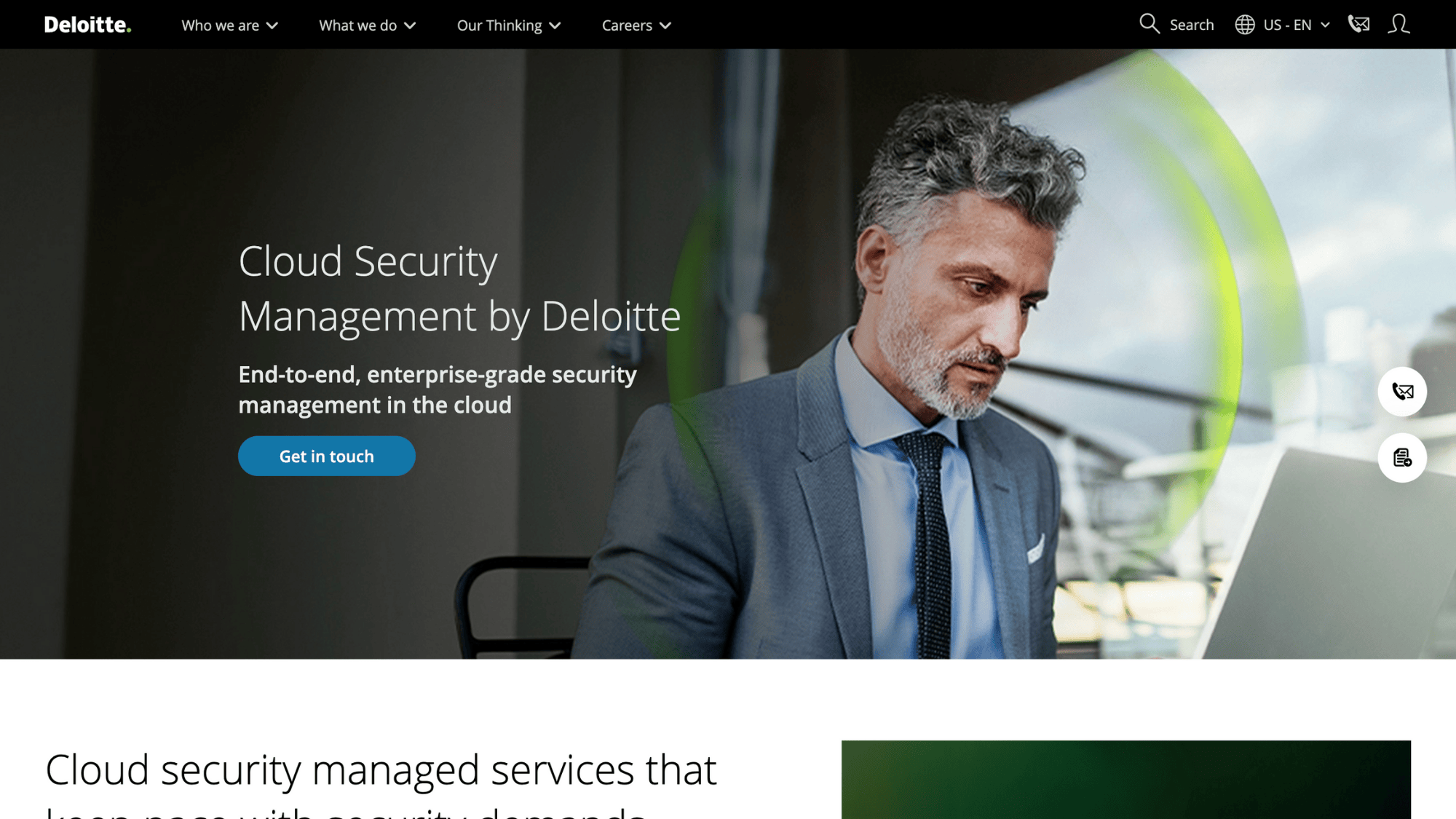
Deloitte brings Big 4 credibility with a massive cybersecurity practice spanning over 10,000 security professionals globally. They excel at connecting cloud security with broader business risk, compliance, and audit needs.
Their approach combines technical security with strategic risk management, making them ideal for companies facing complex regulatory requirements.
Key Features
- Risk management integration: Cloud security tied directly to enterprise risk frameworks and board-level reporting structures.
- Audit and compliance: Seamless coordination between security implementations and financial audits with integrated compliance documentation processes.
- Cyber intelligence: Access to Deloitte’s global threat intelligence network with insights from thousands of client engagements worldwide.
- Regulatory expertise: Specialized teams for heavily regulated industries with deep knowledge of sector-specific compliance requirements.
| Pros | Cons |
|---|---|
| Trusted Big 4 brand with strong regulatory and audit expertise | Very expensive with Big 4 premium pricing structures built in |
| One-stop shop connecting security, audit, and risk management | Large teams can mean inconsistent quality and communication challenges |
| Extensive experience with complex compliance requirements | Bureaucratic processes that can slow down agile security implementations |
| Strong government and public sector practice areas | May over-engineer solutions for smaller or simpler environments |
Best for: Publicly traded companies, regulated industries, and organizations needing integrated security, audit, and compliance services under one roof.
4. EY (Ernst & Young)
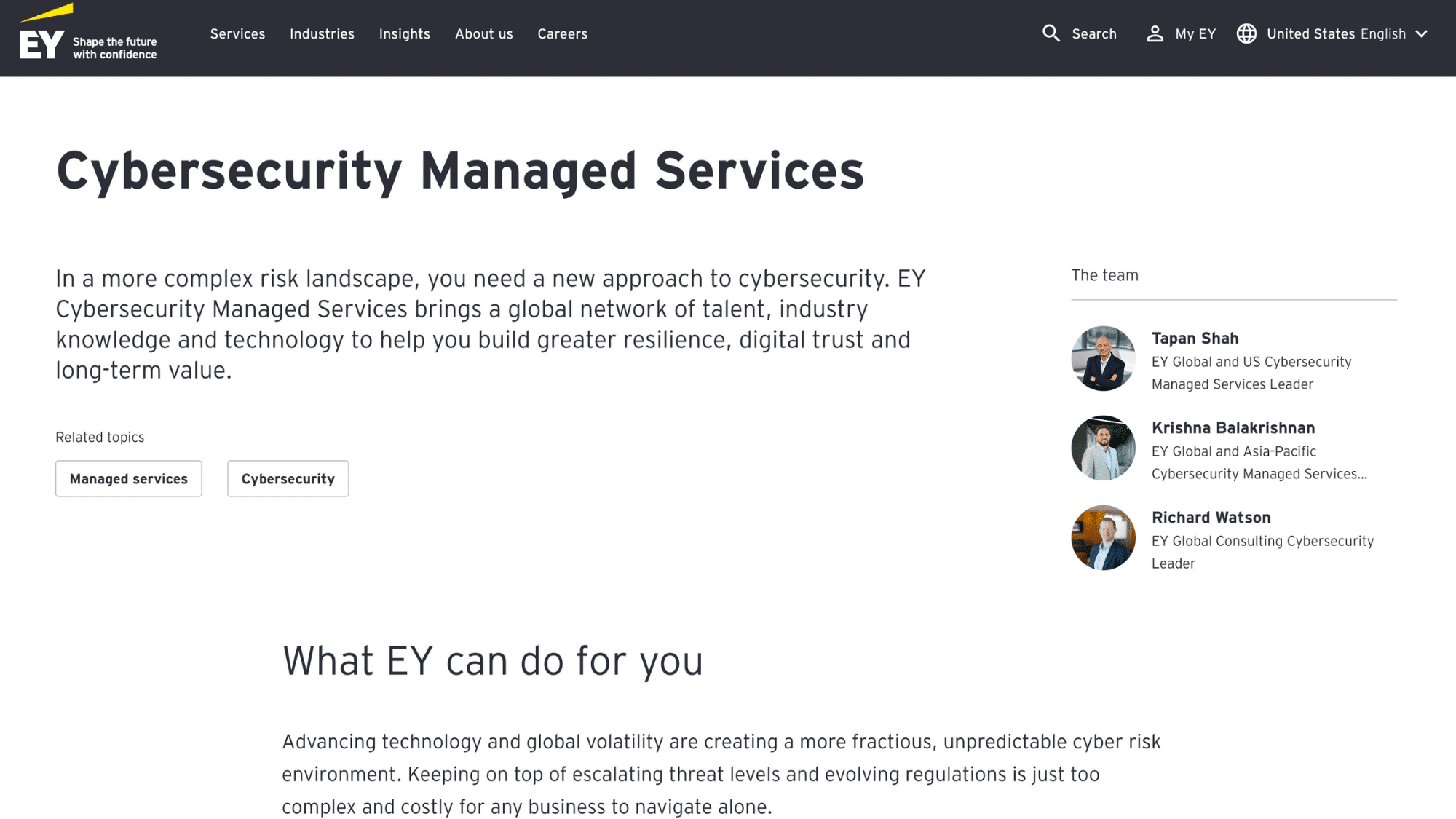
EY combines cybersecurity with its traditional audit and advisory strengths, creating a unique value proposition for companies.
They’re particularly strong in financial services and healthcare, with dedicated teams understanding industry-specific threats.
EY’s approach focuses on building security programs that satisfy both technical requirements and stakeholder expectations.
Key Features
- Financial services expertise: Specialized cloud security for banks, insurance companies, and fintech with deep regulatory knowledge.
- Healthcare security: HIPAA-focused cloud security with electronic health record protection and patient data privacy controls.
- Board-level reporting: Security metrics and dashboards designed for C-suite executives and board presentations with business context.
- Digital transformation security: Security integrated into broader digital transformation initiatives rather than bolted on after the fact.
| Pros | Cons |
|---|---|
| Strong financial services and healthcare industry knowledge | Premium Big 4 pricing that exceeds boutique firm rates significantly |
| Excellent at translating technical security into business language | Can prioritize compliance checkbox exercises over actual security improvements |
| Trusted advisor relationships with executives and boards | Variable consultant quality depending on which team gets assigned |
| Global delivery model with consistent methodologies worldwide | Less technical depth than specialized security-only firms in some areas |
Best for: Financial services and healthcare organizations needing industry-specific cloud security expertise with strong compliance and board communication capabilities.
5. KPMG
KPMG rounds out the Big 4 with strong cloud security and cyber defense capabilities backed by its global advisory network.
They’re known for practical, business-focused security implementations rather than overly complex solutions. KPMG’s approach emphasizes getting security right without disrupting business operations or slowing down innovation.
Key Features
- Practical security implementations: No-nonsense cloud security that balances protection with business needs and operational realities.
- KPMG Cyber Defense Centers: Multiple global security operations centers providing around-the-clock monitoring and incident response services.
- Cloud enablement: Security frameworks that accelerate cloud adoption rather than becoming blockers to digital transformation initiatives.
- Third-party risk management: Specialized services for securing supply chains, vendors, and partner connections to your cloud.
| Pros | Cons |
|---|---|
| Pragmatic approach focused on business outcomes over perfection | Still carries Big 4 premium pricing despite practical positioning |
| Strong methodology for balancing security with business agility | Smaller cybersecurity practice than Deloitte or Accenture comparatively |
| Good at managing complex multi-vendor cloud environments | May lack cutting-edge technical expertise in emerging cloud technologies |
| Established relationships with procurement and finance departments | Engagement teams can vary significantly in technical skill levels |
Best for: Mid-to-large enterprises wanting Big 4 credibility and global reach with a more practical, business-friendly approach to cloud security.
6. Booz Allen
Booz Allen specializes in government and defense sector cloud security with top-secret clearances and FedRAMP expertise.
They’ve been trusted by federal agencies for decades and understand the unique security requirements of public sector cloud deployments.
Their consultants often have military or intelligence backgrounds, bringing a different perspective than traditional commercial consulting firms.
Key Features
- FedRAMP authorization: Complete FedRAMP compliance services including documentation, implementation, testing, and ongoing authorization maintenance for government clouds.
- Classified cloud security: Expertise in securing classified workloads in AWS GovCloud, Azure Government, and other secure cloud environments.
- Defense sector expertise: Deep understanding of Department of Defense requirements, CMMC compliance, and military-grade security protocols.
- Threat intelligence: Access to government-level threat intelligence and security research from ongoing defense and intelligence community engagements.
| Pros | Cons |
|---|---|
| Unmatched government and defense sector expertise with clearances | Limited commercial sector experience compared to other consulting firms |
| Deep FedRAMP and compliance knowledge for federal agencies | Requires security clearances for many engagements, limiting consultant availability |
| Strong relationships with federal procurement and contracting offices | A government-focused approach may not translate well to the private sector |
| Proven track record in handling sensitive and classified data | Higher costs due to specialized expertise and clearance requirements |
Best for: Government agencies, defense contractors, and organizations requiring FedRAMP authorization or handling classified information in the cloud.
7. Capgemini
Capgemini is a European technology consulting powerhouse with strong cloud security capabilities and global delivery centers.
They combine strategic consulting with hands-on technical implementation using offshore and nearshore teams.
Capgemini excels at large-scale cloud transformations where cost efficiency matters as much as security, leveraging its global delivery model.
Key Features
- Global delivery model: Cost-effective security implementations using a mix of onshore consultants and offshore technical teams.
- Multi-cloud expertise: Strong capabilities across AWS, Azure, and Google Cloud with vendor-neutral architecture and tooling recommendations.
- DevSecOps integration: Security built into CI/CD pipelines with automated testing, scanning, and deployment processes throughout development.
- Managed services: Ongoing cloud security management with 24/7 monitoring from global security operations centers at competitive rates.
| Pros | Cons |
|---|---|
| More cost-effective than Big 4 due to global delivery | Communication challenges with offshore teams in different time zones |
| Strong technical capabilities across all major cloud platforms | Less brand recognition in North America compared to competitors |
| Good balance of strategic consulting and hands-on implementation | Variable English proficiency depending on which delivery center assigned |
| Experience with large, complex enterprise transformations | Cultural differences can impact project communication and understanding |
Best for: Cost-conscious enterprises needing large-scale cloud security implementations with a balance of onshore strategy and offshore execution.
8. Infosys
Infosys offers strong technical expertise and cost-effective, automation-focused delivery, leveraging offshore resources for enterprise-grade cloud security at lower costs.
Infosys excels at standardized implementations and managed security services where proven methodologies can be applied at scale.
Key Features
- Cost-effective security: Enterprise cloud security services at significantly lower rates than Big 4 or boutique firms.
- Automation focus: Heavy emphasis on security automation, orchestration, and AI-driven threat detection to reduce manual overhead.
- Cloud-native development security: Securing containerized applications, microservices, and serverless architectures with modern DevSecOps practices and tools.
- Managed security services: Affordable 24/7 security monitoring and management from global delivery centers with dedicated security teams.
| Pros | Cons |
|---|---|
| Significantly lower costs than Western consulting firms | Primarily offshore delivery can mean timezone and communication gaps |
| Strong technical capabilities and cloud certifications across teams | Less strategic consulting strength compared to Big 4 firms |
| Good at standardized, repeatable security implementations | May struggle with highly customized or unique security requirements |
| Large talent pool with extensive cloud platform experience | Higher turnover rates can impact project continuity and knowledge |
Best for: Budget-conscious organizations needing standardized cloud security implementations and ongoing managed services at competitive rates.
9. QualySec
QualySec is a specialized cybersecurity firm focused on application security, penetration testing, and vulnerability assessments in cloud environments.
Unlike broad consulting firms, they’re technical specialists who dig deep into finding security flaws.
QualySec is ideal for organizations wanting thorough security testing and remediation guidance from experts who focus solely on security.
Key Features
- Penetration testing: Comprehensive cloud infrastructure and application penetration testing with detailed vulnerability reports and remediation guidance.
- Cloud security assessments: In-depth security posture evaluations across AWS, Azure, and GCP with configuration reviews and compliance checks.
- Application security: Specialized testing for cloud-native applications, APIs, microservices, and serverless functions with code-level vulnerability identification.
- Compliance validation: Security testing aligned with compliance frameworks like PCI DSS, HIPAA, SOC 2, and ISO standards.
| Pros | Cons |
|---|---|
| Specialized technical expertise in security testing and assessments | Limited strategic consulting or broader IT transformation services |
| More affordable than Big 4 for security-specific engagements | Smaller firm means less capacity for multiple simultaneous projects |
| Detailed, actionable findings with clear remediation steps provided | No managed security services or ongoing monitoring capabilities offered |
| Fast engagement turnaround without lengthy sales cycles | Less established brand compared to household consulting names |
Best for: Organizations needing specialized security testing, penetration testing, and vulnerability assessments rather than broad consulting or managed services.
10. IBM Security
IBM Security combines decades of enterprise security experience with cutting-edge cloud security capabilities and Watson AI technology.
They operate one of the world’s largest security operations with X-Force threat intelligence gathering data from billions of security events daily.
IBM excels at hybrid cloud security, particularly for organizations running both on-premises infrastructure and multiple cloud platforms simultaneously.
Key Features
- Hybrid cloud expertise: Seamless security across on-premises data centers, private clouds, and public cloud platforms with unified management.
- AI-powered threat detection: Watson AI analyzes security data to identify threats faster and more accurately than traditional rule-based systems.
- X-Force threat intelligence: Access to IBM’s global threat research team tracking emerging vulnerabilities, malware, and attack patterns worldwide.
- Enterprise integration: Deep integration with existing enterprise systems including mainframes, legacy applications, and traditional IT infrastructure alongside cloud.
| Pros | Cons |
|---|---|
| Unmatched hybrid cloud security expertise for complex environments | Can be expensive with enterprise-level pricing similar to Big 4 |
| Powerful AI and automation capabilities with Watson technology | IBM-centric approach may push proprietary tools over best-of-breed |
| Extensive threat intelligence from decades of security research | Large organization can mean bureaucracy and slower response times |
| Strong support for legacy systems alongside modern cloud | Consultant quality varies significantly across different service lines |
Best for: Large enterprises with hybrid cloud environments needing to secure both legacy systems and modern cloud infrastructure under a unified security framework.
11. PwC (PricewaterhouseCoopers)
PwC rounds out the Big 4 with one of the largest cybersecurity practices globally, employing thousands of security professionals worldwide.
They bring deep trust and advisory relationships built through decades of audit work, making security conversations easier at the board level.
PwC excels at connecting cloud security investments to business value and risk reduction in a language executives understand.
Key Features
- Business risk integration: Cloud security strategies tied directly to enterprise risk management frameworks and business impact analysis.
- Trust and transparency: Board-level security reporting with clear metrics on risk reduction, compliance status, and return on security investment.
- Industry frameworks: Pre-built security frameworks for financial services, healthcare, retail, and manufacturing with industry-specific threat modeling.
- Global consistency: Standardized methodologies and quality controls across all regions, ensuring consistent service delivery regardless of location.
| Pros | Cons |
|---|---|
| Exceptional at communicating security value to boards and executives | Premium Big 4 pricing that significantly exceeds boutique competitors |
| Trusted relationships with the C-suite from existing audit engagements | Junior staff often do the majority of the work while partners oversee |
| Strong methodology connecting security spending to risk reduction | Can be process-heavy with extensive documentation requirements throughout |
| Comprehensive services from strategy through managed operations | May recommend complex solutions when simpler approaches would work |
Best for: Large corporations needing Big 4 credibility, strong board communication, and integration between cloud security and broader enterprise risk management programs.
Choosing the Right Partner for Your Needs
The best cloud security consultant depends on your specific situation. Large enterprises with complex compliance needs might choose Big 4 firms like Deloitte or EY.
Government agencies naturally gravitate toward Booz Allen Hamilton. Budget-conscious companies often prefer Infosys or Capgemini’s global delivery models.
And organizations wanting personalized, expert-led service without Big 4 overhead choose specialists like Nova or QualySec.
Consider your budget, timeline, compliance requirements, and whether you need ongoing managed services or one-time implementations.
Most importantly, look for firms with proven experience in your industry and cloud platforms. The right partner becomes an extension of your team, not just another vendor.
The Bottom Line
Cloud security isn’t something you can ignore and hope for the best. Every day without proper protection is another chance for hackers to strike, data to leak, or compliance violations to pile up.
The right cloud security consulting partner brings expertise you can’t easily build in-house. They’ve seen every type of threat, fixed countless vulnerabilities, and know exactly how to protect your specific cloud setup.
Even if you choose a Big 4 firm for enterprise scale, a specialist like Nova for personalized service, or a technical expert like QualySec for deep testing, what matters is taking action now. Don’t wait for a breach to force your hand.
Ready to lock down your cloud? Schedule a free security assessment today and find where your weaknesses are hiding.