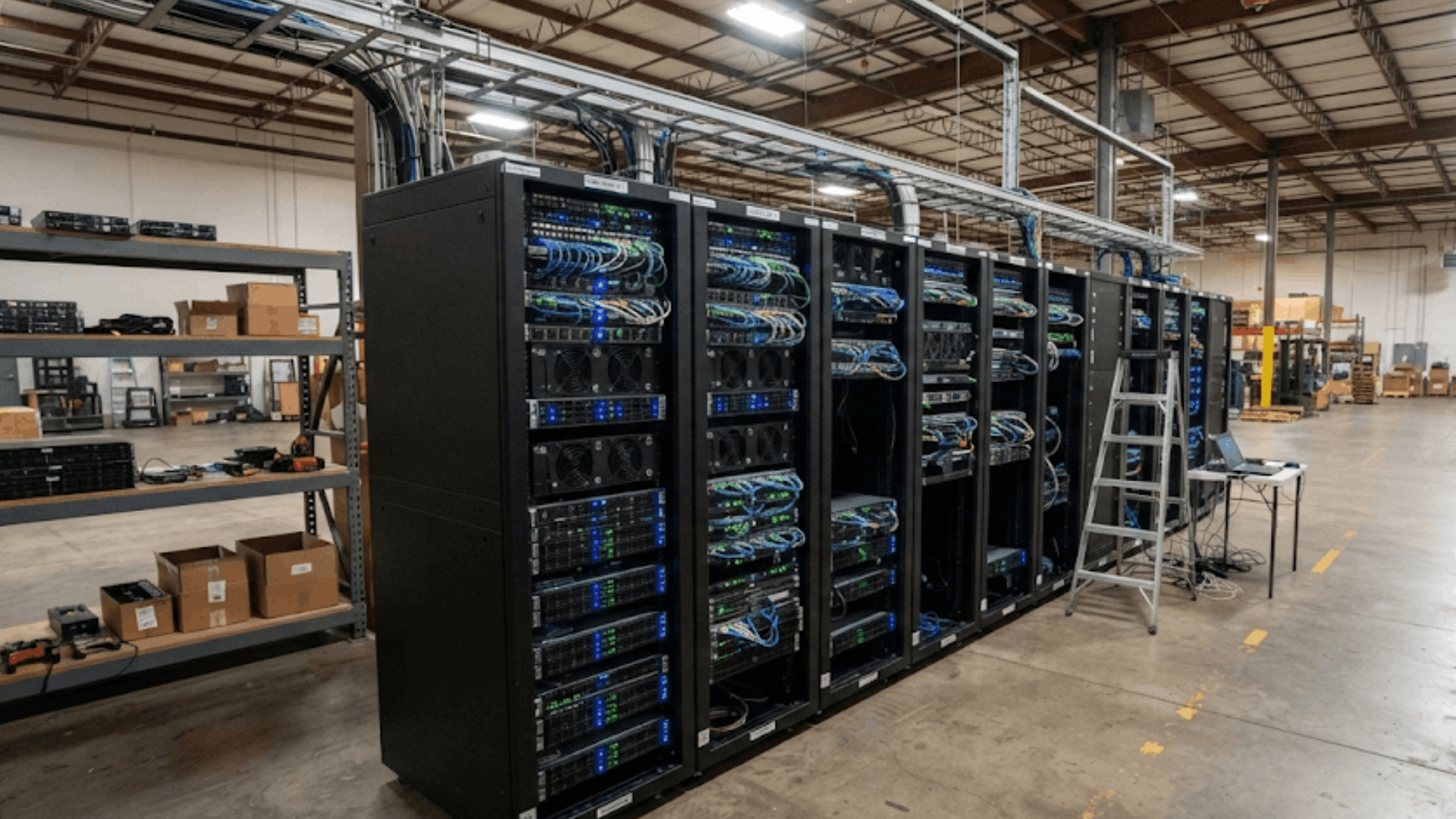

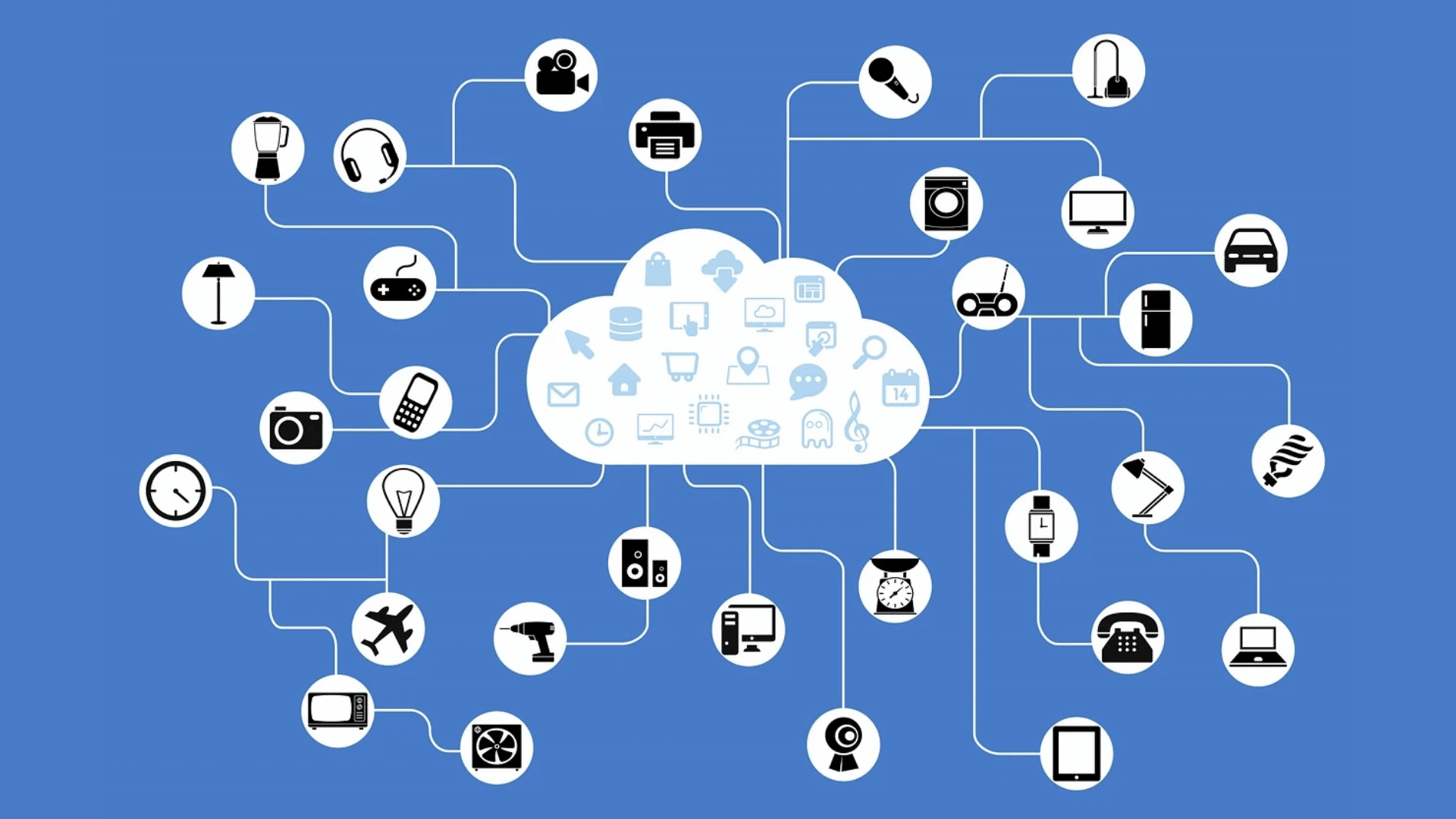



Smart devices are rapidly transforming industries, homes, and modern infrastructure through seamless digital connectivity and automation.
Connected systems enable real-time data collection, monitoring, and smarter decisions across wearables, sensors, and industries.
IoT development focuses on designing, building, and managing interconnected networks in which physical devices communicate via software, cloud platforms, and communication protocols.
It combines embedded systems, networking, analytics, and design to build efficient, scalable, and reliable solutions.
As adoption grows in healthcare, manufacturing, and smart cities, IoT development is driving digital transformation across modern technology ecosystems.
Quick Answer: What Is IoT Development?
IoT development is the process of building connected systems where devices such as sensors, machines, and smart tools communicate over the internet to exchange data and perform coordinated actions.
It integrates hardware, embedded software, communication protocols, cloud platforms, and data processing systems to enable seamless connectivity and real-time control.
The main goal of IoT development is to create reliable, scalable systems that enable automation, monitoring, and intelligent decision-making across industries and environments.
Including healthcare, manufacturing, transportation, and smart city infrastructure.
How Does IoT Development Work?
IoT development functions through a layered architecture that enables seamless data flow from devices to applications for monitoring, control, and automation.
1. Device Layer
The Device Layer forms the physical foundation of IoT systems, where real-world data is captured and initial actions are executed.
It includes sensors, actuators, and embedded components that interact directly with the environment.
This layer is responsible for collecting accurate input, enabling local processing, and ensuring devices operate efficiently with minimal delay.
- Sensors: Capture temperature, motion, humidity, light, and other environmental data
- Actuators: Perform physical actions like switching, movement, or mechanical control
- Embedded Systems: Handle real-time processing and device-level operations
- Data Collection: Continuously gathers and transmits environmental inputs
- Edge Intelligence: Enables basic local decision-making before cloud transmission
2. Connectivity Layer
The Connectivity Layer ensures seamless and secure communication between IoT devices and backend systems.
It manages how data is transmitted across networks using various protocols and communication technologies.
This layer plays a critical role in maintaining reliability, reducing latency, and ensuring interoperability between different devices and platforms.
- Protocols: Use MQTT, HTTP, CoAP, AMQP, and other messaging standards
- Networks: Support Wi-Fi, Bluetooth, Zigbee, LoRaWAN, and cellular connectivity
- Transmission: Transfers data securely between devices and cloud systems
- Gateway Systems: Bridge communication across different device networks
- Security Encryption: Protects data from unauthorized access during transfer
3. Data Processing Layer
The Data Processing Layer is responsible for transforming raw IoT data into meaningful insights that support intelligent decision-making.
It combines edge and cloud computing to balance speed and scalability while handling large volumes of incoming information.
This layer uses analytics, filtering, and machine learning techniques to identify patterns, reduce noise, and enable predictive capabilities.
- Edge Computing: Processes data closer to the source for faster response
- Cloud Computing: Provides scalable storage and computing power
- Analytics Engine: Converts raw data into actionable insights
- Real-Time Processing: Enables instant alerts and system responses
- Machine Learning: Detects patterns and supports predictive analysis
4. Application Layer
The Application Layer is the user-facing part of IoT systems where processed data is displayed and acted upon.
It provides dashboards, mobile apps, and web interfaces that allow users to monitor, control, and manage connected devices.
This layer converts complex IoT outputs into simple visual formats, such as charts and alerts, enabling better decision-making.
- Dashboards: Display real-time system performance and analytics
- Mobile Applications: Enable remote monitoring and control
- Web Interfaces: Provide centralized system access
- Visualization Tools: Present data using charts and graphs
- Automation Controls: Trigger smart actions based on rules
Best Practices for IoT Development
IoT development requires following proven practices to build secure, scalable, and high-performing connected systems.
- Security First: Implement strong device authentication, data encryption, and regular security updates to protect IoT devices and prevent unauthorized access.
- Scalability Planning: Design systems that can support future growth by handling increasing numbers of connected devices without affecting performance.
- Performance Optimization: Improve system efficiency by optimizing resource usage, reducing latency, and accelerating data processing for better user experiences.
- Data Management: Establish secure data collection, storage, processing, and governance practices to maintain data accuracy, privacy, and regulatory compliance.
- Device Lifecycle Management: Ensure proper provisioning, monitoring, updating, and retirement of devices throughout their operational lifespan.
- Interoperability Standards: Use common protocols and frameworks to ensure seamless communication between different devices and platforms.
In-House Team vs. IoT Development Partner
Choosing between an in-house team and an IoT development partner depends on project complexity, internal expertise, budget, and the product’s long-term ownership goals.
| Aspect | In-House Team | IoT Development Partner |
|---|---|---|
| Expertise | Best for teams with strong skills in embedded systems, firmware, and cloud integration | Provides external expertise for complex IoT development requirements |
| Ownership | Full control over the codebase, hardware design, and system architecture | Shared or limited control depending on the engagement model |
| Alignment | Strong alignment with internal business goals and product vision | Requires coordination with external teams for alignment |
| Development Speed | Can be slower if expertise is limited or the team is small | Faster development using proven frameworks and experience |
| Time to Market | May take longer due to the learning curve and setup | Reduces time to market with ready processes and tools |
| Specialized Knowledge | Depends on internal skill availability | Access to hardware sourcing, certification, and protocol expertise |
IoT Development Cost and Timeline: What to Expect
IoT development cost and timeline vary widely depending on project complexity, hardware requirements, software scope, and scalability needs.
A simple proof-of-concept or MVP with basic sensors, off-the-shelf devices, and a simple dashboard can usually be completed within a few weeks to a couple of months with a relatively low budget.
Mid-level IoT products involving custom firmware, cloud integration, and mobile or web applications typically take four to eight months.
Enterprise-grade IoT systems with large device networks, real-time analytics, advanced security, and compliance requirements.
Often require eight to twelve months or more, along with significantly higher investment and ongoing maintenance planning.
The IoT Development Process
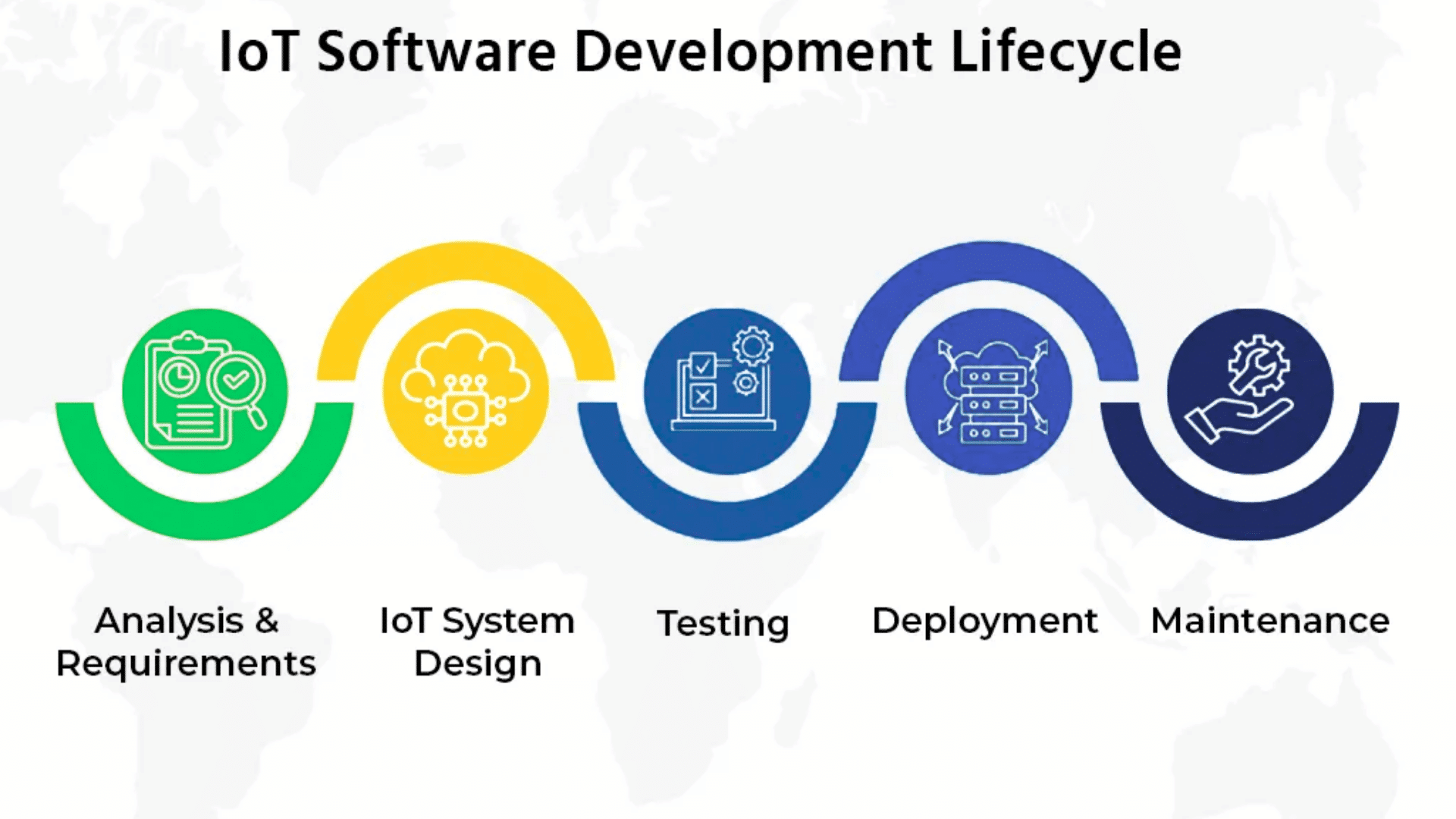
Understanding the four layers explains how a finished IoT system behaves, but it does not show how to build one. A disciplined, stage-based approach lowers that risk.
1. Analysis and Requirements
Every dependable IoT project starts by defining the problem it solves and the boundaries around it.
Teams document what the system must do in plain business terms before naming any hardware or software.
This is also where scope creep does the most damage, since one extra feature can ripple into new sensors, more bandwidth, and longer testing cycles.
When a proposed feature falls outside the agreed scope, it gets parked for a later release rather than bolted on midstream.
2. Architecture and Protocol Selection
With requirements set, the team designs how data will move across the device, connectivity, processing, and application layers.
Protocol choice happens here, and it shapes cost, battery life, and range for the entire life of the product.
A low-power sensor network might rely on Zigbee or LoRaWAN, while a video-heavy gateway needs Wi-Fi or cellular connectivity.
On projects I have worked on, the protocol picked at this stage quietly dictated more of the budget than the hardware itself.
3. Prototyping and Development
Prototyping turns the architecture into something testable, often on accessible hardware such as Arduino, ESP32, or Raspberry Pi boards, before custom devices are manufactured.
Firmware, cloud pipelines, and user-facing dashboards take shape in parallel rather than sequentially.
A working prototype also gives stakeholders something concrete to react to, which sharpens requirements.
That looked clear on paper but proved fuzzy in practice. Custom hardware enters the picture only once the core logic has been validated.
4. Testing and Validation
IoT testing covers more ground than typical software, because hardware, firmware, connectivity, and cloud services all have to work together.
Devices are checked in isolation and again as part of the full system, since a component that behaves perfectly on its own can fail under real network conditions.
Teams simulate dropped connections, power loss, and unexpected sensor readings to see how the system recovers.
Security testing belongs here too, covering authentication, encryption, and the handling of sensitive data.
5. Deployment and Ongoing Monitoring
Deployment rarely marks the end of the work. Devices in the field need a reliable way to receive firmware updates, since security patches and feature improvements arrive throughout a product’s life.
Monitoring dashboards track device health, connectivity, and data quality so issues are caught before users notice them, and predictive maintenance signals can flag a failing sensor in advance.
Treating deployment as a starting line rather than a finish line is what separates durable IoT products from short-lived pilots.
Core Components of IoT Development
IoT development is built on essential components that work together to enable connected, secure, and scalable smart systems.
| Component | Description | Key Functions |
|---|---|---|
| IoT Devices | Physical hardware used to collect and interact with real-world data | Smart sensors capture environmental signals, connected equipment enables automation, and devices perform data acquisition from the surroundings |
| Communication Networks | Connectivity systems that enable data transfer between devices and platforms | Uses Wi-Fi, Bluetooth, Zigbee, LoRaWAN, and cellular networks for reliable communication and selects suitable connectivity based on use case |
| Cloud Infrastructure | Remote computing environment for storing and processing IoT data | Provides scalable data storage, remote access, and supports advanced processing for large-scale IoT systems |
| Security Systems | Protection mechanisms ensuring safe and secure IoT operations | Includes authentication methods, encryption techniques, and device protection systems to prevent unauthorized access and data breaches |
Popular IoT Development Frameworks
IoT development frameworks provide platforms, tools, and services that help developers build, connect, and manage smart devices efficiently across scalable environments.
- AWS IoT: Provides secure device connectivity, strong cloud integration, scalable infrastructure, real-time monitoring, and reliable data processing for large IoT systems
- Azure IoT: Offers enterprise-grade solutions with advanced analytics, centralized device management, real-time monitoring, and seamless integration with Microsoft cloud services
- Google Cloud IoT: Focuses on intelligent data handling, machine learning integration, remote device control, scalable infrastructure, and advanced analytics for smart applications
- ThingsBoard: An open-source IoT platform that supports visualization dashboards, device management, rule-based automation, and multi-protocol integration for flexible deployments
- Eclipse IoT: Provides a modular ecosystem of frameworks, developer tools, and libraries that support interoperability, rapid development, and community-driven IoT innovation
IoT Development Methodologies: Agile vs. Waterfall
IoT projects are typically developed using Agile or Waterfall methodologies, each offering a different approach to planning, execution, and delivery depending on project flexibility and complexity.
| Aspect | Agile Methodology | Waterfall Methodology |
|---|---|---|
| Approach | An iterative and incremental process with continuous improvement | Linear and step-by-step sequential process |
| Flexibility | Highly flexible, allows changes during development | Limited flexibility, changes are difficult once phases begin |
| Development Style | Work is divided into small sprints with frequent updates | Each phase is completed before moving to the next |
| Testing | Continuous testing throughout the development cycle | Testing is done only after development is completed |
| Customer Involvement | Continuous feedback and collaboration with stakeholders | Minimal involvement after requirement gathering |
| Best Use Case | Suitable for complex and evolving IoT systems | Suitable for simple and well-defined IoT projects |
Programming Languages and Tools for IoT Development
IoT development relies on a combination of programming languages and prototyping tools to build, test, and deploy connected applications efficiently.
Languages such as C and C++ are widely used for embedded programming and firmware development, while Python is popular for data processing, automation, and rapid prototyping.
Developers often use platforms like Arduino and ESP32 to create and test IoT devices, Raspberry Pi for edge computing and gateway applications, and Node-RED to visually connect devices, APIs, and cloud services during development.
Together, these tools help accelerate prototyping, simplify integration, and reduce development time.
Benefits and Challenges of IoT Development
IoT development offers major advantages in automation, efficiency, and data-driven decision-making, but it also comes with technical and operational challenges that impact security, connectivity, and scalability.
| Benefits of IoT Development | Challenges of IoT Development |
|---|---|
| Automates routine tasks, reducing manual effort and improving productivity. | Security vulnerabilities can expose connected devices to cyberattacks. |
| Enables real-time monitoring and faster decision-making through continuous data collection. | Data privacy concerns arise from collecting and storing sensitive information. |
| Improves operational efficiency by optimizing processes and reducing resource waste. | Device compatibility issues can make integration with different platforms difficult. |
| Supports predictive maintenance, helping reduce downtime and repair costs. | Reliable internet connectivity is essential for consistent device performance. |
| Enhances customer experiences with personalized and smart services. | Managing large numbers of connected devices becomes more complex as systems grow. |
| Reduces long-term operational costs through automation and energy optimization. | Initial development, deployment, and maintenance costs can be high. |
How to Choose the Right IoT Development Framework?
Selecting the right IoT development framework requires careful evaluation of key technical and business factors to ensure long-term success.
Project requirements assessment helps define system goals, device needs, and functionality scope before development begins.
Scalability considerations ensure the framework can handle future growth and increasing device loads. Security capabilities evaluation focuses on encryption, authentication, and protection features.
Integration and compatibility factors ensure smooth communication with existing systems and devices.
Budget and maintenance requirements help balance cost efficiency with long-term support, updates, and operational sustainability for reliable IoT deployment.
Common IoT Communication Protocols
IoT communication protocols enable smooth data exchange between devices, networks, and cloud systems for efficient connectivity and performance.
- MQTT (Message Queuing Telemetry Transport): A lightweight protocol using low bandwidth for frequent small data transfers, remote monitoring, and IoT devices on unreliable networks.
- HTTP (HyperText Transfer Protocol): A standard web communication protocol used to connect IoT devices with web applications and cloud platforms for data exchange and system interaction.
- HTTPS (HyperText Transfer Protocol Secure): An encrypted version of HTTP that ensures secure data transmission between IoT devices and cloud systems, protecting sensitive information.
- CoAP (Constrained Application Protocol): Designed for low-power and resource-constrained devices, CoAP enables efficient communication for sensors and embedded systems with limited memory and processing power.
- AMQP (Advanced Message Queuing Protocol): An enterprise-grade messaging protocol that provides secure, reliable, and structured message delivery for large-scale IoT applications requiring dependable communication.
- Zigbee: A short-range wireless communication protocol optimized for low-power mesh networks, commonly used in smart home and industrial sensor systems.
- LoRaWAN, Wi-Fi, and Cellular Networks: These wireless technologies meet diverse IoT needs, with LoRaWAN offering long-range low-power communication and Wi-Fi/cellular supporting high-bandwidth applications.
IoT Development Use Cases Across Industries
IoT development is widely used across industries to improve automation, monitoring, efficiency, and data-driven operations.
| Industry | Use Case | Key Applications |
|---|---|---|
| Smart Homes | Home automation and energy control | Connected appliances, smart lighting, security systems, and energy management solutions |
| Healthcare | Remote monitoring and medical connectivity | Remote patient monitoring, wearable health devices, and connected medical equipment |
| Manufacturing | Industrial automation and maintenance | Smart factories, predictive maintenance, and real-time production monitoring |
| Agriculture | Smart farming and monitoring systems | Soil monitoring, irrigation control, crop health tracking, and environmental sensors |
| Transportation | Fleet and vehicle intelligence | Fleet tracking, route optimization, and connected vehicle applications |
Future Trends in IoT Development
IoT development is rapidly evolving with emerging technologies that improve intelligence, connectivity, and sustainability across smart systems.
- AI-Powered IoT: Drives intelligent automation growth and enables advanced analytics applications for smarter decision-making and predictive insights
- 5G Connectivity: Provides faster communication capabilities and expands IoT deployment opportunities through high-speed, low-latency networks
- Digital Twins: Creates virtual representations of physical assets to deliver improved operational insights and real-time system monitoring
- Sustainable IoT Solutions: Focuses on energy-efficient devices and supports green technology initiatives for reducing environmental impact and promoting sustainability
- Edge AI Integration: Brings artificial intelligence directly to edge devices for faster processing, reduced latency, and real-time decision-making without relying heavily on cloud systems
- IoT in Smart Cities Expansion: Enables advanced urban infrastructure management including smart traffic systems, waste management, energy optimization, and public safety monitoring
Conclusion
IoT development helps businesses build intelligent systems that connect devices, process data, and automate operations across industries.
Success depends on selecting the right frameworks, communication protocols, security practices, and scalable architecture to create reliable, future-ready solutions.
As AI, edge computing, and 5G evolve, IoT applications will become more powerful and widely adopted.
If you are planning your first IoT project or expanding an existing solution, understanding these fundamentals provides a strong foundation.
Start exploring IoT development today and build smarter, connected solutions that drive lasting innovation.
Frequently Asked Questions
What Is an IoT Developer?
An IoT developer builds connected systems using sensors, software, and cloud platforms, enabling data collection, communication, automation, and real-time intelligent decision-making across devices.
Is IoT Programming Hard?
IoT programming is moderately challenging, requiring knowledge of embedded systems, networking, and cloud integration, but consistent practice and learning make it manageable for developers.
Are IoT Engineers in Demand?
IoT engineers are highly in demand due to growing adoption of smart devices, automation systems, industrial IoT solutions, and expanding digital transformation across industries.
Does IoT Need Coding?
Yes, IoT requires coding for device programming, data processing, communication protocols, and cloud integration to build functional, scalable, and efficient connected systems.