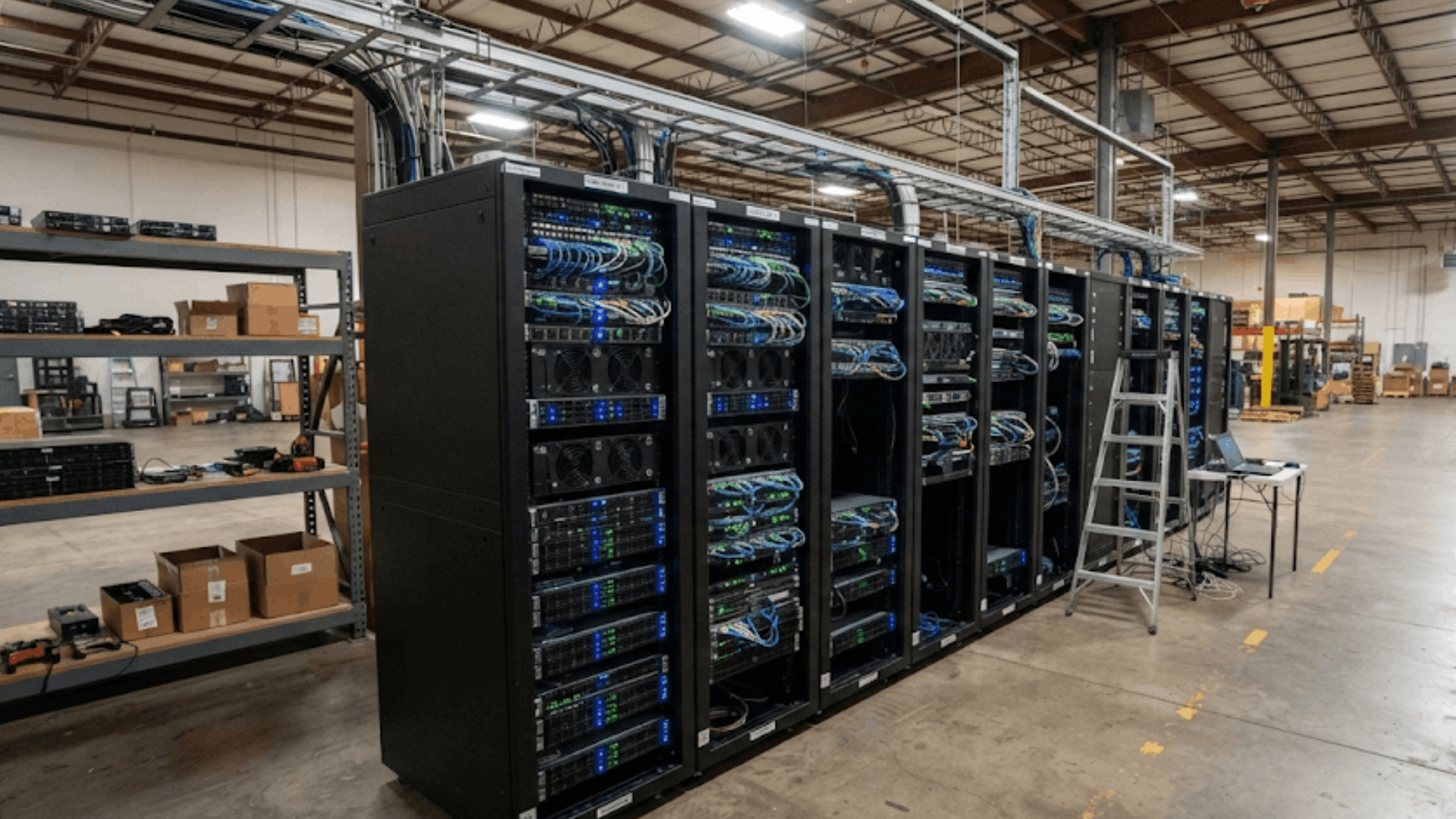






When businesses rely on multiple data centers to run applications, store information, and deliver services, keeping these locations connected quickly and securely can become a major challenge.
Data center interconnect (DCI) links different data centers through high-speed network connections.
It allows organizations to share data, manage workloads, and maintain continuous operations.
As companies adopt cloud platforms, hybrid environments, and distributed infrastructure, efficient connectivity between data centers has become increasingly important.
Quick Answer: What Is Data Center Interconnect?
Data center interconnect (DCI) is a networking method used to connect two or more data centers through high-speed links for secure data sharing, workload management, and business continuity.
It uses technologies such as fiber optics and dedicated links to transfer information between locations.
Businesses use DCI to improve network performance, support disaster recovery, manage workloads, and maintain reliable IT operations across data centers while reducing downtime and improving connectivity.
How Data Center Interconnect Works

Data center interconnect (DCI) connects two or more data centers through high-speed network links that enable secure data sharing, application access, and resource management.
1. Establish A High-Speed Connection Between Data Centers
The first step in a data center interconnect (DCI) is creating a dedicated, high-speed connection between two or more data centers.
Organizations commonly use fiber optic cables, leased lines, or carrier services to provide reliable communication.
The connection is designed to deliver high bandwidth and low latency, allowing large amounts of data to move efficiently.
A stable network foundation ensures applications, storage systems, and business services remain connected across different locations.
2. Configure Secure Network Communication
After the physical connection is established, network devices such as routers, switches, and gateways are configured to communicate with each other.
Routing protocols determine the best path for data, while network settings ensure traffic reaches the correct destination.
Secure communication is also configured through encryption, authentication, and access controls.
This creates a trusted connection that protects sensitive business data while allowing seamless communication between connected data centers.
3. Transfer And Synchronize Data
Once communication is active, data begins moving between locations.
Files, databases, virtual machines, and application data are transferred using high-speed network links.
Many organizations also configure continuous data replication so changes made in one data center are automatically copied to another.
This synchronization keeps information consistent across sites, supports backup operations, and allows applications to access updated data regardless of which location users connect to.
4. Balance Workloads Across Locations
DCI allows organizations to distribute workloads between multiple data centers instead of relying on a single facility.
Traffic can be directed to the location with the most available computing resources or the lowest network delay.
This improves application performance during periods of high demand and prevents individual data centers from becoming overloaded.
Workload balancing also increases resource utilization and helps maintain consistent service for users in different geographic regions.
5. Protect Data During Transmission
As data moves between connected data centers, protecting it from unauthorized access is essential.
Encryption secures information while it is in transit, making intercepted data unreadable without the correct keys.
Organizations should also defend against common security threats such as malware, ransomware, unauthorized access, and data interception.
Authentication, firewalls, access controls, and continuous network monitoring further strengthen security, helping maintain confidential, reliable, and uninterrupted communication across the entire DCI environment.
6. Monitor Network Performance Continuously
Network administrators continuously monitor the DCI infrastructure to ensure reliable operation.
Monitoring tools track bandwidth usage, latency, packet loss, and connection health in real time.
If performance issues or hardware failures occur, alerts help administrators respond quickly before services are affected.
Continuous monitoring also provides valuable performance data that supports capacity planning, troubleshooting, and long-term network optimization.
7. Maintain Availability Through Failover And Recovery
A major purpose of DCI is maintaining business continuity when problems occur.
If one data center experiences a failure, traffic can automatically switch to another connected location with minimal interruption.
Replicated data and synchronized applications allow critical services to continue operating while recovery efforts take place.
This failover capability reduces downtime, supports disaster recovery plans, and helps organizations deliver reliable services even during unexpected outages.
Different Types of DCI Architecture
Data center interconnect architecture defines how networks, applications, and workloads communicate across multiple data center locations.
| DCI Architecture Type | Common Uses |
|---|---|
| Layer 2 DCI | Virtual machine mobility, clustering, and storage replication. |
| Layer 3 DCI | Scalable connectivity, traffic control, and multi-site applications. |
| Point-to-Point Architecture | Simple deployments, backup sites, and data replication. |
| Hub-and-Spoke Architecture | Centralized management and controlled network traffic. |
| Mesh Architecture | High availability, redundancy, and faster traffic routing. |
| Hybrid DCI Architecture | Hybrid cloud, multi-cloud, and complex enterprise networks. |
| Cloud-Centric Architecture | Cloud migration, scalable services, and distributed workloads. |
Types of Data Center Interconnect Solutions
Organizations choose data center interconnect (DCI) solutions based on distance, performance needs, and connectivity goals.
- Metro DCI: Connects nearby data centers with low-latency links for data replication, workload sharing, local disaster recovery, and business continuity.
- Long-Haul DCI: Connects distant data centers across regions or countries for global operations, remote backups, and disaster recovery.
- Cloud DCI: Connects private data centers with public cloud platforms, supporting hybrid cloud, multi-cloud, cloud migration, and scalable infrastructure.
- Dark Fiber DCI: Uses dedicated fiber optic infrastructure to provide high bandwidth, low latency, enhanced security, and complete network control.
- Wavelength-Based DCI: Uses DWDM or CWDM technology to transmit multiple data streams over a single fiber with high efficiency.
- Ethernet DCI: Extends Ethernet connectivity between data centers for scalable, cost-effective networking, virtualization, and application access.
- MPLS-Based DCI: Uses MPLS networks to deliver secure, reliable connectivity with traffic prioritization and predictable application performance.
- IP VPN DCI: Uses encrypted VPN connections to securely connect remote data centers over IP networks at a lower cost.
- SD-WAN DCI: Uses software-defined networking to optimize traffic routing, improve performance, simplify management, and increase network flexibility.
Core Concepts Behind Data Center Interconnect Networks

Understanding the core concepts of data center interconnect (DCI) helps explain how multiple data centers communicate, share resources, and maintain reliable connections.
1. Understanding Bandwidth In DCI Networks
Bandwidth refers to the amount of data that a network connection can transfer within a specific time.
In a data center interconnect network, higher bandwidth allows businesses to move large volumes of data between locations faster.
This is important for activities such as data replication, cloud connectivity, and workload sharing.
Choosing the right bandwidth capacity helps organizations maintain smooth performance, support growing data demands, and prevent network congestion across connected data centers.
2. Importance of Low-Latency Connectivity
Low-latency connectivity reduces the time it takes for data to travel between connected data centers.
Lower latency improves application response times and supports real-time operations that require fast communication.
DCI solutions use high-speed connections, including fiber optic networks, to minimize delays between locations.
Industries that rely on quick data processing, such as finance, healthcare, and cloud services, benefit from efficient data center connectivity with reduced network response times.
3. Role Of Network Security Controls
Security is a key concept in data center interconnect solutions because sensitive information moves between multiple locations.
Organizations use security measures such as encryption, authentication, and controlled access to protect data during transfer.
Secure DCI networks help reduce risks while maintaining reliable communication between data centers.
Proper security planning ensures that businesses can benefit from connected infrastructure while protecting important applications, customer information, and critical business data.
4. Scalability And Future Network Growth
Scalability allows a data center interconnect network to expand as business requirements increase.
As companies generate more data and adopt cloud-based services, their connectivity needs continue to grow.
Scalable DCI solutions allow organizations to increase bandwidth, connect additional locations, and support new technologies without completely replacing existing infrastructure.
Planning for future growth helps businesses maintain efficient data center connectivity and adapt to changing IT demands over time.
Benefits of Data Center Interconnect
Businesses use DCI solutions to create reliable data center connectivity, support critical operations, and build scalable IT infrastructure.
- Faster Data Access and Sharing: DCI uses high-speed network connections to reduce delays and improve data movement between locations. This supports faster applications and user experiences.
- Improved Disaster Recovery Support: Connected data centers help businesses maintain backups, replicate data, and recover systems quickly.
- Better Resource Management: DCI allows organizations to share computing power, storage, and workloads across locations. This improves infrastructure efficiency and helps optimize IT resources.
- Enhanced Network Scalability: DCI solutions allow businesses to expand connectivity, increase bandwidth, and connect additional locations as data requirements grow.
- Improved Cloud Connectivity: DCI enables secure connections between private data centers and cloud platforms. It supports hybrid cloud environments by improving data transfer.
- Increased Data Security: Secure DCI networks use encryption and access controls to protect information during transfer. This helps organizations maintain safe and reliable communication.
Data Center Interconnect Challenges
Managing a data center interconnect (DCI) network can involve several challenges related to cost, security, scalability, and performance.
- High Infrastructure Costs: DCI requires investment in fiber, equipment, installation, and maintenance, with costs depending on distance, bandwidth, and infrastructure complexity.
- Network Security Concerns: DCI networks use encryption, authentication, and access controls to protect data. Organizations can follow the NIST Cybersecurity Framework to identify, manage, and reduce cybersecurity risks.
- Managing Complex Connections: Multiple DCI links require skilled teams, monitoring tools, and performance management to maintain reliable communication between locations.
- Limited Scalability Planning: Poor planning can restrict DCI expansion, making it harder to increase bandwidth, add locations, and support future growth.
- Latency and Performance Issues: Network distance and congestion can impact DCI speed, making low-latency connectivity important for efficient data transfer.
- Integration With Existing Networks: DCI solutions must work with cloud platforms, enterprise systems, and existing network infrastructure for smooth operations.
Data Center Interconnect vs Network Connectivity
Compare DCI and traditional network connectivity to understand their purposes, performance differences, technologies, and how businesses use each option.
| Feature | Data Center Interconnect (DCI) | Traditional Network Connectivity |
|---|---|---|
| Main Purpose | Connects multiple data centers for secure data sharing and resource access | Connects devices, users, and local networks |
| Primary Focus | High-speed data center communication with reliable performance | General network access and everyday communication |
| Performance Requirements | Requires very high bandwidth and low-latency connectivity | Performance depends on user needs and network usage |
| Common Uses | Cloud connectivity, disaster recovery, workload sharing, and enterprise systems | Internet access, office networks, and user communication |
| Infrastructure Type | Uses fiber optics, optical networks, and dedicated links | Uses standard network connections and internet services |
| Best For | Organizations managing multiple data centers and distributed IT environments. | Businesses needing regular device and user connectivity |
Best Practices For Data Center Interconnect
Following the right practices helps businesses design reliable data center interconnect (DCI) networks with better performance, security, and scalability.
- Choosing the Right Connection Type: Select DCI solutions based on distance, bandwidth, speed requirements, budget, and business goals to improve connectivity and network performance.
- Protecting Data Across Networks: Use encryption, authentication, and monitoring tools to secure data transfers and protect sensitive information across connected data centers.
- Planning for Future Growth: Choose scalable DCI infrastructure that supports increasing data demands, additional locations, and future technology changes without major upgrades.
- Monitoring Network Performance: Track bandwidth, latency, and traffic patterns regularly to identify issues and maintain reliable data center connectivity.
- Ensuring Equipment Compatibility: Ensure network devices, optical systems, and cloud platforms work together for efficient DCI operations and smoother infrastructure management.
- Maintaining Disaster Recovery Readiness: Use DCI for data replication, backups, and recovery planning to improve business continuity and reduce service interruptions.
Conclusion
Choosing the right data center interconnect (DCI) solution starts with understanding how DCI works, the available connectivity options, and the benefits it provides for performance, reliability, and business continuity.
This blog covered DCI technologies, key concepts like bandwidth and latency, common challenges, and best practices for building secure network connections.
By evaluating distance, scalability, security, and infrastructure needs, businesses can select a DCI approach that matches their goals and keeps data moving efficiently.
Frequently Asked Questions
Who Uses Data Center Interconnect Solutions?
Organizations such as enterprises, cloud providers, financial companies, and technology firms use DCI to connect locations and manage large-scale data operations.
What Factors Affect DCI Performance?
DCI performance depends on connection quality, network design, equipment capability, traffic volume, and how efficiently data moves between connected infrastructure.
Can Small Businesses Use DCI?
Small businesses can use DCI through managed services that provide secure connectivity without requiring them to build and maintain complex network infrastructure.
How Is DCI Different From Data Backup?
DCI focuses on connecting locations for real-time communication, while data backup creates copies of information for storage and recovery purposes.
What Industries Benefit Most From DCI?
Finance, healthcare, cloud providers, telecommunications, retail, manufacturing, and government benefit from DCI through secure connectivity, disaster recovery, and reliable multi-site operations.