






Running daily tasks by hand can take up a lot of time. I have seen teams struggle with missed updates, slow approvals, and too much manual work.
That is why many companies now use business process automation software comparison guides before choosing a tool. It helps you see which software fits your workflow, budget, and team size.
In this article, I will share the top automation tools, their features, pricing, and pros and cons.
You will also learn how these platforms improve productivity and reduce errors in daily work.
Choosing the right business automation services can help companies manage tasks faster without increasing workload.
If you are trying to save time and make your business tasks easier, this guide will help you choose the right software without getting confused by complex terms or marketing claims.
What Is Business Process Automation Software?
Business process automation software helps companies automate repetitive tasks and workflows without manual effort.
These tools help businesses manage approvals, data entry, emails, customer support, and team communication.
Instead of spending hours on manual work, teams can set rules and let the software complete tasks automatically. This saves time and reduces mistakes in daily operations.
Small businesses use it to manage simple workflows, while large companies use it for complex operations across different departments.
Some tools also connect with apps like Slack, Google Drive, CRM platforms, and accounting software.
The main goal of business process automation is to make work easier and help teams focus on more important tasks instead of repeating the same process every day.
Why Businesses Use Automation Software?
Many businesses use automation software to save time and reduce manual work. It also helps teams stay organized, improve accuracy, and complete tasks faster.
- Saves Time: Automation tools handle repeated tasks quickly, so employees can focus on more important work. This helps teams finish daily tasks without wasting extra hours.
- Reduces Human Errors: The software adheres to established rules, helping reduce errors in reports, emails, and data entry. Better accuracy also improves overall business operations.
- Improves Team Productivity: Teams can complete projects faster because fewer tasks need manual effort. Employees can spend more time on planning and customer support.
- Better Customer Experience: Quick responses and faster service help businesses better support customers. Customers also receive updates and solutions without long delays.
- Easy Integration With Other Tools: Many platforms connect with CRM systems, email tools, and project management apps. This allows businesses to manage work from one system.
- Helps Businesses Grow: As workloads increase, automation software can handle more tasks without adding extra staff. It also helps companies manage larger operations more smoothly.
Leading Business Process Automation Software Compared
Business process automation software helps companies manage workflows, reduce repetitive tasks, and improve productivity. Different platforms offer tools for automation, integrations, reporting, and task management.
1. UiPath
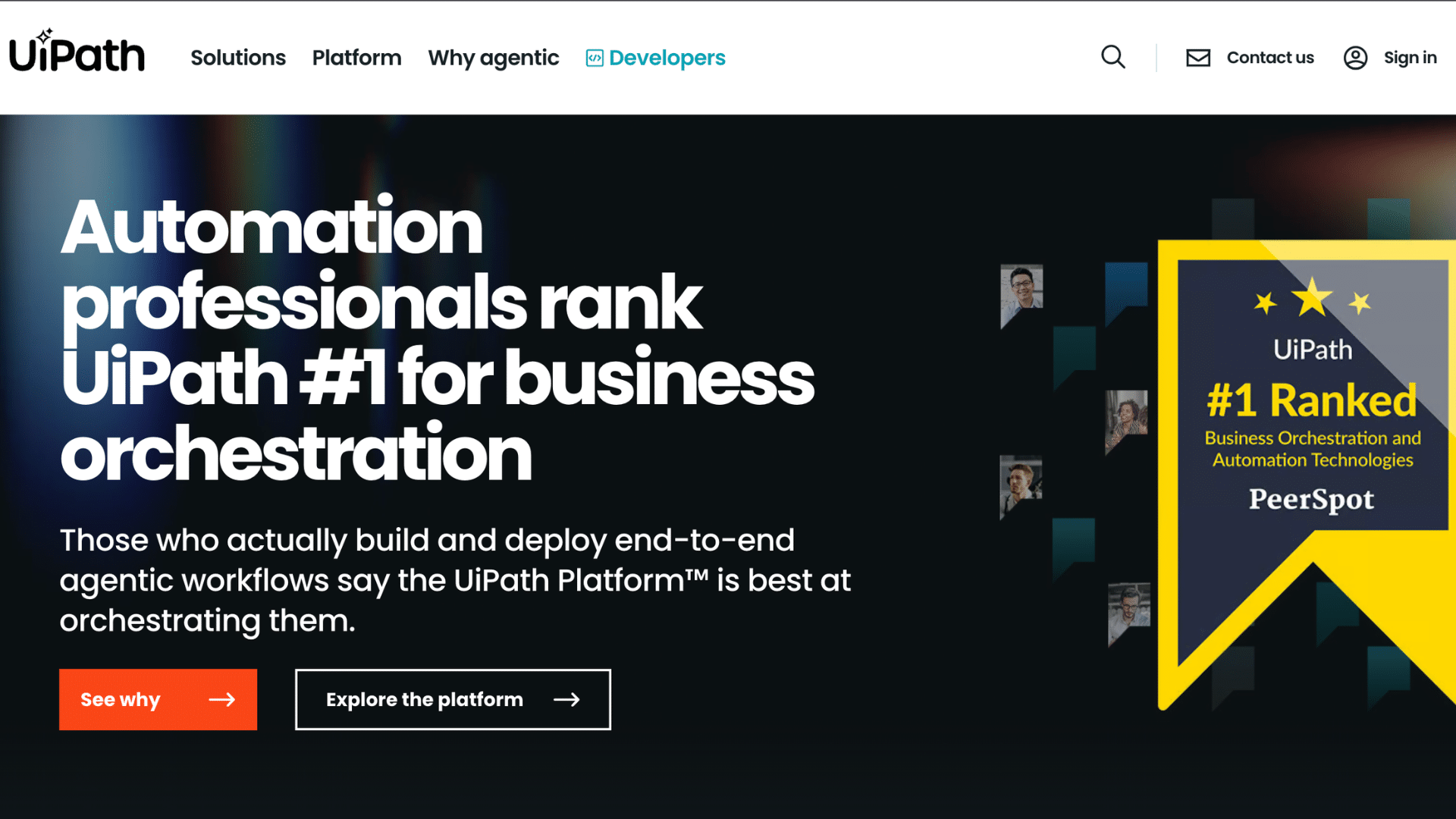
UiPath is a leading robotic process automation platform used by businesses to automate repetitive tasks and improve workflow management.
It supports AI-powered automation, cloud services, and advanced analytics for large companies.
Many industries use UiPath to reduce manual work and improve efficiency.
The platform offers drag-and-drop workflow creation, making automation easier for teams. It also supports integration with many business applications and systems.
| Pros | Cons |
|---|---|
| Easy workflow creation | Expensive for small teams |
| Strong AI capabilities | Requires setup training |
| Supports enterprise workflows | Advanced features can feel complex |
| Large integration library | Higher learning curve for beginners |
- Best For: Large businesses and enterprise automation
- Services: Task automation, document processing, workflow management
- Integration Support: CRM systems, ERP software, cloud apps
- Deployment Type: Cloud-based and on-premise
- Pricing: Custom enterprise pricing available
2. Microsoft Power Automate
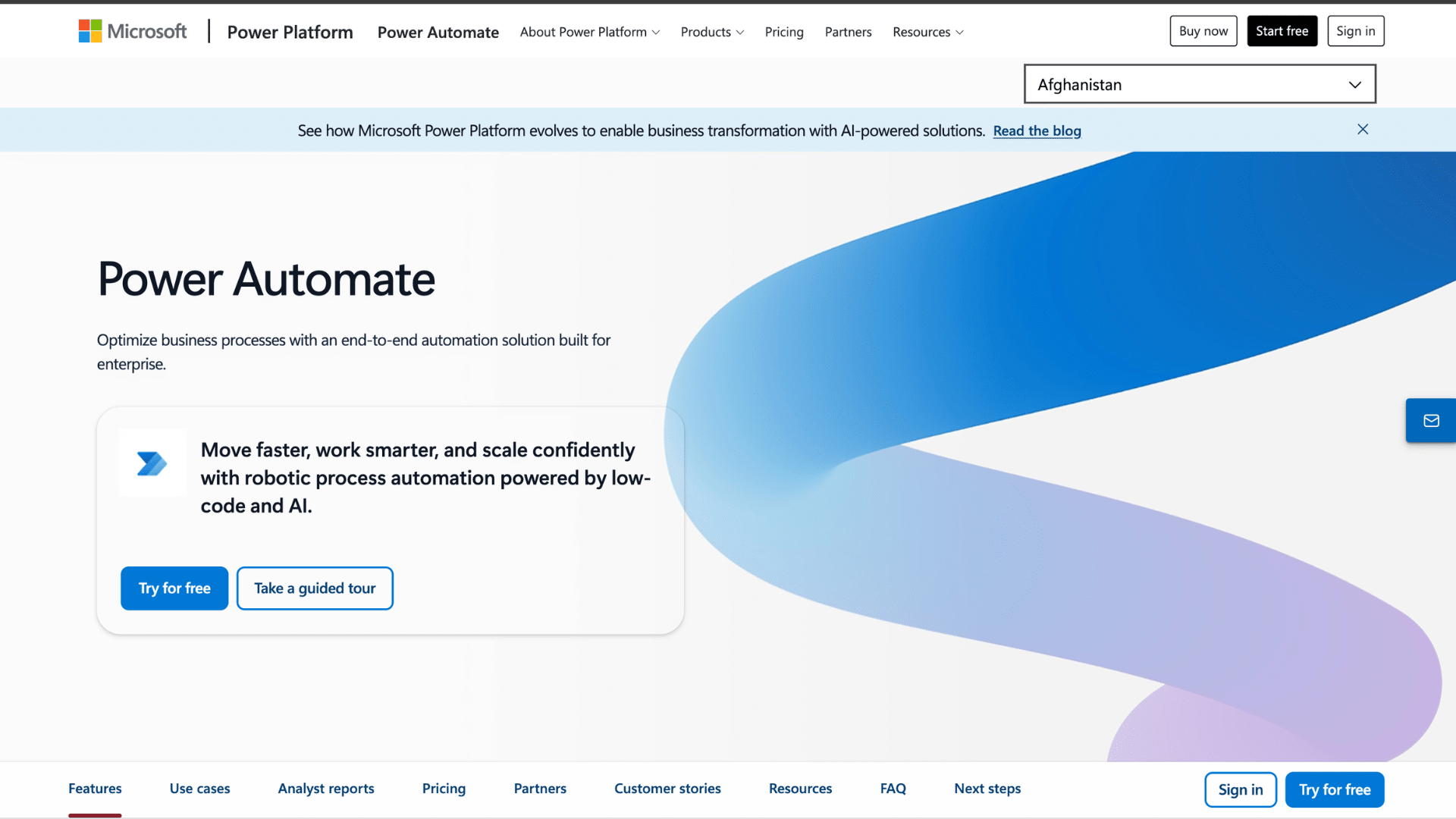
Microsoft Power Automate helps businesses automate workflows across Microsoft apps and third-party tools. It is widely used for approvals, notifications, file management, and repetitive office tasks.
The platform works well with Microsoft 365 products like Teams, Excel, Outlook, and SharePoint. Businesses like it because it offers ready-made workflow templates and an easy setup process.
I often see Microsoft Power Automate recommended for companies that already use Microsoft tools in their daily operations.
It also supports cloud automation and robotic process automation for larger tasks.
| Pros | Cons |
|---|---|
| Strong Microsoft integration | Premium features cost extra |
| Easy for beginners | Limited advanced customization |
| Good workflow templates | Works best inside the Microsoft ecosystem |
| Affordable for small teams | Complex workflows may slow down |
- Best For: Microsoft users and office workflow automation
- Services: Email automation, task management, approval workflows
- Integration Support: Microsoft 365, SharePoint, Teams, CRM apps
- Deployment Type: Cloud-based
- Pricing: Free and paid plans available
3. Zapier
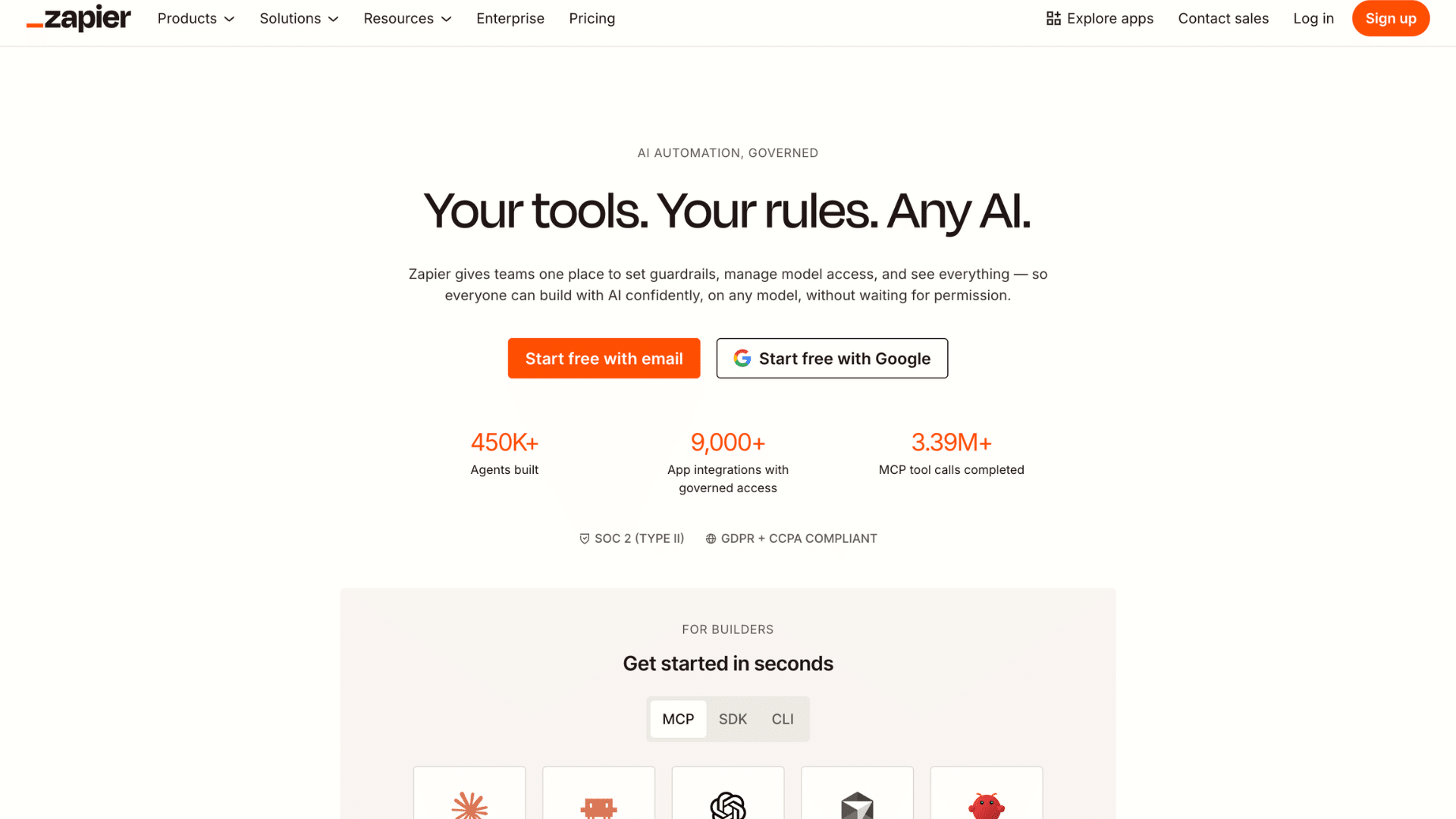
Zapier is a no-code automation platform that connects thousands of apps and services. It helps businesses automate daily tasks between apps like Gmail, Slack, Shopify, and Google Sheets.
The platform uses “Zaps” to create automated workflows without coding knowledge. Small businesses and freelancers often use Zapier because it is simple and quick to set up.
It is mainly focused on app connectivity and task automation.
| Pros | Cons |
|---|---|
| Very easy to use | Limited enterprise features |
| Supports thousands of apps | Costs increase with usage |
| Fast workflow setup | Basic reporting tools |
| No coding required | Limited advanced automation |
- Best For: Small businesses and freelancers
- Services: App integration, email automation, CRM updates
- Integration Support: Slack, Gmail, Trello, Shopify, Google Sheets
- Deployment Type: Cloud-based
- Pricing: Free and subscription plans available
4. Kissflow
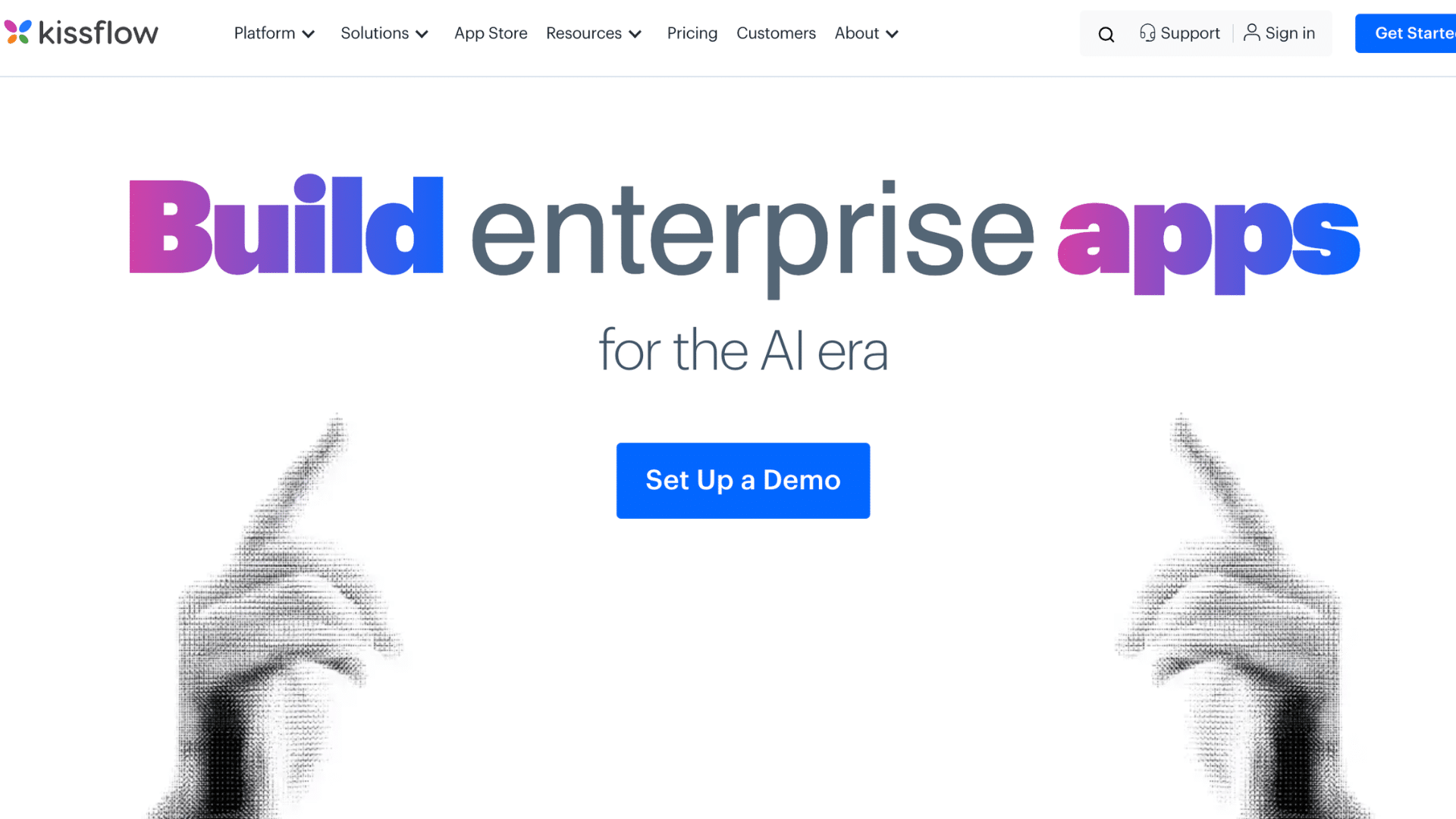
Kissflow is a workflow automation platform designed to simplify approvals and process management for businesses.
It provides low-code tools that help teams automate workflows without technical expertise. Companies use Kissflow for HR, finance, procurement, and project workflows.
The platform also includes collaboration and reporting features to improve team productivity.
It works well for mid-sized businesses looking for easy process automation.
| Pros | Cons |
|---|---|
| Easy workflow customization | Limited advanced automation |
| User-friendly interface | Higher pricing for larger teams |
| Good reporting features | Fewer integrations than competitors |
| Supports team collaboration | Some setup learning is required |
- Best For: Mid-sized businesses and workflow management
- Services: HR workflows, procurement automation, project tracking
- Integration Support: Google Workspace, Microsoft tools, CRM apps
- Deployment Type: Cloud-based
- Pricing: Custom pricing plans available
5. Automation Anywhere
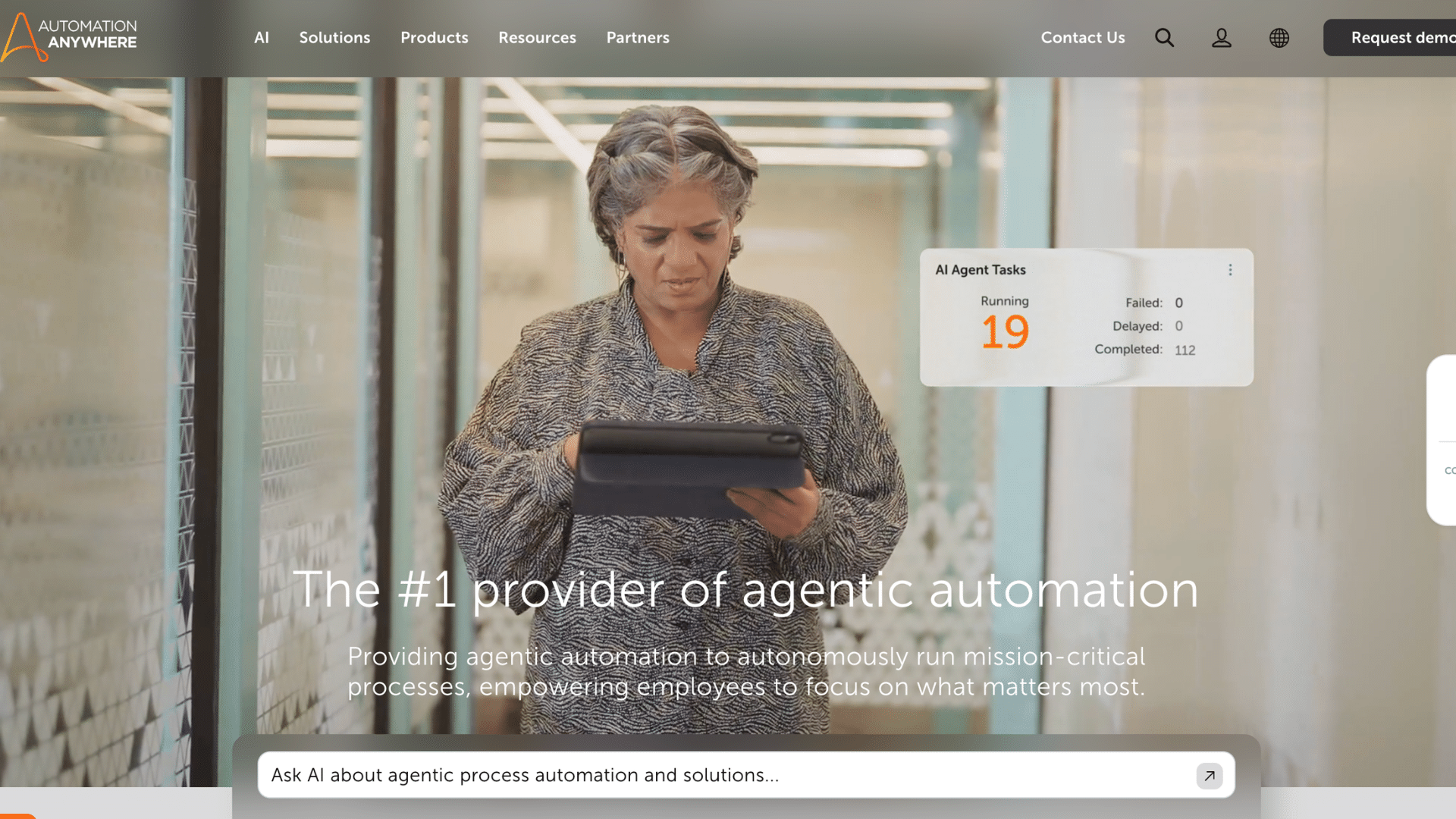
Automation Anywhere is an enterprise automation platform that combines robotic process automation with AI technologies. Businesses use it to automate tasks like invoice processing, customer support, and data handling.
The platform supports cloud-native automation and intelligent bots for complex workflows.
During my research on automation tools, Automation Anywhere was frequently recommended for managing high-volume business tasks.
Large companies choose Automation Anywhere for scalable automation projects. It also offers analytics and process insights to improve operations.
| Pros | Cons |
|---|---|
| Strong AI automation tools | Expensive for small businesses |
| Scalable enterprise support | Technical setup may take time |
| Advanced analytics features | Requires employee training |
| Good cloud automation | Complex for beginners |
- Best For: Enterprise process automation
- Services: Data automation, customer support workflows, analytics
- Integration Support: ERP systems, CRM tools, cloud apps
- Deployment Type: Cloud and on-premise
- Pricing: Enterprise pricing available
6. ProcessMaker
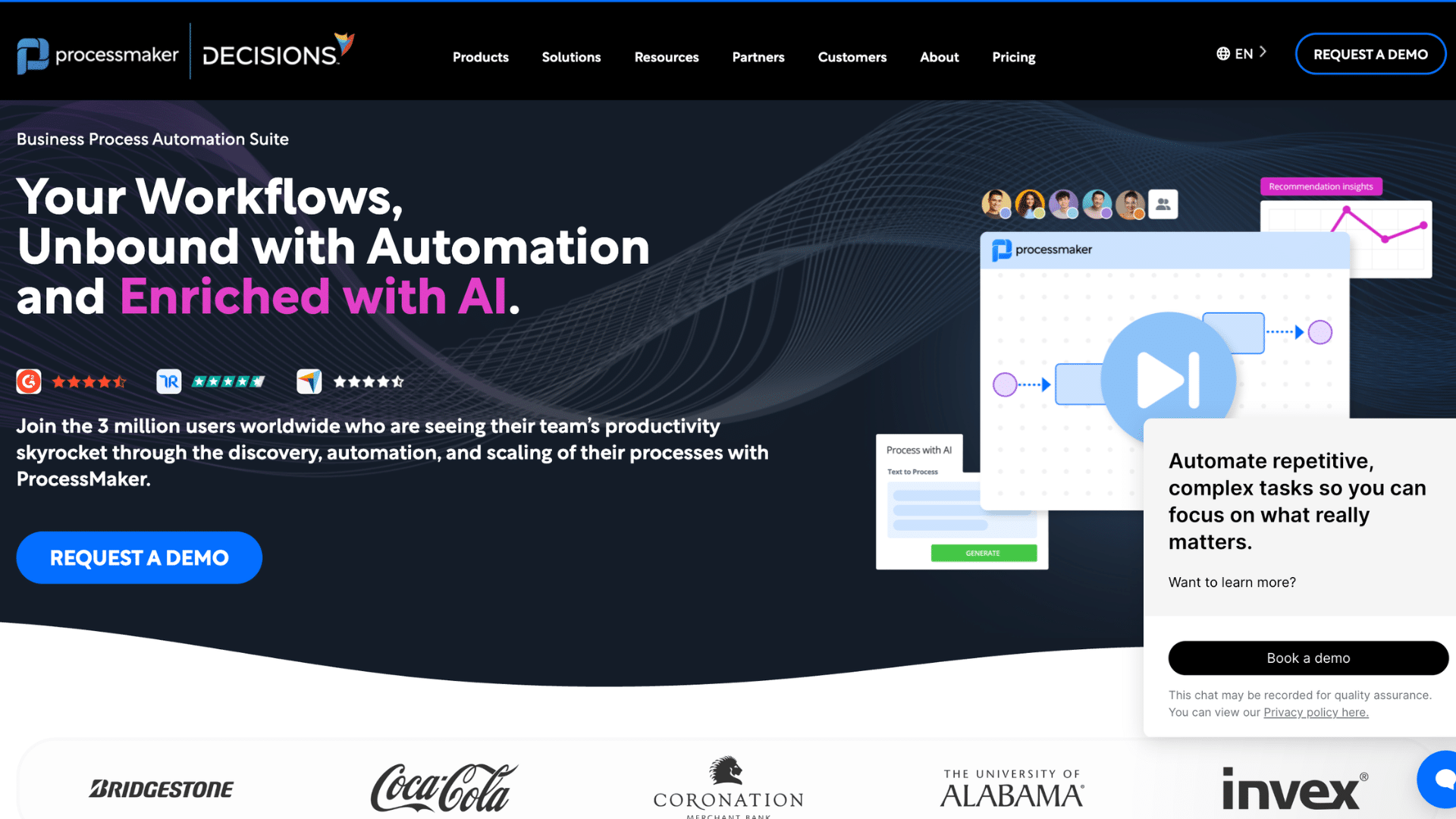
ProcessMaker is a workflow and business process automation platform focused on improving task management and approvals.
It offers low-code tools that allow businesses to build workflows with little coding knowledge.
Companies use it for HR, finance, customer service, and compliance processes.
The platform also supports process tracking and reporting for better workflow visibility. It is suitable for businesses looking for flexible workflow automation.
| Pros | Cons |
|---|---|
| Easy workflow building | Interface can feel outdated |
| Flexible deployment options | Advanced features need training |
| Good reporting tools | Limited templates compared to competitors |
| Supports compliance workflows | Setup can take time |
- Best For: Workflow and approval management
- Services: HR automation, compliance workflows, task management
- Integration Support: CRM tools, ERP software, cloud services
- Deployment Type: Cloud-based and on-premise
- Pricing: Custom pricing available
7. Nintex
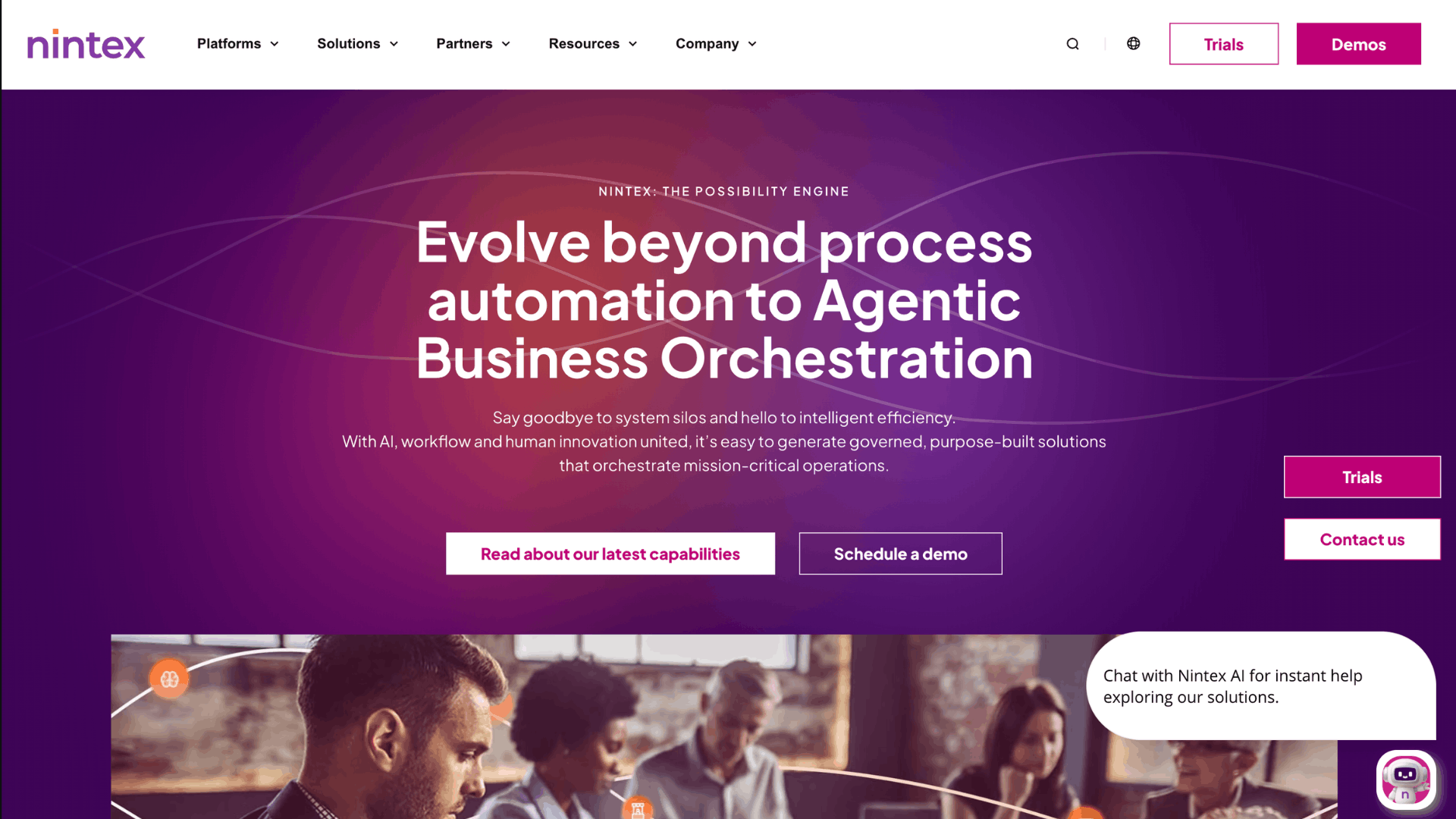
Nintex is a workflow automation platform that helps businesses manage approvals, document handling, and process mapping. Many companies use it to improve internal workflows and reduce manual paperwork.
The platform supports drag-and-drop workflow building, making setup easier for non-technical users.
Nintex also offers reporting and analytics tools for workflow tracking. It is commonly used in HR, finance, and legal departments.
| Pros | Cons |
|---|---|
| Easy drag-and-drop builder | Expensive for small teams |
| Strong document automation | Learning curve for advanced tools |
| Good reporting features | Some integrations require setup |
| Supports large workflows | Can feel complex for beginners |
- Best For: Enterprise workflow management
- Services: Approval automation, document workflows, reporting
- Integration Support: Microsoft 365, Salesforce, SharePoint
- Deployment Type: Cloud and on-premise
- Pricing: Custom enterprise pricing
8. Pegasystems (Pega)
Pega is a business process automation and customer engagement platform used by large enterprises. It combines workflow automation with AI-driven decision-making tools.
Businesses use Pega for customer service, case management, and operational workflows.
One of my friends works with enterprise workflow systems, where Pega is used to handle large and complex business operations.
The platform is highly customizable and supports complex business processes. It is widely used in banking, healthcare, and telecom industries.
| Pros | Cons |
|---|---|
| Powerful AI features | Expensive setup costs |
| Highly customizable | Requires technical expertise |
| Good for complex workflows | Steep learning curve |
| Strong enterprise support | Not ideal for small businesses |
- Best For: Large enterprises and complex workflows
- Services: Customer engagement, workflow automation, analytics
- Integration Support: CRM systems, ERP tools, cloud platforms
- Deployment Type: Cloud-based and on-premise
- Pricing: Enterprise-level pricing
9. Blue Prism
Blue Prism is a robotic process automation platform built for enterprise-level automation projects. It helps businesses automate repetitive tasks with digital workers and AI tools.
The platform focuses on security, compliance, and scalability for large operations.
Many companies use Blue Prism in the banking, healthcare, and finance industries. It supports integration with different enterprise applications and systems.
| Pros | Cons |
|---|---|
| Strong security features | Expensive for smaller companies |
| Good enterprise scalability | Technical setup required |
| Reliable automation tools | User interface feels outdated |
| Supports compliance workflows | Limited beginner support |
- Best For: Enterprise automation projects
- Services: Task automation, compliance workflows, analytics
- Integration Support: ERP systems, CRM tools, cloud apps
- Deployment Type: Cloud and on-premise
- Pricing: Custom pricing available
10. Appian
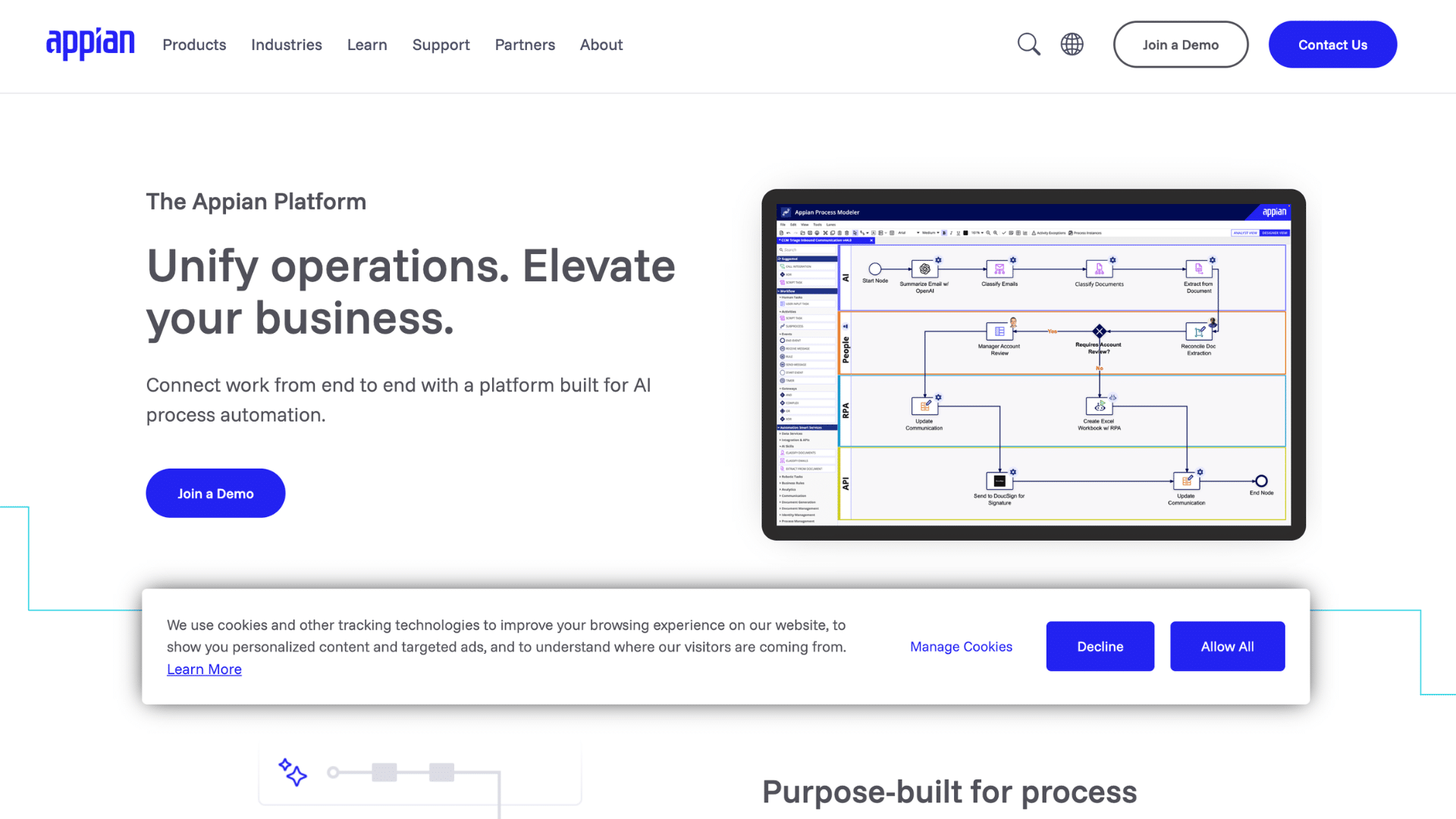
Appian is a low-code automation platform that helps businesses build apps and automate workflows quickly. It combines workflow management, AI tools, and data integration into one platform.
Businesses use Appian for customer service, case management, and operational workflows.
The low-code setup makes it easier for teams to create automated workflows with less coding experience. It is popular among enterprises needing fast workflow development.
| Pros | Cons |
|---|---|
| Fast app development | Higher pricing plans |
| Easy workflow customization | Advanced setup may need experts |
| Strong integration support | Complex for small businesses |
| Supports AI automation | Limited free features |
- Best For: Rapid workflow and app development
- Services: Process automation, case management, reporting
- Integration Support: Salesforce, SAP, Microsoft tools
- Deployment Type: Cloud-based and on-premise
- Pricing: Custom pricing plans
11. RunMyJobs by Redwood
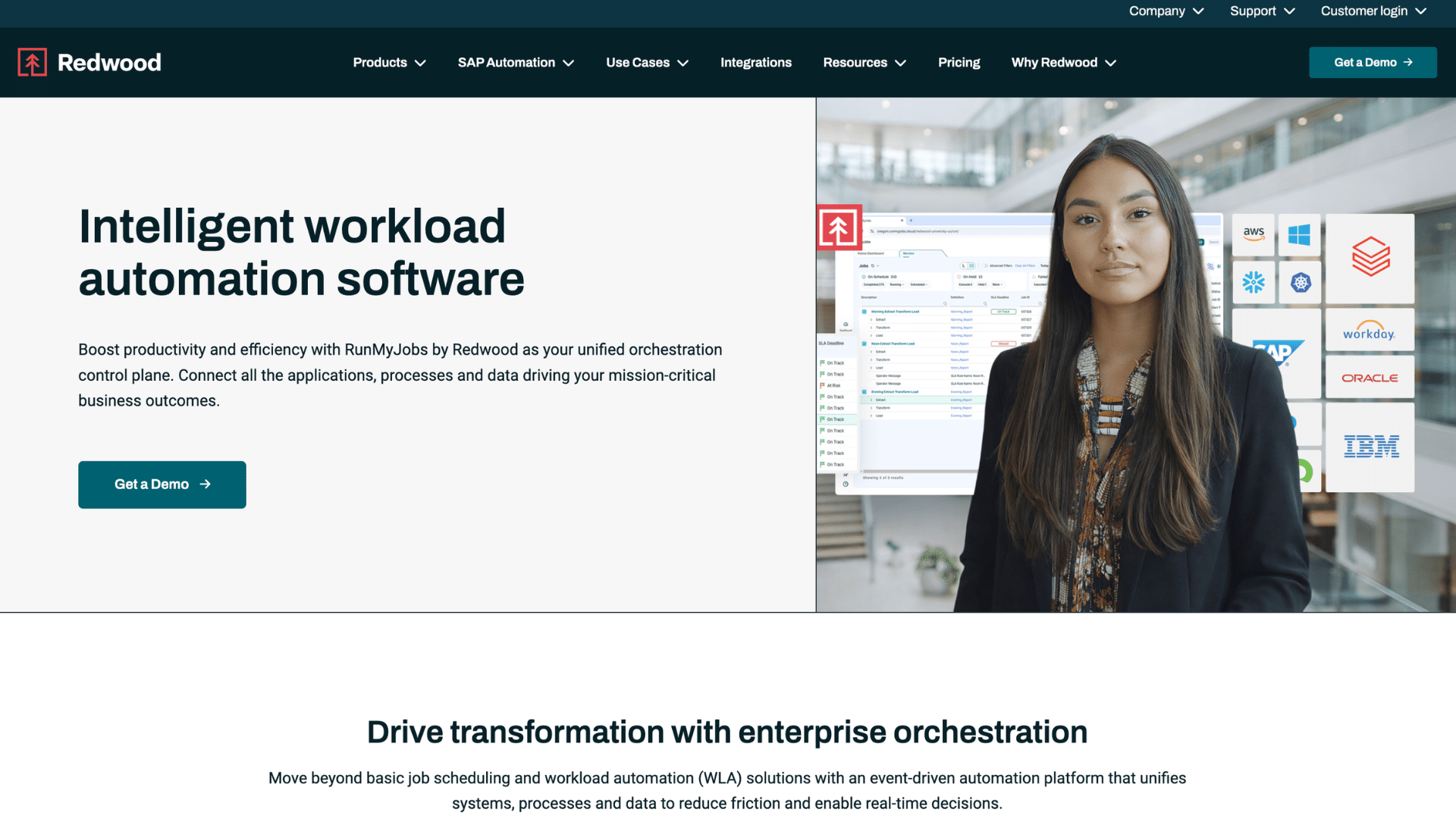
RunMyJobs by Redwood is an automation platform focused on workload automation and job scheduling. Businesses use it to manage IT operations, business workflows, and cloud tasks from one system.
The platform helps automate background processes and repetitive scheduling tasks. Many IT teams rely on scheduling tools like this to manage large workflows without constant manual monitoring.
It also provides monitoring tools to track workflow performance. Large companies often use it for IT and enterprise process management.
| Pros | Cons |
|---|---|
| Strong scheduling features | Not beginner-friendly |
| Good cloud automation | Mainly focused on enterprise use |
| Reliable workflow monitoring | Setup can be technical |
| Supports large workloads | Limited small business features |
- Best For: IT operations and enterprise scheduling
- Services: Process automation, cloud task management, reporting
- Integration Support: SAP, Oracle, cloud platforms
- Deployment Type: Cloud-based
- Pricing: Enterprise pricing available
12. Scoro
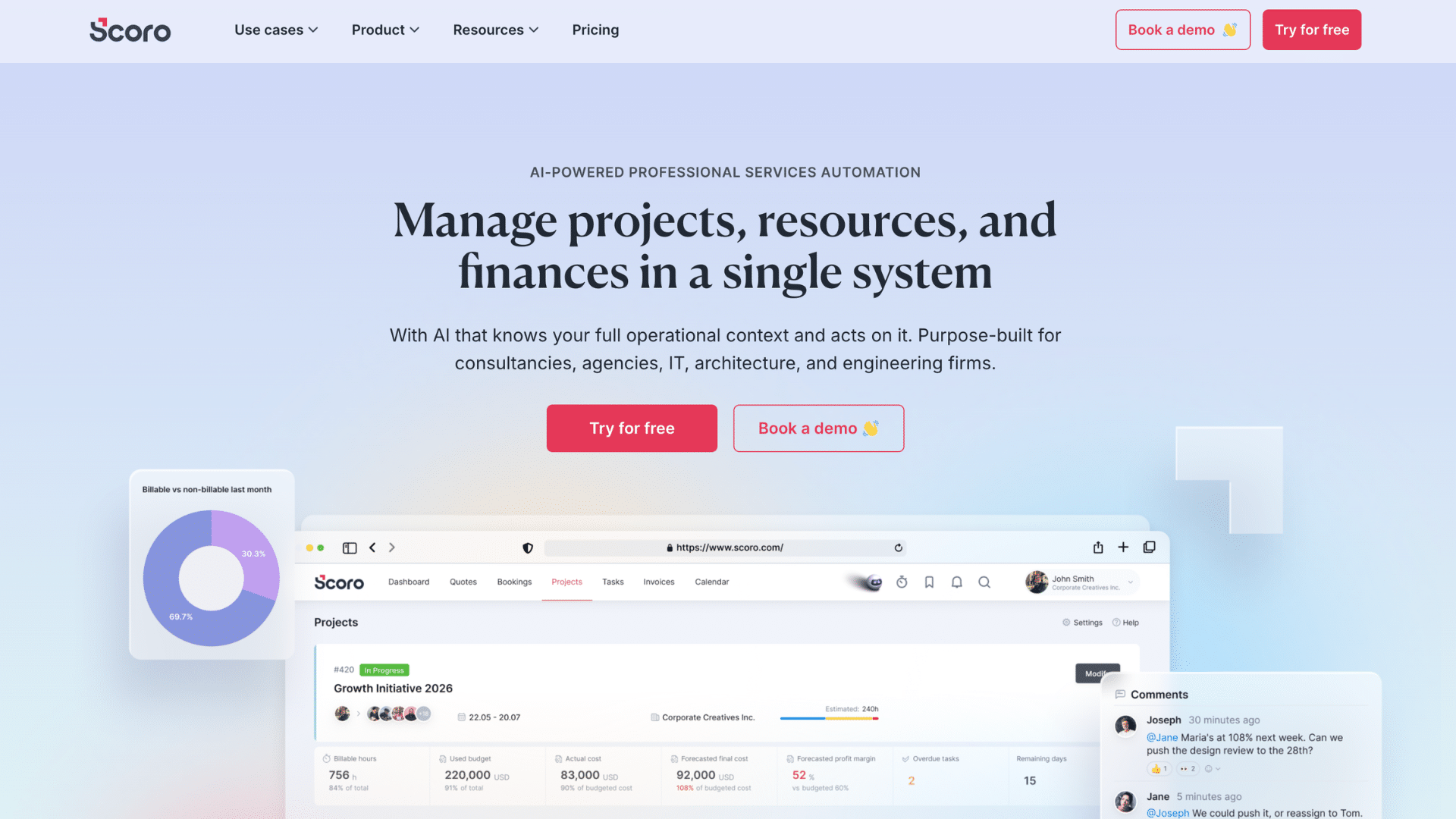
Scoro is a business management and workflow automation platform designed for service-based businesses. It combines project management, billing, scheduling, and reporting tools into a single system.
Companies use it to automate project workflows and improve team organization.
The platform also offers dashboards and analytics for tracking business performance. It works well for agencies, consulting firms, and professional service teams.
| Pros | Cons |
|---|---|
| All-in-one business tool | Limited customization options |
| Strong project tracking | Can feel expensive |
| Good reporting dashboards | Setup may take time |
| Easy team collaboration | Fewer integrations than competitors |
- Best For: Agencies and service-based businesses
- Services: Project tracking, billing automation, team management
- Integration Support: QuickBooks, Google Workspace, CRM apps
- Deployment Type: Cloud-based
- Pricing: Subscription-based pricing
13. ActiveBatch
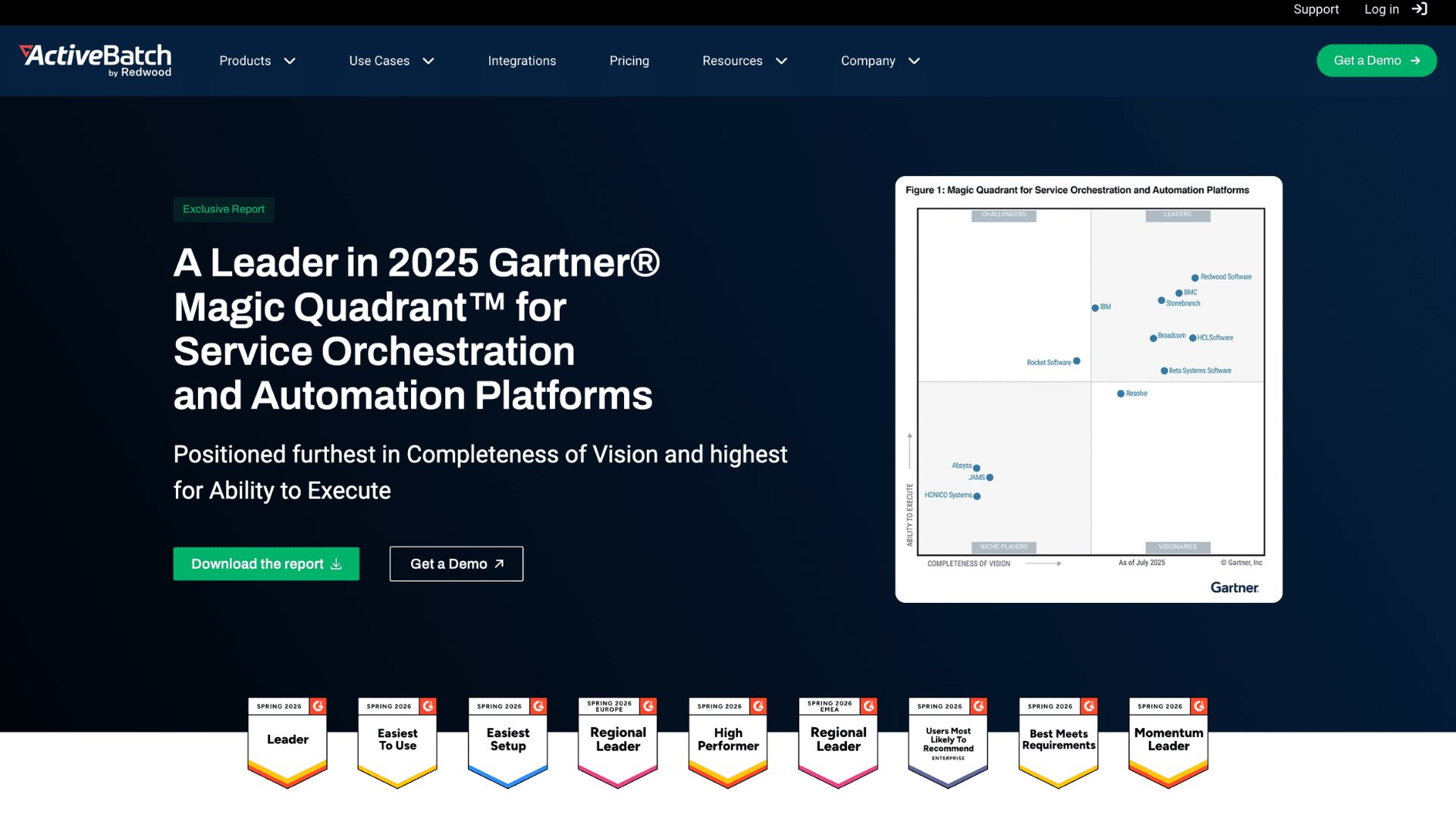
ActiveBatch is an enterprise workload automation platform that automates IT processes and workflows. It supports job scheduling, file transfers, and process automation across multiple systems.
Companies use it to reduce manual IT management tasks and improve workflow efficiency.
The platform also offers monitoring and alert tools for workflow tracking. It is mainly used by IT teams and large organizations.
| Pros | Cons |
|---|---|
| Powerful scheduling tools | Technical setup required |
| Strong IT automation support | Complex for beginners |
| Good monitoring features | Higher pricing |
| Supports enterprise workflows | The interface may feel outdated |
- Best For: IT workflow automation
- Services: File transfers, process scheduling, reporting
- Integration Support: Cloud services, ERP systems, databases
- Deployment Type: Cloud and on-premise
- Pricing: Custom enterprise pricing
14. Wrike
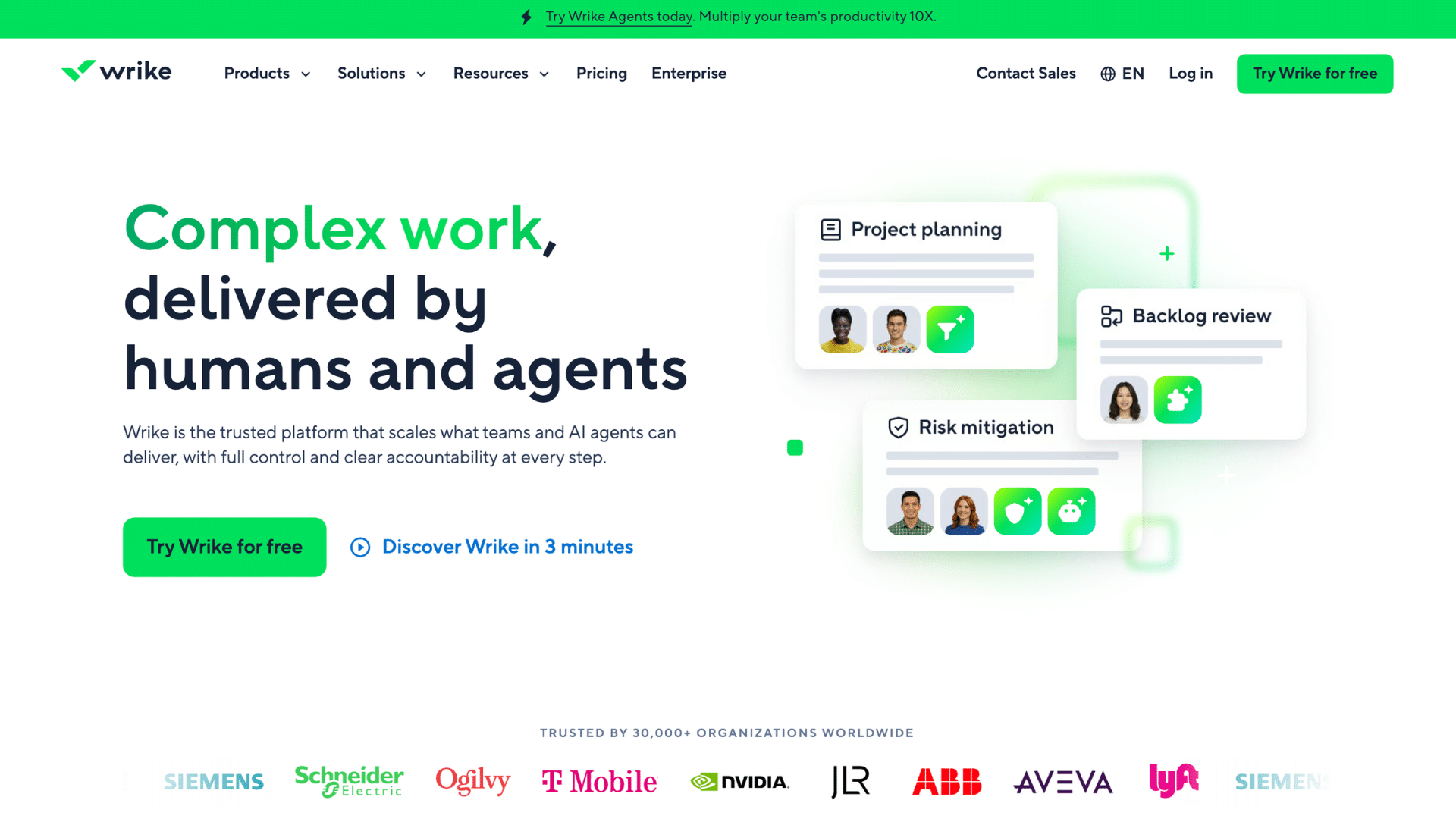
Wrike is a project management and workflow automation platform used by teams to manage tasks and projects. It offers automation tools for approvals, task assignments, and workflow tracking.
Businesses use Wrike to improve collaboration and keep projects organized.
Many companies use Wrike to manage deadlines, team communication, and project updates from one platform.
The platform also includes dashboards, reporting, and file-sharing features. It works well for marketing, creative, and remote teams.
| Pros | Cons |
|---|---|
| Easy team collaboration | Advanced tools cost extra |
| Good project dashboards | Can feel overwhelming at first |
| Flexible workflow setup | Limited offline support |
| Supports remote teams | Complex pricing structure |
- Best For: Project management and team collaboration
- Services: Workflow tracking, approvals, file sharing
- Integration Support: Slack, Google Drive, Microsoft Teams
- Deployment Type: Cloud-based
- Pricing: Free and paid plans available
15. Celigo
Celigo is an integration and automation platform that connects business applications and automates workflows.
Companies use it to synchronize data across systems such as ERP, CRM, and eCommerce platforms. The platform provides prebuilt integration templates to speed up setup.
It is commonly used by businesses managing multiple software systems. Celigo also supports custom automation workflows for data management.
| Pros | Cons |
|---|---|
| Strong integration support | Advanced setup can be technical |
| Good automation templates | Pricing may increase with usage |
| Easy data syncing | Limited offline functionality |
| Supports many business apps | Learning curve for beginners |
- Best For: System integration and data automation
- Services: ERP integration, CRM syncing, workflow management
- Integration Support: NetSuite, Salesforce, Shopify, Slack
- Deployment Type: Cloud-based
- Pricing: Custom subscription pricing
16. Nanonets
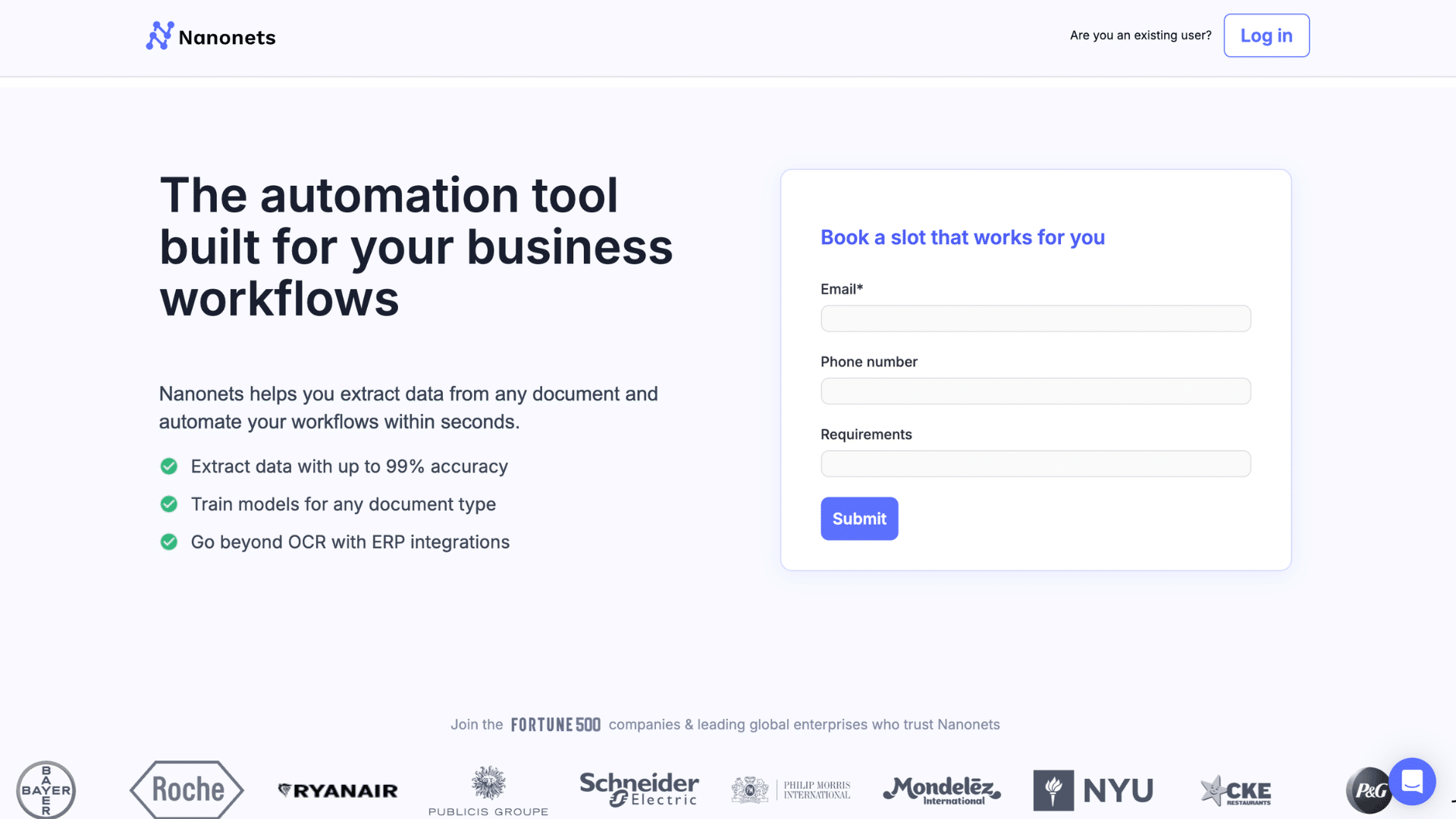
Nanonets is an AI-powered automation platform focused on document processing and data extraction. Businesses use it to automate invoices, receipts, forms, and document workflows.
The platform uses machine learning to automatically extract and organize data.
My brother works in invoice processing, and tools like Nanonets help save hours of manual document work each week.
It helps companies reduce manual data entry and improve accuracy. Nanonets is popular among finance, logistics, and operations teams.
| Pros | Cons |
|---|---|
| Strong AI data extraction | Limited advanced workflow tools |
| Easy invoice automation | Usage costs can rise |
| Good OCR accuracy | Requires an internet connection |
| Reduces manual entry work | Smaller integration library |
- Best For: Document and invoice automation
- Services: Data extraction, invoice processing, workflow management
- Integration Support: Google Drive, ERP systems, CRM apps
- Deployment Type: Cloud-based
- Pricing: Usage-based pricing plans
17. Pipefy
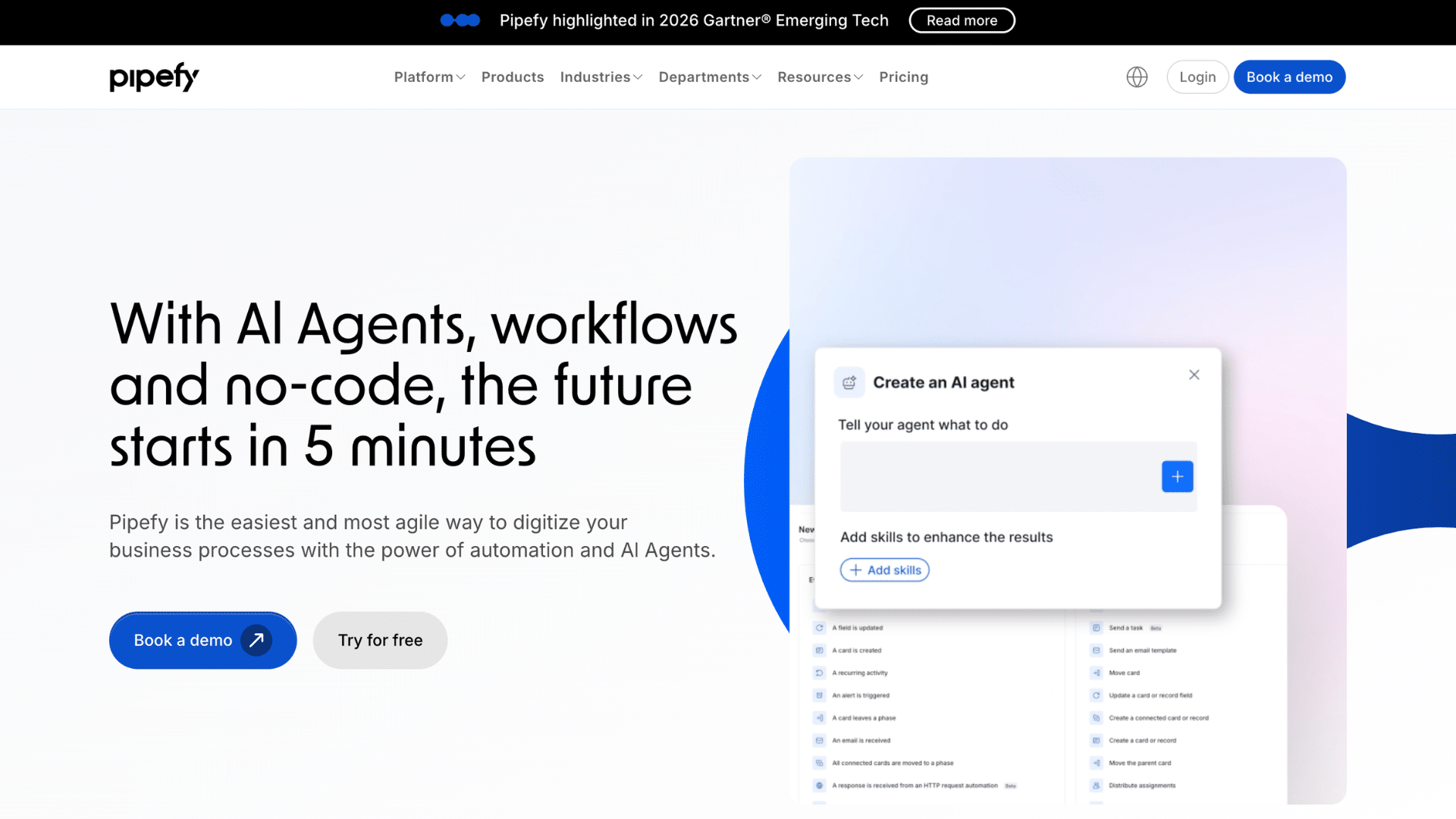
Pipefy is a workflow management platform that automates approvals and internal processes. It offers no-code workflow creation for HR, finance, procurement, and customer support tasks.
Businesses use it to standardize workflows and improve team organization.
The platform also includes dashboards and reporting tools for workflow tracking. It is popular with small and mid-sized businesses.
| Pros | Cons |
|---|---|
| Easy no-code setup | Limited enterprise features |
| Good workflow organization | Advanced customization is limited |
| User-friendly interface | Some integrations need upgrades |
| Affordable plans available | Reporting tools are basic |
- Best For: Small and medium businesses
- Services: HR workflows, procurement automation, task tracking
- Integration Support: Slack, Salesforce, Google Workspace
- Deployment Type: Cloud-based
- Pricing: Free and paid plans available
18. Bizagi
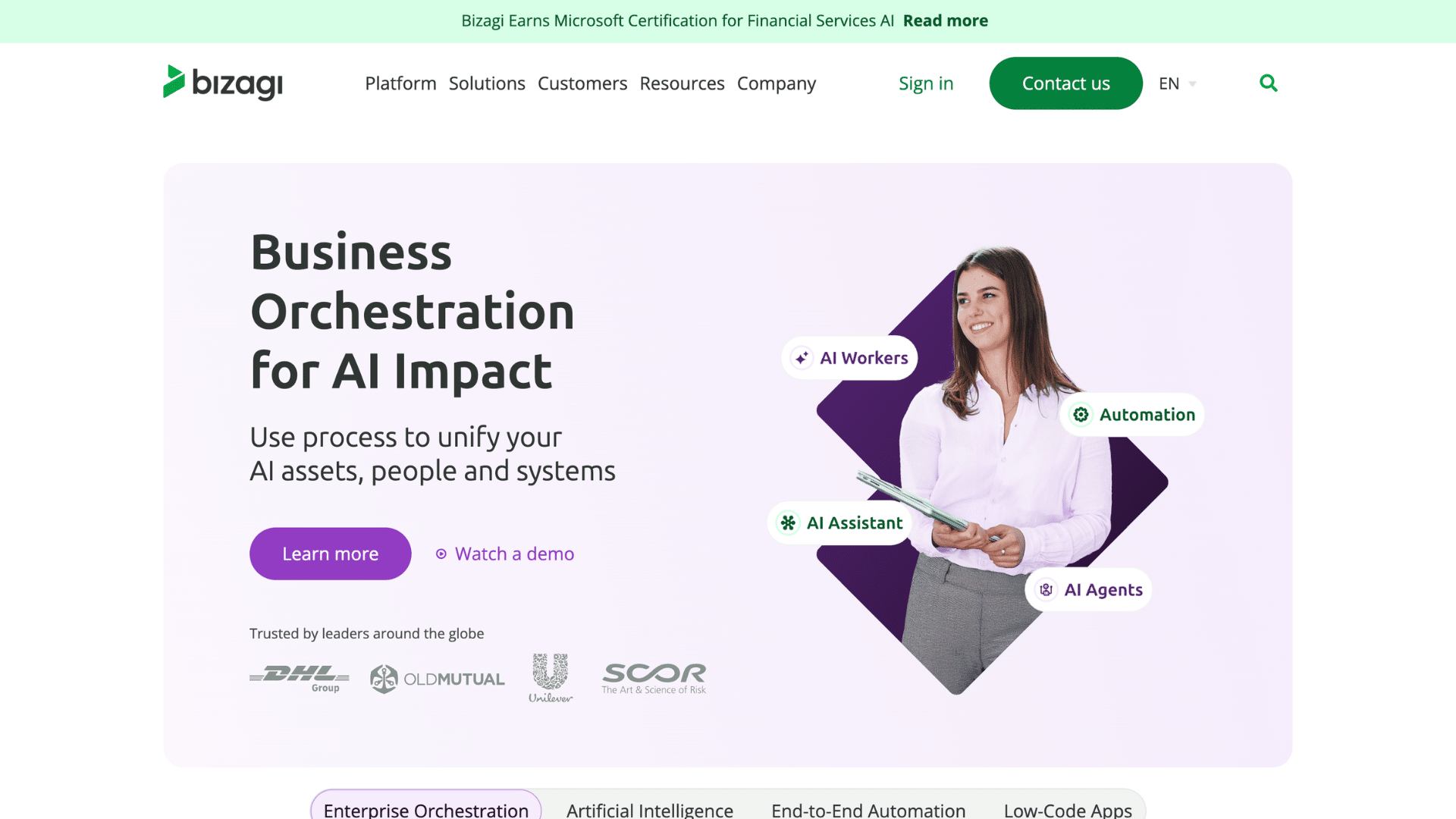
Bizagi is a business process management and automation platform for designing and automating workflows. Companies use it to improve operational efficiency and process visibility.
The platform provides low-code tools for workflow modeling and automation. It also supports process analytics, workflow tracking, and reporting.
Bizagi is commonly used in finance, healthcare, and government industries.
| Pros | Cons |
|---|---|
| Strong process modeling tools | Advanced setup can be technical |
| Good workflow visibility | Enterprise pricing can be high |
| Supports low-code automation | Limited beginner guidance |
| Useful analytics features | Some integrations require setup |
- Best For: Business process management
- Services: Workflow design, reporting, task automation
- Integration Support: ERP systems, CRM tools, cloud apps
- Deployment Type: Cloud and on-premise
- Pricing: Free modeler with paid enterprise plans
19. Camunda

Camunda is an open-source workflow and process automation platform designed for technical teams and developers. It helps businesses automate complex workflows and business processes.
I noticed many IT teams prefer Camunda because it gives developers more control over complex workflow automation projects.
The platform supports BPMN workflow modeling and integrates with enterprise systems. Companies use Camunda for scalable automation projects and microservice orchestration.
| Pros | Cons |
|---|---|
| Strong developer flexibility | Requires technical expertise |
| Open-source availability | Not beginner-friendly |
| Scalable workflow automation | Limited no-code features |
| Good enterprise integrations | Setup can be complex |
- Best For: Developer-focused automation projects
- Services: Workflow management, process orchestration, reporting
- Integration Support: Java apps, cloud platforms, enterprise systems
- Deployment Type: Cloud and self-hosted
- Pricing: Open-source and enterprise plans available
Quick Comparison of BPA Software
Different BPA platforms offer features ranging from simple workflow automation to advanced AI tools. This comparison highlights ease of use, free plans, and the best use case for each software.
| Software | Best For | Free Plan | AI Features | Ease of Use |
|---|---|---|---|---|
| UiPath | Enterprise automation | No | Yes | Moderate |
| Microsoft Power Automate | Microsoft users | Yes | Yes | Easy |
| Zapier | Small businesses | Yes | Limited | Very Easy |
| Kissflow | Workflow approvals | No | Moderate | Easy |
| Automation Anywhere | Enterprise AI automation | No | Yes | Moderate |
| ProcessMaker | Workflow management | No | Moderate | Moderate |
| Nintex | Document workflows | No | Moderate | Moderate |
| Pegasystems (Pega) | Large enterprise workflows | No | Yes | Technical |
| Blue Prism | Secure enterprise automation | No | Yes | Technical |
| Appian | App development | No | Yes | Moderate |
| RunMyJobs by Redwood | IT workload automation | No | Limited | Technical |
| Scoro | Service-based businesses | No | Limited | Easy |
| ActiveBatch | IT process automation | No | Moderate | Technical |
| Wrike | Project management | Yes | Limited | Easy |
| Celigo | System integrations | No | Moderate | Moderate |
| Nanonets | Document automation | No | Yes | Easy |
| Pipefy | SMB workflows | Yes | Limited | Easy |
| Bizagi | Process modeling | Yes | Moderate | Moderate |
| Camunda | Developers | Yes | Moderate | Technical |
How BPA Software Improves Team Productivity?
Business automation software helps teams complete tasks faster by reducing manual work and improving workflow management. It also keeps projects organized, improves communication, and helps employees focus.
- Faster Task Completion: Automation tools handle repetitive work quickly, helping teams finish projects on time. This also reduces delays in daily operations.
- Better Team Collaboration: Employees can track updates, approvals, and tasks from one shared platform. It helps teams stay connected and work more smoothly together.
- Less Manual Work: Teams spend less time on data entry, email, and repetitive tasks. Employees can focus more on important business goals.
- Improved Workflow Tracking: Managers can monitor progress and identify delays more easily. This makes project management more organized and efficient.
- Reduced Errors: Automated systems follow set rules, reducing the likelihood of mistakes. Better accuracy also improves overall workflow quality.
- Better Time Management: Employees can focus on planning, customer service, and high-value work. It also helps teams handle workloads more effectively.
Why AI Matters in Business Process Automation Software?
AI is helping automation software handle tasks faster, smarter, and with fewer manual steps. Businesses now use AI tools to improve workflows, reduce errors, and make better decisions.
AI has changed business process automation software by making workflows more intelligent and flexible.
Earlier automation tools mainly followed fixed rules, but AI can now analyze data, understand patterns, and handle more complex tasks.
AI-powered tools are becoming a major part of digital transformation SMB efforts across industries.
Many businesses use AI for customer support chatbots, document processing, invoice management, and predictive analytics.
AI-powered automation software can learn from past actions and improve workflow performance over time.
This makes business operations more accurate and efficient. Industries like healthcare, finance, retail, and logistics are using AI automation to manage large volumes of data and daily tasks without increasing employees’ workload.
Best BPA Software for Small Businesses
Small businesses need affordable, easy-to-use, and flexible automation tools for daily workflows. The platforms below help manage tasks, approvals, communication, and automation with less manual work.
| Software | Best For | Main Services | Pricing Type | Ease of Use |
|---|---|---|---|---|
| Zapier | App integrations | Workflow automation, task syncing | Free & paid plans | Very easy |
| Pipefy | Workflow management | HR and approval workflows | Free & paid plans | Easy |
| Kissflow | Team workflows | Process automation and approvals | Custom pricing | Easy |
| Microsoft Power Automate | Microsoft users | Office workflow automation | Subscription-based | Moderate |
| Wrike | Project management | Task tracking and collaboration | Free & paid plans | Easy |
| Scoro | Service businesses | Project and billing automation | Subscription-based | Moderate |
| ProcessMaker | Process management | Workflow and compliance automation | Custom pricing | Moderate |
Common Challenges in Business Process Automation
Businesses often face challenges when setting up automation tools during the early stages of implementation. Issues like high costs, employee training, and system integration can affect productivity and workflow performance.
- High Setup Costs: Some automation platforms require a large investment for software, setup, and training. This can be difficult for small businesses with limited budgets.
- Employee Resistance: Teams may feel uncomfortable using new systems and automated workflows. Proper training helps employees adjust more easily.
- Complex System Integration: Connecting automation software with existing business tools can take time. Some older systems may not support modern integrations.
- Workflow Errors: Incorrect workflow setup can create delays and process issues. Businesses need regular testing to avoid automation mistakes.
- Security Concerns: Automated systems handle sensitive business and customer data. Strong security settings are important for data protection.
- Maintenance and Updates: Automation platforms need updates and monitoring to work properly. Regular maintenance helps avoid technical problems.
- Limited Customization: Some tools may not fully match a company’s workflow needs. Businesses may need additional setup or custom development.
Conclusion
The right business automation software can make work easier and more organized. Each platform offers different features based on business size, workflow needs, and budget.
Some tools work better for simple task automation, while others are designed for large enterprise operations with AI and advanced integrations.
Businesses save significant time by automating repetitive tasks rather than handling everything manually.
Better workflow tracking, fewer errors, and faster communication can improve team productivity over time. The best approach is to focus on the features your business actually needs instead of choosing the most expensive platform.
If you have used these automation tools, share your experience in the comments to help others choose the right software.
Frequently Asked Questions
Can Business Automation Software Work on Mobile Devices?
Many automation platforms offer mobile apps for workflow tracking, approvals, and task management.
Do Automation Tools Require Coding Knowledge?
Many modern automation platforms provide no-code or low-code tools for non-technical users.
How Long Does It Take to Set up Automation Software?
Setup time depends on workflow complexity and can range from a few hours to several weeks.
Can Automation Software Help with Remote Team Management?
Yes, many platforms support remote collaboration, task tracking, and real-time workflow updates.
Is Business Automation Software Useful for Startups?
Startups use automation tools to save time, reduce manual tasks, and manage growing workloads more.