




Manufacturing is moving faster than ever, and I see more companies turning to automation in manufacturing to keep up.
If you manage a plant or oversee production, you likely feel pressure to cut costs, reduce errors, and improve output.
You want solutions that make work easier, not more complicated. In this guide, I will explain the key trends shaping modern factories.
You will learn how AI, robotics, and smart systems are changing daily operations. I also share the real benefits, common roadblocks, and what to consider before making big decisions.
This article gives you a clear view of where the industry stands today and where it is heading next.
By the end, you will understand how to build a smart strategy that fits your goals and supports long-term growth.
What Is Automation in Manufacturing?
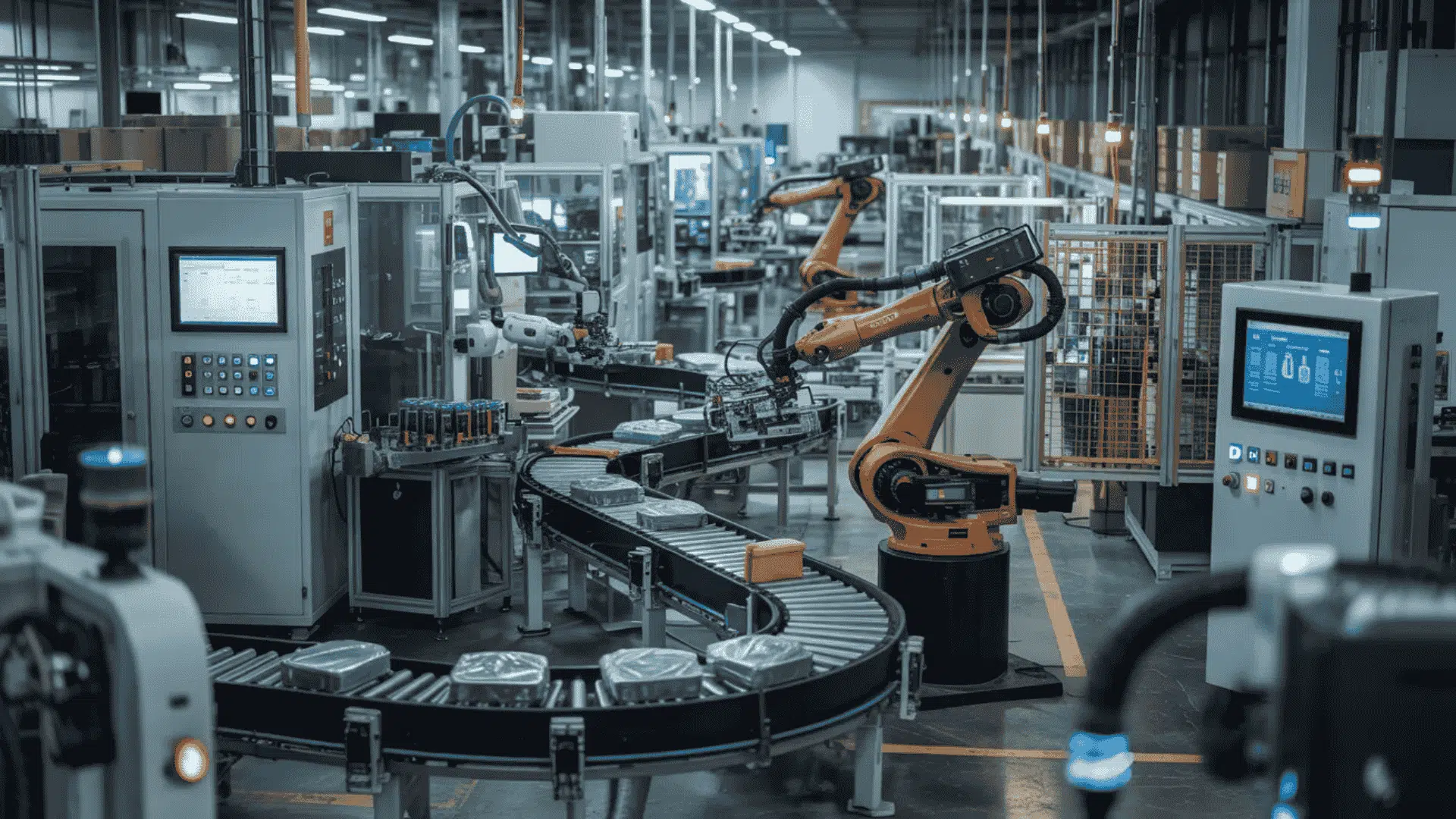
Automation in manufacturing means using machines, software, and control systems to handle tasks that people once did by hand.
It helps factories run faster with fewer mistakes by using programmed equipment instead of manual work.
The main goal is to improve speed, accuracy, and consistency. Automated systems can move materials, assemble parts, inspect products, and track data in real time.
Many plants now use robots, sensors, and computer systems to keep lines running smoothly.
Automation does not remove people from the process. Workers still monitor systems, solve problems, and make key decisions.
Machines handle routine tasks, letting teams focus on quality, safety, and performance while controlling costs.
One thing I see consistently in cloud deployments is that facilities that gain the most from automation focus on strong data systems, not just robots.
With cloud and real-time processing, they predict issues instead of reacting.
Key Trends in Automation in Manufacturing
Manufacturing is evolving as companies adopt smarter tools and connected systems. These automation trends in manufacturing show how factories are improving speed, quality, and overall performance.
1. AI and Digital Adoption
Artificial intelligence is helping factories make better decisions faster. AI systems analyze large volumes of production data to identify patterns and reduce errors.
Many manufacturers use digital dashboards to track output, downtime, and quality in real time.
Cloud software also connects teams across locations, making planning easier.
As more companies adopt digital tools, they gain better control over costs, scheduling, and supply levels. This shift supports faster response times and steady production performance.
2. Robotics and Cobots
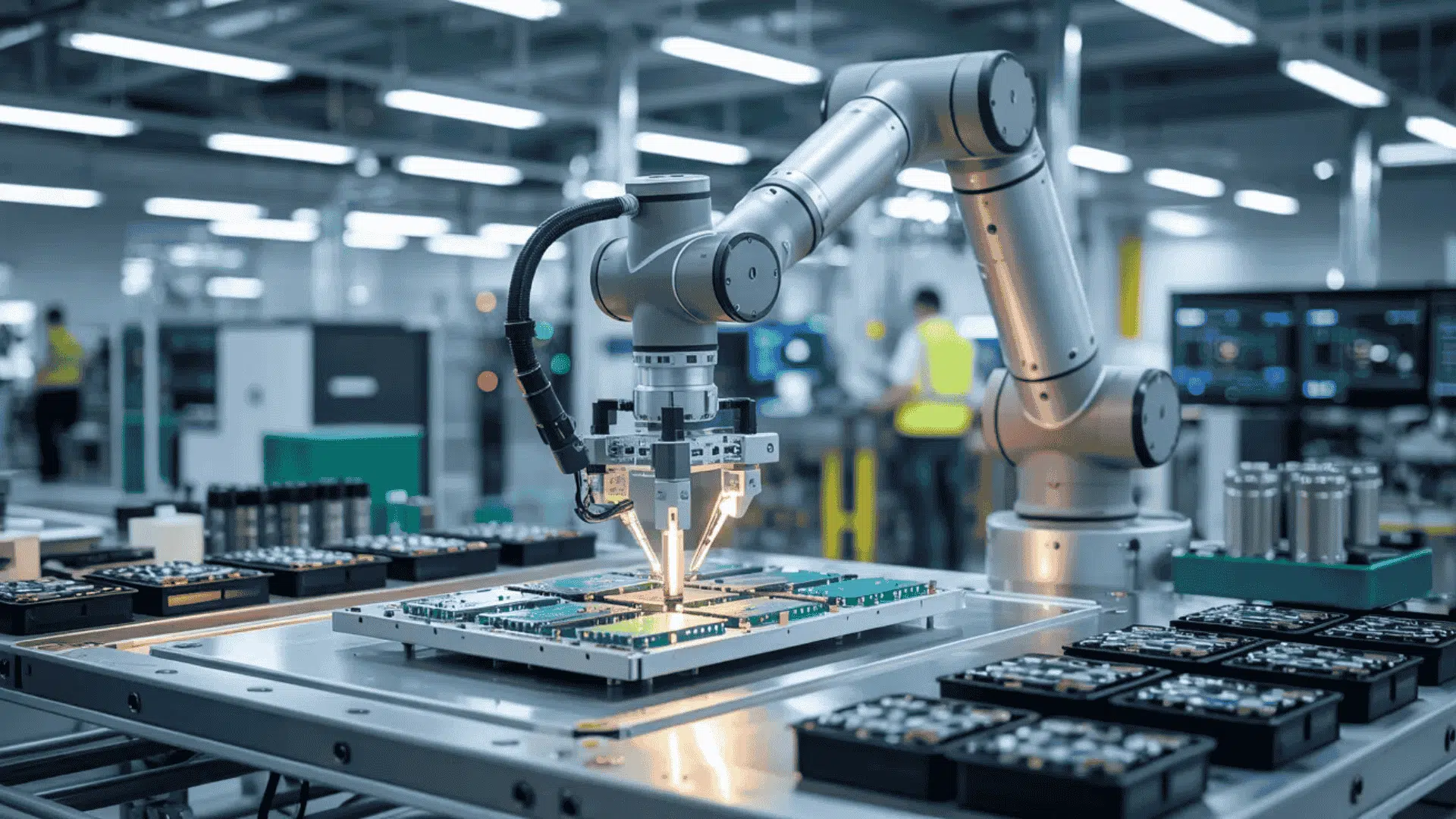
Robots are now common in many factories. They handle welding, packaging, assembly, and material movement with high accuracy.
Cobots, or collaborative robots, work safely beside human employees. They assist with repetitive or heavy tasks without replacing skilled workers.
Small businesses use cobots for lower cost, easier setup, and safer, faster work.
A colleague who runs operations at a mid-sized auto parts supplier told me their cobot deployment paid for itself in 14 months.
The deciding factor was not the robot itself but the ease of reprogramming it when product lines shifted. Flexible tooling, not raw speed, was what made the ROI case.
3. IoT and Edge Computing
The Internet of Things connects machines, sensors, and systems across the production floor. These connected devices collect real-time data on temperature, speed, and equipment health.
Edge computing processes this data locally rather than sending it to a remote server.
This reduces delays and allows quick action when issues arise. Factories use these systems to improve quality control and reduce downtime.
Faster data processing helps managers respond to problems before they grow.
4. Additive Manufacturing
Additive manufacturing, often called 3D printing, is changing how parts are made. Instead of cutting material away, this process builds items layer by layer.
Companies use it for rapid prototyping and custom components. It reduces waste and shortens product development time.
Manufacturers can test designs quickly without waiting for long tooling processes.
As materials improve, additive manufacturing is moving from small-scale testing to larger production use in some industries
5. Flexible Automation Strategies
Flexible automation allows factories to adjust quickly when product demand changes. Instead of using a single fixed setup, companies design systems that can handle multiple products with minimal downtime.
Machines can be reprogrammed, and production lines can shift in response to new orders. This helps reduce delays and supports faster turnaround times.
Flexible systems also lower long-term risk because businesses can scale up or down without rebuilding entire operations.
This approach gives manufacturers greater control and more consistent performance.
6. Human-Robot Collaboration
Human-robot collaboration focuses on teamwork between workers and machines. Robots handle repetitive, heavy, or risky tasks, while employees manage supervision and quality control.
Cobots are designed to work safely beside people without large safety barriers. This setup improves productivity while keeping skilled workers involved in key decisions.
Employees often receive training to operate and maintain these systems.
By combining human judgment with robotic precision, factories improve both efficiency and workplace safety.
7. Predictive Maintenance
Predictive maintenance uses sensors and software to monitor machine health. Instead of waiting for equipment to break, systems detect early warning signs like unusual vibration or heat.
Maintenance teams receive alerts and schedule repairs before major failures occur.
This reduces downtime and lowers repair costs. It also extends the life of machines. With better planning, factories avoid sudden production stops.
Predictive maintenance helps keep operations steady and improves overall reliability.
Research note: A study published in the International Journal of Production Economics found that predictive maintenance programs reduce unplanned downtime by 30–50% compared to traditional scheduled maintenance.
The biggest gains come within the first 18 months of sensor deployment.
8. Digital Twins
A digital twin is a virtual model of a real machine or production line. It allows companies to test changes in a digital space before applying them in the factory.
Engineers can simulate different conditions and identify possible issues early.
This reduces errors and improves planning. Digital twins also help track performance and suggest improvements.
By using virtual testing, manufacturers save time and lower the risk of costly mistakes.
9. Sustainable Automation
Sustainable automation helps factories reduce waste, save energy, and lower operating costs. Smart systems monitor power use and adjust equipment based on real production needs.
Automated controls improve accuracy, which reduces scrap and excess material use. Sensors also track water, energy, and emissions to support better reporting and compliance.
Many companies now focus on cleaner production methods while maintaining output.
Sustainable automation allows manufacturers to improve efficiency and meet environmental standards without slowing down operations.
10. Supply Chain Automation
Supply chain automation improves how materials move from suppliers to the factory and then to customers. Software tracks inventory levels in real time and automatically updates stock.
This reduces delays, shortages, and overordering. Automated warehouses use robotics to sort, store, and ship products faster and with fewer errors.
Digital tools also improve demand forecasting and order planning.
By connecting systems across the supply chain, manufacturers maintain steady production and respond quickly to market changes.
What Is the Role of AI and Robotics in Manufacturing?
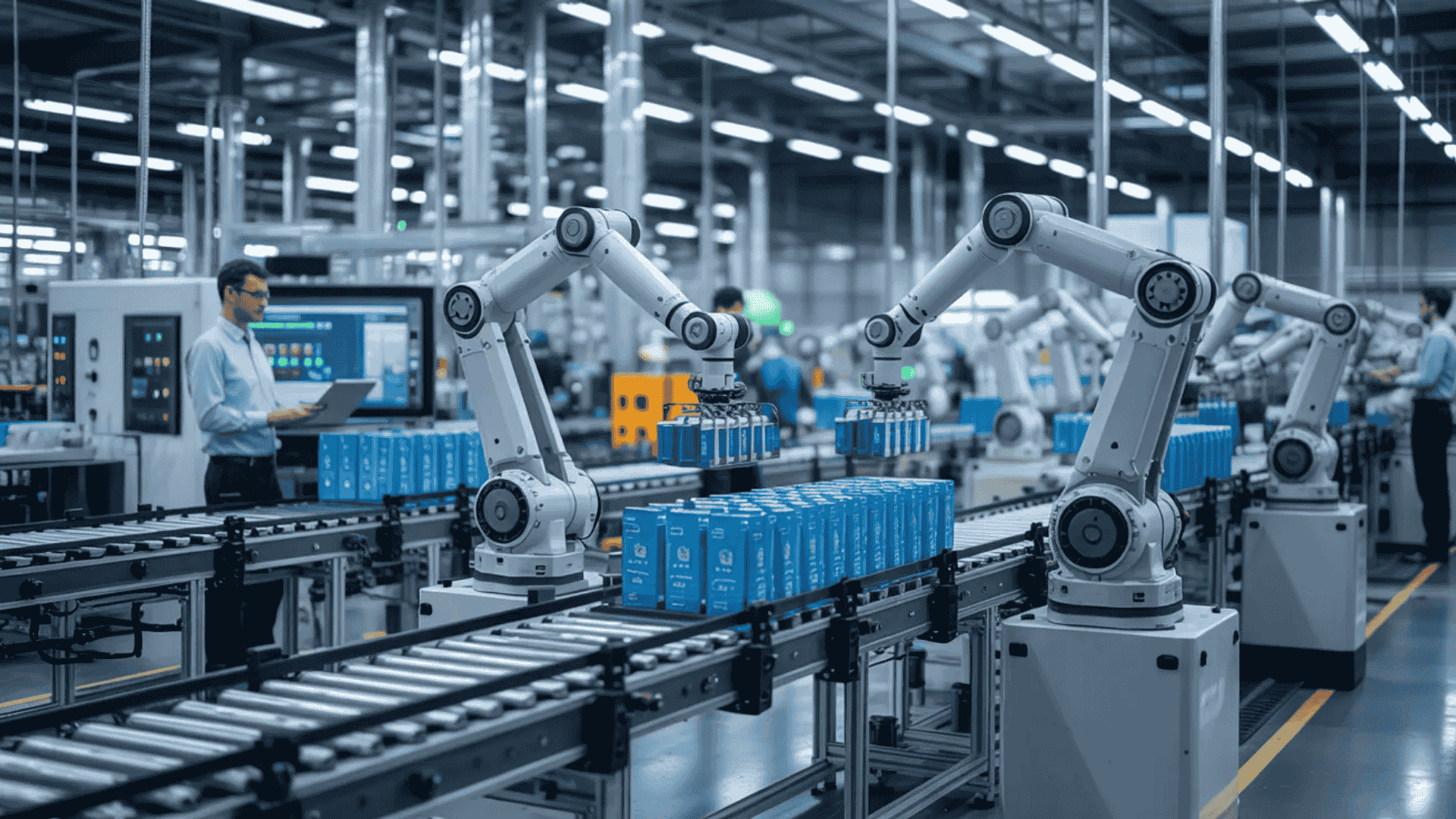
AI and robotics play a central role in modern manufacturing. AI systems analyze production data to improve planning, detect defects, and reduce downtime.
They help managers make quick, data-based decisions, while robots handle repetitive and demanding tasks.
Robots assemble parts, move materials, and inspect products with high accuracy.
When combined, AI and robotics create smarter production lines that adapt quickly to changes. AI can guide robots to improve performance and avoid errors.
This cuts waste and keeps output steady, while workers monitor systems and handle complex tasks.
AI and robotics help manufacturers boost efficiency, keep quality high, and respond faster to demand.
According to the International Federation of Robotics (IFR), global robot installations in manufacturing reached a record 553,000 units in 2022, with automotive and electronics sectors leading adoption.
The IFR projects continued double-digit growth through 2026 as cobot costs continue to fall.
Benefits of Automation in Manufacturing
Automation helps manufacturers improve performance and maintain steady production. It supports better efficiency, quality control, and long-term cost management.
- Higher Productivity: Machines run continuously and complete tasks faster than manual work, increasing overall output.
- Improved Accuracy: Automated systems reduce human errors, leading to more consistent and reliable results.
- Lower Labor Costs: Fewer manual tasks mean companies can reduce dependency on large workforces.
- Better Safety: Robots handle risky or heavy tasks, helping reduce workplace injuries.
- Faster Production Time: Automated processes speed up manufacturing cycles and reduce delays.
- Consistent Quality: Systems follow set instructions, ensuring uniform product quality every time.
- Reduced Waste: Precise operations minimize material waste and improve resource use.
- Real-Time Monitoring: Data systems track performance, helping managers make quick decisions.
- Scalability: Automation makes it easier to increase production when demand grows.
- Improved Worker Roles: Employees focus on monitoring, planning, and solving complex problems instead of repetitive tasks.
What Does ROI Look Like in Practice?
ROI timelines in manufacturing automation vary based on the type of system and scale of use. Cobots used by small and mid-sized businesses usually recover their cost within 12 to 24 months.
These systems are easier to install and require lower upfront investment, making them a practical choice for faster returns.
In contrast, large fixed automation lines used in high-volume production take longer to break even, often around 3 to 5 years. However, they provide higher cost savings over time due to their capacity and efficiency.
Software-based automation, such as predictive maintenance tools and supply chain systems, often delivers faster results.
Since these tools cost less to implement, companies can start seeing improvements in performance data within the first few months of use.
Types of Automation in Manufacturing
Manufacturing uses different types of automation based on production needs and flexibility. Each type supports a specific level of volume, customization, and operational control.
| Type of Automation | Description | Best Used For | Flexibility Level |
|---|---|---|---|
| Fixed Automation | Uses specialized equipment designed for high-volume, repetitive production tasks. | Mass production with stable demand | Low |
| Programmable Automation | Equipment can be reprogrammed to handle different product batches. | Batch production with moderate variation | Medium |
| Flexible Automation | Systems adjust quickly to different products with minimal downtime. | Custom or variable production | High |
| Integrated Automation | Combines machines, software, and control systems into one connected network. | Smart factories and large-scale operations | High |
| Robotic Automation | Uses industrial robots to perform precise and repetitive tasks. | Assembly, welding, packaging | Medium to High |
Future of Automation in Manufacturing
The future of automation in manufacturing will focus on smarter systems, faster decision-making, and greater flexibility.
Factories will rely more on AI to predict demand, improve quality control, and reduce downtime. Robotics will continue to advance, with machines that learn and adapt to changes in real time.
Connected systems will share data across departments, helping teams respond quickly to market shifts.
Automation will also support customized production, allowing manufacturers to produce smaller batches without raising costs. Sustainability will remain a key priority, with systems designed to reduce energy use and material waste.
At the same time, workers will take on more technical roles, managing and improving automated systems.
Overall, automation will move beyond basic efficiency and become a core driver of innovation and long-term growth in manufacturing.
Conclusion
Automation in manufacturing is no longer something to plan for someday. It is already shaping how factories improve speed, quality, and overall efficiency.
As you think about your own operations, it is important to focus on what truly supports your goals.
The right systems should solve real problems, not create new ones. When automation aligns with clear planning and strong leadership, it becomes a long-term advantage.
You do not need to change everything at once. Start small, measure results, and build from there.
A steady and practical approach often delivers better results than rushing into large investments.
Are you using automation in your facility, or are you still evaluating your options? Share your experience, challenges, or questions in the comments below so others can learn from your journey, too.