

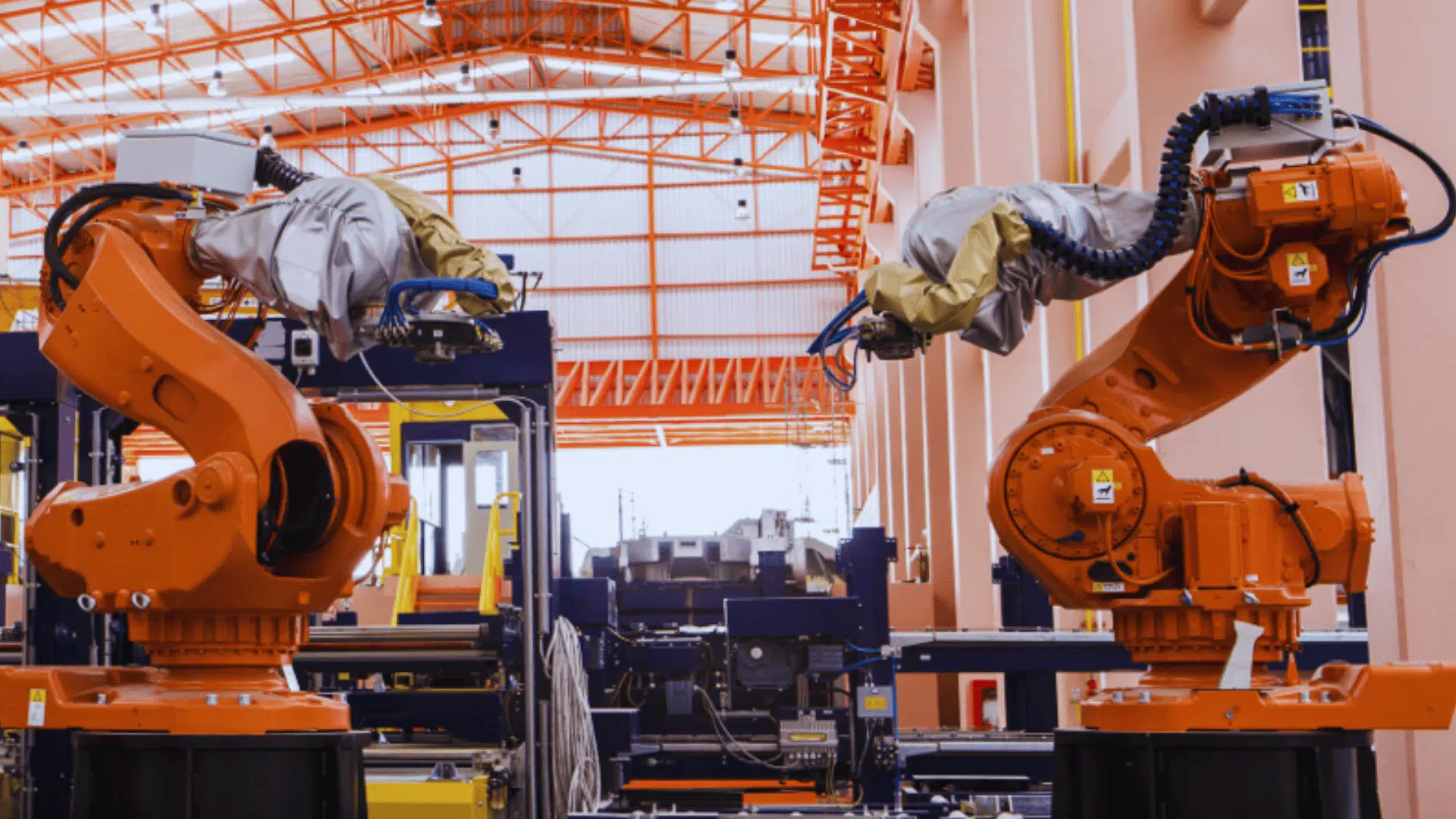





Robots are no longer just a thing you see in movies. They are working in real factories, warehouses, and production lines every single day.
According to the International Federation of Robotics (IFR) World Robotics Report, a record 553,052 industrial robots were installed globally in 2022 alone, and that number continues to rise.
Having spent a decade writing technical documentation for automation integrators, I have seen how quickly even small manufacturers are adopting these systems once they understand the specific task each robot type handles best.
In this article, I will explain the most important applications of robotics used in industrial settings today.
You will learn how robots are used in assembly, welding, packaging, and more.
By the end, you will have a clear understanding of how industrial robots work and why so many businesses are making the switch.
What Are Robotics and Artificial Intelligence?
An industrial robot is a programmable machine built to handle physical tasks in factories with high speed, accuracy, and consistency beyond human limits.
These robots work on multiple axes, which allows them to move freely and complete complex actions.
Common types include articulated robots with six-axis arms, SCARA robots used for fast horizontal assembly, delta robots for rapid pick-and-place jobs, and Cartesian robots that follow straight-line movement.
Another growing category is collaborative robots, also called cobots, which are designed to work safely next to humans.
They do not need safety cages and follow ISO/TS 15066 guidelines to reduce risk during shared tasks.
Industries use these robots in welding, assembly, packaging, and inspection, where steady output and low error rates are important for meeting production goals and maintaining product quality standards.
Top Core Applications of Industrial Robots
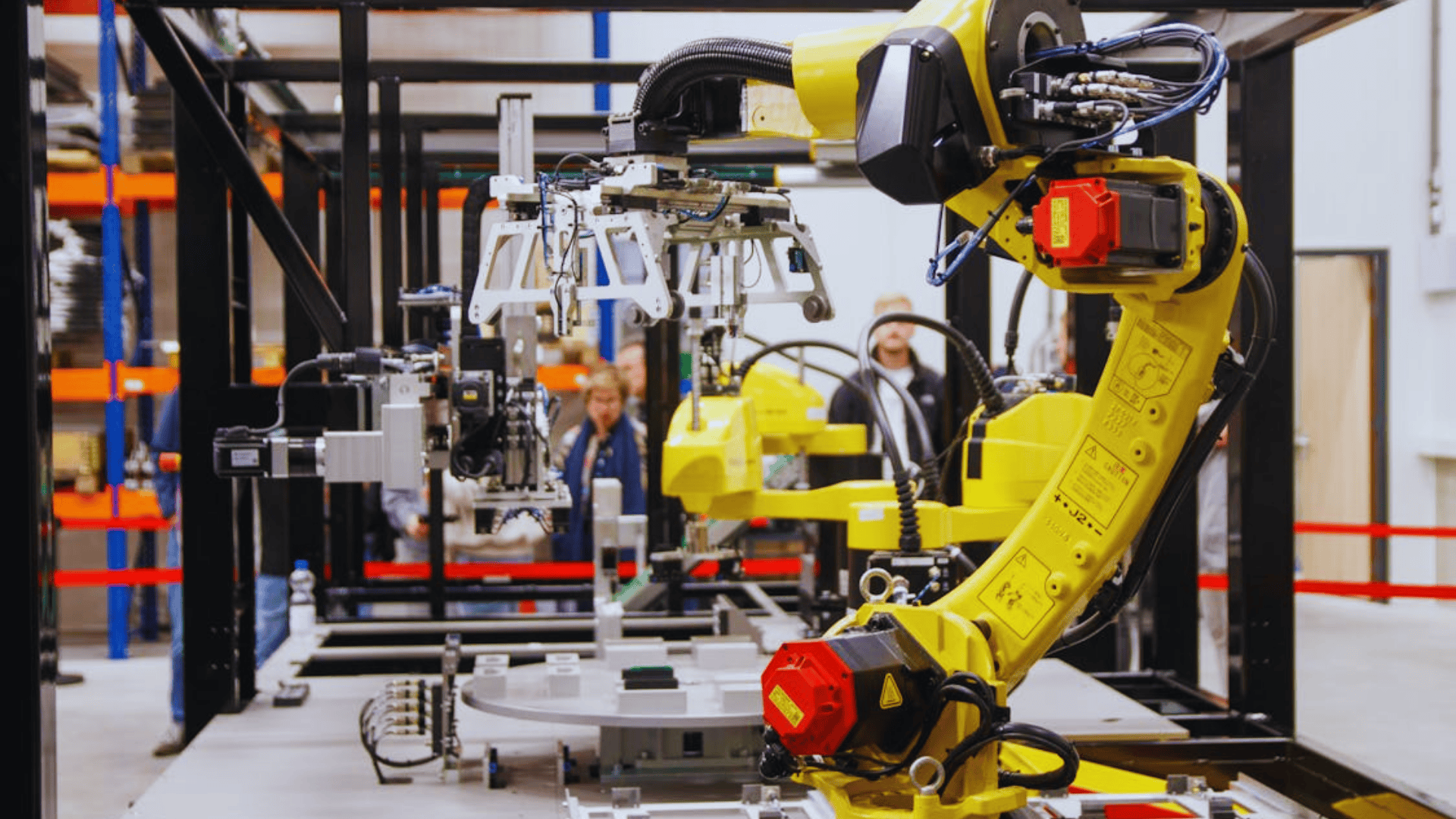
Industrial robots are used across dozens of industries, but some applications stand out as the most impactful. Let’s look at the core ways these machines are used on factory floors every day.
1. Assembly
Robots are widely used in assembly lines to assemble products quickly and accurately. They handle tasks such as attaching components, inserting screws, and joining parts.
This is especially critical in automotive and electronics manufacturing, where component tolerances are measured in fractions of a millimeter.
When I was documenting the integration of a 6-axis articulated arm into a PCB sub-assembly line, the engineering team reported a 34% reduction in rework within the first three months.
Robots can work around the clock without slowing down, making assembly faster and more consistent than manual labor.
And they eliminate the fatigue-driven error patterns that are particularly hard to trace in quality audits.
2. Welding
Welding is one of the most popular applications for industrial robots. Robotic welders perform arc, spot, and laser welding with a level of consistency hard to match by hand.
They work in high-heat, high-fume environments that are unsafe for human workers.
BMW’s Leipzig plant, for example, uses over 1,000 robotic welding arms on its body-in-white production line, producing consistent structural welds across every vehicle frame.
Industries like automotive, shipbuilding, and aerospace depend on robotic welding to produce strong, clean joints every time.
Because the robot repeats the exact same motion each cycle, weld quality remains uniform across thousands of units, a level of consistency that manual welders, even highly skilled ones, cannot sustain indefinitely.
3. Packaging and Palletizing
Robots play a big role in packaging operations. They fill, seal, label, and sort products at speeds that human workers simply can’t keep up with.
In warehouses and food processing plants, robotic palletizers stack boxes and crates onto pallets with precision, reducing product damage and the physical strain on workers performing repetitive lifting.
Amazon’s fulfillment centers use robots for palletizing and sorting, boosting throughput while lowering injury rates among workers.
With machine vision systems added, packaging robots can also detect misaligned or damaged items before they move further down the line, cutting end-of-line waste.
4. Material Handling
Moving materials from one place to another is a basic but essential task in any factory.
Robots and automated guided vehicles (AGVs) handle this job, transporting raw materials, parts, and finished goods across the floor.
This reduces the risk of injury from heavy lifting and keeps the workflow moving at a predictable pace.
Material handling robots are also used in warehouses to retrieve and sort inventory, and modern deployments integrate them with warehouse management systems (WMS).
5. Machine Tending
Machine tending involves loading and unloading parts into CNC machines, injection molding equipment, or other automated tools. This task is repetitive and time-consuming for human operators.
Robots handle it with ease, working alongside machines without breaks.
They pick up raw parts, place them into the machine, wait for the process to finish, and remove the completed piece.
This keeps production moving at a steady pace and frees up human workers for tasks that require more skill and judgment.
6. Painting and Coating
Applying paint or protective coatings to products requires consistency and control. Robotic painting systems deliver the same spray pattern, speed, and coverage every time.
This cuts paint waste, ensures a uniform finish, and keeps workers away from harmful fumes like VOCs and isocyanates.
Automotive manufacturers were among the first to adopt robotic painting.
A modern car body passes through a fully automated paint booth where robots apply electrocoat primer, base coat, and clear coat in a precise sequence.
Today, the same approach is standard in appliance manufacturing, aerospace, and heavy equipment production.
7. Quality Inspection
Robots equipped with cameras and sensors can inspect products at high speeds. They check for surface defects, measure dimensions, and verify that components are correctly assembled.
This level of inspection is faster and more accurate than manual checks.
Vision-guided robots can detect flaws too small for the human eye to detect consistently.
As a result, fewer defective products reach the customer. Quality inspection robots are commonly used in electronics, pharmaceuticals, and automotive production.
8. Pick and Place
Pick-and-place robots are designed to pick up items from one location and move them to another. They are commonly used in sorting, packaging, and assembly operations.
These robots work at very high speeds and can handle delicate or oddly shaped items without causing damage.
In food manufacturing, they pick individual products and place them into trays or boxes.
In electronics, they place tiny components onto circuit boards with extreme precision that manual handling cannot reliably achieve.
9. CNC Machining and Finishing
Robots are used to tend CNC machines and perform finishing tasks such as grinding, polishing, deburring, and sanding.
These tasks are time-intensive and can cause repetitive stress injuries in human workers. Robotic finishing systems apply consistent pressure and speed, producing a smooth and even result every time.
They are used in industries that manufacture metal parts, aerospace components, and consumer appliances.
By automating finishing work, factories reduce production time while improving the surface quality of their final products.
10. Dispensing and Sealing
Robots used for dispensing apply adhesives, sealants, lubricants, or coatings to products with high accuracy.
This is important in industries where the wrong amount of material can cause product failure. Robotic dispensing systems follow a programmed path and apply the exact right amount every time.
This reduces material waste and ensures a consistent bond or seal.
Common applications include sealing car doors, applying glue in electronics assembly, and dispensing silicone in appliance manufacturing. The result is better product quality and lower material costs.
11. Collaborative Robot Applications (Cobots)
Collaborative robots, or cobots, are designed to work safely alongside human workers.
Unlike traditional industrial robots that operate behind safety cages, cobots use sensors to detect nearby people and slow down or stop to avoid contact.
They are used for lighter tasks like assembly assistance, part feeding, and inspection support. Small and mid-sized manufacturers use cobots because they are easier to program and more affordable.
They help businesses automate without requiring a complete overhaul of their existing production setup.
A McKinsey Global Institute analysis found that roughly 64% of manufacturing tasks with pay below the median wage are technically automatable with current robotics technology.
Underscoring why cobot adoption is accelerating, particularly in labor-intensive assembly operations.
Emerging Applications Worth Watching
The above applications represent established, widely deployed use cases. These three emerging areas are also gaining significant traction and are likely to become mainstream industrial applications within this decade.
12. Surgical and Medical Robotics
Robotic systems like the da Vinci Surgical System have made robotic-assisted surgery a standard practice in many procedures, from prostate surgery to heart valve repair.
This shift shows how precise and reliable robotic tools have become.
In manufacturing, it drives demand for micro-assembly robots that can handle parts smaller than 1 mm.
These robots are now key in medical device and implant production, where high accuracy and careful handling are required for safe and consistent results.
13. Agricultural Robotics
Harvest robots, autonomous seeding systems, and vision-guided fruit-picking machines are helping solve labor shortages in agriculture.
These tools handle planting and harvesting with better speed and consistency than manual work.
For food manufacturers, this leads to more uniform raw materials, which makes processing easier and more reliable.
With steady input quality, automated systems downstream can run more smoothly, reduce errors, and improve overall production efficiency across the supply chain.
14. Construction and Infrastructure Robots
Bricklaying robots, rebar-tying machines, and autonomous inspection drones are now part of modern construction work.
These tools help speed up building tasks and reduce manual effort on-site. For industrial facilities planning expansion or renovation, robotic methods can shorten project timelines and improve build consistency.
They also help reduce structural errors that often come from manual work.
With better precision and steady performance, these technologies support safer and more efficient construction processes, making them a useful choice for large-scale industrial projects.
Benefits of Industrial Robotics Applications
Industrial robots bring real, measurable advantages to manufacturing operations. These benefits go beyond speed and affect safety, quality, and long-term profitability across the board.
- Increased Productivity: Robots work continuously without breaks, shift changes, or fatigue. This keeps production lines running at full capacity around the clock, significantly boosting output.
- Improved Product Quality: Perform the same task with the same precision every single time. This consistency reduces defects and ensures products meet quality standards reliably.
- Enhanced Worker Safety: It takes over dangerous, physically demanding, or toxic tasks. This keeps human workers away from hazardous environments and reduces workplace injuries.
- Lower Operational Costs: While the upfront investment is high, robots reduce labor costs, material waste, and rework due to errors, resulting in significant long-term savings.
- Faster Production Cycles: Robots complete tasks at speeds that outpace manual labor. This shortens production lead times and helps manufacturers meet tight deadlines more consistently.
Challenges of Implementing Robotic Applications
Using robots in a business sounds great, but it comes with some real hurdles. Understanding these challenges helps businesses plan smarter and avoid costly surprises.
1. High Initial Investment
The upfront cost of purchasing, installing, and integrating robotic systems is significant.
For small and mid-sized businesses, this financial barrier can be difficult to overcome without financing or phased implementation.
A single articulated robot arm typically costs between $25,000 and $400,000, depending on payload and precision requirements, plus integration, programming, and safety infrastructure costs on top.
2. Complex Integration with Existing Systems
Fitting robots into a running production line needs careful planning from the start. Older machines and software often do not match well with new robotic systems, which can slow things down.
In my documentation work, I often saw delays caused by communication issues between robot controllers and existing PLCs.
These protocol mismatches are fixable, but they take time to resolve.
If teams do not plan for this early, it can add several weeks to commissioning and push project timelines further than expected.
3. Need for Skilled Technicians
Operating and maintaining industrial robots requires trained workers with the right technical skills. Many manufacturers struggle to find people who understand robotic systems, which can slow adoption.
Cobot platforms help by using simple teach-by-demonstration methods for basic tasks.
However, advanced multi-axis robots still need skilled programmers to handle complex movements.
Without proper training, errors and downtime can increase. Building a skilled team is key to running robots smoothly and getting the best results from automation systems
4. Workforce Transition Concerns
Automation often raises concerns about job loss among workers. This can affect morale if not handled carefully. The best approach is to focus on reskilling and shifting roles instead of replacing jobs.
In many cases, robots need human technicians for monitoring and maintenance.
This creates new job paths rather than removing them. When companies treat robots as tools that support workers, employees adapt better.
Clear communication and training help build trust and keep teams engaged during the transition.
5. Programming and Customization Complexity
Setting up robots for specific tasks often takes detailed programming and planning. For specialized jobs, this process can be slow and may need expert support.
However, modern tools like offline simulation software make this easier. Programs such as RoboDK or ABB RobotStudio let engineers test robot paths before actual setup.
This reduces errors during installation and saves time.
Using simulation early in the process helps improve accuracy, speeds up deployment, and ensures smoother integration into production systems.
Conclusion
Learning about industrial robotics changed how I see everyday products. Many perfect items are made with the help of robots.
This technology is now practical and not limited to large factories.
Businesses of all sizes use robots to save time, cut costs, and improve worker safety.
If you are evaluating automation, I would suggest starting with the application that causes your highest-frequency quality defect or your most frequent workplace injury.
These starting points give quick results and build confidence. One well-placed cobot can shift team perception more than research.
Have you seen robots in action at work, or are you just starting to explore this topic? Drop your experience in the comments below, and I’d love to hear your thoughts.