





If you’re shopping for a new TV, you’ve likely come across the debate between OLED vs QLED. Both technologies promise great picture quality, but they work differently and offer unique benefits.
You may also be wondering about Neo QLED vs OLED and which option delivers the best value for your home.
Another common question is, “Is QLED good enough, or is OLED worth the extra cost?”
In this guide, we’ll break down the key differences, compare performance, pricing, and viewing experience, and help you choose the right TV for your needs.
Keep reading to find out which display technology deserves a place in your living room.
What Is OLED Technology?
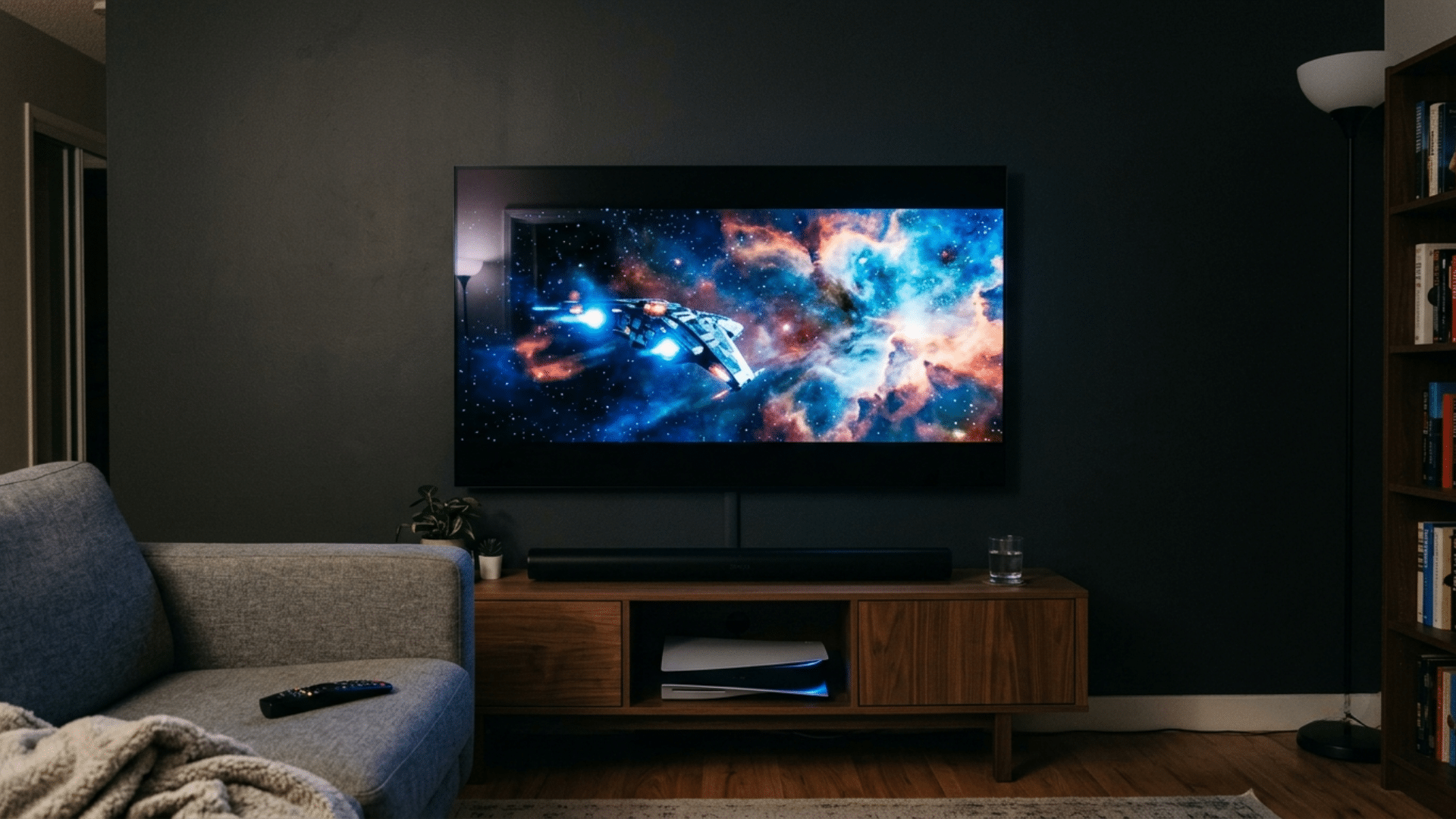
OLED stands for Organic Light Emitting Diode, a display technology used in many premium TVs.
Unlike traditional LED TVs, OLED screens do not need a separate backlight. Instead, each pixel emits its own light and can be turned on or off individually.
This allows OLED TVs to produce true black because fully dark pixels emit no light. As a result, viewers get excellent contrast, sharp details, and a more realistic picture.
OLED TVs also offer wide viewing angles, so the image stays clear even when viewed from the side.
Their fast response times make them a popular choice for gaming and sports.
While OLED TVs often cost more than QLED models, many buyers prefer them for their impressive picture quality and movie-watching experience.
What Is QLED Technology?
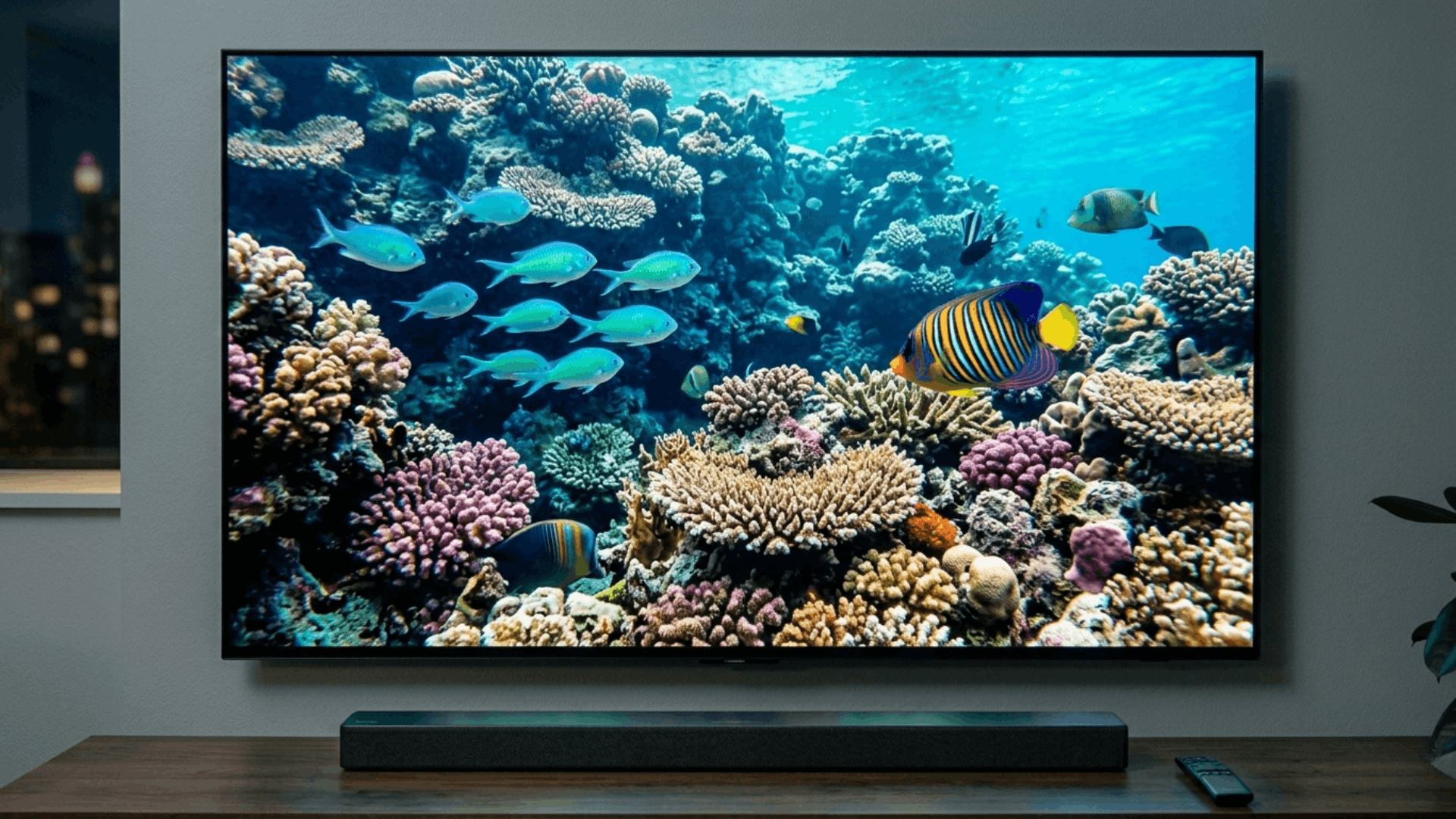
QLED stands for Quantum Dot Light Emitting Diode. It is a type of LED TV that uses a layer of tiny quantum dots to improve color and brightness. Unlike OLED TVs, QLED TVs rely on a backlight to produce images.
The quantum dots help create more vivid colors and better brightness, making QLED TVs a strong choice for bright rooms with lots of natural light.
Many QLED models also support advanced HDR formats, which can make movies, sports, and games look more detailed and colorful.
Another advantage is that QLED TVs do not face the same burn-in concerns associated with OLED displays.
They are available in a wide range of sizes and prices, making them a popular option for buyers looking for strong performance and value.
Key Differences Between OLED Vs QLED
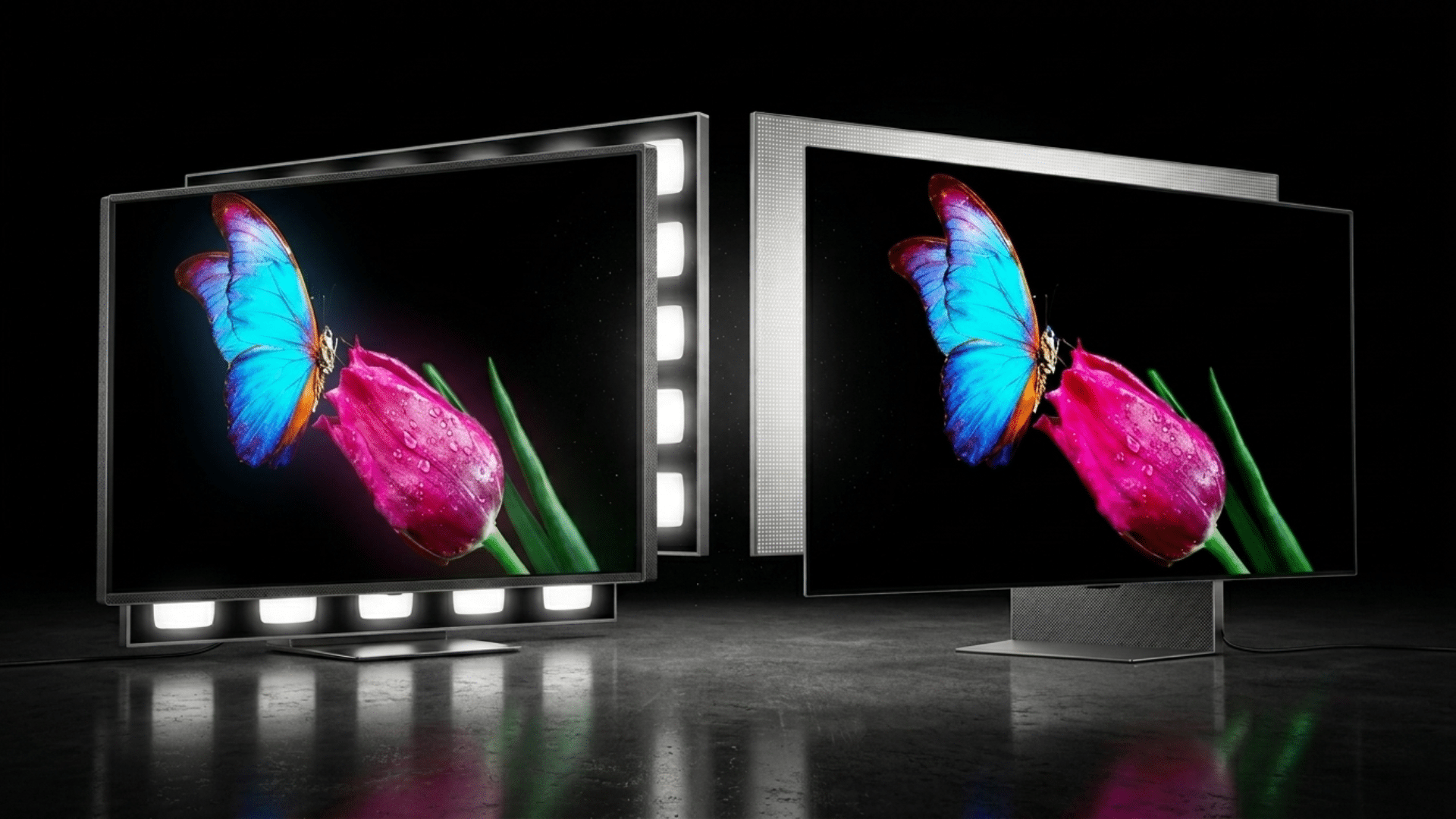
OLED and QLED TVs both offer excellent picture quality, but they achieve it in different ways. Understanding their key differences can help you choose the best TV for your viewing habits, room conditions, and budget.
1. Picture Quality
OLED TVs are known for their outstanding picture quality because each pixel produces its own light. This allows the screen to create perfect black levels and excellent contrast without relying on a backlight.
QLED TVs use a backlight and quantum dot technology to improve colors and brightness.
While QLED displays look vibrant and sharp, OLED often delivers a more realistic image with better detail in dark scenes, making it a favorite for movie enthusiasts and home theater setups.
2. Brightness Performance
When it comes to brightness, QLED TVs generally have the advantage.
Their powerful LED backlights can produce very high brightness levels, which helps images remain clear and colorful in rooms with lots of sunlight.
OLED TVs have improved significantly over the years, but most QLED models still outperform them in peak brightness.
If your TV will be placed in a bright living room with large windows, a QLED display may provide a more comfortable viewing experience during the day.
3. Black Levels and Contrast
One of the biggest differences between OLED and QLED is how they handle black colors.
OLED pixels can completely switch off when displaying black, resulting in true blacks and nearly infinite contrast.
QLED TVs use local dimming to darken certain areas of the screen, but some light may still leak through. This can create a slight glow around bright objects in dark scenes.
For viewers who watch movies at night, OLED offers a noticeable advantage.
4. Color Performance
Both OLED and QLED TVs deliver impressive colors, but they approach color reproduction differently. OLED TVs tend to provide highly accurate and natural-looking colors that closely match the creator’s intent.
QLED TVs use quantum dots to deliver bright, saturated colors that stand out, especially in HDR content.
While many people enjoy the bold appearance of QLED displays, some viewers prefer the more balanced and realistic color presentation that OLED technology typically offers across a wide range of content.
5. Viewing Angles
OLED TVs maintain excellent picture quality even when viewed from the side. Colors, brightness, and contrast remain consistent across a wide range of viewing positions, making them ideal for large families or group viewing.
QLED TVs can lose some brightness and color accuracy when viewed from wider angles, although premium models have improved this issue.
If people often sit in different parts of the room rather than directly in front of the TV, OLED usually provides a better viewing experience.
6. Gaming Performance
Gamers often appreciate OLED TVs because of their extremely fast response times and smooth motion handling.
These features help reduce blur during fast-paced gameplay and make controls feel more responsive.
Many OLED and QLED models now support gaming features such as HDMI 2.1, Variable Refresh Rate (VRR), and Auto Low Latency Mode (ALLM).
While both technologies can deliver excellent gaming experiences, OLED generally has a slight edge for competitive gamers who prioritize speed and image quality.
7. Price and Long-Term Value
Price is often a deciding factor when choosing between OLED and QLED. QLED TVs are available across a wider price range, making them accessible to more buyers.
OLED TVs typically cost more because of their advanced display technology and premium image quality.
However, many users feel the improved contrast and viewing experience justify the higher cost.
Buyers should consider their budget, room lighting, and viewing habits to determine which technology offers the best overall value for their needs.
OLED vs QLED Differences at a Glance
OLED and QLED TVs offer strong performance, but each technology excels in different areas. This table highlights the most important differences in a simple format.
| Feature | OLED | QLED |
| Picture Quality | Produces true blacks and excellent contrast, creating a more realistic and detailed viewing experience. | Delivers bright, colorful images with strong HDR performance and impressive overall picture quality. |
| Brightness | Provides good brightness levels but may appear less intense in very bright rooms. | Reaches higher brightness levels, making content easier to see in sunny spaces. |
| Viewing Angles | Maintains consistent colors, contrast, and brightness even when viewed from the side. | Picture quality may slightly decrease when viewed from wider seating positions. |
| Gaming Performance | Offers extremely fast response times and smooth motion for a highly responsive gaming experience. | Supports modern gaming features and performs well for casual and competitive gamers. |
| Burn-In Risk | Static images displayed for long periods can cause image retention. | No burn-in concerns, making it suitable for a wide range of content and long viewing sessions. |
| Price | Premium technology that generally comes with a higher purchase price. | Available across multiple price ranges, offering more budget-friendly options for buyers. |
| Best Use Case | Ideal for movie lovers, home theaters, and dark-room viewing environments. | Best for bright rooms, sports fans, families, and shoppers seeking strong value. |
Real Homeowners Share Their OLED vs QLED Experience
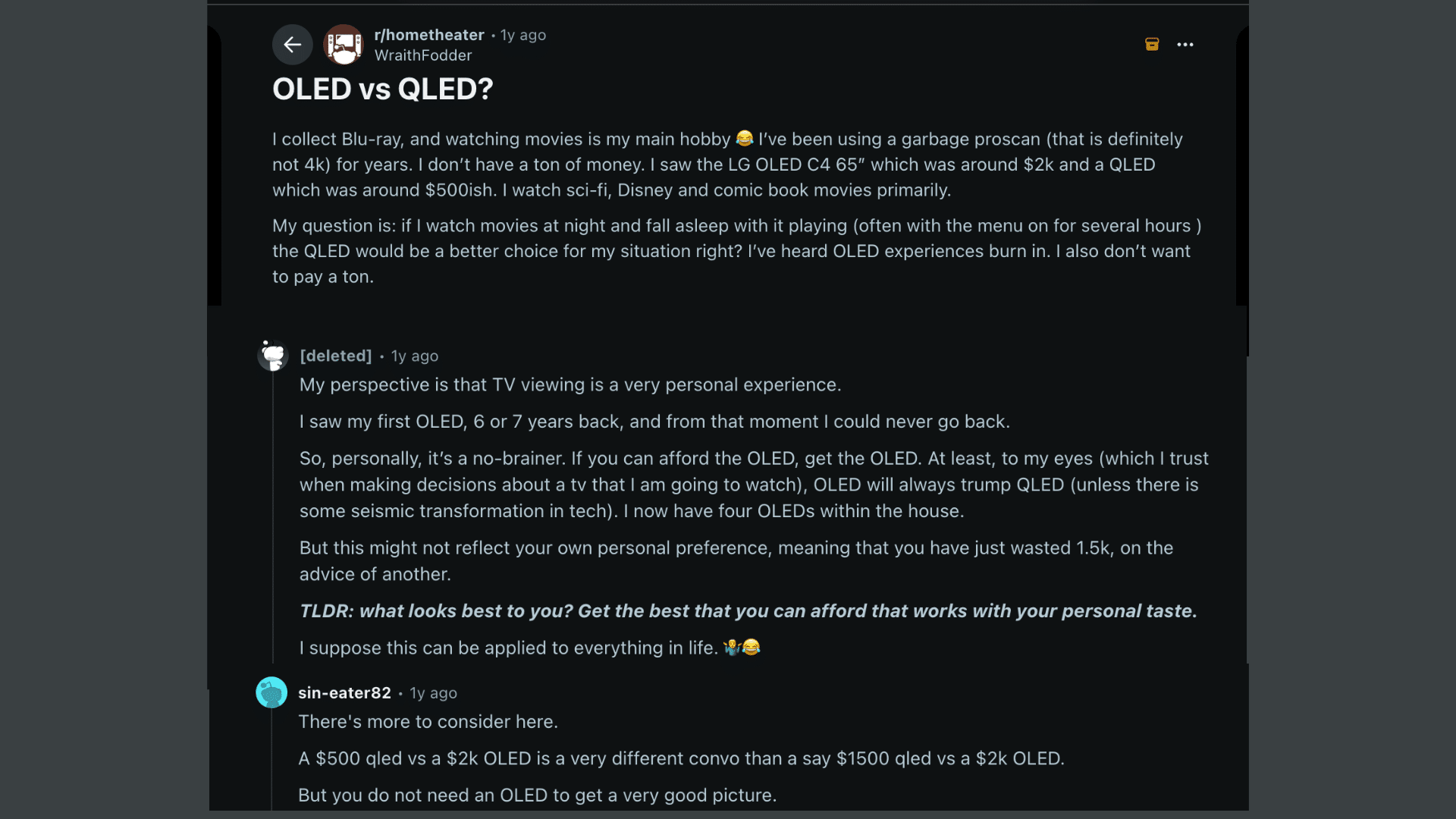
A Reddit discussion indicates that most homeowners agree OLED offers the best picture quality, especially for movie nights in dark rooms.
Many said the deep blacks, rich colors, and strong contrast made films look more lifelike.
At the same time, several users felt modern Mini LED and higher-end QLED TVs deliver excellent value, with brighter screens and lower prices.
Burn-in was still a concern for some buyers, but many OLED owners shared that newer LG models include protection features and have held up well after years of regular use.
Budget also played a big role, with many recommending a quality Mini LED or QLED TV if spending around $500 to $1,000.
Overall, homeowners suggested choosing based on your room, viewing habits, and budget rather than panel type alone.
When Is the Best Time to Buy OLED and QLED TVs?
Buying at the right time can help you get a better TV for less money. These are the most popular sale periods for TV shoppers in the United States.
- Black Friday (November)often offers the lowest TV prices of the year. Premium OLED and QLED models can see major discounts.
- Cyber Monday (November): Great for online shoppers looking for TV deals. Many Black Friday discounts continue through Monday.
- Super Bowl Sales (January–February): Retailers offer lower TV prices ahead of the big game. Large-screen TVs are commonly included in promotions.
- Memorial Day Sales (May): A good time to find discounts on electronics. Many stores offer deals before the summer season.
- Labor Day Sales (September): Retailers often clear inventory before the holiday sales period. Shoppers can find solid deals on popular TV models.
- New Model Release Season (March–April): Older models usually drop in price when new TVs arrive. This is a smart way to save without losing many features.
- Amazon Prime Day (Summer): Amazon and competitors often run special TV promotions. Limited-time deals can offer significant savings on select models.
OLED vs QLED Cost Comparison
OLED TVs cost more, while QLED models span a wider price range, making them suitable for both premium and budget-conscious buyers.
| Factor | OLED TVs | QLED TVs |
| Entry-Level Pricing | Usually start around $700–$1,000 for smaller screen sizes from major brands. | Entry-level models often start between $400 and $700, making them more affordable for budget-conscious buyers. |
| Mid-Range Pricing | Most popular 55-inch and 65-inch OLED TVs typically range from $1,000–$2,000. | Mid-range QLED models generally cost between $700 and $1,500, depending on features and brand. |
| Premium Models | High-end OLED TVs can exceed $2,500, especially for larger screens and advanced features. | Premium QLED and Neo QLED models can range from $1,500 to over $3,500. |
| Cost Per Screen Size | Larger OLED panels remain expensive because manufacturing costs are higher. | QLED TVs usually offer larger screen sizes at a lower price point. |
| Value for Movie Lovers | Higher cost is often justified by superior contrast, black levels, and cinematic picture quality. | Offers strong picture quality but may not match OLED’s performance in dark-room viewing. |
| Sale Discounts | Discounts are common during Black Friday, but OLED models usually remain premium-priced. | QLED TVs frequently receive larger percentage discounts during major sales events. |
| Best Choice for Budget Buyers | Better suited for shoppers willing to pay more for top-tier picture quality. | A stronger option for buyers seeking a balance of performance and affordability. |
| Overall Value | Excellent value for home theater enthusiasts and serious movie watchers. | Excellent value for families, sports fans, and everyday entertainment needs. |
How Is Neo QLED Different from OLED?
Neo QLED and OLED are both premium TV technologies, but they create images differently. OLED TVs use self-lit pixels that can turn completely off, producing perfect black levels and outstanding contrast.
Neo QLED TVs use Mini LED backlighting with thousands of tiny LEDs, allowing for better brightness control than standard QLED models.
As a result, Neo QLED TVs can reach much higher brightness levels, making them a strong choice for bright living rooms and daytime viewing.
OLED, however, still has an advantage in black levels, contrast, and viewing angles, especially in dark rooms.
Neo QLED also avoids burn-in concerns and often comes in larger screen sizes.
The better option depends on your viewing environment, budget, and whether you prioritize brightness or picture accuracy.
OLED vs QLED: Which TV Should You Choose?
Both OLED and QLED offer excellent picture quality, but the right choice depends on your viewing habits, room lighting, and budget.
| Feature | OLED | QLED |
| Picture Quality | Deeper blacks and higher contrast | Bright, vibrant colors |
| Brightness | Best in dim or dark rooms | Better for bright rooms |
| Viewing Angles | Excellent | Good, varies by model |
| Burn-In Risk | Possible with prolonged static images | No burn-in risk |
| Gaming | Fast response and low input lag | Great on premium models |
| Price | Usually more expensive | More budget-friendly options |
| Best For | Movie lovers and home theaters | Families, sports, and bright living rooms |
Conclusion
The OLED vs QLED debate does not have a single winner because the best choice depends on your needs. OLED offers perfect blacks and premium contrast while QLED delivers higher brightness, strong colors, and better value.
If you’re comparing Neo QLED vs OLED, Neo QLED provides a great balance of brightness and picture quality. For those asking,
“Is QLED good?” The answer is yes, especially for bright rooms and everyday viewing.
Before making a purchase, compare features, set a budget, and watch for major sales events. Use this guide to confidently choose the TV technology that fits your home and viewing habits.
Frequently Asked Questions
Is OLED Worth the Extra Money Over QLED?
Yes, OLED is worth the extra cost if you prioritize movie watching, perfect blacks, and premium picture quality. QLED offers better value for bright rooms and budget-conscious buyers.
Which TVs Last Longer, OLED or QLED?
Both can last many years, but QLED has a slight advantage because it does not carry any burn-in risk. With normal use, modern OLED TVs also offer excellent longevity.
What Is the Downside of OLED TVs?
The main downsides of OLED TVs are their higher price, lower peak brightness than some QLED models, and the small risk of burn-in from long-term static images.
Which Is Better for Eyes, QLED or OLED?
OLED is generally considered better for eye comfort because it offers deeper blacks, better contrast, and can reduce light output in dark viewing environments. However, both are safe for everyday use.
Does OLED Burn-In Easily?
No, modern OLED TVs do not burn in easily during normal use. Burn-in is rare and usually occurs only after displaying the same static content for extended periods over time.