
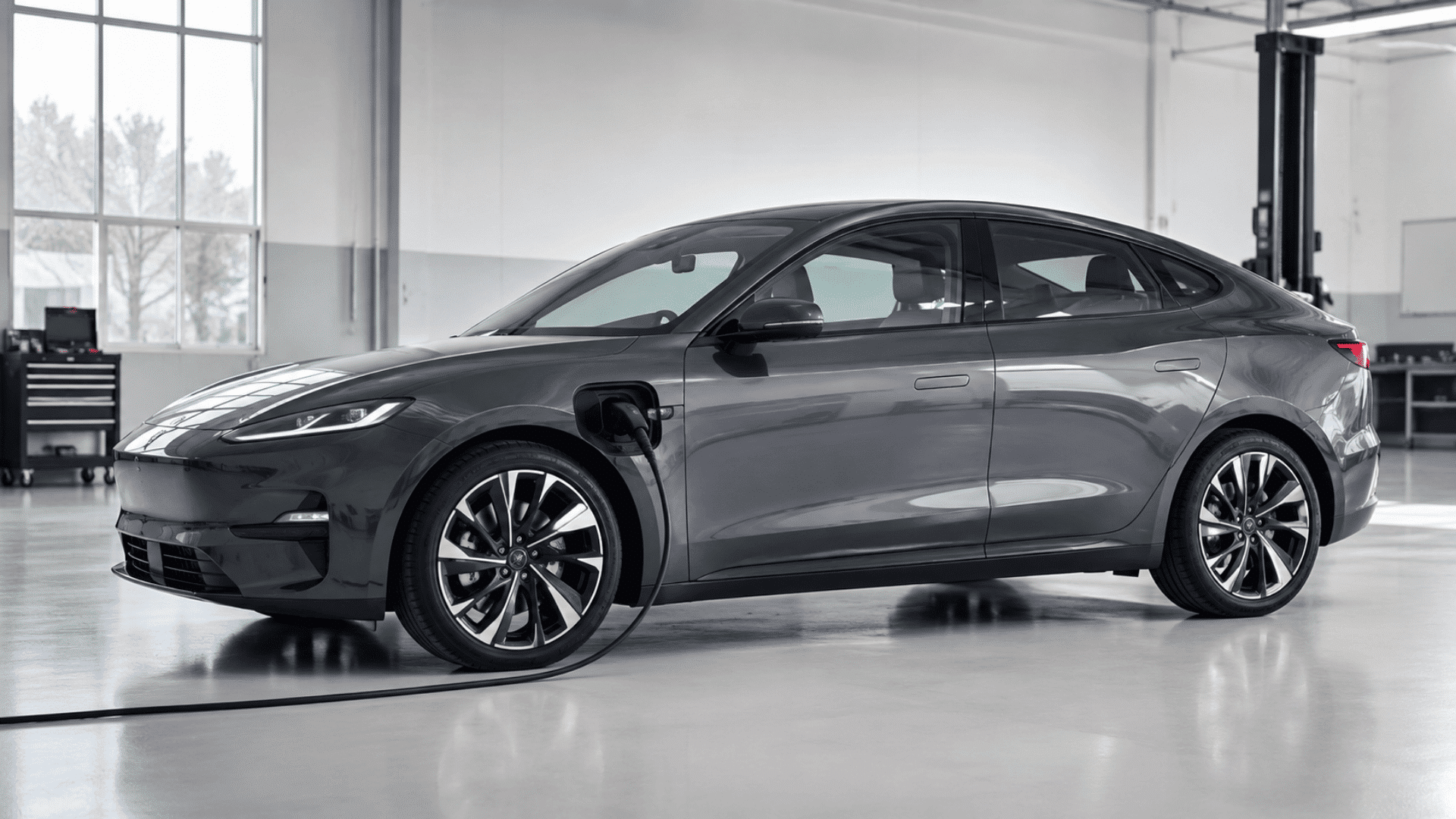





An electric car stores electricity in a large traction battery and sends it through power electronics to an electric motor, which turns the wheels.
Press the accelerator, and the controller works out how much power is needed. The inverter manages the flow of electricity before it reaches the motor. The battery recharges from an outside source, while regenerative braking recovers some of that energy as the car slows down.
The working becomes much easier to understand when you simply follow the path of electricity instead of chasing technical terms.
Below, I’ve covered the entire process, along with parts, charging, braking, and how EVs differ from gas cars. Continue reading for a detailed understanding.
What are the Main Parts of an Electric Car?
Once the battery-to-wheels process is clear, the individual components are easier to understand.
Each part supports a different stage of storing, controlling, converting, or transferring electrical energy. Together, these systems allow the car to charge, accelerate, power its electronics, and manage battery temperature efficiently.
| Component | What It Does |
|---|---|
| Traction Battery | Stores electrical energy for propulsion |
| Electric Motor | Converts electrical energy into rotation |
| Inverter | Converts and controls electrical power |
| Vehicle Controller | Determines how much power the motor receives |
| Reduction Gear and Drivetrain | Transfers motor rotation to the wheels |
| Charge Port | Connects the vehicle to charging equipment |
| Onboard Charger | Processes AC electricity for battery charging |
| DC/DC Converter | Supplies suitable power to lower-voltage systems |
| Auxiliary Battery | Supports low-voltage electronics and vehicle systems |
| Thermal System | Helps control battery and component temperatures |
Electric cars also contain computers, converters, sensors, and control modules that coordinate these systems and manage electrical power throughout the vehicle.
The ‘Battery’ Explains a Lot About How an EV Works
If there’s one part of an EV worth understanding above the rest, it’s the battery.
The battery in an EV powers it and is commonly called the traction battery. Its main jobs are to:
- store electrical energy
- supply power to the propulsion system
- accept energy during charging
- receive some recovered energy from regenerative braking
Many modern EVs use lithium-ion traction batteries. Battery capacity is generally measured in kilowatt-hours, or kWh (how much energy is available or consumed).
When the vehicle is driven, the battery discharges stored energy. When the vehicle is plugged in, energy is added again.
The battery also needs temperature control because extreme heat or cold can affect battery operation and usable driving range. EVs therefore use thermal-management systems.
Traction Battery vs. 12-Volt Battery
Electric cars usually have more than one battery system: a traction battery and a 12-volt auxiliary battery.
The table below shows how the two differ:
| Battery | Main Purpose | What It Powers |
|---|---|---|
| Traction battery | Stores high-voltage energy for driving | Electric motor and propulsion system |
| 12-volt battery | Supports low-voltage electrical systems | Lights, screens, controls, and electronics |
How does an Electric Car Work? Entire Process in Detail
The basic driving sequence in an electric car is:
| Accelerator → Controller → Battery → Inverter → Electric Motor → Drivetrain → Wheels |
The steps below further oversimplify the process for you. Take a look!
Step 1: The Driver Presses the Accelerator
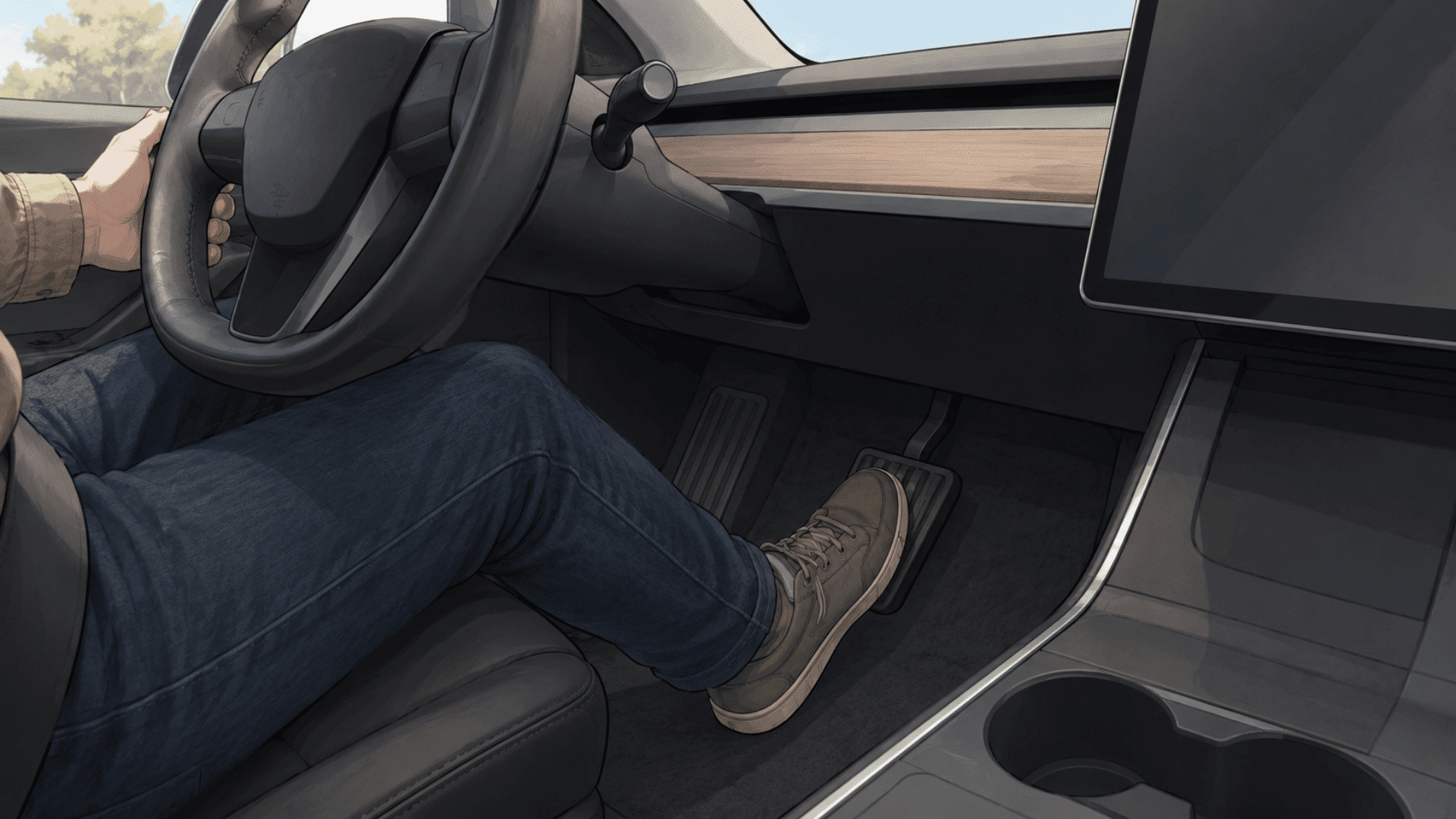
When the driver presses the accelerator, sensors detect how far the pedal has moved and send that information to the vehicle controller.
The controller then calculates how much power the motor needs.
A light press requests gentle acceleration, while pressing farther down increases the power demand.
The accelerator therefore acts as an electronic input rather than directly controlling the motor or battery. In more advanced vehicle systems, edge computing can also process sensor data locally when fast decisions are required.
Step 2: The Battery Supplies Electrical Energy
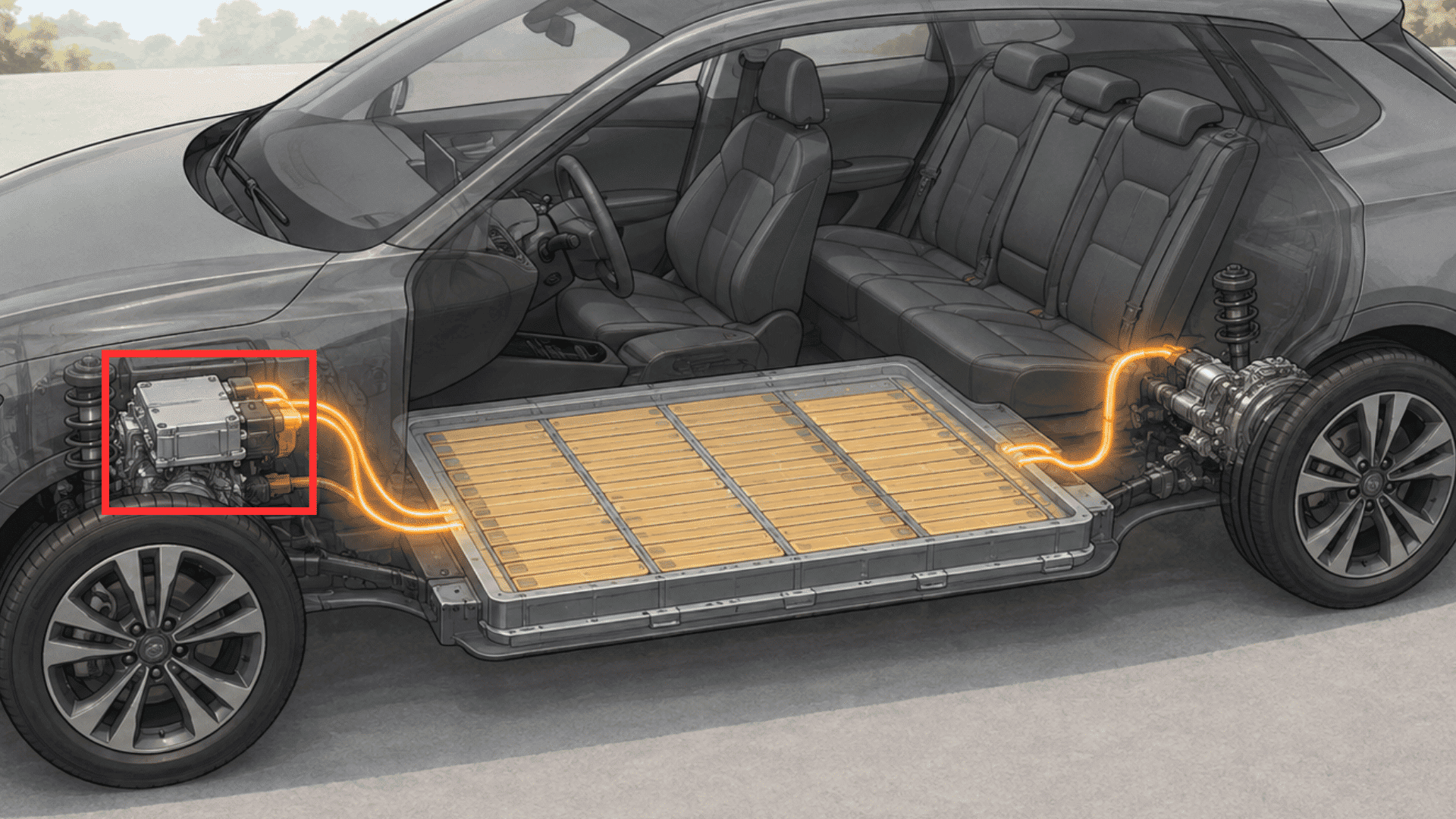
The traction battery stores the electrical energy used to move the vehicle.
As the U.S. Department of Energy explains, this large battery pack is what powers the electric motor in place of a fuel tank.
When the controller requests power, the battery releases the required amount of electricity into the propulsion system. This stored energy then turns the wheels.
Step 3: The Inverter and Power Electronics Manage the Electricity
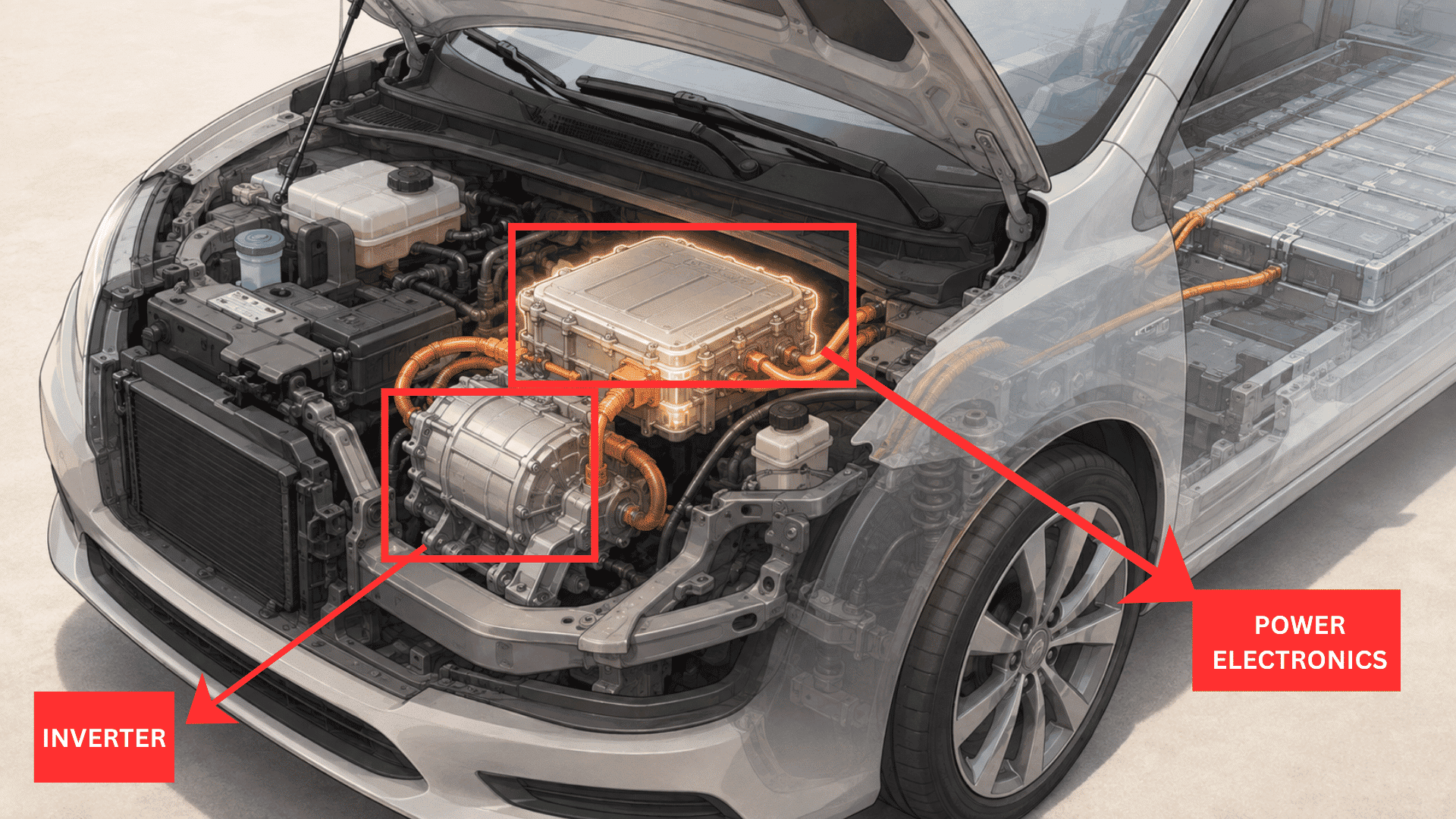
Electricity stored in the traction battery is supplied as direct current, or DC.
The inverter and other power electronics control this electricity before it reaches the motor. In vehicles with AC traction motors, the inverter converts DC electricity into alternating current, or AC.
These systems also regulate how much electrical power reaches the motor, helping control its speed and torque according to the driver’s input.
Step 4: The Electric Motor Converts Electricity Into Motion
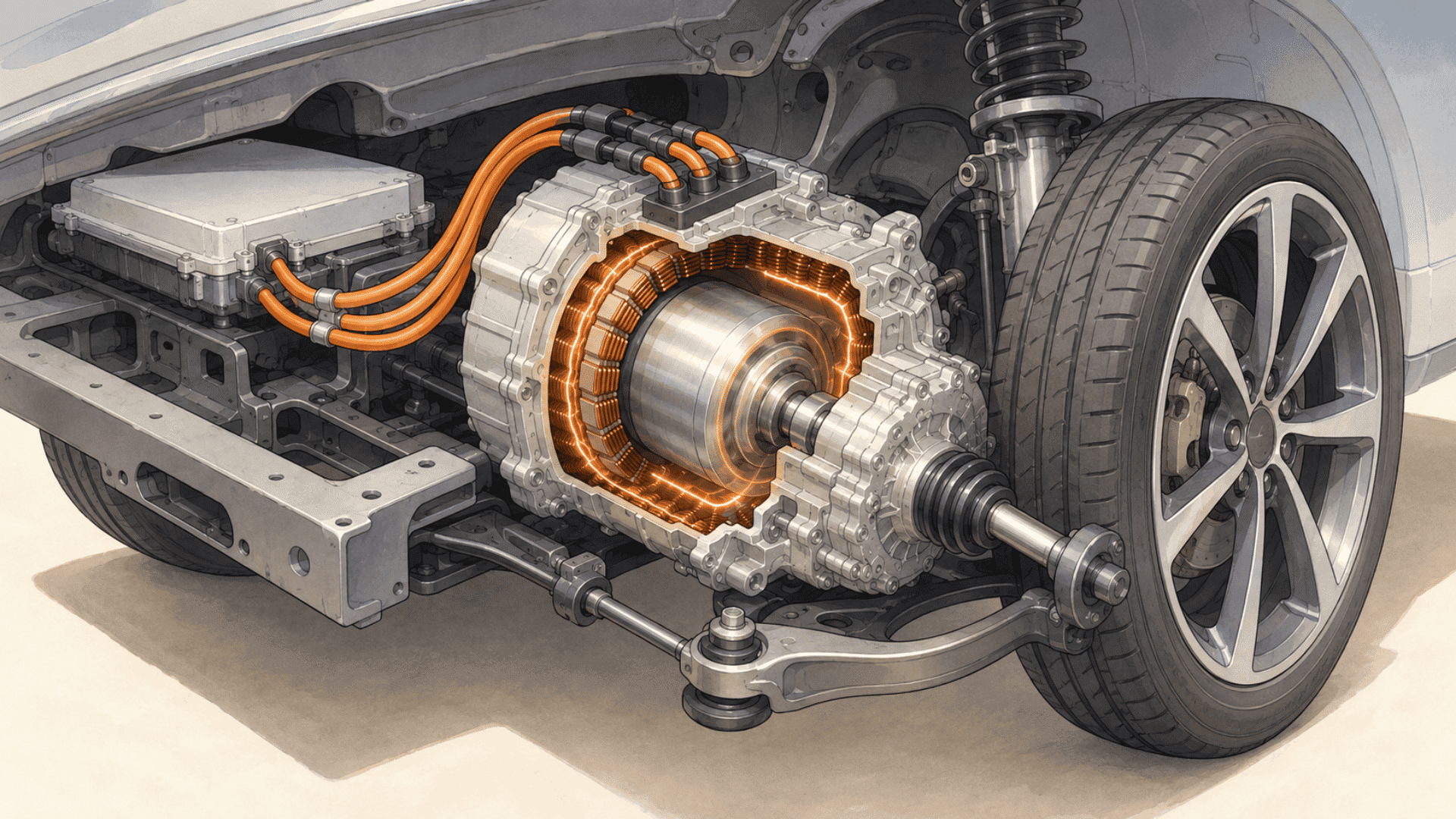
The electric motor receives the controlled electrical power and converts it into mechanical rotation.
Inside the motor, electromagnetic forces cause the rotating components to turn. This produces torque that can be delivered quickly when the driver accelerates.
Because the motor can respond almost immediately to changes in electrical power, electric cars often provide smooth and responsive acceleration without waiting for an engine to build speed.
Step 5: Drivetrain Turns the Wheels
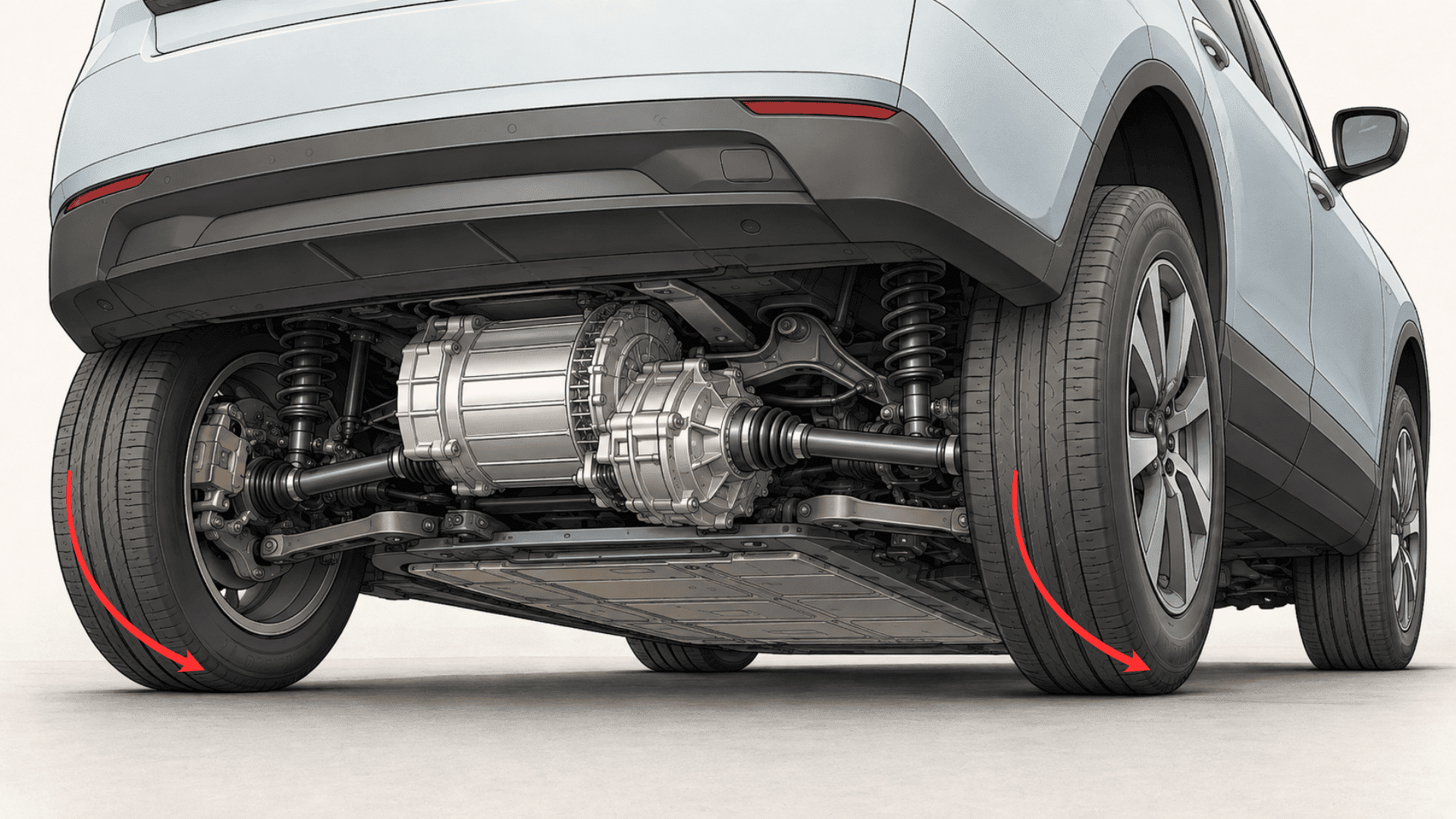
The motor’s rotation is transferred through the drivetrain to the wheels. Electric cars use a reduction gear that adjusts the motor’s high rotational speed into suitable wheel speed and torque.
Unlike gasoline engines, electric motors can operate effectively across a much wider range of speeds. This means most EVs do not need a conventional multi-speed transmission and can instead use a simpler single-speed reduction system.
Some EVs may use more than one motor, such as separate motors for the front and rear axles. Once the drivetrain transfers the motor’s rotation to the wheels, the vehicle moves.
How Does an Electric Car Charge?
An electric car charges by taking electricity from an external power source and storing it in its traction battery.
The basic flow is:
| Electricity Source → Charging Equipment → Charge Port → Battery |
How the electricity reaches the battery depends on whether the car uses AC charging or DC fast charging.
| Charging Type | How It Works | Power Flow |
|---|---|---|
| AC Charging | Home and many public chargers supply AC electricity. The car’s onboard charger converts it into DC electricity before it reaches the battery. | AC Source → Charge Port → Onboard Charger → DC Power → Battery |
| DC Fast Charging | The fast charger converts AC electricity to DC before it reaches the car, allowing DC power to go directly to the battery. | Fast Charger → Charge Port → DC Power → Battery |
Charging speed depends on the power source, the car’s charging capability, battery temperature, battery condition, and current charge level.
With DC fast charging, the rate usually drops as the battery gets closer to full.
How Does Regenerative Braking Work?
Regenerative braking lets an electric car recover some of the energy that would otherwise be lost while slowing down. During acceleration, electrical energy moves from the battery to the motor, which turns the wheels.
When the vehicle decelerates, part of this energy flow reverses. Check the following flowchart:
| Wheels → Motor/Generator → Power Electronics → Battery |
As the wheels continue turning, they can drive the electric motor, which works as a generator. The motor converts some of the vehicle’s kinetic energy into electrical energy, and the power electronics direct that recovered energy back toward the traction battery.
EVs also retain conventional friction brakes, which work alongside regenerative braking when stronger or more immediate stopping force is required.
What Affects How Far an Electric Car Can Travel?
EVs often have a shorter range than conventional gasoline vehicles, although available driving ranges continue to improve.
Many EVs can travel more than 100 miles on a full charge, while some models can exceed 200 miles and, in certain cases, 400 miles.
However, the exact electric car’s range depends on how quickly it uses the energy stored in its battery. Important factors include:
- usable battery capacity
- vehicle efficiency
- driving speed
- acceleration habits
- outside temperature
- heating and air-conditioning use
- vehicle weight and load
- terrain
- road conditions
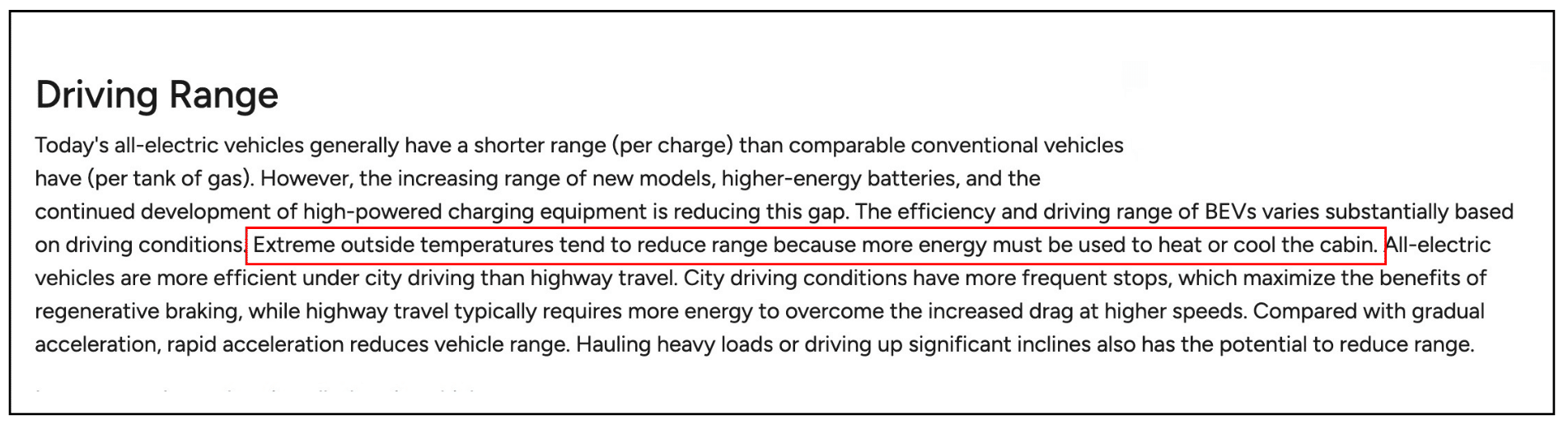
Worth noting! Cold or very hot conditions can also affect battery performance. Heating/cooling the cabin in extreme weather conditions can consume more energy.
EV vs. Gas Car: How Their Working Differs
An EV and a gas car both turn the wheels to move the vehicle, but they produce that movement in very different ways.
- An EV draws electricity from a traction battery and sends it through power electronics to an electric motor.
- A gas car burns fuel inside an internal-combustion engine to create power.
The rest of the differences are as follows:
| Electric Car | Gas Car |
|---|---|
| Stores energy in a traction battery | Stores fuel in a fuel tank |
| Uses an electric motor | Uses an internal-combustion engine |
| Runs on stored electricity | Burns gasoline or diesel |
| Uses an inverter and power electronics | Uses fuel and engine-management systems |
| Usually uses simpler reduction gearing | Commonly uses a multi-speed transmission |
| Can recover energy through regenerative braking | Primarily loses braking energy as heat |
| Does not need a combustion exhaust system | Requires an exhaust system |
So, while a gas car depends on fuel combustion to create power, an EV relies on the battery, inverter, motor, and drivetrain to convert stored electricity into movement.
Bottom Line
An electric car turns stored electrical energy into movement. The battery supplies the energy, the controller and inverter manage it, and the motor uses it to turn the wheels.
Charging replenishes the battery, while regenerative braking sends some energy back during deceleration. Knowing this flow gives you the foundation for understanding EV range, charging times, battery capacity, and everyday performance.
If an EV is on your shortlist, those are the areas worth comparing next.
Got a question about electric cars or something you want us to cover? Share it with us and stay tuned for more EV guides.
Frequently Asked Questions
Does an Electric Car Use Power When It Is Stopped?
Yes, systems such as climate control, lights, displays, and vehicle electronics can still use battery power while the car is stationary.
What Happens When an Electric Car Battery Runs Out?
When usable battery charge gets too low, the vehicle can no longer drive and must be recharged before normal operation resumes.
Why are Electric Cars So Quiet?
Electric motors operate without the combustion, exhaust pulses, and many of the mechanical noises produced by gasoline engines.
What Do kW and kWh Mean in an Electric Car?
kW measures power, or how quickly energy is used or delivered, while kWh measures energy capacity, such as how much electricity an EV battery can store.
How Long Do EV Batteries Last?
Most EV batteries last many years and hundreds of thousands of miles, though gradual capacity loss is normal and depends on charging habits and climate.