



Businesses today rely heavily on digital systems, which also makes digital security services more important as cyber threats continue to grow.
Data breaches, ransomware, and system attacks can affect businesses of all sizes, not just large companies.
This growing risk makes digital security services important for protecting data, reducing threats, and keeping systems running smoothly.
With so many cybersecurity services and platforms available, choosing the right solution can be difficult.
Some solutions focus on specific areas, such as endpoints or the cloud, while others provide full support with expert monitoring. Understanding these differences helps businesses make a more informed choice.
In this guide, you will learn what digital security services are, how they work, the different types available, and the top providers businesses use today.
What Are Digital Security Services?
Digital security services are cybersecurity solutions that protect business systems, networks, devices, and data from threats like ransomware, phishing, malware, and unauthorized access.
In simple terms, they act as a strong safety layer that helps keep sensitive information secure from hackers and other online risks.
These services are handled by cybersecurity experts who continuously monitor systems, identify threats, and respond quickly before serious damage occurs.
They also help businesses deal with security breaches, data theft, and unauthorized access that could expose financial records, customer details, or important business information.
Managed digital security services focus on advanced threat detection, real-time monitoring, and faster threat response.
Key Features to Look for in Cybersecurity Services
Strong cybersecurity services should help businesses detect threats early, protect sensitive data, and respond quickly to security incidents. The right features also improve visibility, reduce risks, and support long-term security planning.
- Threat Detection: Helps identify malware, ransomware, suspicious activity, and unauthorized access before major damage occurs.
- Real-Time Monitoring: Continuously tracks systems, networks, and devices to detect threats and unusual behavior instantly.
- Data Protection: Secures sensitive business and customer data through encryption, access controls, backup protection, and API security tools.
- Incident Response: Provides fast action during cyberattacks to contain threats, reduce downtime, and recover affected systems.
- Risk Analysis: Evaluates security weaknesses, compliance gaps, and potential business impact through cyber risk quantification and ongoing assessments.
Top Digital Security Service Providers
Managed digital security services help businesses protect systems, networks, and sensitive data through continuous threat monitoring, incident response, and advanced cybersecurity support.
1. Accenture Security
Accenture Security offers enterprise-level cybersecurity services focused on threat detection, risk management, and system protection, using expert-led operations and advanced tools.
Best For: Full-scale enterprise cybersecurity transformation and managed security.
| Pros | Cons |
|---|---|
| Wide range of advanced security services | High cost for small businesses |
| Strong industry reputation | Complex setup for some solutions |
| Uses AI and modern threat detection | May require ongoing expert coordination |
| Trusted by large enterprises | Not ideal for basic security needs |
Services and Solutions:
- Managed detection and response (MDR) with 24/7 monitoring
- Cloud security, network security, and endpoint protection
- Identity and access management (IAM)
- Risk and compliance consulting
- Incident response and cyber recovery support
2. IBM Security Services
IBM Security Services focuses on intelligent threat management and data protection, using AI and deep analytics to improve security across complex systems.
Best For: AI-powered threat intelligence and SIEM solutions.
| Pros | Cons |
|---|---|
| Strong AI and analytics integration | Heavy reliance on IBM ecosystem tools |
| Advanced threat intelligence (X-Force) | Licensing and pricing can be complex |
| Good for large-scale environments | Requires a skilled team to manage QRadar |
| Broad security ecosystem support | Integration outside the IBM stack can be tricky |
| Reliable enterprise-grade solutions | Overkill for small or simple setups |
Services and Solutions:
- AI-powered threat detection with IBM QRadar and X-Force intelligence
- Security orchestration and automated response (SOAR)
- Data security and encryption solutions
- Identity governance and user access control
- Cloud workload protection and application security
3. Deloitte Cybersecurity
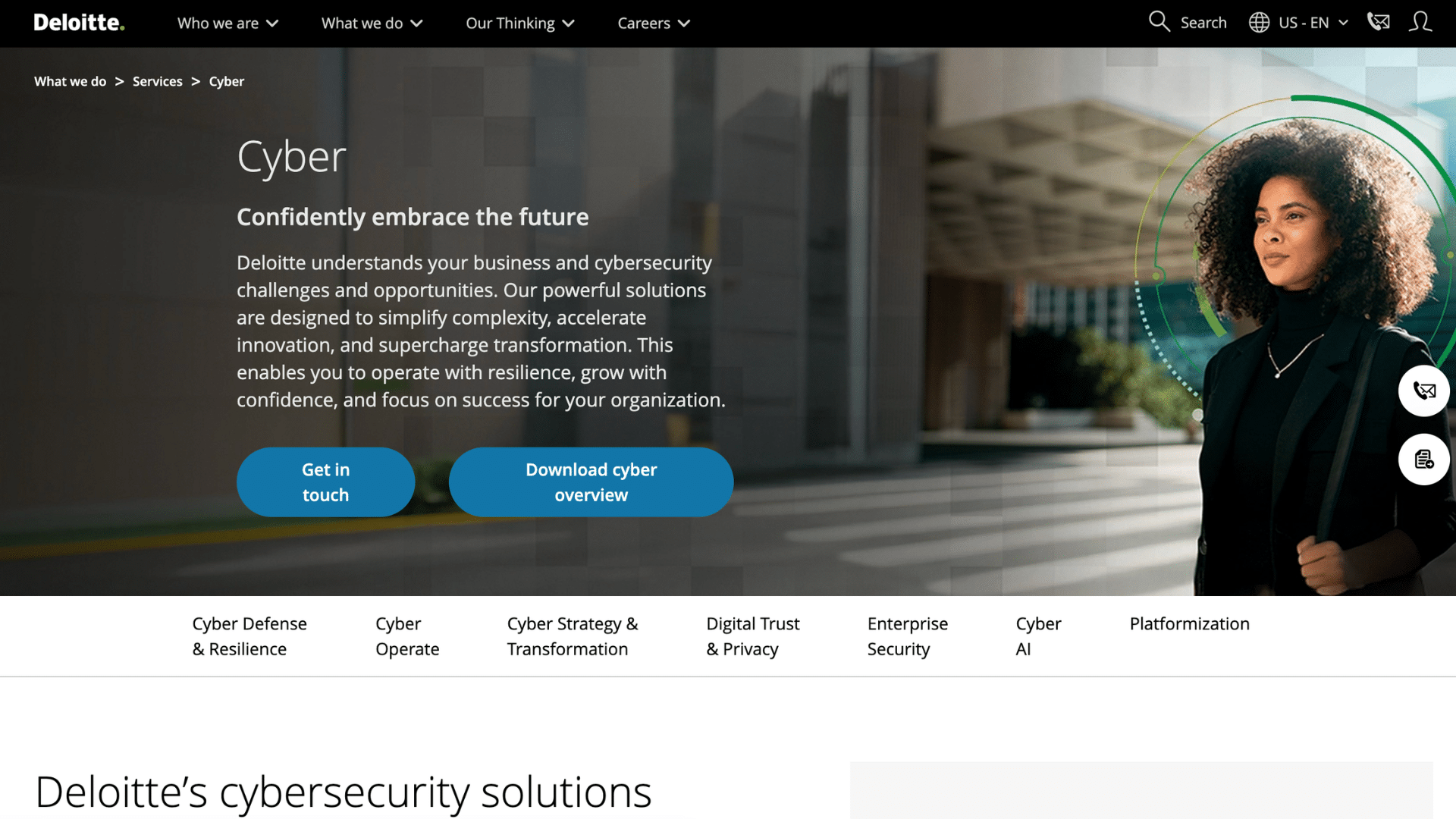
Deloitte Cybersecurity delivers end-to-end security services focused on risk management, threat defense, and building strong, resilient systems using expert teams and advanced tools.
Best For: Cyber risk management and large-scale security transformation.
| Pros | Cons |
|---|---|
| Strong focus on risk and compliance | Heavy focus on consulting over tools |
| End-to-end enterprise security services | Can feel process-heavy and slow |
| Deep industry expertise | Requires strong internal coordination |
| Good for large-scale transformations | Not flexible for small, quick setups |
Services and Solutions:
- Cyber strategy and transformation aligned with business goals
- Threat detection, incident response, and cyber defense services
- 24/7 security operations and monitoring
- Data protection, privacy, and identity security solutions
- AI-driven platforms for threat analysis and response
4. PwC Cybersecurity
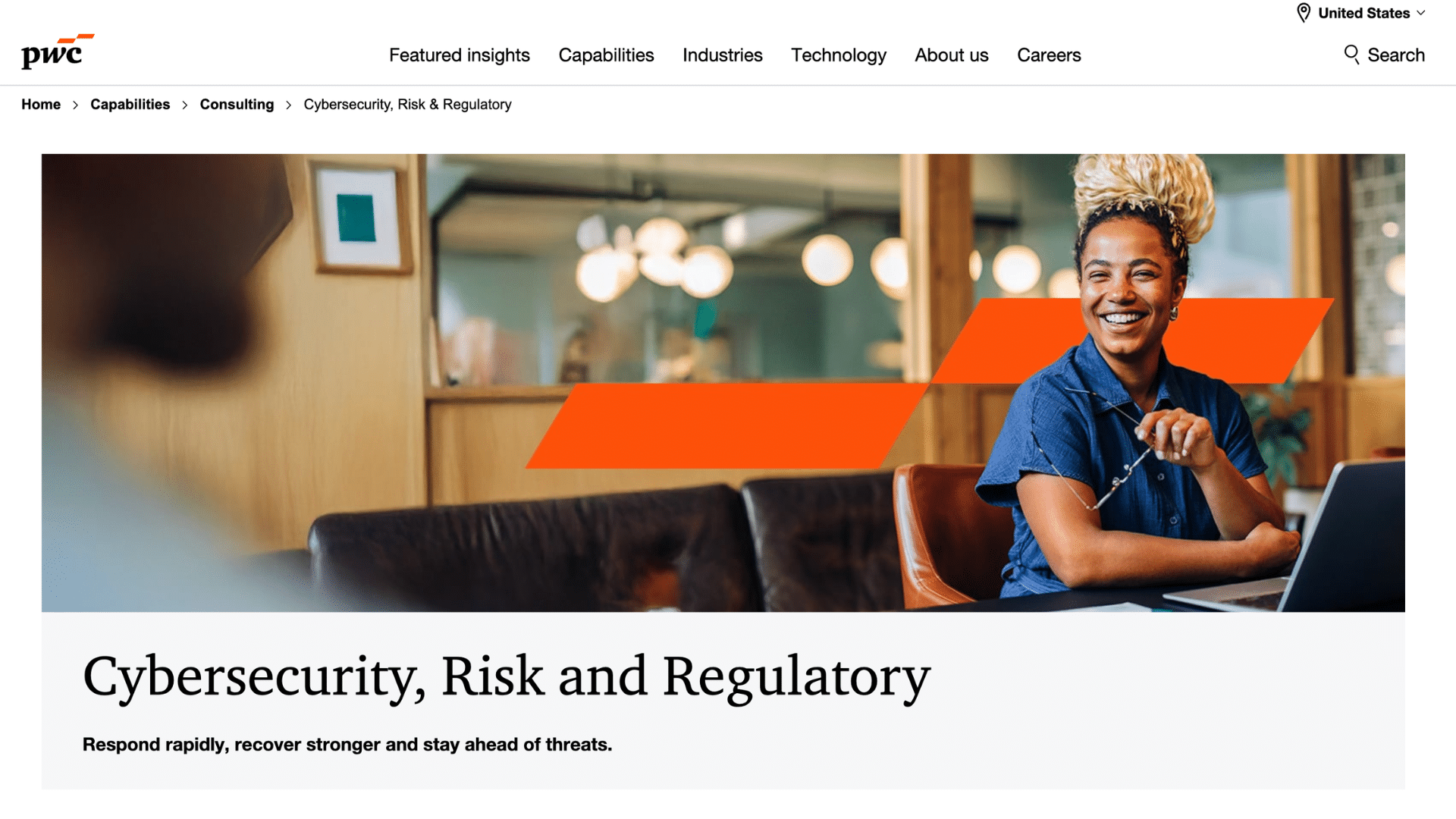
PwC Cybersecurity focuses on risk-based security and compliance, helping businesses manage cyber threats with strong governance and structured security programs.
Best For: Governance, compliance, and audit-focused security support.
| Pros | Cons |
|---|---|
| Strong expertise in regulatory compliance | Limited proprietary security tools |
| Deep focus on governance and risk control | Heavy reliance on structured processes |
| Trusted for audits and policy frameworks | Can slow down fast decision-making |
| Works well in regulated industries | Less suited for rapid threat response |
Services and Solutions:
- Cybersecurity strategy and risk advisory
- Governance, risk, and compliance (GRC) services
- Threat detection and incident response planning
- Data privacy and protection services
- Managed security and continuous monitoring
5. EY Cybersecurity
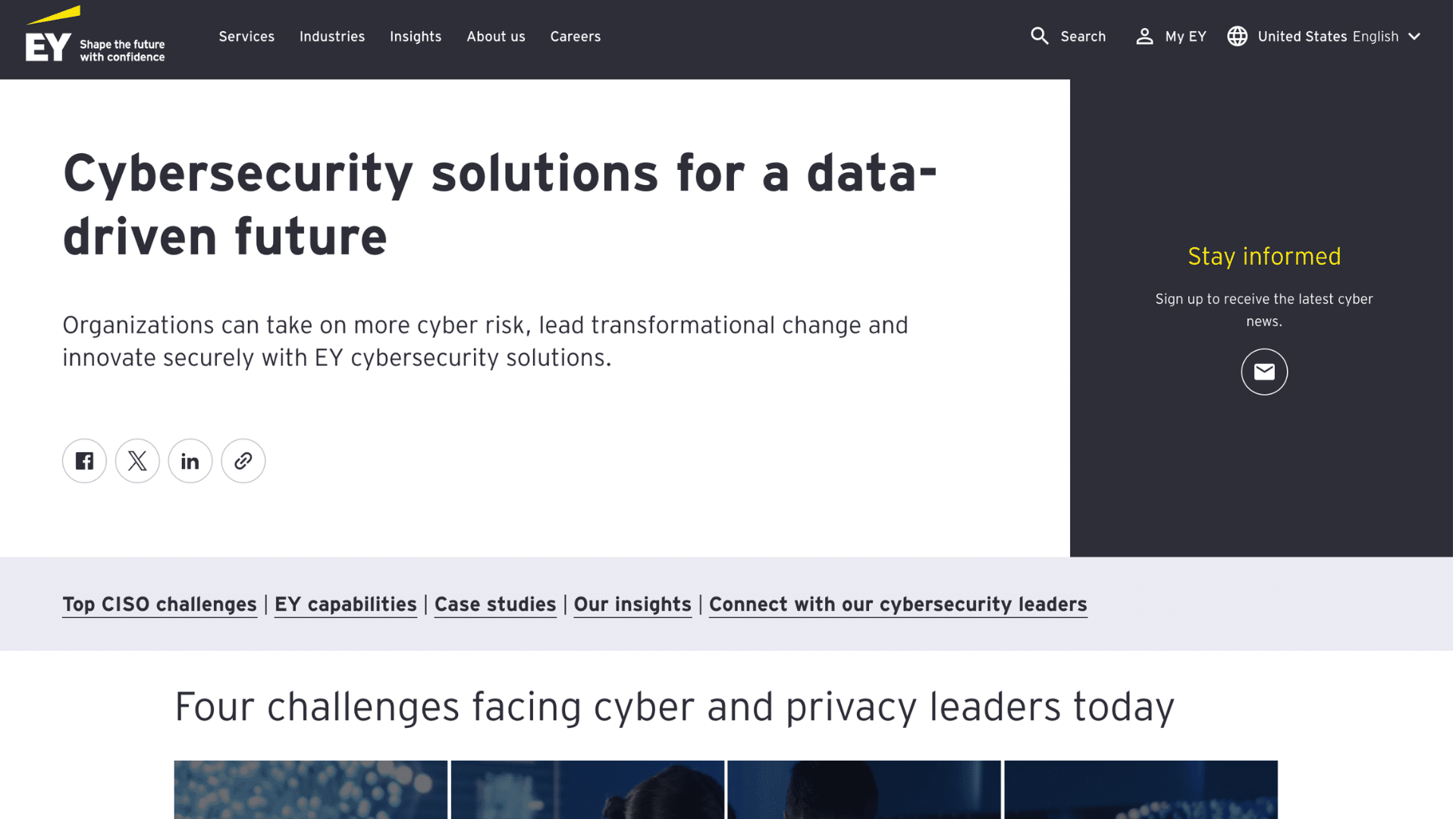
EY Cybersecurity focuses on building long-term security programs with a strong focus on business continuity, risk visibility, and digital trust across organizations.
Best For: Long-term cyber resilience and business continuity planning
| Pros | Cons |
|---|---|
| Strong focus on long-term security plans | Less focus on real-time threat tools |
| Good for business continuity planning | Not ideal for immediate threat response |
| Clear structure for security programs | Can feel slower for urgent needs |
| Trusted in finance and enterprise sectors | May involve multiple layers of coordination |
Services and Solutions:
- Cyber risk assessment and business continuity planning
- Data protection and privacy management
- Cyber resilience and disaster recovery planning
- Cloud security and secure digital transformation
- Security program design and maturity improvement
6. KPMG Cybersecurity Services
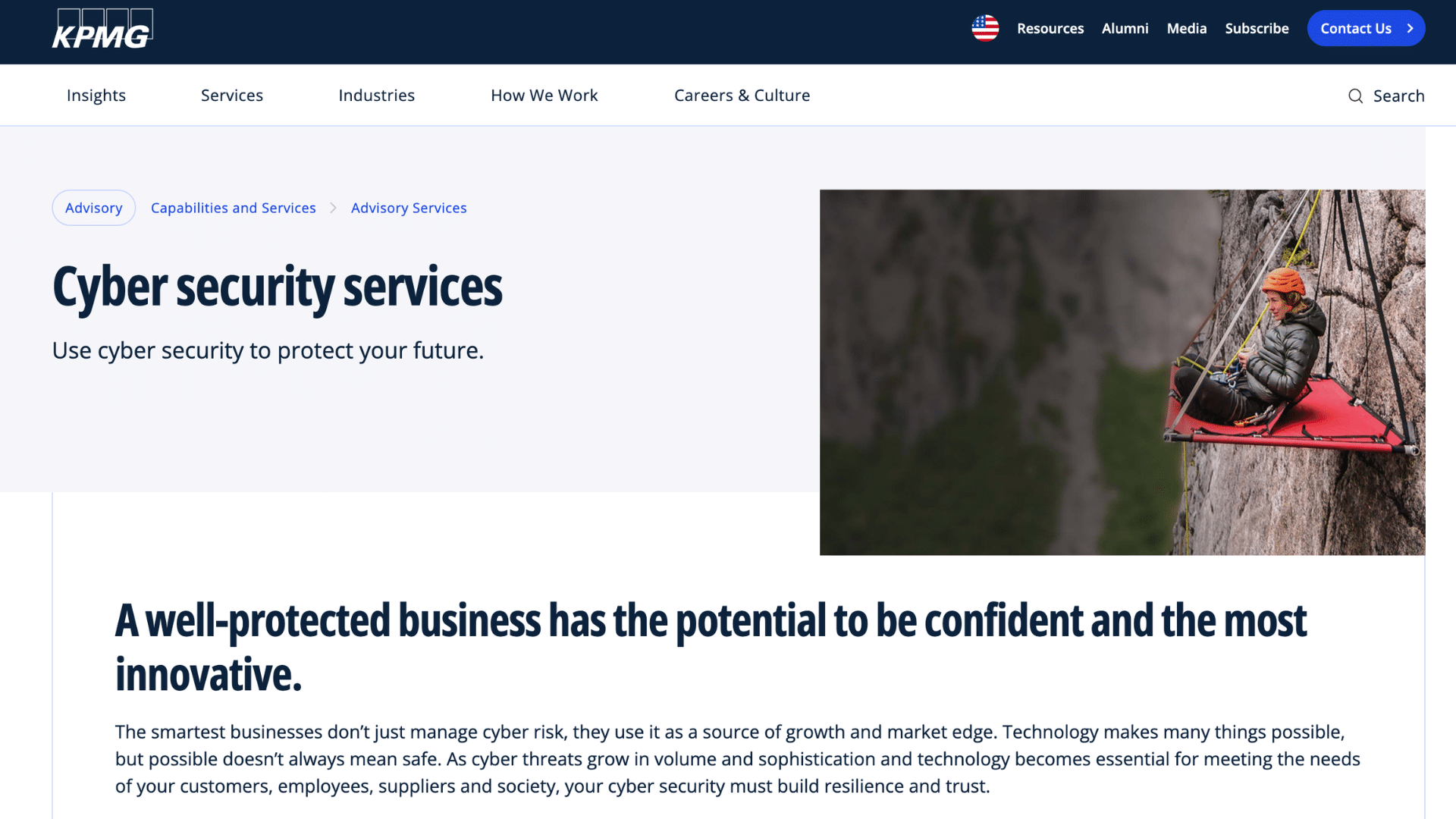
KPMG Cybersecurity Services focuses on aligning security with business goals, helping companies manage risks, improve resilience, and build long-term digital trust.
Best For: Security strategies aligned with business goals and compliance.
| Pros | Cons |
|---|---|
| Strong focus on aligning security with business strategy | Less emphasis on advanced in-house tools |
| Good expertise in governance and compliance frameworks | Can be advisory-heavy |
| Flexible, tailored security programs | Results depend on implementation support |
| Works well across multiple industries | More strategy-focused than tool-focused |
Services and Solutions:
- Cyber risk assessment and threat modeling
- Strategy, governance, and compliance (GRC) frameworks
- Security transformation and program management
- Vulnerability testing and penetration testing
- Identity and access management solutions
7. AT&T Cybersecurity
AT&T Cybersecurity focuses on network-level protection, helping businesses secure data, devices, and connections using built-in security and real-time threat intelligence.
Best For: Network-level security for small to mid-size businesses.
| Pros | Cons |
|---|---|
| Strong network-level security approach | Less focus on deep consulting strategy |
| Easy integration with network services | Pricing structure can be complex |
| Good for real-time threat filtering | Limited customization in lower tiers |
| Suitable for small to mid-size businesses | Not as strong in enterprise consulting |
Services and Solutions:
- Network-based security with built-in threat filtering
- Managed threat detection and response (MDR)
- Endpoint, cloud, and multi-environment security visibility
- DDoS protection and secure web gateway solutions
- Threat intelligence powered by global network data
8. Verizon Cybersecurity Services
Verizon Cybersecurity Services focuses on network-driven security, using its large telecom infrastructure to monitor threats and protect data across devices, cloud, and enterprise systems.
Best For: Telecom-driven security for large distributed networks.
| Pros | Cons |
|---|---|
| Strong network-level visibility | Pricing depends on data volume usage |
| Real-time threat monitoring at scale | Can be complex to estimate the total cost |
| Good integration with connectivity services | Less focus on deep business consulting |
| Reliable for large distributed networks | May require Verizon ecosystem alignment |
Services and Solutions:
- Managed security services with real-time monitoring and analytics
- Network security, SASE, and secure connectivity solutions
- DDoS protection and traffic filtering
- Threat intelligence and risk management programs
- Incident response, forensics, and security operations center (SOC) support
9. Rapid7
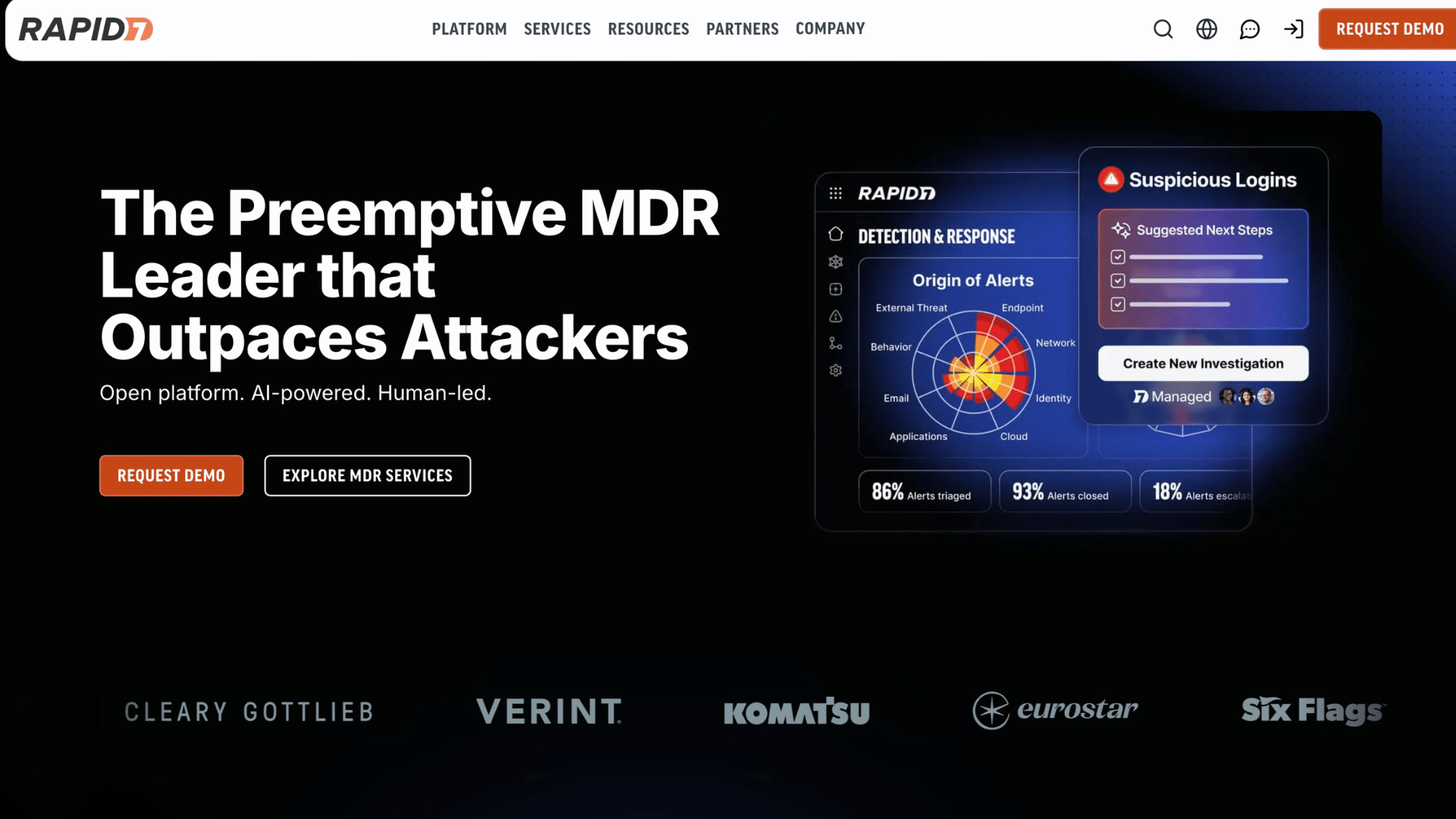
Rapid7 focuses on vulnerability management, SIEM visibility, and threat detection through its Insight cloud platform, helping businesses identify and respond to security risks faster.
Best For: Vulnerability management and security operations visibility.
| Pros | Cons |
|---|---|
| Strong vulnerability scanning capabilities | Advanced modules can raise pricing |
| Good SIEM visibility and analytics | The dashboard may feel technical for beginners |
| Useful for identifying security gaps | Setup can take time for large environments |
| Flexible cloud-based platform | Some automation features need tuning |
Services and Solutions:
- Managed detection and response (MDR) services
- InsightVM vulnerability management
- InsightIDR SIEM and behavioral analytics
- Cloud risk and exposure monitoring
- Threat intelligence and attack detection
10. Arctic Wolf
Arctic Wolf focuses on managed security operations with concierge-style support, giving businesses continuous monitoring and direct access to security experts.
Best For: Fully managed security monitoring and SOC support.
| Pros | Cons |
|---|---|
| Strong hands-on security support | Less focused on standalone software tools |
| Easy-to-follow reporting and guidance | Premium support can be costly |
| Good for businesses without large security teams | Fewer advanced customization options |
| Continuous monitoring and risk visibility | Smaller ecosystem than larger vendors |
Services and Solutions:
- 24/7 security operations monitoring
- Managed detection and response (MDR)
- Cloud and endpoint threat monitoring
- Risk scoring and security assessments
- Incident response guidance
Why Companies Need Digital Security Services?
Businesses face constant online risks that can harm data and operations. Strong security helps reduce threats and keeps systems safe.
- Phishing: Fake emails or messages trick employees into sharing passwords or sensitive data, leading to unauthorized access.
- Ransomware: Malicious software locks systems or data and demands payment to restore access, often stopping business operations.
- Malware: Harmful programs enter systems to steal data, damage files, or spy on activity without notice.
- Insider threats: Employees or internal users misuse access, either on purpose or by mistake, causing data leaks or system issues.
- Zero-day attacks: Exploit unknown software flaws before fixes are available, making them hard to detect.
- Man-in-the-middle attacks: Hackers intercept communication between systems to steal or alter data.
- Credential stuffing: Stolen usernames and passwords are reused to break into multiple accounts.
- Cloud security risks: Weak settings in cloud systems can expose large amounts of data.
- Social engineering: Manipulation tactics used to trick employees into giving access or information.
One thing I noticed while comparing cybersecurity solutions is that phishing and ransomware remain the most common risks for small businesses because many teams still rely on weak password habits and outdated systems.
Cybersecurity Platforms (Tools-Based Solutions)
Cybersecurity platforms are software-based tools businesses can use if they have an in-house IT or security team to manage threat detection, monitoring, and system protection internally.
1. CrowdStrike
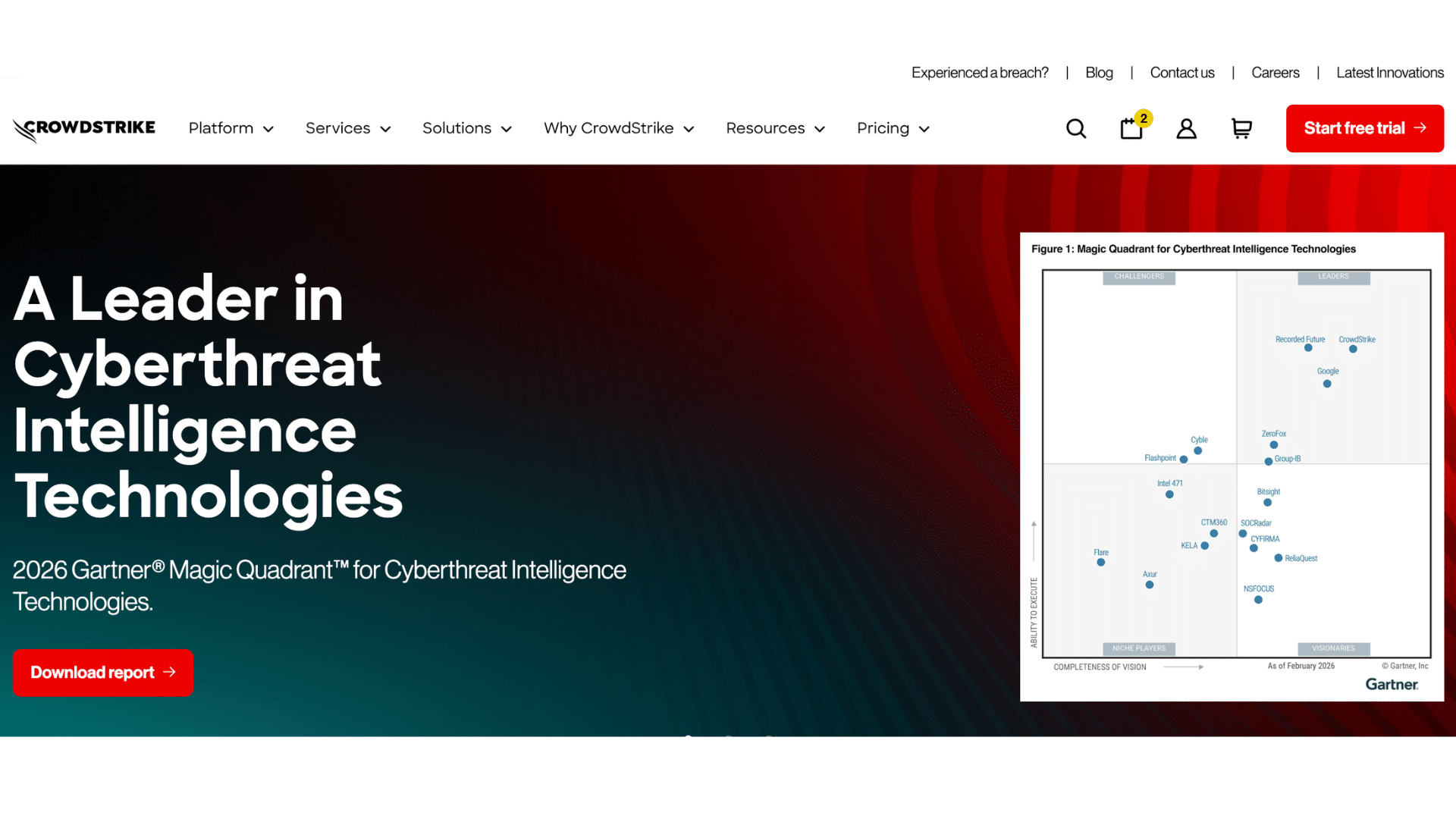
CrowdStrike is a cloud-based cybersecurity platform focused on endpoint protection, threat intelligence, and real-time attack detection using its AI-powered Falcon platform.
Offers endpoint detection and response (EDR), AI-powered threat intelligence, and managed threat hunting services.
It also provides cloud workload protection, identity security, ransomware detection, and Zero Trust security support for modern enterprise environments.
Cons:
- Premium plans can become expensive
- Advanced features may need skilled IT teams
- Limited focus on traditional network hardware security
CrowdStrike is one of the platforms I see mentioned often in enterprise security discussions because of its strong endpoint detection and cloud-based management.
2. Fortinet
Fortinet is a cybersecurity platform known for network security, firewalls, and integrated threat protection through its Security Fabric ecosystem.
Provides next-generation firewall protection, SD-WAN networking, endpoint security, and cloud security solutions.
The platform also includes intrusion prevention, web filtering, centralized security management, and AI-powered threat intelligence.
Cons:
- Setup can be complex for beginners
- Advanced features may require separate licensing
- Some products need regular manual tuning
3. Cloudflare
Cloudflare provides cloud-based cybersecurity focused on Zero Trust access, DDoS protection, and secure web performance across distributed environments.
Offers Zero Trust network access, DDoS mitigation, secure web gateway protection, and DNS security.
It also includes remote browser isolation, application security, and cloud-based traffic monitoring tools.
Cons:
- Advanced enterprise plans can be expensive
- Some controls require technical knowledge
- Limited traditional endpoint security tools
4. Zscaler
Zscaler is a cloud-native security platform focused on Zero Trust access, secure internet traffic, and protecting remote work environments.
Provides Zero Trust network access (ZTNA), secure web gateway services, and cloud firewall protection.
The platform also includes data loss prevention (DLP), cloud workload security, and secure remote access for distributed teams.
Cons:
- Initial migration can take time
- Policy configuration may feel complex
- Heavy cloud dependence for operations
5. SentinelOne
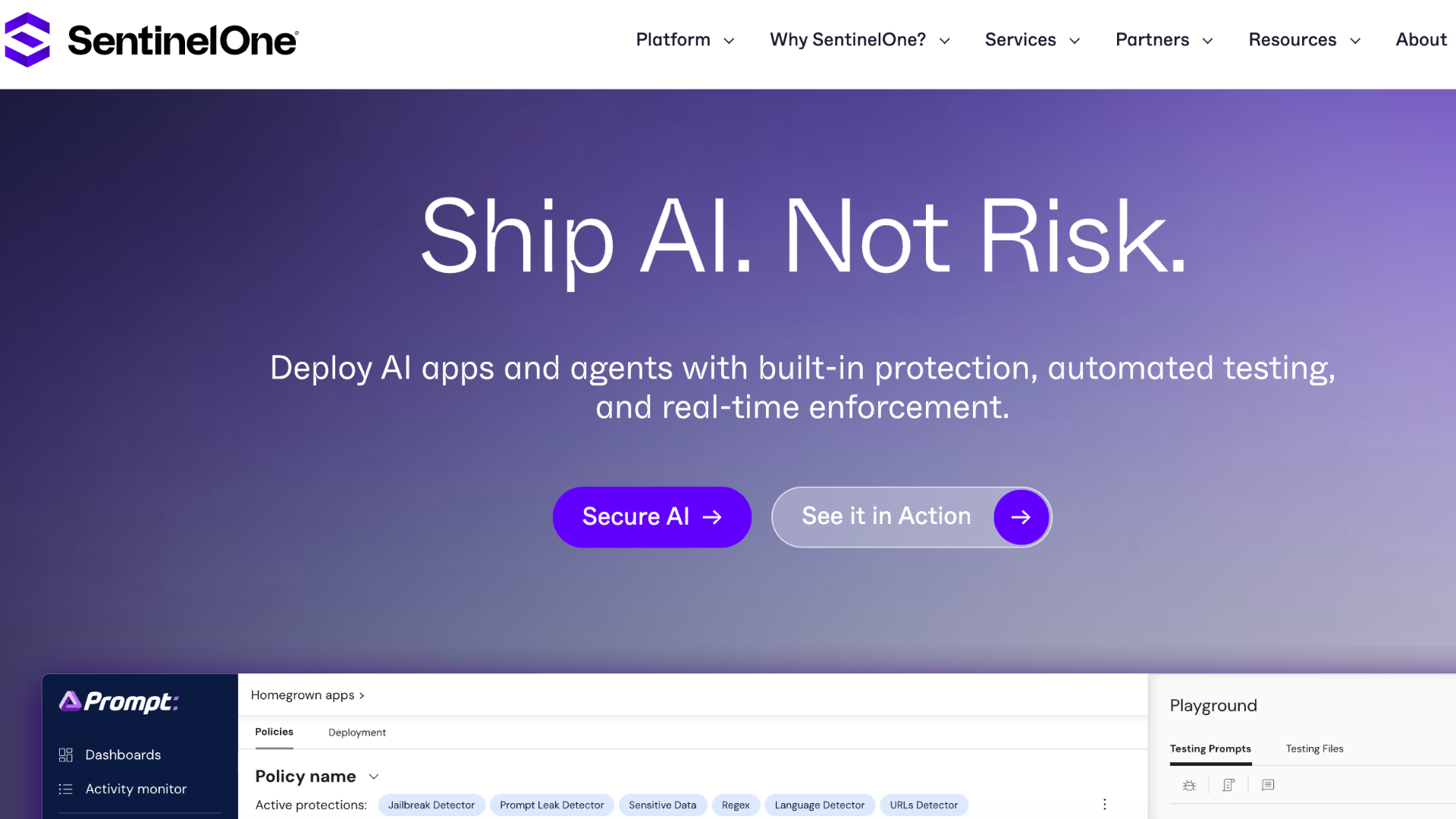
SentinelOne is an AI-driven cybersecurity platform focused on endpoint protection, automated threat response, and real-time attack detection.
Offers endpoint detection and response (EDR), AI-powered threat prevention, and automated remediation tools.
It also includes ransomware protection, threat analytics, cloud security, and identity protection features.
Cons:
- Advanced features may require training
- Pricing can increase with scale
- Some alerts may need manual review
6. Wiz
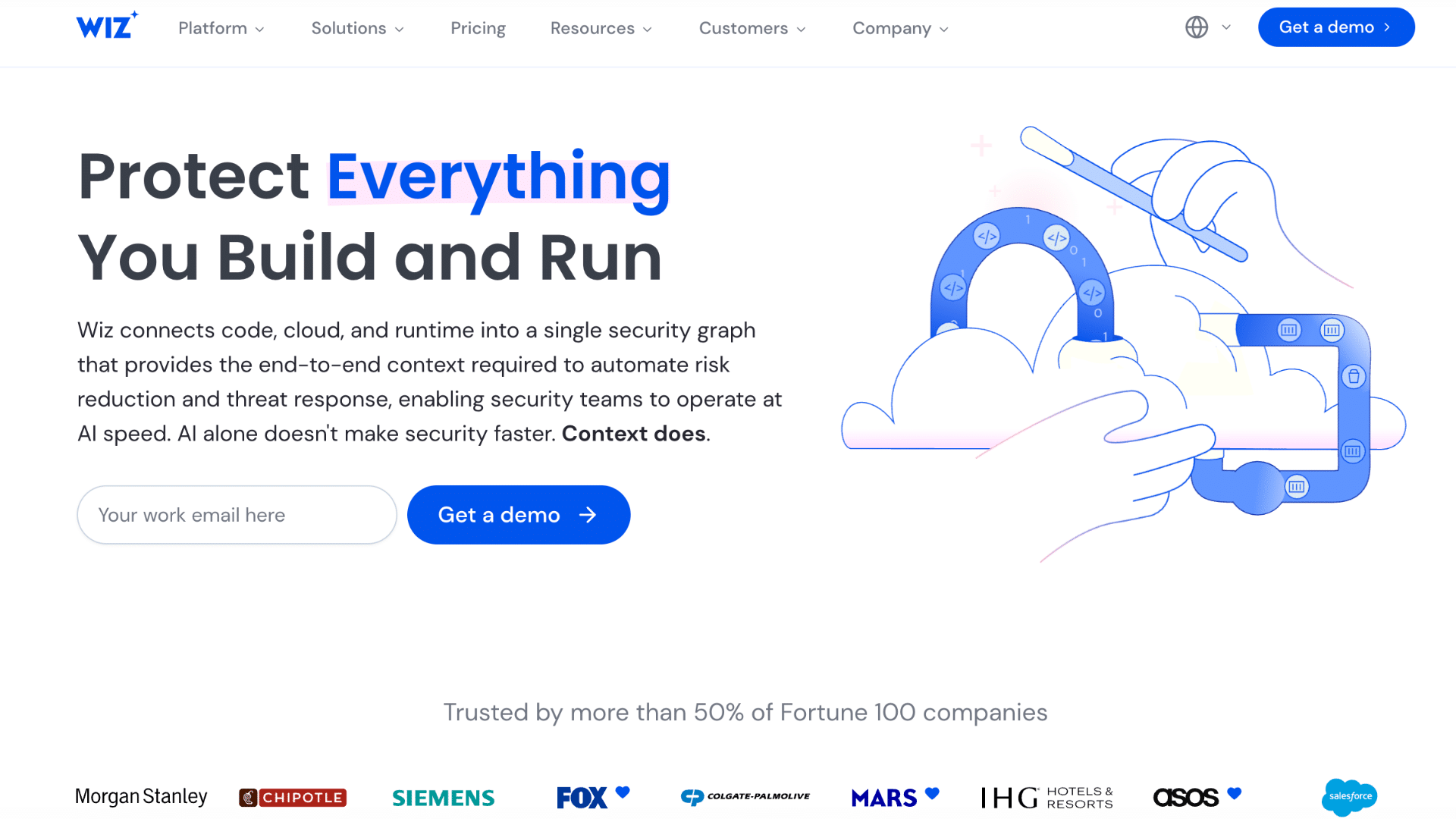
Wiz is a cloud security platform designed to identify risks, vulnerabilities, and misconfigurations across multi-cloud environments from a single dashboard.
Provides multi-cloud security monitoring, cloud vulnerability detection, and agentless cloud scanning.
The platform also includes compliance management, posture management, risk prioritization, and identity visibility tools.
Cons:
- Mainly focused on cloud environments
- Less suitable for traditional on-premise systems
- Advanced reporting may take time to learn
7. CyberArk
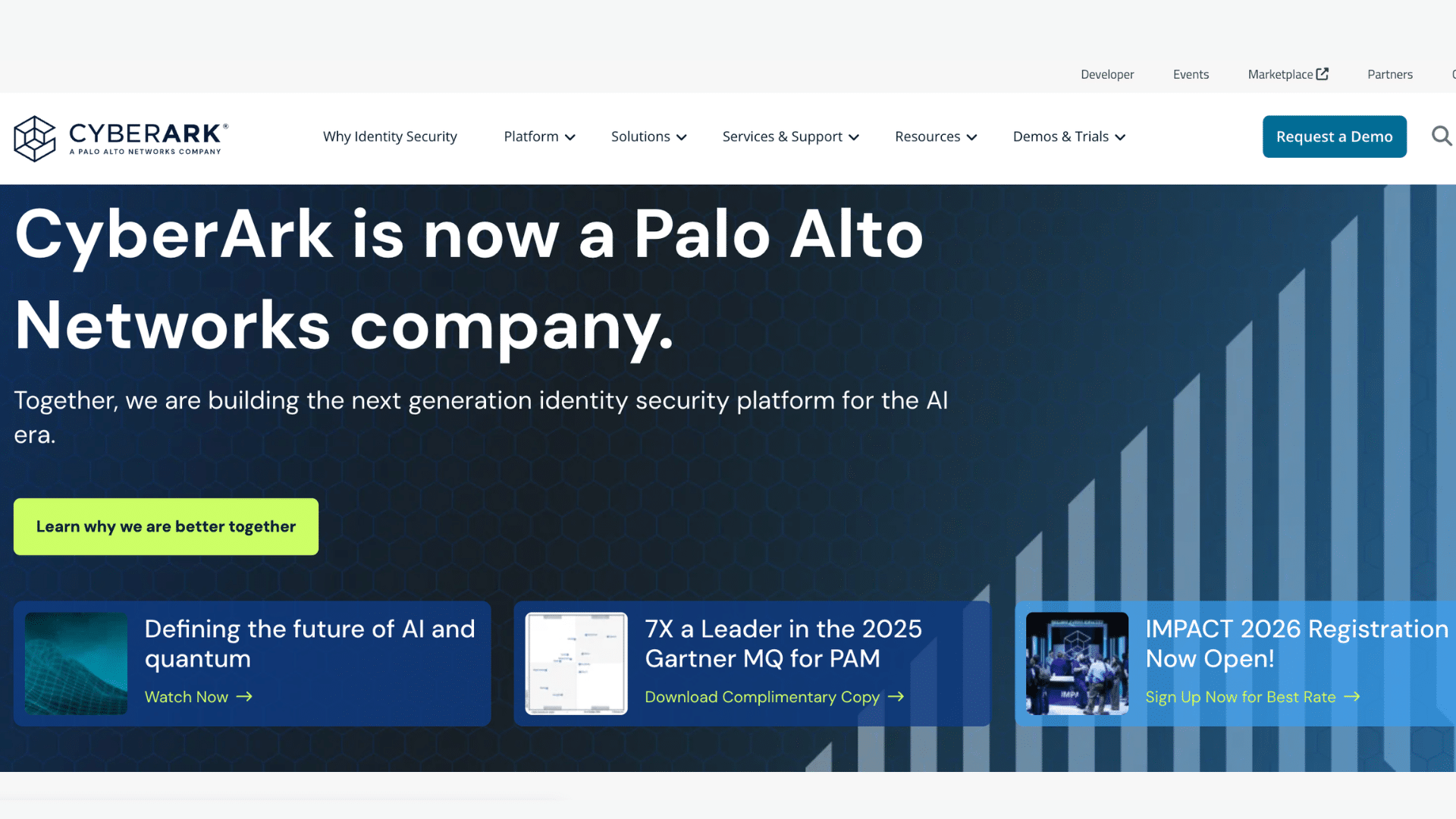
CyberArk specializes in identity security and privileged access management, helping businesses secure sensitive accounts and credentials.
Offers privileged access management (PAM), identity security, password protection, and multi-factor authentication (MFA).
It also includes session monitoring, endpoint privilege management, and secrets management for applications and workloads.
Cons:
- Deployment can be resource-intensive
- Higher learning curve for smaller teams
- Premium enterprise pricing
8. Check Point
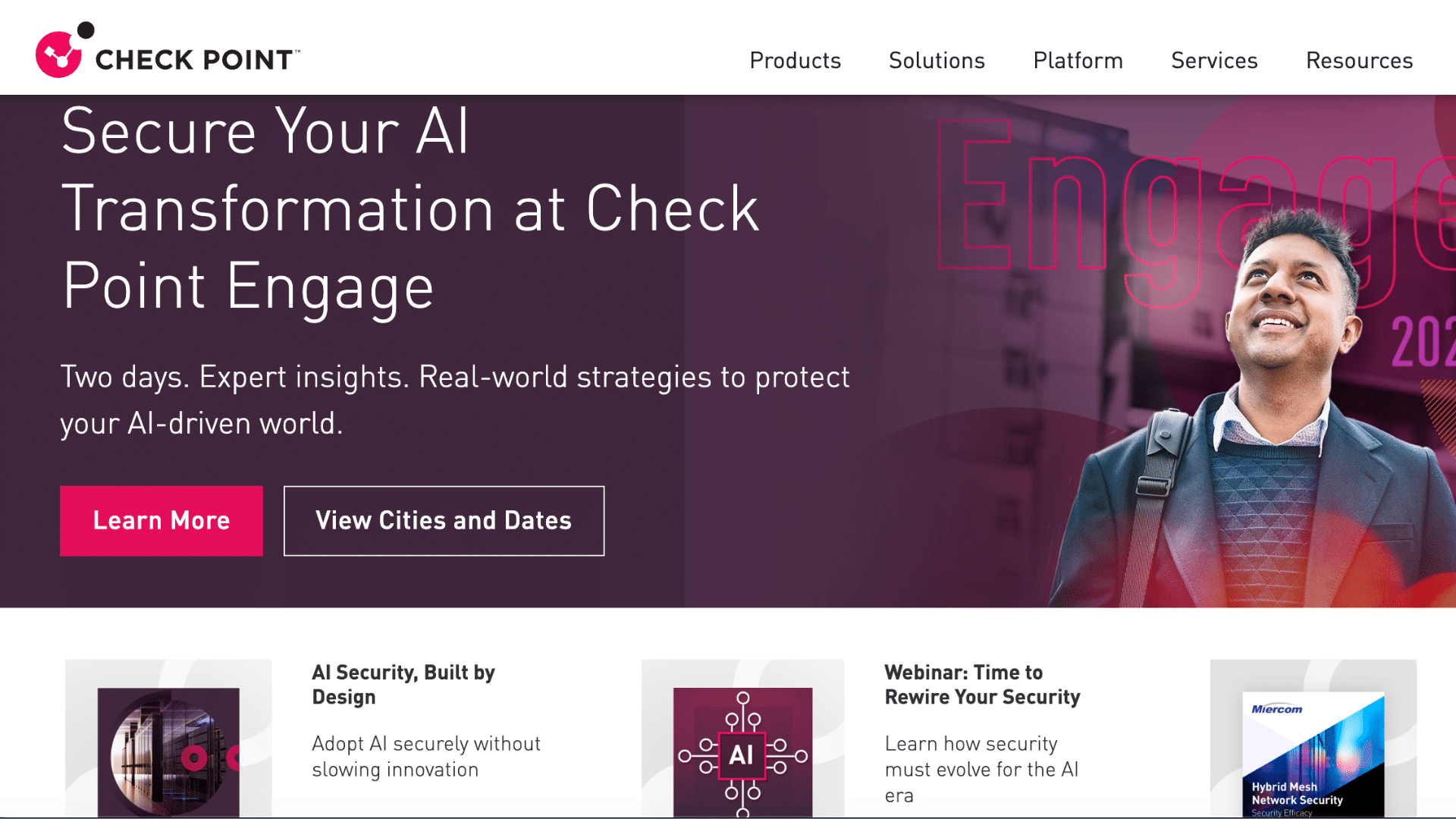
Check Point provides enterprise cybersecurity solutions focused on network security, cloud protection, and advanced threat prevention.
Offers next-generation firewall security, threat prevention, and sandboxing technologies.
The platform also includes cloud protection, endpoint security, secure VPN access, email security, and centralized management tools.
Cons:
- The management interface can feel outdated
- Some advanced tools require add-on licenses
- Initial configuration may be time-consuming
Cybersecurity Services vs Platforms
Cybersecurity services and platforms differ in how security is managed within a business. Businesses with small IT teams often prefer managed services because they do not need to monitor threats internally.
| Factor | Cybersecurity Services | Cybersecurity Platforms |
|---|---|---|
| What it is | Managed security handled by external experts | Software tools used to manage security internally |
| Control | Experts handle most tasks and decisions | Full control stays with the internal team |
| Setup | Set up and configured by service providers | Requires in-house setup and configuration |
| Monitoring | 24/7 monitoring by security professionals | Monitoring depends on the internal team’s effort |
| Cost | Ongoing service-based pricing | One-time or subscription cost for tools |
| Best use case | Companies needing hands-off, expert protection | Businesses with skilled IT teams managing security |
| Examples | Managed SOC, MSSP, threat monitoring services | Antivirus software, firewalls, and SIEM platforms |
Companies Offering Both Services and Platforms
Some cybersecurity companies provide both managed security services and software platforms, allowing businesses to combine expert support with security tools in one ecosystem.
1. Palo Alto Networks
Palo Alto Networks offers cybersecurity platforms along with managed security and incident response services.
The company is known for its AI-driven threat detection, Zero Trust security, and strong cloud protection tools used by large enterprises.
Key features include:
- Cortex XDR threat detection
- Prisma Cloud security
- Next-generation firewall protection
- Unit 42 incident response services
2. Microsoft Security
Microsoft Security combines enterprise security services with cloud-based security tools across Microsoft 365, Azure, and Windows systems. It is widely used for identity protection, endpoint security, and threat monitoring within Microsoft environments.
Key features include:
- Microsoft Defender endpoint security
- Microsoft Sentinel SIEM and XDR
- Azure cloud security tools
- Identity and access management
3. Cisco Security
Cisco Security provides both managed security services and enterprise security platforms focused on network protection and secure infrastructure management.
The company is widely recognized for firewall security, Zero Trust access, and secure enterprise networking.
Key features include:
- Secure firewall and SD-WAN
- Zero Trust network access
- Threat intelligence and analytics
- Managed detection and response
How Cybersecurity Services Work?
Cybersecurity services help businesses find security risks, protect systems, and respond to threats before they cause major damage.
- Risk Check: Security teams assess systems, networks, and applications to identify vulnerabilities, threats, and compliance gaps.
- Planning: A security strategy is created based on business size, industry requirements, and cybersecurity compliance needs.
- Setup: Security tools such as firewalls, endpoint protection, monitoring systems, and access controls are configured and deployed.
- Monitoring: Systems are continuously monitored to detect suspicious activity, malware, unauthorized access, and emerging threats in real time.
- Updates: Security patches, software updates, and policy improvements are regularly applied to keep protection up to date.
How Do You Choose the Right Cybersecurity Service?
The right cybersecurity service should match your business needs, security risks, and long-term protection goals.
1. Business Needs
Every business has different security needs depending on the type of data, systems, and online services it uses.
A small business may only need endpoint protection and basic monitoring, while larger organizations often require cloud security, identity management, and 24/7 threat response.
Businesses handling customer payments, healthcare records, or sensitive company information usually need stronger protection.
For example, a healthcare company may focus on patient data protection, while an ecommerce business may prioritize payment security and fraud prevention.
Knowing your daily operations and main security risks helps you choose the right cybersecurity services.
2. Budget
Cybersecurity costs can vary based on service type, monitoring level, number of users, and business size.
Some businesses choose software-based platforms with lower upfront costs, while others invest in managed security services for continuous expert support.
It is important to compare pricing with the level of protection being offered instead of only choosing the cheapest option.
Lower-cost cybersecurity tools may lack proper monitoring and response support, leading to higher costs after a breach.
Businesses should also plan for long-term costs like upgrades, monitoring, compliance, and future security needs.
3. Industry Rules
Many industries must follow specific cybersecurity and data protection regulations to keep customer information secure.
Businesses in healthcare, finance, retail, and government sectors often need services that support compliance standards like HIPAA, PCI DSS, GDPR, or SOC 2.
Choosing a cybersecurity provider familiar with these requirements can help reduce legal risks and avoid compliance issues.
Security services with audit support, data encryption, access controls, and monitoring tools are commonly used to meet industry regulations and reporting standards.
4. Support Speed
Fast response times are important during cyberattacks, data breaches, or system failures.
Businesses should look for providers that offer real-time monitoring, rapid incident response, and 24/7 support availability.
Delayed response can increase downtime, financial losses, and data exposure. Some cybersecurity companies also provide dedicated response teams and emergency recovery services for critical situations.
Reviewing SLAs, response times, and support availability helps businesses know how quickly security issues will be handled.
5. Future Growth
Cybersecurity services should be flexible enough to support future business growth and changing technology needs.
As companies expand, they often add more devices, cloud applications, remote employees, and connected systems that require protection.
If your business uses remote teams heavily, cloud-focused security tools may work better because they help secure devices, applications, and users across different locations.
Scalable security solutions make it easier to expand coverage without replacing the whole system later.
Businesses should also check if the service can support new technologies, tools, and compliance needs as they grow.
Conclusion
Cybersecurity is no longer something businesses can put off, as online threats continue to increase every year. Choosing the right solution is not only about finding the most popular provider or the lowest price.
It is about understanding what your business truly needs today and what may be needed in the future.
Features like monitoring, threat detection, cloud security, and fast support can make a big difference when problems happen.
I think businesses should compare providers carefully and focus on long-term protection instead of short-term savings.
A reliable cybersecurity plan can help reduce downtime, protect customer data, and keep daily operations running smoothly. Every business has different security needs, so the right choice will look different for everyone.
If you have used cybersecurity services or platforms before, share your experience and thoughts in the comments below.
Frequently Asked Questions
What Is the Difference Between CTI and IVR?
CTI connects telephone systems with computer software for call management, while IVR uses automated voice menus to interact with callers and route calls without human assistance.
What Are the Best Free Cybersecurity Tools?
Popular free cybersecurity tools include Wireshark, Nmap, Bitdefender Free, Malwarebytes Free, and Snort. These tools help with network monitoring, malware detection, and vulnerability testing.
What is Qualys Vulnerability Scanner used for?
Qualys Vulnerability Scanner helps businesses detect security weaknesses, missing patches, and system vulnerabilities across networks, devices, and cloud environments through automated scanning and reporting features.
What Is Sophos Cybersecurity Known For?
Sophos cybersecurity is known for endpoint protection, firewall security, ransomware defense, and managed threat response services designed to protect business systems, networks, and cloud environments from cyber threats.
Are Managed Cybersecurity Services Worth the Cost?
Yes, managed cybersecurity services are worth the cost for many businesses because they provide expert monitoring, faster threat response, and stronger protection against cyber threats and data breaches.