






If you’ve shopped for an SSD lately, you’ve probably done a double-take at the price tag. The same 1TB drive that cost around $60 last year now sells for nearly twice that, and it’s not a glitch or a seasonal markup.
So why are SSD prices going up when storage has been getting cheaper for years? I’ve tracked hardware pricing cycles for a while now, and this one is different; the old pattern of waiting a few months for a price drop no longer works.
In this article, I’ll break down what’s really driving the increase, how long analysts expect it to last, and what you can do about it; doesn’t matter if you’re a buyer, a student, or planning purchases for a whole team.
Key Terms Used in this Article
Before we get into the causes, here’s a quick reference for the tech terms you’ll see throughout this article. Feel free to skip ahead and come back if anything trips you up.
| Term | What It Means |
| SSD | Solid-state drive: fast storage with no moving parts, used in most modern laptops and PCs |
| HDD | Hard disk drive: older storage that uses spinning platters; slower but cheaper per terabyte |
| NAND flash | The memory chip inside every SSD makes up about 90% of an SSD’s production cost |
| DRAM | The memory your computer uses for active tasks (RAM) is built by the same manufacturers as NAND |
| HBM | High-bandwidth memory; premium chips used in AI accelerators, currently the industry’s top priority |
| TLC / QLC | Two types of NAND: TLC stores 3 bits per cell (more durable), QLC stores 4 (cheaper per terabyte) |
| NVMe | A fast connection standard for modern SSDs, typically in a small “M.2” stick format |
| Gen 3 / Gen 4 | PCIe generations that set an NVMe drive’s maximum speed; higher numbers mean faster and pricier |
| Fab | Short for fabrication plant, the multi-billion-dollar factory where memory chips are made |
| Contract price | The bulk price manufacturers charge large buyers moves before retail prices do, making it the key indicator to watch |
Why are SSD Prices Going Up?
The SSD price increase isn’t the result of a single problem. It’s five separate pressures hitting the NAND supply chain at the same time, and each one feeds into the next.
Here’s a closer look at what’s driving up costs.
1. AI Data Centers are Consuming NAND at Scale

The biggest driver of demand is AI infrastructure. Training and running AI models require enormous amounts of fast storage, and hyperscale data centers are buying NAND in volumes the consumer market simply can’t match.
Many of these deals are long-term priority contracts, which means a large share of global output is spoken for before regular SSD makers even place their orders.
Sandisk’s CEO confirmed during the company’s Q1 FY2026 earnings call that demand has outpaced supply since late 2025; and he expects that imbalance to continue through the end of 2026 and beyond.
2. Manufacturers are Keeping Supply Tight on Purpose

After the 2023 oversupply crash, when NAND prices collapsed and memory makers posted heavy losses, the industry changed its playbook. Samsung, SK Hynix, and Micron are now deliberately cautious about expanding capacity, choosing stable margins over market share.
This supply discipline means there’s no flood of new chips coming to rescue buyers anytime soon.
Building a new fabrication plant takes years and tens of billions of dollars, so even a change of heart today wouldn’t add supply quickly. It’s a strategy, not an accident, and it’s working exactly as intended.
3. Fabs are Prioritizing High-Margin Memory Products

Factory capacity is limited, and manufacturers are pointing it at whatever pays best. Right now, that’s high-bandwidth memory (HBM) for AI accelerators and enterprise-grade storage, not the mainstream NAND used in consumer SSDs.
The financial incentive is hard to argue with: Samsung reported a 755% profit jump in Q1 2026, with roughly 95% of those profits coming from its memory business.
Consumer drives are now competing for leftover production capacity, and when allocation gets tight, lower-margin products are always the first to feel the impact.
4. AI Firms are Replacing Hard Drives with SSDs
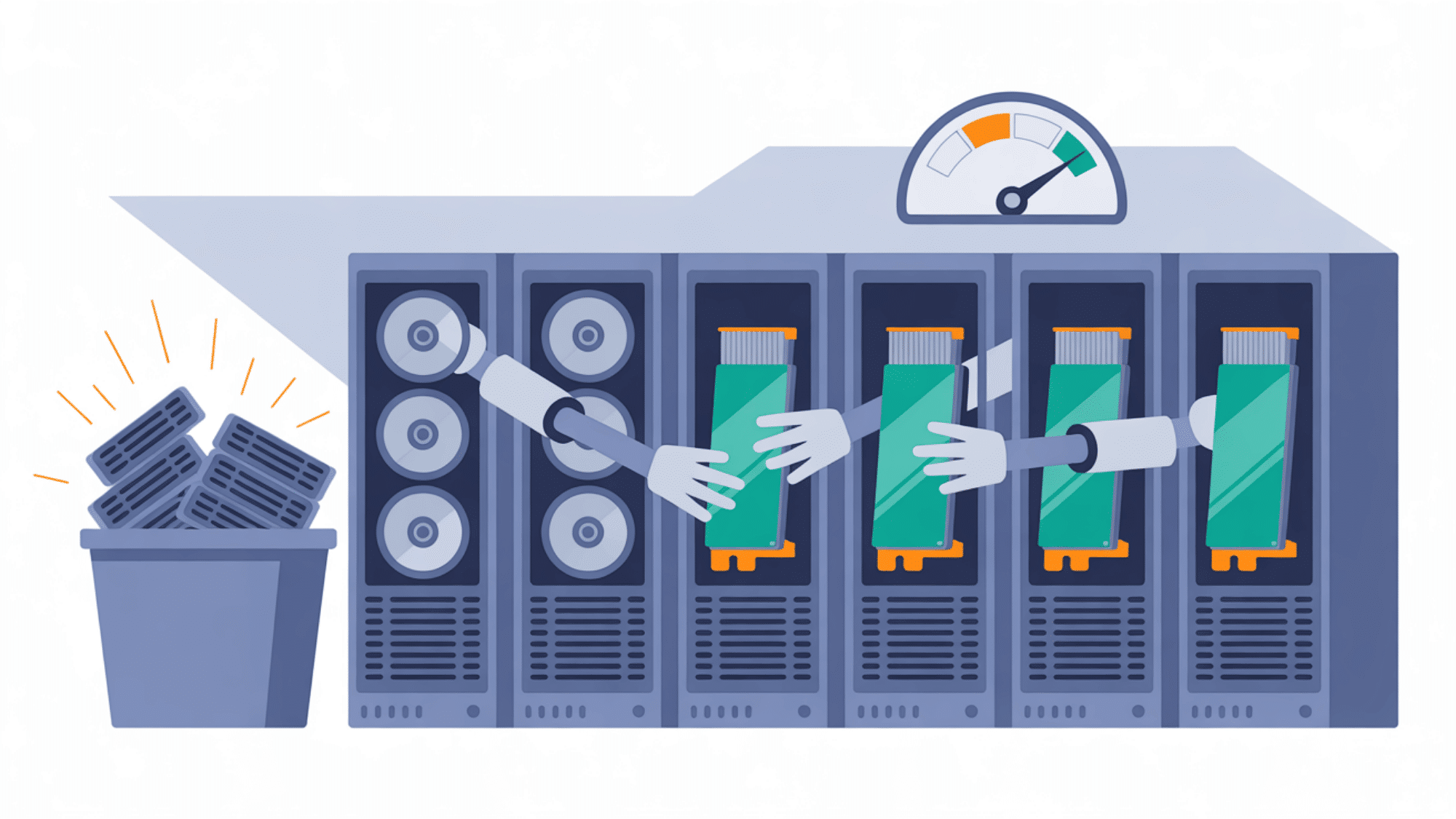
A newer pressure point is what industry insiders call hard drive displacement. AI inference workloads require faster read speeds than traditional hard drives can deliver, so data centers are replacing HDDs with SSDs at scale.
This shift adds an entirely new layer of demand on top of an already strained supply.
Phison’s CEO pointed to this trend directly, noting that TLC 1TB NAND more than doubled in price between July and October 2025, jumping from $4.80 to $10.70 in just a few months.
5. Production Costs are Rising at the Source
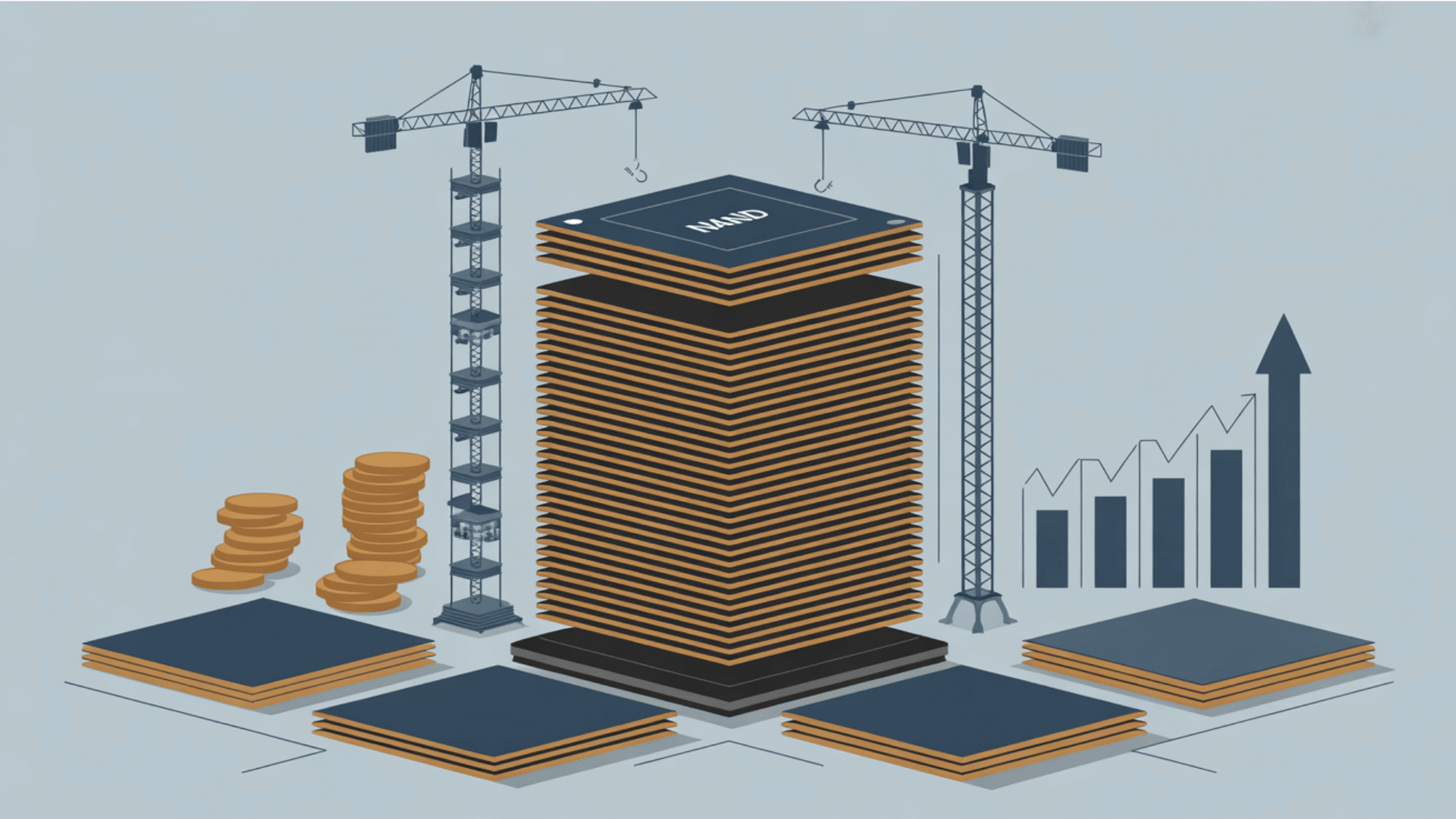
Even setting demand aside, making NAND is getting more expensive. Wafer prices have climbed, controller chips cost more, and the industry’s transition to chips with over 300 stacked layers adds manufacturing complexity and risk at every step of production.
These costs flow straight into the finished drive sitting on a store shelf.
So even if AI demand cooled tomorrow, the baseline cost of producing an SSD would still sit noticeably higher than it did two years ago; meaning prices wouldn’t simply snap back to where they were.
Who Manufactures SSDs and Why Won’t They Just Make More
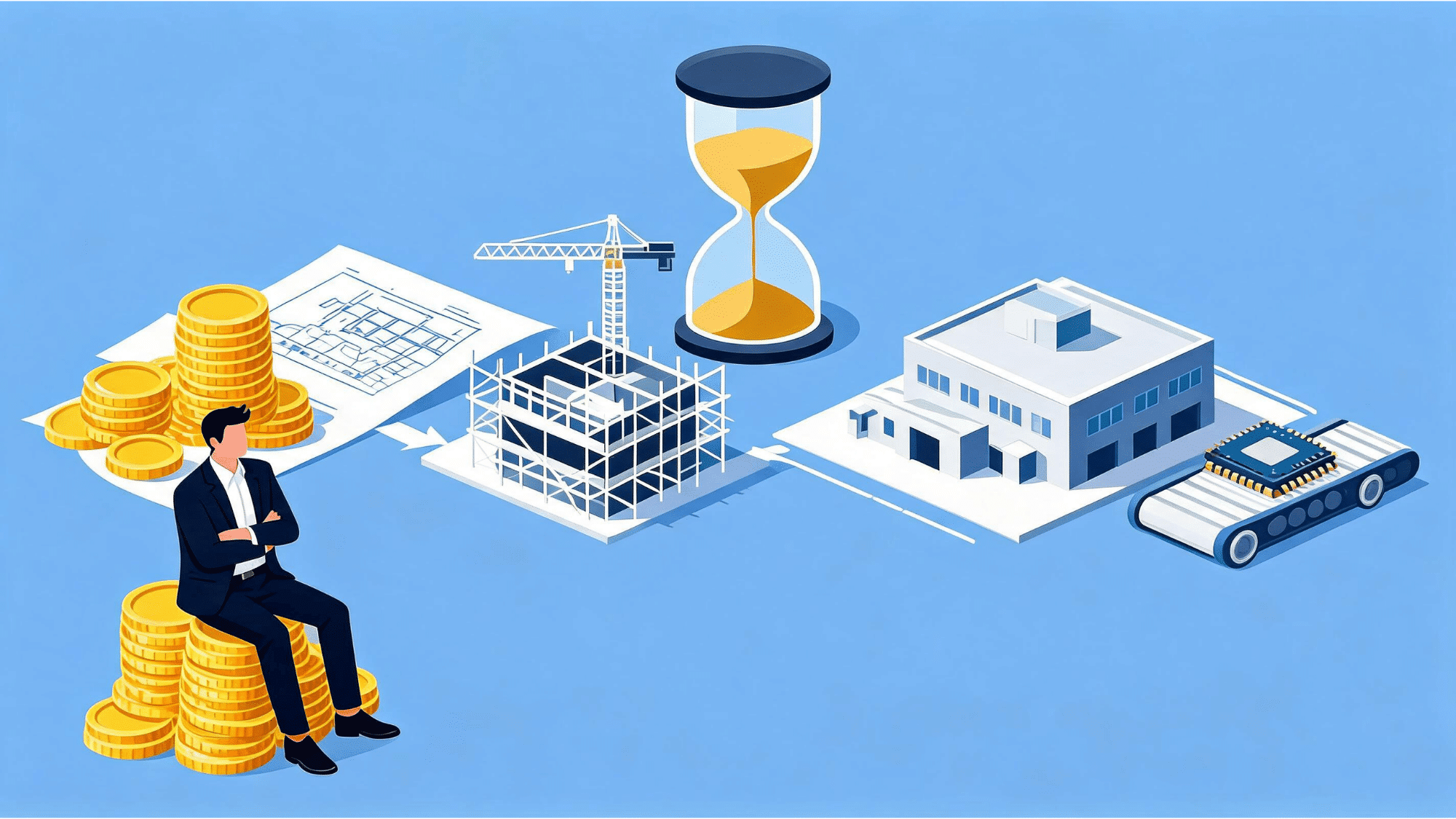
The obvious question is: if demand is this high, why not simply build more factories? The answer comes down to time, money, and memory of past pain. Here’s what standing up a new NAND supply actually looks like:
- Year 0: A manufacturer commits $20–30 billion to a new fabrication plant; roughly the GDP of a small country- bet on one facility
- Years 1–3: Construction, cleanroom certification, and equipment installation. Not a single chip ships during this window
- Year 4+: Production ramps slowly, and yields take additional quarters to stabilize before output meaningfully moves the market
So even if every major manufacturer broke ground today, relief wouldn’t arrive until the late 2020s. And here’s the part many buyers miss: they don’t want to break ground.
The 2023 price crash taught Samsung, SK Hynix, and Micron that overbuilding destroys profits, and their recent earnings prove restraint pays.
When caution is this profitable, tight supply isn’t a problem the industry is racing to solve. It’s the business model.
Who Supplies NAND and Who’s Buying It All
To understand the price squeeze, it helps to know the players on both sides. The supply side is remarkably concentrated: just five companies make nearly all the world’s NAND.
The demand side is even more concentrated: a handful of AI giants with budgets large enough to buy at almost any price.
Here’s how the two sides stack up:
| NAND Suppliers (Market Share, per Q4 2025) | Major Buyers (Spending Commitments) |
| Samsung: 28% share; V9 NAND nearly fully booked before launch; reportedly seeking 20–30% price hikes in 2026 deals | OpenAI: $500B Stargate project; deals with Samsung and SK hynix for up to 900,000 memory wafers per month |
| SK Group (SK hynix + Solidigm): 22.1% share; fastest grower at 47.8% quarterly revenue jump; 2026 capacity essentially sold out | Microsoft : $120B+ annual AI infrastructure spend; $80B backlog of unfulfilled cloud orders |
| Kioxia: ~15% share; record quarterly revenue of $3.31B on AI server demand | Meta: $115–135B planned 2026 capex, including gigawatt-scale data centers |
| SanDisk : ~12% share; independent since 2025; reportedly pushing steep contract price increases | Amazon & Google: memory purchases at volumes dwarfing the consumer market, locked via long-term contracts |
| Micron : ~11% share; only US-based maker; investing $24B in new Singapore capacity | Oracle: $50B projected 2026 spend, a 136% year-over-year jump |
Columns ranked independently; rows do not indicate supplier–buyer relationships
Is this a Temporary Spike or a New Normal?
Honest answer: it’s somewhere in between, and it helps to separate what’s confirmed from what’s speculation.
The confirmed part: SanDisk expects demand to outpace supply through the end of 2026, and TrendForce forecasts NAND contract prices to rise another 70–75% in Q2 2026. So no near-term relief.
The speculative part: Some industry voices warn of a memory squeeze lasting up to a decade as AI permanently rewrites how supply gets allocated. That’s a possibility, not a forecast.
In my view, the responsible read is to plan for elevated prices through 2026 and treat anything beyond that as an open question.
I’ve watched too many decade-long predictions in this industry collapse the moment one new fab clears its yield problems.
Understanding and Moving with the Market

The big leagues have effectively bottlenecked the supply of essential tech to the common consumer. How does it affect you? And what exactly should you do?
I’ll try to answer those questions, keeping in mind that this is an advisory section.
How Rising SSD Prices Affect You
This isn’t just a problem for people shopping for a bare drive. Because NAND sits inside nearly every modern device, the price squeeze ripples outward in ways you’ll feel even if you never open a PC case.
- Laptops: Dell and Lenovo are reportedly planning smaller default SSD capacities in their 2026 lineups to control costs; same price, less storage
- PCs: Gartner estimates surging memory costs will push overall PC prices up by around 17% in 2026 compared to 2025, per its February 2026 forecast.
- High-capacity drives: The 4TB and 8TB segments have seen the sharpest spikes and the most stock shortages
- Phones and consoles: Smartphones and gaming hardware draw from the same NAND pool, so spec cuts or price bumps are likely there too
When manufacturers start downgrading their own products to manage costs, that tells you how tight this market really is.
Smart Buying Moves in this Market
The old strategy, wait a few months, and prices will drop, is exactly the wrong move right now. With supply tight through at least the end of 2026, the smarter play depends on who you are and what you actually need.
- Buyers: If you need a drive, buy sooner rather than later; use a price tracker to confirm you’re not catching a retailer markup on top of the market rise
- Students: Step down to 1TB instead of 2TB, and pair it with an external HDD or cloud storage for files that don’t need speed
- Builders: Don’t over-spec; a Gen 4 or even Gen 3 drive still covers gaming and everyday work at a lower premium
- Analysts and IT teams: Lock pricing early through framework agreements, qualify more than one supplier, and build capacity flexibility into your BOMs
Here’s a quick decision guide based on where you stand right now:
| Your Situation | Best Move Right Now | Why It Works |
| Drive failing or out of space | Buy now, even at current prices | Waiting risks paying more; Q2 2026 forecasts point higher, not lower |
| Want an upgrade, but the current drive works | Hold off and monitor prices | Elective upgrades don’t justify peak pricing; revisit in late 2026 |
| Need bulk storage, not speed | Buy an HDD or hybrid setup | HDD prices have stayed largely flat while SSDs surged |
| Building a new PC | Choose 1TB now, add later | Smaller drive trims cost today; expansion slots leave room to grow |
| Buying a new laptop | Pick the smaller SSD config | OEM storage upgrades carry heavy markups in this market |
| Procuring for a team or fleet | Lock contracts and order early | Lead times are stretching; early commitments secure price and stock |
When Could SSD Prices Come Down?
No confirmed reversal is on the calendar, but there are signals worth watching. SK Hynix plans to ship 321-layer QLC NAND in the second half of 2026, which could ease pressure on margins.
If enterprise demand plateaus even slightly, mainstream 1TB–2TB consumer drives would likely be the first to see relief.
Until then, the indicators that matter are TrendForce’s quarterly NAND contract price reports and manufacturer lead times, not retail rumors or social media predictions.
When contract prices flatten for two consecutive quarters, that’s your early signal that the squeeze is loosening.
Final Thoughts
So why are SSD prices going up? Because the economics of memory have shifted; AI infrastructure now sets the terms of the market, and manufacturers have learned that restraint earns more than expansion.
For everyone downstream, the lesson is that storage is no longer the easy, ever-cheaper line item it was for a decade.
The good news is that none of this leaves you powerless. Buy on need rather than on habit, match capacity to what you’ll actually use, and watch contract prices rather than headlines.
If this breakdown helped, share it with someone about to overpay for an upgrade; and check our other storage guides before your next purchase.
Frequently Asked Questions
Do Higher SSD Prices Mean I’m Getting Better Quality Drives?
No, higher prices reflect supply shortages, not better hardware. I advise checking specs like endurance rather than assuming a pricier drive is superior.
Are Used or Refurbished SSDs a Smart Buy During this Shortage?
Yes, but always verify drive health first. I recommend asking for SMART data. A lightly used drive saves money, but a worn one risks data.
Will External SSDs and Memory Cards Also Get More Expensive?
Yes, USBs and microSD cards use the same flash memory facing shortages. In my experience, only traditional hard drives have avoided these price hikes.
Should I Buy QLC or TLC NAND During the Price Surge?
Prefer TLC for primary drives due to better speed and endurance. However, cheaper QLC drives work well for secondary storage or backups right now.
Does the SSD Price Increase Affect Cloud Storage Subscriptions?
Not immediately. Providers use long-term contracts to absorb cost swings. Even with shortages stretching into 2026, I see cloud storage remaining a stable option.