


5G is now common on many smartphones, but seeing the 5G symbol does not always mean the connection will be faster than LTE. That can make the question “is 5G better than LTE?” harder to answer than it first appears.
The short answer: yes, in most conditions, 5G is faster and more capable than LTE, but on a weak or distant 5G signal, a strong LTE connection can still perform better.
In my years of creating technical guides and working closely with engineering teams, I have learned that newer technology does not always yield the same results across every setting.
Network coverage, signal strength, frequency bands, location, and traffic can all affect mobile performance.
This blog explains how LTE and 5G work, their main technical differences, typical speeds, and situations where LTE may perform better.
By the end, the numbers and everyday performance differences should make much more sense when comparing these two mobile networks.
LTE and 5G Explained: The Basics
Before comparing speeds and use cases, it helps to know what each technology actually is and how it gets data to your phone.
What is LTE? A Quick Refresher
LTE stands for Long-Term Evolution and is a widely used 4G mobile network technology.
According to NIST, LTE is a fourth-generation (4G) cellular technology used for mobile communications.
It connects a phone to nearby cell towers, allowing users to make calls, stream videos, browse websites, and use mobile apps without Wi-Fi or the Internet.
LTE transmits data via radio signals and shares network capacity with nearby users. In everyday use, LTE speeds can vary widely depending on the carrier, signal strength, network traffic, location, and device.
In areas with strong coverage, LTE can still provide smooth streaming, quick web browsing, video calls, and reliable everyday mobile performance.
What is 5G? The Basics Explained Simply
5G is the newer generation of mobile network technology built for faster data, lower delay, and more connected devices.
NIST also notes that 5G uses both lower frequencies and higher-frequency millimeter-wave bands, with higher frequencies offering greater speed and data capacity.
It comes in three main types:
- Low-band 5G covers large areas but often performs close to LTE.
- Mid-band 5G balances coverage and speed, common in many U.S. cities.
- mmWave 5G reaches extremely high speeds but covers short distances and struggles indoors.
Under ideal conditions, some forms of 5G exceed 1 Gbps, though everyday speeds are usually much lower. This is why the answer to “Is 5G better than LTE?” depends on which type of 5G is actually available in your area.
LTE vs 5G: What Really Sets Them Apart
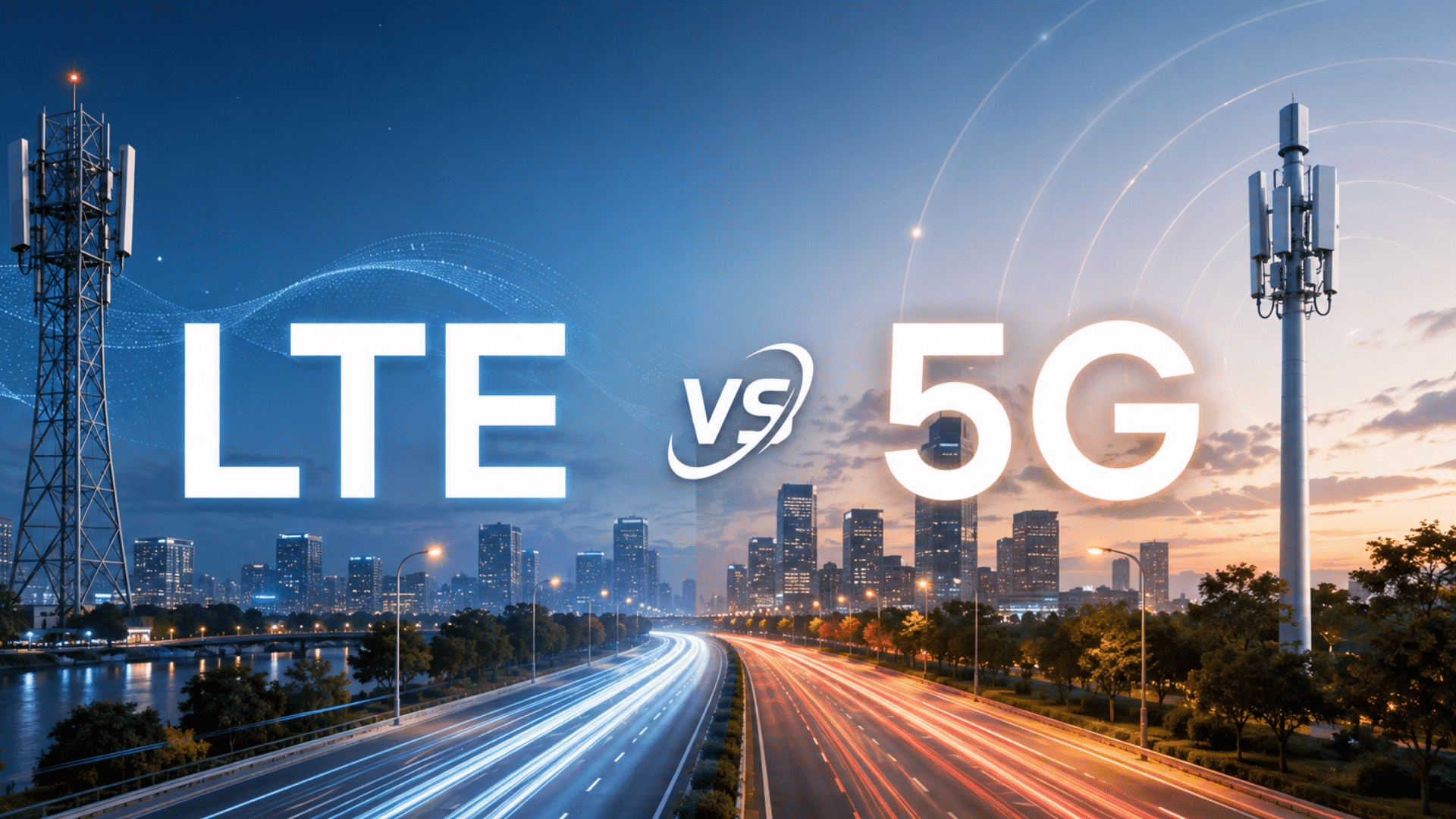
5G is often called the “next big thing” after LTE, but the real difference comes down to three simple things: how fast it is, how well it works day-to-day, and whether it’s actually worth switching for.
| User Need | Better Choice |
| Wide or steady coverage | LTE |
| Maximum available speed | 5G |
| Weak 5G signal area | LTE |
| Strong mid-band coverage | 5G |
| Basic daily phone use | Either |
1. Speed
5G isn’t always dramatically faster; it depends on the band. Low-band 5G barely beats LTE, mid-band (the most common type)
It offers a solid jump, and mmWave delivers blazing speeds but only over short distances. Real speed also depends on your tower, location, and network traffic.
- LTE: 35–50 Mbps
- 5G: 60–80 Mbps (low-band), 150–300 Mbps (mid-band), 1 Gbps+ (mmWave)
2. Performance
5G isn’t just about speed; it also reacts faster. Lower latency means calls connect quicker, games feel smoother, and video stays in sync.
It also handles many devices at once without slowing down, which is great in busy places like malls, stadiums, or offices. LTE can struggle when too many people connect simultaneously.
- LTE latency: 35–45 ms
- 5G latency: 20–28 ms
3. Overall Value
For simple tasks like texting, browsing, or listening to music, LTE works just fine and feels almost the same as 5G. But if you stream in 4K, play online games, or use video calls a lot, mid-band 5G makes a real difference.
Whether it’s “worth it” depends on how you use your phone and whether strong mid-band coverage exists where you live.
- LTE: Good enough for everyday tasks (up to 50 Mbps)
- 5G: Noticeably better for heavy use (150–300 Mbps on mid-band)
Why 5G May Not Feel Faster in Everyday Use
On paper, 5G looks like a clear winner, but in real life, many users don’t notice a big speed jump. Here’s why:
- 5G coverage varies by location: LTE networks have had more time to build broad coverage, while strong 5G service can still vary by carrier, city, neighborhood, and frequency band.
- mmWave signal drops off quickly indoors and at a distance: This fastest form of 5G struggles to pass through walls or travel far, so speeds fall sharply once you move away from the tower.
- Phone settings and carrier limits that slow things down: Some carriers cap 5G speeds, and older phones may not fully support newer 5G bands.
So even with 5G turned on, your phone often relies on LTE behind the scenes to stay connected.
Advice: If 5G feels slow or unstable, compare it with LTE in the same location. A stronger LTE signal may give steadier everyday performance.
When LTE Can Actually Beat 5G
5G may sound more advanced, but LTE still wins in several everyday situations. In rural and small-town areas, LTE towers reach far more places, so you’re less likely to lose signal outside major cities.
This matters when asking ‘Is 5G better than LTE?’ because a strong LTE signal can outperform a weak 5G connection.
Inside buildings, LTE signals pass through walls and floors more easily, making them more reliable in offices, homes, and basements where 5G often struggles.
LTE also tends to be easier on battery life because your phone isn’t constantly searching for a stronger 5G signal, helping it maintain a steadier connection overall.
For many people, especially those living outside city centers, LTE quietly delivers a smoother and more dependable experience than 5G.
Fun Fact: Newer does not always mean faster. A strong LTE connection can sometimes outperform weak 5G, especially indoors or where 5G coverage is limited.
5G vs LTE: Which One Should You Count on Right Now?
Both networks work fine today, but the best choice depends on where you are and what you’re doing.
For anyone asking ‘Is 5G better than LTE?’, the best answer depends on location, signal quality, coverage, and how the connection is being used.
| Situation | Best Choice | Why |
|---|---|---|
| Streaming, gaming, city areas | 5G | Faster speeds, less lag |
| Rural areas or travel | LTE | Wider, more stable coverage |
| Video calls, big uploads | 5G | Handles heavy data better |
| Saving battery | LTE | Uses less power |
| Checking your network | Phone Settings Network/Status bar icon | Shows if you’re on 5G or LTE live |
Pick LTE for steady coverage, 5G for speed. Your phone often switches automatically anyway.
Advice: Let the phone switch networks automatically unless the connection becomes unstable. Manual LTE selection can help when nearby 5G coverage is weak.
How to Manually Switch Between 5G and LTE on Your Phone
Sometimes the best fix for a weak or unstable 5G connection is to switch to LTE yourself, rather than waiting for your phone to sort it out.
On iPhone, go to Settings → Cellular → Cellular Data Options → Voice & Data, then choose LTE instead of 5G Auto or 5G On.
On Android, the path is usually Settings → Network & Internet → SIM/Mobile Network → Preferred Network Type, where you can select LTE only.
This helps when your phone keeps searching for a weak 5G signal and draining battery, when LTE feels more reliable in your area, or when you want a steadier connection for hotspot use.
Switching back to 5G later just means reversing the same steps.
Note: Phone menu names can differ by model, carrier, and software version, so the exact network-setting path may look slightly different on some devices.
Common 5G Myths Debunked
A lot of misinformation still floats around about 5G, so here are a few myths worth clearing up.
| Myth | Fact |
|---|---|
| 5G always means faster speeds than LTE | Actual speed depends heavily on band type, location, and network congestion, not just which generation your phone displays |
| You need a brand-new phone every year to use 5G properly | 5G phones keep working for years, but accessing newer bands carriers add later may require upgraded hardware, not just software. |
| 5G drains your battery no matter what | Battery drain mostly happens when a phone is stuck searching for a weak 5G signal; in strong coverage areas, the difference versus LTE is much smaller |
| 5G will completely replace LTE very soon | LTE is expected to stay active for years, since most 5G still depends on it and rural coverage relies heavily on LTE towers |
Knowing the difference between what 5G promises and what it actually delivers today can help you set realistic expectations for your phone’s performance.
The Bottom Line
So, is 5G better than LTE? In many situations, yes. 5G can provide faster downloads, lower latency, and better performance for gaming, large uploads, and high-quality streaming.
Still, LTE remains valuable because its coverage is often wider and more stable, particularly in rural areas and inside buildings.
From my experience writing technical guides, I have found that specifications only tell part of the story.
Everyday performance matters just as much as the maximum speed listed for a technology. A strong LTE signal can sometimes work better than a weak 5G connection.
Most modern phones switch between the two networks automatically, helping maintain a usable connection.
What works better in your area, 5G or LTE? Comment below and share your experience with other readers.
Frequently Asked Questions
Does 5G Use More Data than LTE?
5G does not automatically use more data than LTE. However, faster speeds can encourage higher-quality streaming, larger downloads, and more frequent app use, which may increase overall monthly data consumption.
Why does My Phone Keep Switching from 5G to LTE?
Your phone may switch between 5G and LTE when signal strength, tower coverage, network traffic, or supported frequency bands change. This helps maintain a more stable mobile connection overall.
Do I Need a New SIM Card to Use 5G?
5G usually does not require a special SIM card, but older SIMs may limit access to certain features. Your carrier can confirm compatibility with its current 5G network before upgrading.
Can Airplane Mode Fix Slow 5G?
Airplane mode can briefly reset your mobile connection and force the phone to reconnect to a nearby tower. This may improve speed when the device is stuck on a weak 5 G signal.
Which Network Works Better for a Mobile Hotspot?
5G can improve hotspot performance when coverage is strong because it offers higher speeds and capacity. LTE may still provide a steadier hotspot connection in areas with weaker 5G coverage.