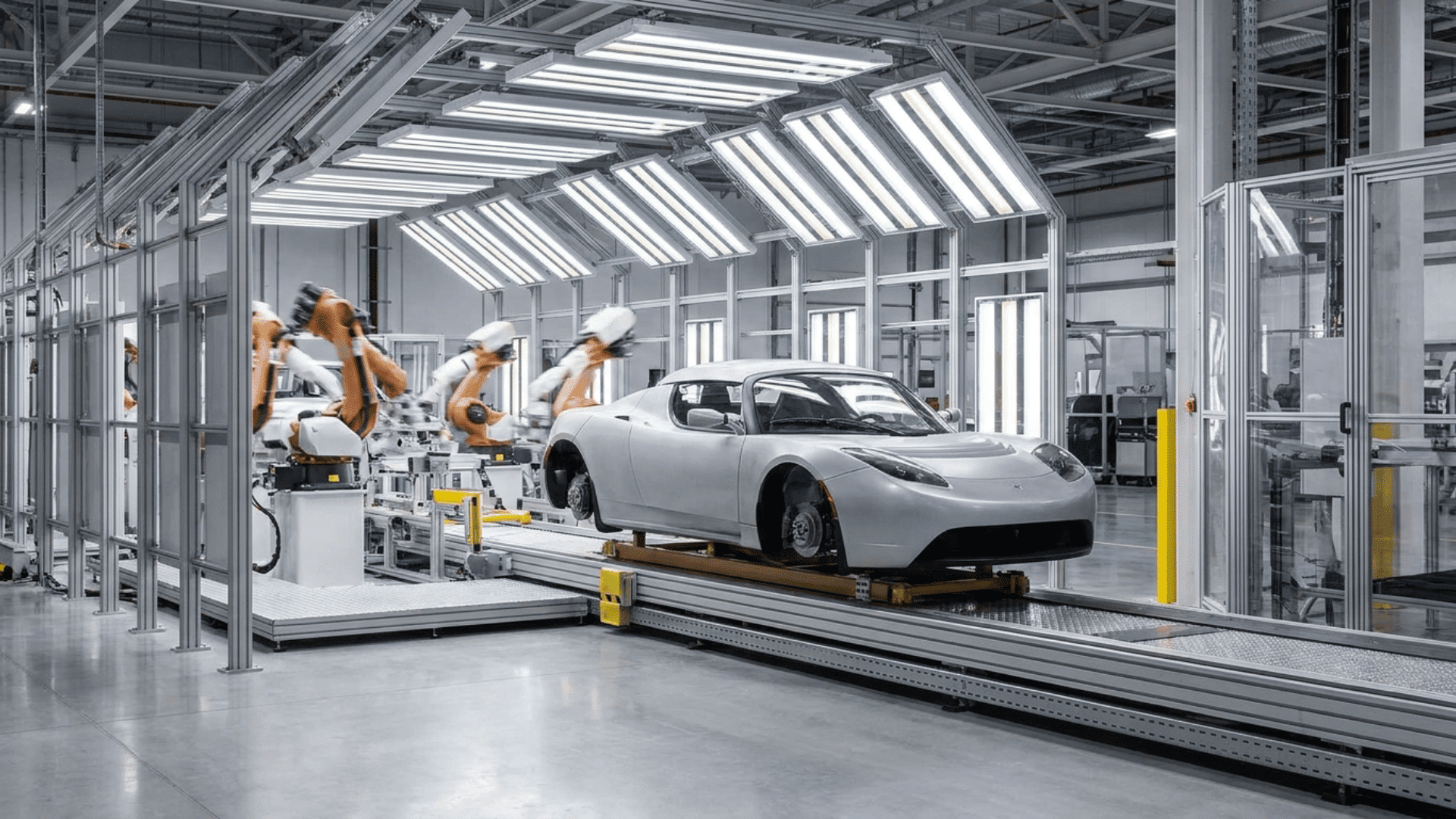







AI is no longer just helping with small tasks. It can write reports, review documents, answer customer questions, schedule work, research topics, and even assist with coding.
That raises a fair question: what jobs are safe from AI as the technology continues to improve? The short answer is that no career is fully protected.
But some jobs are much harder to replace because they depend on hands-on work, human trust, judgment, care, and real-world responsibility.
That is whereAI-proof careers become useful to compare. Instead of looking only at job titles, it helps to look at what the work actually demands and how much of it AI could realistically take over.
Some career paths clearly hold up better than others, and knowing why can make the choice much easier.
What Does “Safe From AI” Really Mean?
When asking what jobs are safe from AI, focus on how many essential tasks still require physical presence, human judgment, trust, or professional accountability.
No career is 100% safe from AI. The more useful question is how much of the job AI can actually take over and how much still depends on a person.
That difference matters. Task automation means AI takes over parts of the workload, such as summarizing notes, sorting data, drafting reports, or handling routine admin tasks.
Job replacement occurs when technology can perform enough of a role that fewer workers are needed. I have seen software change individual tasks more often than it removes an entire role.
A nurse is a good example. AI in healthcare may summarize patient records or flag possible risks, but the nurse still checks the patient, provides hands-on care, notices sudden changes, and takes responsibility for key decisions.
Quick self-check: ask yourself three things about your own role. Could a new hire learn to do this in three months? Does it require a license, a physical presence, or a high-trust judgment call? Is the day-to-day work basically the same as it was two years ago? If your role fails all three, it’s more exposed than it feels.
Why Are Some Jobs Harder for AI to Replace?
The level of AI risk depends more on what the job requires every day than on the job title itself. Roles that depend on physical skill, trust, judgment, or responsibility are harder to automate fully.
From working closely with engineering teams, I have learned that unpredictable physical problems rarely fit a fixed technical process.
- Physical work in changing places: Jobs such as plumbing, electrical work, emergency response, and repair often take place in homes, hospitals, vehicles, or outdoor sites where conditions are constantly changing.
- Human care and trust: Nursing, therapy, teaching, childcare, and social work depend on communication, emotional support, and personal relationships.
- High-stakes judgment: Medicine, law, aviation, emergency care, and safety inspections often require a trained professional to make the final call.
- Legal or professional responsibility: Licensed workers can be held responsible for the outcomes of their decisions, which makes full automation more difficult.
- Unpredictable situations: Broken equipment, unusual patient needs, weather, emergencies, and unexpected site problems do not always follow fixed patterns.
- Human leadership and coordination: Managing teams, resolving conflict, setting priorities, and taking responsibility for group decisions still rely heavily on people.
| AI-proof isn’t the same as recession-proof. A job can resist automation and still get cut in a downturn (creative direction, high-end sales), and a job can survive a recession while staying exposed to AI (routine bookkeeping, junior paralegal work). |
Career Fields That Are Harder for AI to Replace
These are not guaranteed AI-proof careers. They stand out because key parts of the work still depend on human judgment, physical action, trust, responsibility, or direct care.
1. Healthcare and Direct Patient Care

Healthcare remains one of the stronger career fields because patient care involves much more than reading data.
When I assess AI risk, I separate administrative work from decisions that require direct observation, care, and professional accountability.
Trained professionals examine people, make treatment decisions, perform procedures, respond to sudden changes, and take responsibility for patient safety.
Career options include:
- Registered nurse
- Nurse practitioner
- Physician
- Surgeon
- Pediatrician
- Geriatrician
- Anesthesiologist
- Dentist
- Dental hygienist
- Midwife
- Occupational therapist
- Physical therapist
- Speech-language pathologist
- Palliative care physician
- Physician assistant
Where AI may take over tasks: Medical admin, record processing, basic patient queries, scan analysis, and routine documentation are more exposed.
2. Mental Health, Therapy, and Counseling

These careers depend heavily on trust, personal communication, emotional judgment, and responses to situations that do not follow a fixed script.
AI may help with basic screening or note-taking, but licensed professionals still handle diagnosis, treatment decisions, crisis response, and responsibility for care.
Career options include:
- Clinical psychologist
- Psychiatrist
- Mental health counselor
- Marriage and family therapist
- School counselor
- Social worker
- Addiction counselor
- Rehabilitation counselor
- Behavioral therapist
- Grief counselor
Where AI may take over tasks: Appointment notes, basic questionnaires, initial screening, reminders, and simple informational support could become more automated.
3. Teaching and Education

AI can already create lesson plans, explain topics, generate quizzes, and help with grading.
Teaching itself is harder to replace because students also need motivation, classroom management, feedback, supervision, and support from a trusted adult.
Career options include:
- Preschool teacher
- Kindergarten teacher
- Elementary school teacher
- Middle school teacher
- High school teacher
- Special education teacher
- Vocational teacher
- College instructor
- School principal
- Academic advisor
- Athletic coach
- Corporate trainer
- Early childhood educator
Where AI may take over tasks: Lesson preparation, basic grading, worksheets, administrative work, and routine tutoring may become more automated.
4. Childcare and Family Support

Childcare is hard to replace because families expect real supervision, safety, communication, and personal care. These roles also require quick responses when a child is upset, sick, injured, or simply needs attention.
Career options include:
- Childcare provider
- Nanny
- Childminder
- Nursery worker
- Nursery manager
- Youth program worker
- Youth program director
- Family support worker
- After-school program coordinator
Where AI may take over tasks: Scheduling, parent updates, attendance tracking, learning activities, and basic admin work may become more automated.
According to the OECD, digital tools can streamline childcare work, but professionals must use their judgment when integrating them into direct work with children.
5. Skilled Construction Trades

Skilled trades rely on physical ability, job-site judgment, safety checks, and work that changes from one location to another.
A plumber or electrician may face a different problem in every home, which makes full automation harder.
Career options include:
- Electrician
- Plumber
- Carpenter
- HVAC technician
- Welder
- Bricklayer
- Plasterer
- Roofer
- Pipefitter
- Construction supervisor
- Building inspector
- Elevator installer
- Elevator repairer
- Heavy equipment operator
Where AI may take over tasks: Estimating, planning, scheduling, paperwork, and design support may see more automation.
6. Mechanical and Equipment Repair

When people askwhat jobs are safe from AI, repair careers often stand out because diagnosing software cannot physically replace damaged parts or fix equipment on-site.
Career options include:
- Aircraft mechanic
- Auto technician
- Diesel mechanic
- Heavy equipment mechanic
- Industrial machinery mechanic
- Marine mechanic
- Robotics maintenance technician
- Tool and die maker
- Farm equipment mechanic
- Appliance repair technician
Where AI may take over tasks: Diagnostic software, maintenance alerts, service records, and troubleshooting suggestions may become more automated. The physical repair itself still depends heavily on trained workers.
7. Emergency and Public Safety Careers
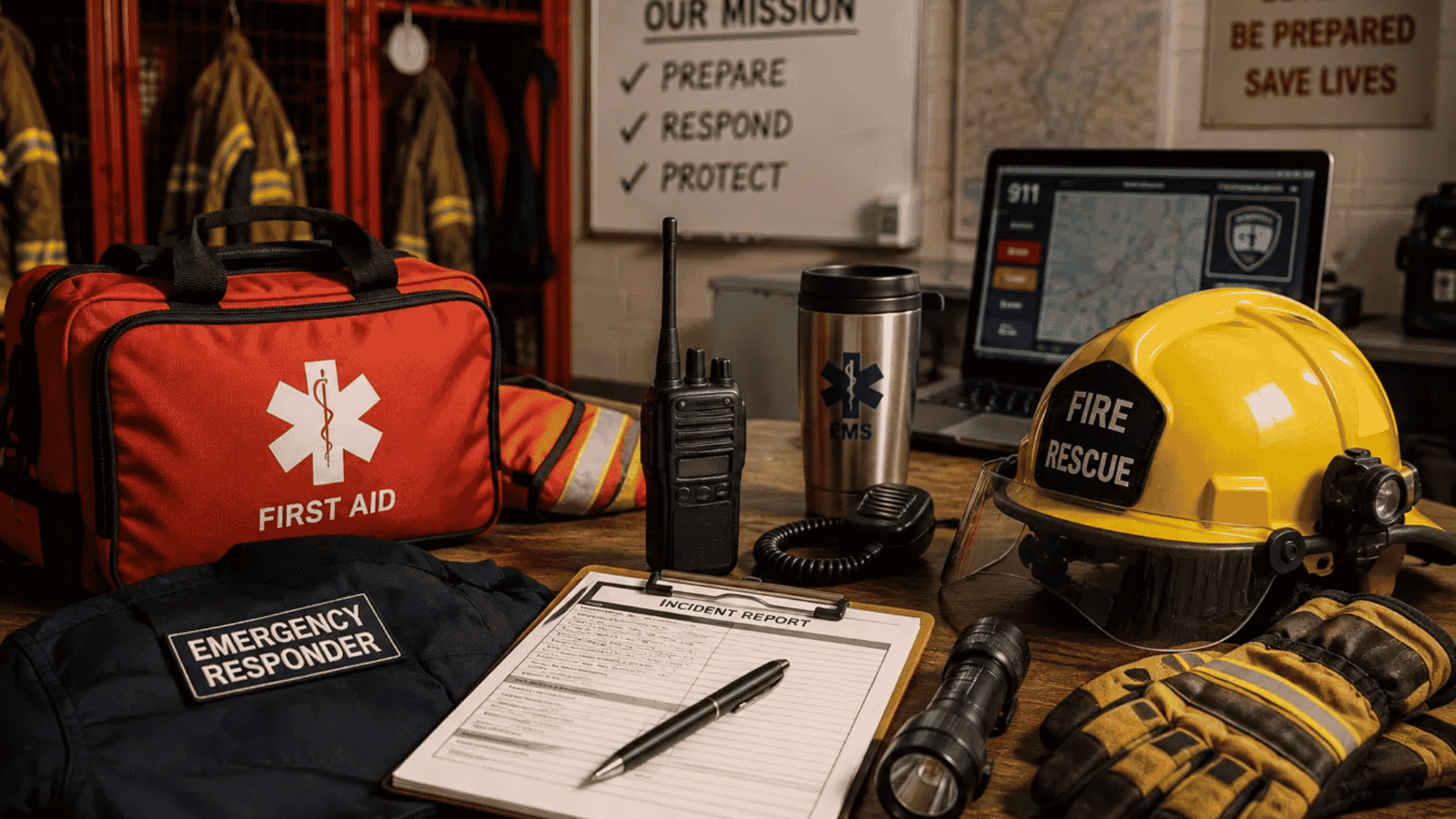
Emergency work is difficult to automate because conditions can change within seconds. These roles combine physical action, teamwork, communication, and fast decisions, where mistakes can affect lives or public safety.
Career options include:
- Firefighter
- EMT
- Paramedic
- Emergency management specialist
- Emergency management director
- Rescue worker
- Search and rescue technician
- Disaster response specialist
- Fire inspector
Where AI may take over tasks: Dispatch support, route planning, incident reports, risk alerts, and data analysis can be assisted by AI. The response itself still requires people on the ground.
8. Law, Mediation, and Legal Judgment

Legal work has a mixed AI risk. Routine research and drafting are easier to automate, but courtroom work, negotiation, client advice, conflict handling, and ultimate legal responsibility still require trained professionals.
Career options include:
- Trial attorney
- Family lawyer
- Public defender
- Prosecutor
- Judge
- Mediator
- Arbitrator
- Compliance officer
- Regulatory affairs specialist
- Legal ethics officer
Higher AI exposure within law:
- Routine document review
- First-draft legal writing
- Form completion
- Basic research
- Standard information gathering
9. Engineering and Field-Based Technical Work

Engineering roles can be more resistant to AI when the work involves industrial robotics applications and other physical systems, safety checks, testing, and responsibility for results.
Field-based roles are especially harder to automate because conditions can change from one site to another.
Career options include:
- Biomedical engineer
- Aerospace engineer
- Mechanical engineer
- Civil engineer
- Environmental engineer
- Field engineer
- Robotics engineer
- Safety engineer
- Manufacturing engineer
- Reliability engineer
Where AI may take over tasks: Computer modeling, calculations, drafting, reports, and design support can be automated.
Field testing, inspections, safety decisions, and responsibility for physical systems still depend heavily on trained professionals.
10. Cybersecurity and Advanced Technology

For readers researching what jobs are safe from AI in the technology sector, starting a cybersecurity career does not mean choosing a field fully protected from AI.
But cybersecurity remains a strong focus because attacks evolve rapidly, and security teams must respond to new risks, investigate incidents, and make decisions that affect entire systems.
Career options include:
- Cybersecurity analyst
- Information security analyst
- Security engineer
- Security consultant
- Penetration tester
- Incident response analyst
- Cybersecurity manager
- AI research scientist
- Machine learning researcher
- Robotics specialist
Where AI may take over tasks: Coding, threat monitoring, documentation, log analysis, and basic security checks can already be assisted by AI.
Human workers are still needed for incident response, risk decisions, system responsibility, and complex attacks.
11. Hospitality and Personal Service Careers

Routine hospitality work may become more automated, but jobs built around direct service still rely on human interaction, judgment, personal care, and the ability to read what a customer needs in the moment.
Career options include:
- Chef
- Executive chef
- Hotel manager
- Guest relations manager
- Concierge
- Barber
- Hairstylist
- Personal trainer
- Funeral director
- Personal chef
Where AI may take over tasks: Reservations, emails, scheduling, basic customer questions, inventory tracking, and other back-office work may be automated.
The Guardian notes that hotel jobs may shift toward customer-facing work as AI handles more routine tasks.
12. Science and Field Research

Science careers can be harder to automate when they involve physical samples, field conditions, experiments, inspections, and decisions that depend on what researchers observe in real settings.
Career options include:
- Environmental scientist
- Geologist
- Forensic scientist
- Biomedical researcher
- Field researcher
- Wildlife biologist
- Laboratory scientist
- Materials scientist
- Environmental field technician
- Research scientist
Where AI may take over tasks: Literature reviews, data sorting, pattern detection, report drafting, and parts of laboratory analysis can be automated.
Collecting samples, setting up experiments, checking unexpected results, and making scientific judgments still require trained people.
13. Management and Leadership

Leadership roles are not automatically protected from AI. The stronger positions involve people management, conflict handling, accountability, and decisions that affect teams, budgets, safety, or business results.
Career options include:
- Operations manager
- Construction manager
- Healthcare manager
- School administrator
- Engineering manager
- Plant manager
- Project director
- Nonprofit director
- General manager
Where AI may take over tasks: Scheduling, report writing, performance tracking, meeting summaries, forecasting, and routine planning can already be assisted by AI.
The harder part to replace is leading people, handling disputes, making trade-offs, and taking responsibility when a decision goes wrong.
14. Finance, Risk, and Compliance

Finance is one of the fields where AI can handle large amounts of data quickly. That makes routine analysis more exposed, while roles built around regulation, oversight, risk judgment, and final responsibility may hold up better.
Career options include:
- Risk analyst
- Risk manager
- Compliance analyst
- Internal auditor
- Financial examiner
- Research analyst
- Surveillance analyst
- Credit risk specialist
- Regulatory specialist
Where AI may take over tasks: Data checks, reporting, fraud screening, research summaries, and routine financial analysis can be automated.
The Guardian reports that a Bloomberg Intelligence survey placed research analysts, compliance and surveillance analysts, risk specialists, and internal auditors among the less exposed banking roles.
15. Human-Led Creative and Strategy Careers

Creative work itself is not safe from AI. AI can already produce text, images, music, concepts, and rough drafts.
The stronger roles involve setting direction, managing people, understanding clients, controlling budgets, and taking responsibility for the final result.
Career options include:
- Creative director
- Film director
- Producer
- Choreographer
- UX researcher
- Brand strategist
- Design director
- Organizational consultant
- Executive coach
- Leadership consultant
Where AI may take over tasks: First drafts, basic concepts, image generation, research summaries, and routine production work are more exposed.
Higher-level direction, client decisions, team leadership, and final approval still depend much more on people.
Which AI Proof Careers Pay the Most?
Some AI-proof careers stand out because they combine strong earning potential with work that still depends heavily on physical skill, judgment, responsibility, or people management.
Healthcare leads the list, but engineering, construction, cybersecurity, and skilled trades also offer strong options.
| Career | Why It Is Harder to Replace | Typical Training Path | Approx. U.S. Annual Pay |
|---|---|---|---|
| Surgeon | Performs physical procedures and carries medical responsibility | Medical degree + residency | $239,000+ |
| Physician | Makes diagnoses and treatment decisions | Medical degree + residency | $239,000+ |
| Dentist | Provides hands-on clinical treatment | Doctoral dental degree | $170,000+ |
| Engineering Manager | Leads technical teams and major engineering decisions | Bachelor’s degree + experience | $167,740 |
| Nurse Practitioner | Provides clinical care and makes treatment decisions | Master’s degree + license | $129,210 |
| Cybersecurity Specialist | Handles security threats, investigations, and incident response | Bachelor’s degree or equivalent experience | $124,910 |
| Construction Manager | Handles site problems, workers, budgets, and safety | Bachelor’s degree often preferred | $106,980 |
| Elevator Installer and Repairer | Performs hands-on installation, testing, and repair | High school diploma + apprenticeship | $100,000+ |
Salary note: U.S. pay can vary by location, experience, specialty, employer, licensing, overtime, bonuses, and industry, so these figures should be treated as national benchmarks.
U.S. Bureau of Labor Statistics data show that wages for physicians and surgeons are among the highest of all occupations, with a median wage of at least $239,200 per year.
Engineering management, nurse practitioner roles, construction management, and cybersecurity also offer strong earnings.
A notable outlier is elevator installation and repair, which can pay above $100,000 without requiring a four-year degree.
That makes it one of the stronger options for readers comparing income, training time, and resistance to full automation.
Best Career Choices by Goal
The strongest option depends on what matters most: pay, training time, hands-on work, human interaction, or long-term demand.
Based on labor data and recurring career discussions, these roles stand out for different reasons.
| Goal | Strong Career Options | Why They Stand Out |
|---|---|---|
| High income | Physician, dentist, nurse practitioner, engineering manager | These roles combine strong pay with high responsibility and work that still depends heavily on trained judgment. |
| No four-year degree | Electrician, plumber, elevator installer, HVAC technician | These careers rely on physical skill and changing work sites. Apprenticeships, licensing, and physical demands are the main trade-offs. |
| Strong human interaction | Nurse, therapist, teacher, physical therapist | Trust, communication, care, and personal support remain central, even as AI handles more admin work. |
| Hands-on work | Electrician, aircraft mechanic, HVAC technician, industrial machinery mechanic | These roles require physical inspection, repair, and on-site problem-solving that software alone cannot complete. |
| Tech-focused work | Cybersecurity, robotics, AI research, security engineering | These careers are tied to growing technology needs, but routine coding, monitoring, and documentation may still become more automated. |
| Working with children | Special education teacher, early childhood educator, school counselor, childcare provider | Supervision, safety, emotional support, and family trust make these roles harder to replace fully. |
Note: These picks are based on current labor data, training demands, automation exposure, and recurring worker discussions. Career stability can still change by industry, location, experience, and future AI use.
What Career Seekers on Reddit Say About AI-Safe Jobs
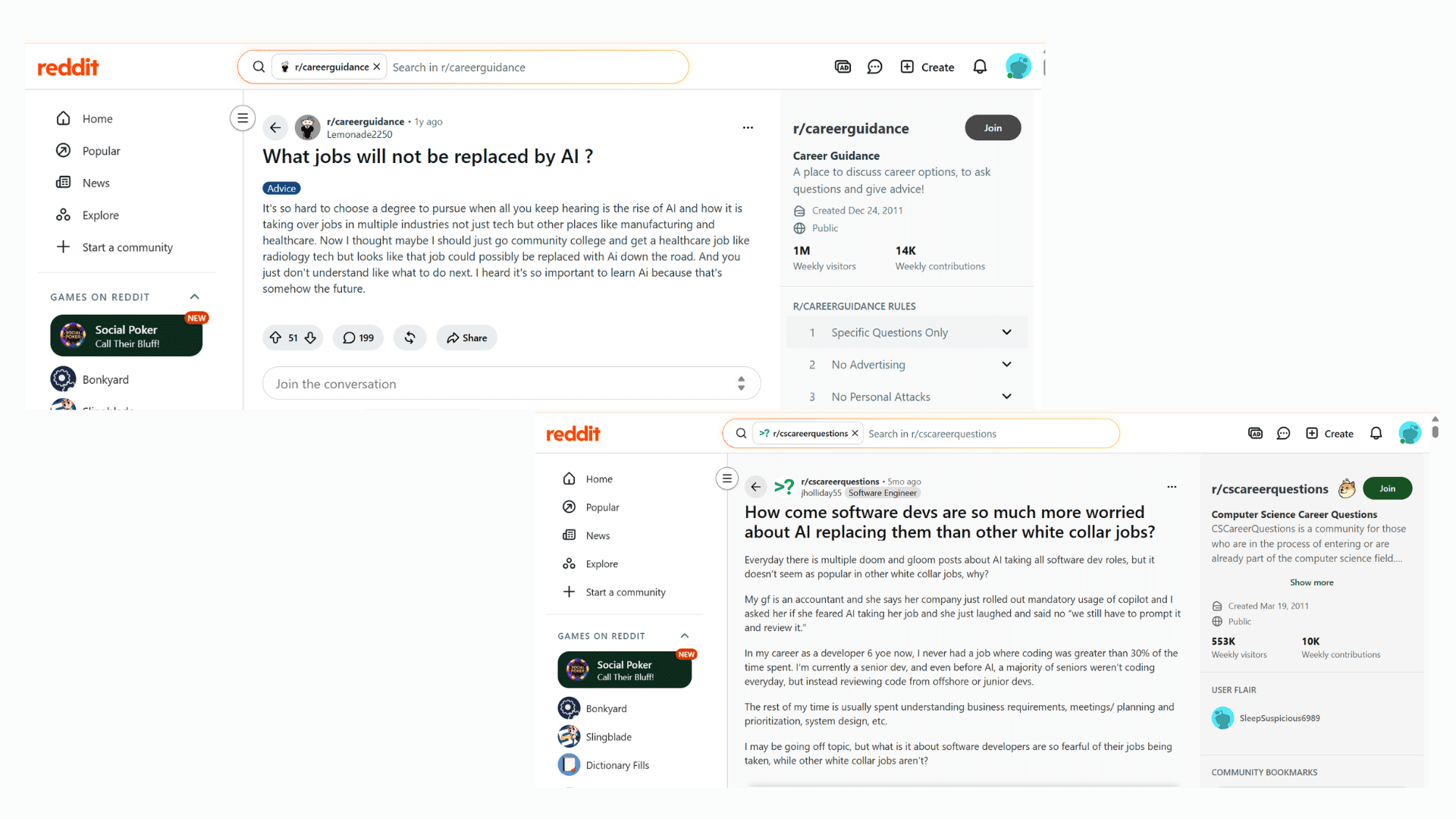
Reddit discussions show that people often point to healthcare, skilled trades, repair work, teaching, and other hands-on careers as safer choices.
The common reason is simple: these jobs still need physical work, human judgment, trust, or direct responsibility.
Opinions become more mixed around software, law, finance, and creative work. Some workers see AI as a tool that removes routine tasks, while others worry about smaller teams and fewer entry-level roles.
The useful takeaway is not that Reddit has the final answer. It shows what workers are seeing and worrying about right now.
Those views make more sense when checked against salary data, hiring trends, job growth, and the actual tasks AI can perform.
Prefer Video? See a Breakdown of AI-Resistant Careers
For readers who prefer a quicker video format, “The Future of Work: High-Paying Careers That AI Won’t Replace” by Silicon Valley Girl is a useful fit for this topic.
The video looks at career paths that may remain stronger as AI takes over more routine work. It covers skilled trades, human-centered roles, and jobs where judgment, communication, and physical ability still matter.
One useful point is that avoiding AI completely is probably not the strongest career plan. A better approach is to choose work where AI can support the job without taking on the entire role.
Watch the video:
Keep in mind: Career predictions in videos are still opinions. Salary data, job growth, training requirements, and real automation trends should carry more weight when making a career decision.
Final Thoughts
Ultimately, anyone wondering what jobs are safe from AI should look for careers in which technology supports workers without replacing their most important responsibilities.
The safest career choice is not the one that avoids AI completely. It is the one where human skill still matters when decisions get harder, conditions change, or real responsibility is involved.
Healthcare, skilled trades, education, emergency work, repair, and selected technical roles all show stronger resistance for that reason.
Still, pay, training time, work conditions, and personal fit matter just as much as automation risk. A career can look secure on paper and still be the wrong choice for someone’s goals.
Before making a move, compare the actual daily tasks, not just the job title.
Thinking about changing careers or choosing one now? Share the role you are considering and what concerns you most about AI in the comments.
Frequently Asked Questions
What Jobs Are Most At Risk By 2030?
Repetitive, rule-based tasks face the highest risk. Data entry clerks, telemarketers, routine bookkeepers, proofreaders, and basic scheduling or customer service roles top the list.
Why Are Entry-Level Workers More Vulnerable to AI?
AI often takes over routine, low-complexity tasks like research, drafting, and data cleanup, shrinking traditional training roles before new hires gain real experience.
What Jobs Have Already Disappeared Due to Automation?
Elevator operators, typists, switchboard operators, toll booth collectors, and video store clerks mostly vanished once machines or software reliably handled their core functions.
What Is the Happiest Job AI Cannot Replace?
Surveys often point to clergy, firefighters, and teachers. These roles are driven by purpose, human connection, and service, consistently ranking among the most personally rewarding careers.