






Robots now work beyond factories and science fiction, helping with everyday tasks in homes, hospitals, and other places.
The growth of robotics and automation has increased the use of robots across industries such as manufacturing, healthcare, and logistics.
I often find that people know robots are useful but are unsure how many different forms they can take. Learning about the types of robots makes it easier to understand why each robot is designed for a specific purpose.
In this blog, you will learn how robots are classified based on their uses, movement, and control methods.
You will also find examples of industrial robots, service robots, medical robots, drones, and other common robot categories.
By the end, you will have a clear idea of the major robot types and how they are used in real-life situations.
Key Takeaways
|
How are Robots Classified?
Robots are classified based on their purpose, design, movement, and level of human control. These factors help group robots according to how they work and where they are used.
One common method is classification by application, which includes industrial robots, service robots, medical robots, and educational robots.
Robots can also be grouped by movement, such as stationary robots, mobile robots, and flying robots.
Another way to classify robots is by control system. Some robots work independently using sensors and software, while others need human commands through remote controls.
Their size, structure, and environment also help define their category.
Understanding these classifications makes it easier to compare different types of robots and learn why each one is built for specific tasks.
Different Types of Robots
Robots come in different forms based on their purpose, design, movement, and working environment. Each type is built to handle specific tasks, from factory operations to healthcare support and everyday assistance.
1. Industrial Robots
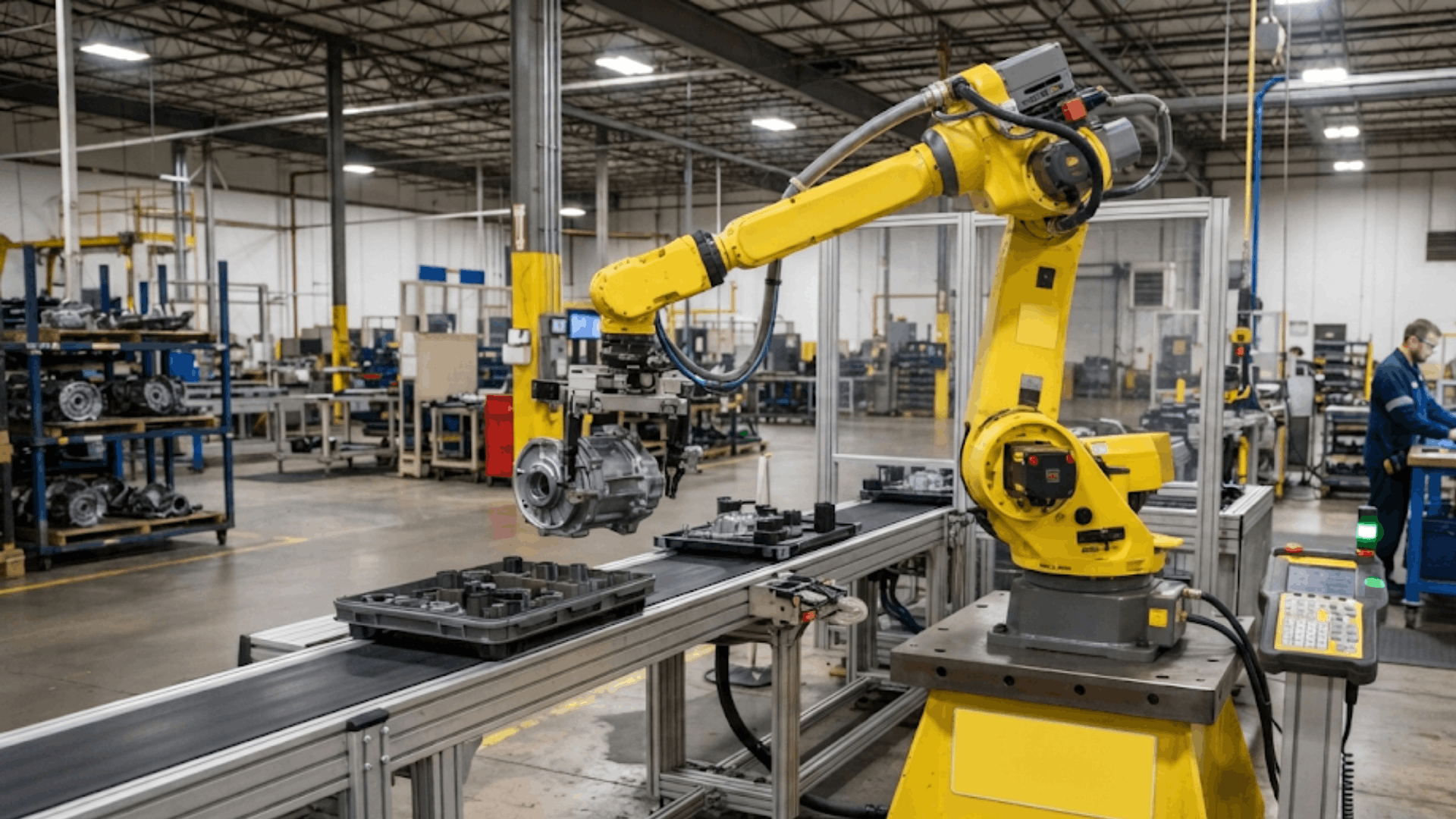
Industrial robots are designed to perform manufacturing tasks quickly and accurately. Industrial robots are widely used in factories, and robotics and manufacturing automation help businesses improve production processes through advanced robotic systems.
They are commonly used in factories for activities such as welding, painting, assembling parts, and packaging products.
A robotic arm used in automobile factories, such as the FANUC industrial robot, is a common example.
It can handle heavy parts, repeat the same movements, and assist workers with tasks that require precision.
2. Service Robots
Service robots are created to assist people in homes, businesses, and public spaces. They perform tasks that support daily activities, customer service, cleaning, and delivery operations.
These robots are often designed to interact with people and operate in changing environments.
A popular example is the iRobot Roomba, which cleans floors automatically using sensors to move around a home.
Hotel delivery robots and restaurant service robots also fall into this category.
3. Medical Robots
Medical robots help doctors and healthcare professionals perform procedures, provide support, and improve patient care.
They are used in surgeries, rehabilitation, and medical training. Surgical robots allow doctors to control precise movements during complex operations.
The da Vinci Surgical System is a well-known example that helps surgeons perform minimally invasive procedures.
Rehabilitation robots, such as robotic walking devices, also assist patients recovering from injuries or physical conditions.
4. Educational Robots
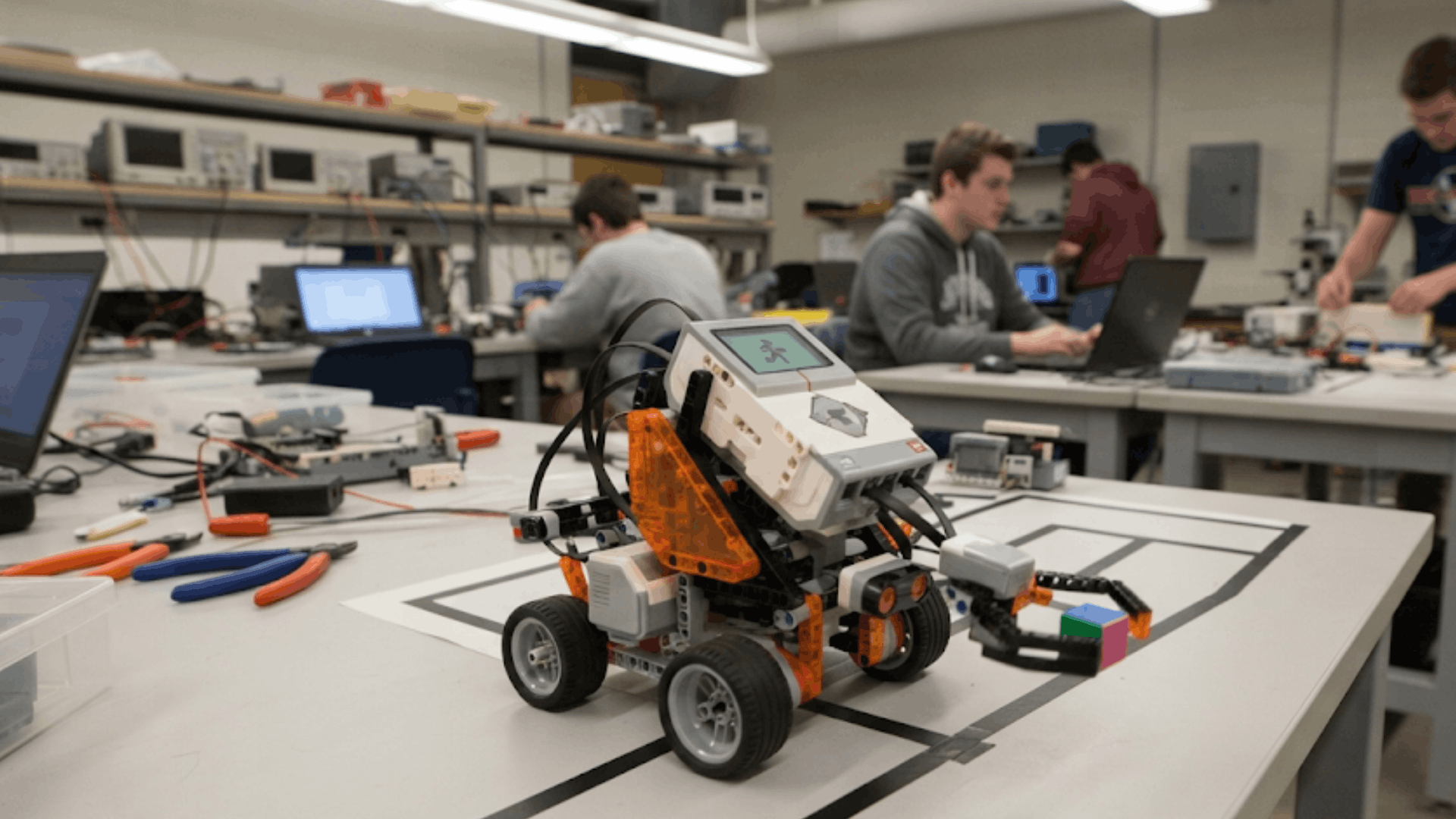
Educational robots are designed to help students learn programming, robotics, and science concepts through practical activities.
They are commonly used in schools, universities, and training centers to make technical learning easier.
These robots allow students to build, program, and test different functions.
LEGO Mindstorms robots are a popular example, as they help learners understand coding and engineering through hands-on projects.
Educational robots are also used in competitions to develop problem-solving skills.
5. Humanoid Robots
Humanoid robots are designed with a human-like structure, including a head, arms, legs, and a body shape similar to people.
They are developed to interact with humans and perform tasks in human-designed environments.
These robots can assist with communication, research, and customer support.
Sophia by Hanson Robotics is an example of a humanoid robot that can recognize faces, hold conversations, and respond to questions.
6. Mobile Robots
Mobile robots can move around their surroundings using wheels, tracks, or legs. They are used in places where movement is required, such as warehouses, homes, and outdoor areas.
These robots use sensors and navigation systems to avoid obstacles and complete tasks.
Amazon warehouse robots are examples of mobile robots that move shelves and materials inside fulfillment centers.
Delivery robots used by companies to transport food or packages also fall into this category.
7. Autonomous Robots
Autonomous robots can perform tasks with little or no human control after being programmed.
They use sensors, cameras, and software to understand their surroundings and make decisions.
These robots are useful in situations where continuous human operation is difficult. Self-driving cars, such as Waymo autonomous vehicles, are examples of autonomous robots.
They use cameras and sensors to detect roads, objects, and traffic conditions while traveling.
8. Remote Controlled Robots
Remote-controlled robots are operated by humans from a distance using a controller or computer system.
They are useful in locations that may be unsafe or difficult for people to access. These robots depend on human instructions rather than making decisions independently.
Bomb disposal robots used by police teams are an example.
Space exploration robots, such as NASA’s Mars rovers, are also controlled remotely to collect information from distant locations.
9. Flying Robots
Flying robots, also known as aerial robots or drones, are designed to move through the air.
They are used for photography, delivery, inspection, agriculture, and research. These robots usually include cameras, sensors, and flight control systems to operate safely.
The DJI Phantom drone is a common example used for aerial photography and video recording.
Delivery drones are also being tested to transport small packages quickly in selected areas.
10. Underwater Robots
Underwater robots are built to operate below water surfaces where human access can be difficult.
They are used for ocean research, marine exploration, pipeline inspection, and underwater repairs.
These robots can capture images, collect samples, and study marine environments.
Remotely Operated Vehicles (ROVs), such as the Deep Discoverer used by NOAA, are examples of underwater robots. They help researchers study deep-sea areas without sending humans into risky conditions.
11. Agricultural Robots
Agricultural robots are designed to support farming activities such as planting, harvesting, monitoring crops, and removing weeds.
They help farmers manage large fields and perform repetitive tasks. These robots often use cameras and sensors to check plant health and field conditions.
The John Deere autonomous tractor is an example of an agricultural robot that can operate with limited human input.
Robotic harvesters are also used to pick fruits and vegetables.
12. Military Robots
Defense organizations use military robots for surveillance, transportation, detection, and operations in dangerous areas.
They help reduce risks for human personnel during certain missions. These robots can be ground-based, aerial, or underwater depending on their purpose.
The PackBot robot developed by iRobot is an example used for bomb detection and hazardous tasks.
Military drones are another example that support monitoring and reconnaissance activities.
13. Warehouse Robots
Many modern facilities use warehouse automation solutions with robots to manage inventory movement, sorting, and product handling tasks more efficiently.
Warehouse robots help manage storage, sorting, and transportation tasks inside distribution centers.
These robots often work alongside human employees to handle repetitive movements. Amazon Robotics systems are examples of warehouse robots that move shelves and packages through large facilities.
They help businesses manage high volumes of products while reducing manual effort in storage operations.
14. Collaborative Robots
Collaborative robots, also called cobots, are designed to work safely alongside humans.
Unlike traditional industrial robots that usually operate in separate areas, cobots can share workspaces with employees.
They are used for assembly, inspection, packaging, and other tasks.
The Universal Robots UR5 is an example of a collaborative robot used in manufacturing environments.
It can assist workers with repetitive jobs while allowing human employees to focus on other activities.
15. Space Robots
Space robots are designed to operate beyond Earth and help scientists study planets, moons, and other space environments.
They collect information, capture images, and perform research tasks where humans cannot easily travel.
NASA’s Perseverance Rover is an example of a space robot exploring Mars. It collects rock samples and studies the planet’s surface.
Space robots help researchers learn more about distant locations without requiring human missions.
16. Entertainment Robots
Entertainment robots are created to provide fun, interaction, and companionship.
They are used in homes, events, education, and media productions. These robots may perform movements, respond to voices, or interact with users.
Sony’s Aibo robotic dog is an example of an entertainment robot designed to act like a pet.
This category also includes robotic toys and interactive characters used in theme parks.
17. Social Robots
Social robots are designed to communicate and interact with people through speech, expressions, and responses.
They are used in education, healthcare, customer service, and companionship settings.
These robots focus on human interaction rather than physical tasks alone.
Pepper by SoftBank Robotics is an example of a social robot that can recognize emotions and communicate with users.
Some care facilities use social robots to provide interaction and support for residents.
18. Swarm Robots
Swarm robots are groups of small robots that work together to complete tasks through coordination.
They are inspired by the behavior of groups found in nature, such as ants or bees. Instead of relying on one large robot, multiple small robots cooperate to complete objectives.
Research projects using Kilobot robots are examples of swarm robotics experiments.
These robots are studied for uses in search missions, environmental monitoring, and large-scale tasks.
19. Exoskeleton Robots
Exoskeleton robots are wearable robotic systems that attach to a person’s body to support movement and strength.
They are used in healthcare, industrial work, and rehabilitation. These robots can help people with mobility challenges or reduce physical strain during demanding tasks.
The EksoGT exoskeleton is used in rehabilitation centers to help patients practice walking.
Industrial exoskeletons also help workers handle heavy equipment more comfortably.
How are Robots Categorized and Classified?
Robots can be grouped into different categories based on their purpose, movement, control method, and working environment. This classification helps explain how various robots are designed for specific tasks.
| Classification Basis | Robot Categories | Examples |
|---|---|---|
| Based on Application | Industrial robots, service robots, medical robots, educational robots, agricultural robots, military robots, entertainment robots | Robotic arms, surgical robots, farming robots, robotic pets |
| Based on Movement | Stationary robots, mobile robots, wheeled robots, tracked robots, legged robots, flying robots, underwater robots | Factory arms, delivery robots, drones, underwater vehicles |
| Based on Control System | Autonomous robots, semi-autonomous robots, remote-controlled robots, manually controlled robots | Self-driving vehicles, smart assistants, bomb disposal robots |
| Based on Human Interaction | Collaborative robots, social robots, humanoid robots, assistive robots | Cobots, Pepper robot, rehabilitation robots |
| Based on Environment | Land robots, aerial robots, marine robots, space robots, indoor robots, outdoor robots | Mars rovers, drones, warehouse robots |
| Based on Level of Intelligence | Pre-programmed robots, learning robots, AI-powered robots, adaptive robots | Automated machines, AI robots, smart navigation robots |
Common Robots Used in Real Life
Robots are used in many areas, from homes and workplaces to healthcare and research. These examples show how different robots help people with everyday and specialized tasks.
- Robot Vacuum Cleaners: Devices like iRobot Roomba use sensors to move around homes and clean floors with minimal human effort.
- Industrial Robotic Arms: Used in factories for welding, assembly, painting, and packaging tasks, especially in automobile and electronics manufacturing.
- Surgical Robots: Systems like the da Vinci Surgical System assist doctors during precise medical procedures and minimally invasive surgeries.
- Delivery Robots: Small mobile robots transport food, packages, and supplies in locations such as campuses, hotels, and neighborhoods.
- Drones: Flying robots are used for photography, inspections, farming, mapping, and delivery services.
- Mars Rovers: Space robots like NASA’s Perseverance Rover collect data, capture images, and study the surface of Mars.
- Robotic Assistants: Social and home robots help with communication, companionship, customer service, and daily support tasks.
Classification of Robots Based on Sizes
Robots come in different sizes and designs depending on the tasks they need to complete, the environment they work in, and how they interact with people.
| Robot Type | Size and Design Features | Common Uses | Example |
|---|---|---|---|
| Micro Robots | Extremely small robots designed with tiny components and sensors for precise operations. | Medical research, inspection, and scientific studies. | Microrobots used for targeted drug delivery research |
| Small Robots | Compact designs that can move easily in homes, offices, and small spaces. | Cleaning, education, and personal assistance. | iRobot Roomba vacuum robot |
| Medium Robots | Balanced size with mobility and sensors for tasks in different environments. | Delivery, security, and customer support. | Starship delivery robot |
| Large Industrial Robots | Heavy machines with strong robotic arms built for repeated factory tasks. | Manufacturing, welding, assembly, and packaging. | FANUC robotic arm |
| Human-Sized Robots | Designed with a body structure similar to humans for interaction and movement. | Research, communication, and assistance. | Sophia humanoid robot |
| Giant Robots | Large machines built for specialized tasks requiring high strength or reach. | Space exploration, construction, and heavy operations. | Large mining robots |
Advantages of Using Different Robot Types
Different robots offer unique benefits based on their design, purpose, and working environment. They help industries and individuals complete tasks with greater accuracy, safety, and support.
- Improved Task Accuracy: Robots can perform repeated tasks with consistent movements, making them useful in manufacturing, healthcare, and research.
- Better Workplace Safety: Robots can handle dangerous jobs in areas with extreme temperatures, harmful materials, or risky conditions.
- Higher Productivity: Automated robots can complete tasks continuously, helping businesses manage large workloads efficiently.
- Support for Human Workers: Robots assist people by handling repetitive or physically demanding activities, allowing workers to focus on other responsibilities.
- Advanced Research Support: Robots help scientists study difficult environments, including deep oceans, outer space, and hazardous locations.
- Improved Daily Convenience: Home robots such as vacuum cleaners and smart assistants help people manage everyday tasks more easily.
- Better Healthcare Assistance: Medical and rehabilitation robots support doctors and patients through precise procedures and recovery activities.
How Do Robots Help Different Industries?
Robots are used across various industries to handle repetitive tasks, improve safety, and support workers in specialized operations. Each industry uses different robot types based on its specific needs.
| Industry | How Robots Are Used | Example Robots |
|---|---|---|
| Manufacturing | Robots perform assembly, welding, painting, packaging, and quality checks in factories with high accuracy. | FANUC industrial robots, robotic arms |
| Healthcare | Robots assist with surgeries, patient rehabilitation, medicine delivery, and medical training. | da Vinci Surgical System, rehabilitation robots |
| Agriculture | Robots help with crop monitoring, planting, harvesting, and field management tasks. | John Deere autonomous tractor, robotic harvesters |
| Logistics and Warehousing | Robots move products, sort packages, manage inventory, and support order fulfillment operations. | Amazon warehouse robots, delivery robots |
| Space and Research | Robots collect data, perform inspections, and complete tasks in locations that are difficult for humans to reach. | Mars rovers, underwater research robots |
Challenges of Deploying Robots
Deploying robots can improve many tasks, but businesses and organizations may face several challenges before using them effectively.
- High Initial Costs: Purchasing robots, installing systems, and maintaining equipment can require a large investment, especially for smaller organizations.
- Complex Setup and Integration: Robots need proper programming, testing, and connection with existing systems to work smoothly in different environments.
- Need for Skilled Workers: Operating and maintaining robots requires trained professionals who understand robotics, software, and technical troubleshooting.
- Safety Concerns: Robots working near humans must be designed and managed carefully to prevent accidents and ensure safe operation.
- Maintenance Requirements: Regular inspections, software updates, and repairs are needed to keep robotic systems working properly.
- Data and Security Risks: Connected robots can face cybersecurity risks if their systems, networks, or collected data are not properly protected.
Why Are Robots Designed Differently?
Robots are designed differently because each one is built to perform specific tasks in different environments.
The design of a robot depends on factors such as its purpose, location, movement style, and level of human involvement.
For example, a drone needs lightweight parts and flight controls to move through the air, while an underwater robot requires a structure that can handle water pressure.
Sensors, software, and mechanical parts are also selected based on the job a robot needs to complete.
A robotic vacuum cleaner uses navigation sensors for home cleaning, while a surgical robot is designed for controlled movements during operations.
These differences allow robots to work effectively across industries and daily activities.
Conclusion
Robots are available in many forms, each designed for specific tasks and environments. From industrial robots used in factories to medical robots, drones, service robots, and space robots, every category has a different purpose.
Their classification depends on factors such as application, movement, control method, and design.
Different robots help industries improve accuracy and safety and support daily activities.
Understanding the types of robots makes it easier to see how these machines are used in real-life situations.
Explore the different robot categories, compare their uses, and share your thoughts in the comments about which robot type interests you the most.
Frequently Asked Questions
What Is the Most Common Robot Used Today?
Industrial robots are among the most common, especially in manufacturing. They handle tasks like assembly, welding, and packaging in factories worldwide.
Can Robots Work without Human Control?
Yes, some robots can work independently using sensors, software, and artificial intelligence. Autonomous robots complete tasks with limited human involvement after setup.
Are All Robots Made for Industrial Use?
No, robots are designed for many purposes, including healthcare, education, home assistance, research, entertainment, and space exploration.
What Makes a Robot Different from a Machine?
A robot can sense its surroundings, process information, and perform actions automatically. Traditional machines usually need direct human operation to complete tasks.