

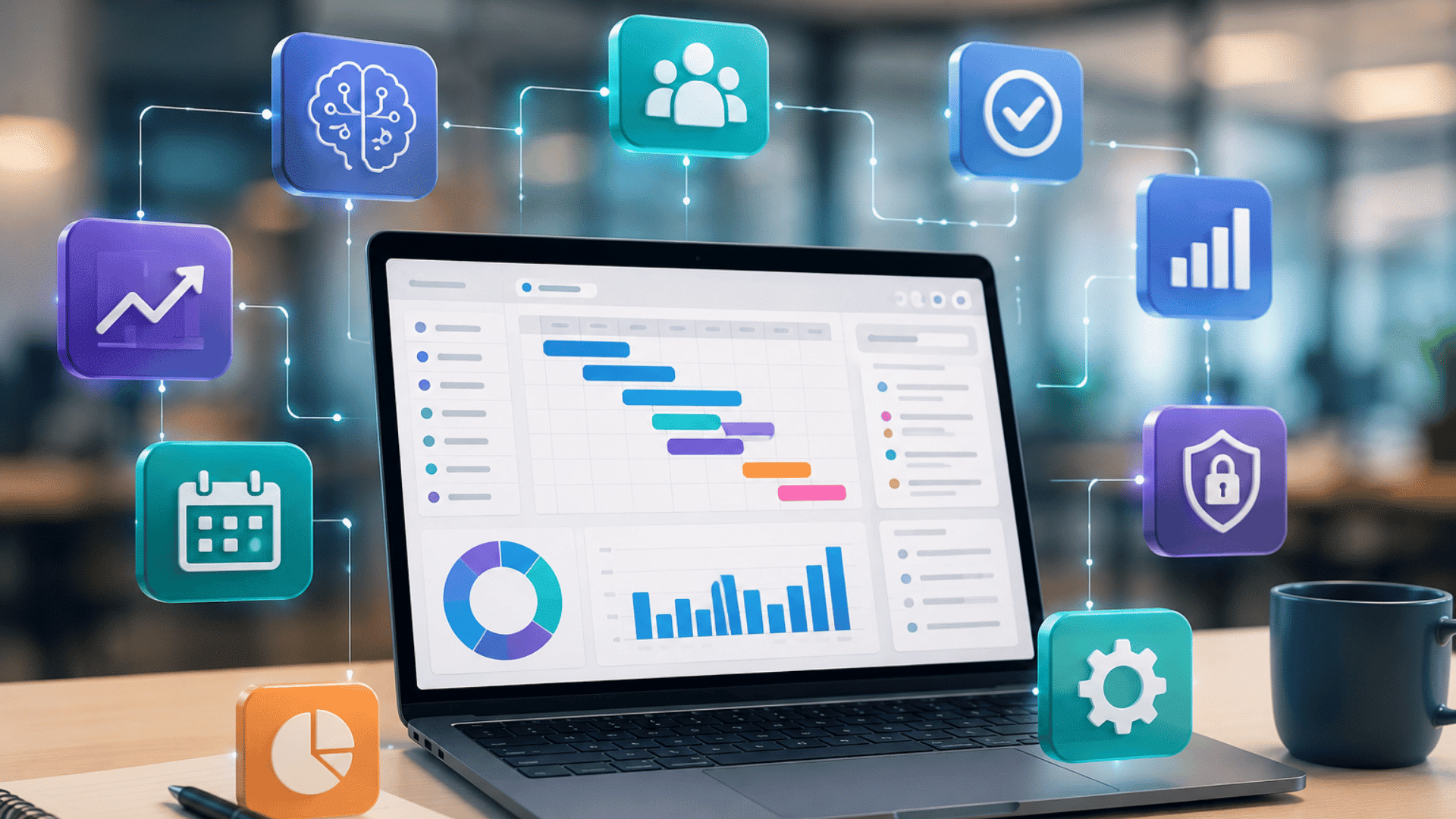




Project management software is changing fast as AI, automation, smarter reporting, and connected workflows become part of daily work.
I find these changes interesting because they are reshaping what teams expect from their software. Platforms can now summarize updates, flag delays, create project plans, and handle routine tasks.
Project management software news refers to updates on new features, pricing, security, integrations, market changes, and trends across project management platforms.
Keeping up with these updates can help teams understand what may improve their work.
In this blog, I cover recent AI features, pricing changes, market data, security updates, integrations, and major trends.
Last updated: August, 2026
Why Project Management Software Is Evolving Rapidly
Project management software is evolving rapidly as teams now work across offices, homes, time zones, and multiple tools.
Following project management software news can help teams understand why platforms are adding AI, automation, reporting, and collaboration features so quickly.
Software must help people stay aligned without creating extra work. AI is a major reason for this shift, with platforms using it to summarize updates, suggest next steps, flag risks, and handle routine tasks.
I look at new features by asking whether they offer real value or simply follow a trend.
Teams also want better automation, real-time reporting, stronger security, and smoother integrations. These changes help project management tools support faster decisions and more efficient daily work.
Current Project Management Software News
Project management software is changing quickly as vendors add AI, automation, analytics, security features, and stronger integrations.
These updates are helping teams manage work faster while reducing repetitive tasks. Here are some of the main developments shaping project management software today.
1. AI Copilots Become Standard in Project Management Platforms
AI assistants are becoming common across platforms such as:
They can summarize projects, answer task questions, draft updates, and locate information. This can reduce time spent searching through dashboards and help teams focus on decisions, deadlines, and important project work.
Advice: Test AI assistants on a small project first. Check whether summaries and task suggestions are accurate before using them across important workflows.
2. Agentic AI Emerges as the Next Big Project Management Trend
Agentic AI is taking project software beyond basic assistance. These systems can act on project information instead of only answering questions.
They may update statuses, assign tasks, identify stalled work, or suggest actions based on project goals.
This shift points toward software that handles more routine coordination while managers retain control over larger decisions and priorities.
3. Predictive Planning Tools Help Teams Anticipate Risks
Predictive planning tools use project history, workloads, deadlines, and performance data to spot possible problems early.
They may warn managers about delayed tasks, limited capacity, or scheduling risks before deadlines are missed.
For teams managing several projects, earlier warnings can support better planning and help managers respond before a small issue becomes a larger project delay.
Note: Predictive tools depend heavily on accurate project data. Missing deadlines, outdated task statuses, or incomplete workload information can reduce the quality of their warnings.
4. Automated Resource Allocation Gets More Intelligent
AI-powered resource tools can help managers assign work based on team availability, skills, deadlines, and project priorities.
Instead of checking every schedule manually, managers can receive recommendations about who has capacity for additional work.
This can reduce scheduling conflicts, prevent workload imbalances, and provide a clearer view of how people and resources are being used.
Advice: Use AI recommendations as support, not as the final decision. Managers should still consider employee experience, workload, availability, and project priorities before assigning work.
5. Real-Time Analytics and Reporting Capabilities Expand

Live dashboards are replacing many manually prepared project reports. Teams can now monitor deadlines, budgets, workloads, performance, and overall project health as information changes.
Faster access to current data makes it easier to notice problems and respond quickly.
Real-time reporting also gives managers a clearer view of progress without waiting for weekly or monthly updates.
Fun Fact: Live dashboards can reduce the need to prepare separate weekly status reports because progress, delays, workloads, and budgets can already be viewed in one place.
6. Integration Ecosystems Continue to Grow Across Platforms
Modern project management platforms increasingly connect with communication apps, CRMs, file-sharing services, development tools, and other business software.
These integrations allow information to move between systems with less manual copying.
For teams using several applications each day, connected workflows can reduce repetitive work, keep records synchronized, and make cross-department collaboration much easier.
7. Enterprise Security and Governance Updates Gain Attention

Security is becoming more important as project platforms add AI and handle larger amounts of company data.
Vendors are strengthening permissions, audit controls, compliance settings, and data-management features. These changes give organizations more control over who can access information and how it is used.
Strong governance is especially important for enterprises working with confidential or regulated business information.
Note: Before enabling new AI features, businesses should review access permissions, data-storage policies, compliance requirements, and which information the AI tool can process.
8. Acquisitions and Partnerships Reshape the Project Management Market

Acquisitions and partnerships are helping software vendors add new technology and expand their product capabilities.
Companies may acquire tools related to AI, analytics, automation, or collaboration instead of building everything internally. Partnerships can also connect project platforms with wider business systems.
For customers, these deals may lead to new features, broader integrations, and changes in how platforms compete.
9. AI-Powered Collaboration Features Improve Hybrid Work

AI collaboration tools are helping remote and hybrid teams stay informed across different locations and schedules.
Features may include meeting summaries, automatic action items, smarter notifications, and suggested content. These functions reduce the need for manual follow-ups while helping team members understand what changed.
Better collaboration features can keep projects moving even when coworkers rarely meet in person.
10. The Shift Toward Autonomous Project Management Accelerates

Project management software is moving toward systems that can monitor progress and handle routine coordination with less manual input.
Emerging tools can identify risks, recommend actions, update records, and support recurring tasks.
Fully autonomous project management is still developing, but many supporting features already exist. The direction points toward software taking greater responsibility for routine project administration.
AI Features Compared Across the Major Platforms
Project management platforms now use AI for planning, meetings, task creation, writing, and workflow support. Each platform has a different strength.
Recent project management software news shows that AI capabilities now vary widely across platforms, making feature comparisons more important for buyers.
| Platform | Standout AI Feature | Best For | Limitation |
|---|---|---|---|
| ClickUp | Super Agents with memory | Advanced automation | More setup |
| monday.com | Meeting notes and action items | Business teams | Credit limits |
| Asana | AI project plan creation | Cross-functional teams | Needs clear inputs |
| Microsoft Planner | Planner Agent in Teams | Microsoft 365 users | License limits |
| Jira | AI-assisted issue writing | Agile teams | Cloud-focused |
| Wrike | AI Agent Builder | Marketing teams | Admin setup |
The best choice depends on team size, workflow, software stack, and required automation.
Advice: Avoid choosing software only because it has more AI features. The better option is usually the platform that fits the team’s existing tools and daily workflow.
What the Latest Market Numbers Say About Adoption
Recent data shows project management software adoption is growing, but companies are focusing more on how effectively they use these tools.
- Market growth: A July 2026 Fortune Business Insights report estimates the market will reach $13.81 billion in 2026, up from $11.91 billion in 2025.
- Efficiency remains important: monday.com found that 82% of respondents use work or project management software to improve organizational efficiency.
- Tool overload remains a problem: 57% of employees reported using more workplace tools, while utilization at the largest enterprises was only 71%.
- AI use is showing measurable gains: PMI reported that 48% of GenAI “Trailblazers” achieved advanced productivity gains, compared with 3% of “Explorers.”
NOTE: These numbers suggest growth now depends not only on buying software, but on using it consistently and getting measurable value from it.
Pricing and Packaging Shifts Worth Watching
Project management software pricing is changing as vendors decide whether AI should be included in standard plans or sold separately.
Keeping track of project management software news can help businesses notice pricing changes, new AI charges, plan updates, and added subscription limits.
Some platforms bundle AI into lower-cost tiers, while others reserve advanced AI tools for higher plans or add-ons.
Enterprise buyers may also have room to negotiate discounts, especially during renewals or larger contracts. The listed subscription price is not always the full cost, either.
Guest limits, API caps, setup time, training, and migration work can raise the total expense. Teams should compare the complete cost of ownership, not just the monthly per-user price shown on a pricing page.
Advice: Compare annual cost, AI fees, guest access, migration expenses, training, API limits, and required add-ons before judging a platform by its advertised monthly price.
Trends Shaping the Next Two Years
Project management software is becoming more connected, automated, and easier to track as work happens.
| Trend | What It Means |
|---|---|
| Open Connection Standards | MCP lets AI assistants connect with outside tools and workspace data without separate custom integrations. |
| Live Reporting | Dashboards can show workloads, delays, progress, and resource use as information changes. |
| Fewer Separate Tools | Vendors are combining tasks, reporting, communication, and automation in one platform. |
| Agents Beyond the Platform | AI agents can work across email, meetings, calls, and connected apps, though large-scale reliability still needs testing. |
These trends point toward simpler, better-connected project management systems.
Fun Fact: AI agents are beginning to work across several connected applications instead of staying inside one project management platform, which could reduce repeated manual updates.
How to Decide Which Updates Actually Matter to You
Not every software update deserves an immediate response. Teams should focus on changes that solve current problems, affect costs, or influence security and daily work.
- Ask three questions before switching tools: Does the update fix a problem today? Can existing data support it? How much time and money will retraining require?
- Act quickly when needed: Pricing changes, removed features, security updates, and new compliance controls may require faster decisions.
- Wait when the impact is low: Beta features, higher-tier options, or tools requiring unavailable data can usually be reviewed later.
A simple filter helps teams avoid unnecessary changes while still responding to updates that truly affect their work.
Advice: Create a short review process for major updates. Check business value, cost, security impact, training needs, and compatibility before changing an established workflow.
Where to Follow Project Management Software News Yourself
Reliable sources make it easier to keep up with product changes without relying on rumors or outdated comparisons.
Checking project management software news from several reliable sources can give teams a clearer view of product updates, pricing, security, and user feedback.
| Source | What It Is Best For |
|---|---|
| Vendor Release Notes and Changelogs | Best for confirmed feature launches, bug fixes, pricing changes, integrations, and removed features directly from the software company. |
| Independent Review and Comparison Sites | Useful for comparing platforms, pricing, user experience, strengths, limitations, and major updates across several tools. |
| Community Forums and User Groups | Helpful for learning how updates perform in daily use, including common problems, workarounds, and user feedback. |
Using a mix of official, independent, and community sources gives a more balanced view of each software update.
Final Thoughts
Project management software is becoming more automated, connected, and capable of handling routine project work.
I think the most useful approach is to focus less on how impressive a new feature sounds and more on how well it solves a real team problem.
AI assistants, live reporting, smarter resource planning, improved integrations, and stronger security controls can make project work easier when they match existing needs.
Still check pricing, training, data requirements, and software compatibility before adopting major updates.
Following project management software news also helps teams prepare for changes rather than reacting after features, prices, or requirements change.
Which project management software update has helped your team the most? Comment below and share the feature, platform, or change you found most useful.
Frequently Asked Questions
Which Project Management Features Matter Most for Remote Teams?
Remote teams often benefit most from shared dashboards, task comments, automated updates, file sharing, meeting summaries, and workload views that keep everyone aligned across locations.
How Can Teams Tell if an AI Feature is Actually Useful?
Teams should check if the AI feature saves time, reduces manual work, improves accuracy, fits existing workflows, and produces results employees can review and trust.
Do More Integrations Always Make Project Software Better?
Not always. Extra integrations can help connect tools, but too many may add complexity. Teams should prioritize integrations they regularly use for communication, files, reporting, and business systems.
When Should a Business Consider Switching Project Management Tools?
A switch may make sense when current software limits collaboration, reporting, integrations, automation, security, or scalability, and another platform offers clear benefits that justify migration and training costs.