





I’ve seen how confusing it can feel when you first look into risk management frameworks. There are so many options, and it’s not always clear which one fits your needs.
If you’ve felt stuck or unsure where to begin, you’re not alone. In this guide, I’ll explain the most common frameworks used by organizations today.
You’ll learn what each framework does, how it works, and where it performs best.
I’ll also give you a side-by-side comparison table and a clear set of selection criteria so you can make a confident decision without wading through vendor whitepapers.
A good risk management framework helps you spot problems early and make smarter decisions.
By the end, you’ll know which frameworks matter for your industry, how to evaluate them against your organization’s goals, and how to avoid the common mistake of over-engineering your approach from day one.
What Are Risk Management Frameworks?
Risk management frameworks are structured systems that help organizations identify, assess, and manage risks in a clear, organized way.
Think of them as the operating manual for how your organization handles uncertainty, whether that uncertainty comes from cybersecurity threats, financial exposure, regulatory pressure, or operational failures.
These frameworks include steps like identifying risks, assessing impact, applying controls, and monitoring results.
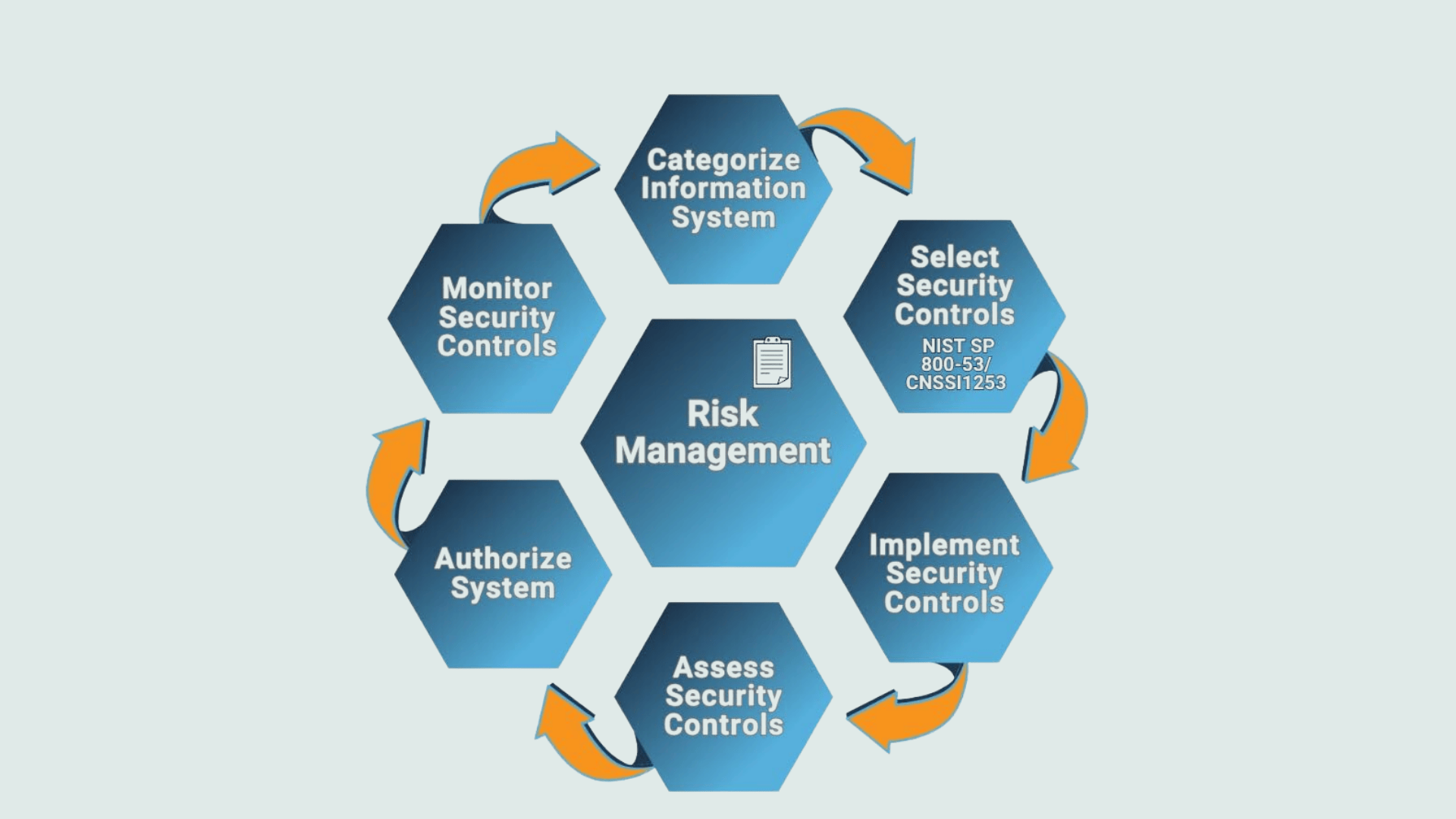
Some frameworks, like NIST RMF, prescribe a very specific six-step process. Others, like ISO 31000, offer guiding principles that you adapt to your context.
Without a framework in place, risk decisions tend to be made informally, inconsistently, and reactively.
Small issues get missed or deprioritized until they become costly incidents.
A framework creates the discipline to catch those issues earlier, document decisions, and hold teams accountable to a repeatable process.
That shift from reactive to proactive is where most of the real value comes from.
Why Risk Management Frameworks Are Important?
They help organizations handle risks in a clear and structured way. They also support better decisions by reducing uncertainty and surprises.
- Improves Decision-Making: Provides clear data about risks, helping teams choose safer and smarter options.
- Reduces Losses: Identifies risks early, which helps avoid financial damage and operational issues.
- Ensures Compliance: Helps meet legal and industry rules by following proper risk control steps.
- Builds Consistency: Creates a standard process so all teams handle risks in the same way.
- Enhances Planning: Supports better planning by preparing for possible problems in advance.
- Boosts Confidence: Gives stakeholders trust that risks are managed and under control.
- Improves Response Time: Makes it easier to act quickly when risks occur due to predefined steps.
- Supports Long-Term Growth: Helps maintain stability, which allows steady and safe business growth.
Key Types of Risk Management Frameworks
Risk management frameworks come in different forms, each designed to address specific types of risks and needs. Some focus on overall business risks, while others target areas like IT, compliance, or governance.
1. ISO 31000 Risk Management Framework
ISO 31000 is a widely accepted global standard for risk management across all types of organizations. It provides clear guidelines for identifying, assessing, and treating risks in a structured manner.
The framework focuses on integration with business processes, making risk management part of daily operations. It is flexible and can be applied to different industries.
Organizations use ISO 31000 to improve decision-making, reduce uncertainty, and create a strong risk-aware culture across all levels.
2. COSO ERM Framework
The COSO Enterprise Risk Management framework helps organizations connect risk management with business strategy and performance.
It focuses on identifying risks that may affect goals and ensuring proper controls are in place. The framework includes components like governance, risk assessment, and monitoring.
It is widely used in corporate settings to improve internal control systems.
COSO ERM helps businesses manage both financial and operational risks while supporting long-term growth and stability.
3. NIST Risk Management Framework
The NIST Risk Management Framework is mainly used in cybersecurity and IT systems. It provides a step-by-step process for identifying, assessing, and managing security risks.
The framework includes steps such as categorizing systems, selecting controls, implementing them, and conducting continuous monitoring.
It is commonly used by government agencies and organizations handling sensitive data.
NIST helps ensure systems remain secure and compliant with standards while reducing the chances of cyber threats and data breaches.
4. COBIT Framework
COBIT is a framework designed for IT governance and management. It helps organizations ensure that their IT systems support business goals while managing risks effectively.
COBIT focuses on control, compliance, and performance in IT operations.
It provides guidelines for managing resources, processes, and information systems.
Businesses use COBIT to improve transparency, reduce IT-related risks, and ensure that technology investments deliver value while staying aligned.
5. FAIR Risk Framework
The FAIR (Factor Analysis of Information Risk) framework is used to analyze and measure information risk in financial terms.
It helps organizations understand the potential financial impact of data and cybersecurity risks.
FAIR focuses on quantifying risk, making it easier to compare and prioritize different threats. This framework is especially useful for decision-makers who need clear, data-driven insights.
It supports better planning by turning complex risks into measurable values.
6. OCTAVE Framework
OCTAVE (Operationally Critical Threat, Asset, and Vulnerability Evaluation) is a framework focused on identifying and managing cybersecurity risks.
It helps organizations evaluate their internal processes, assets, and potential threats.
OCTAVE encourages a self-directed approach in which teams assess risks based on their own knowledge and experience.
It focuses on organizational practices rather than just technical issues. This framework is useful for improving security awareness and building strong internal risk management strategies.
7. Basel III Framework
Basel III is a regulatory framework designed for banks and financial institutions. It focuses on improving financial stability by managing capital, liquidity, and leverage risks.
The framework sets strict guidelines for maintaining adequate reserves to handle financial stress.
It also aims to reduce the chances of economic crises.
Basel III helps banks operate safely, protect customers, and maintain trust in the financial system by requiring strong risk controls.
8. ISO 27001 Framework
ISO 27001 is an international standard focused on information security management. It helps organizations protect sensitive data through a structured system called an Information Security Management System (ISMS).
The framework includes steps like risk assessment, control implementation, and continuous monitoring.
It is widely used across industries to manage data security risks and meet compliance requirements.
ISO 27001 helps organizations build trust, reduce security threats, and ensure that information remains safe and well-protected at all times.
9. CIS Framework
The CIS (Center for Internet Security) Framework provides a set of best practices to improve cybersecurity.
It includes a list of critical security controls that help organizations protect systems and data from common threats. These controls are easy to follow and suitable for organizations of all sizes.
CIS focuses on practical steps like access control, data protection, and system monitoring.
It helps reduce vulnerabilities, strengthen defenses, and improve the overall security posture in a clear, manageable way.
10. TARA Framework
TARA (Threat Assessment and Remediation Analysis) is a framework for identifying and managing cybersecurity threats, especially in industries such as automotive and technology.
It focuses on analyzing potential threats, understanding their impact, and selecting the right countermeasures.
TARA helps organizations prioritize risks based on severity and likelihood. It is useful for building secure systems from the start.
By following TARA, organizations can reduce vulnerabilities and improve protection against evolving cyber threats.
11. Risk IT Framework
The Risk IT framework, developed by ISACA, focuses on managing IT-related risks from a business perspective.
It helps organizations identify, analyze, and respond to risks that affect IT systems and services.
The framework aligns IT risk management with overall business goals. It includes processes for risk evaluation, response, and monitoring.
Risk IT supports better decision-making by ensuring that IT risks are understood and managed effectively within the organization. It also helps balance risk with business opportunities and value creation.
How to Choose the Right Risk Management Framework?
Choosing the right risk management framework depends on the size, goals, and industry of an organization. Each framework is designed to handle different types of risks, so it is important to match it with specific needs.
For example, some frameworks focus on cybersecurity, while others are better for financial or enterprise risks.
It is also important to consider the framework’s complexity and whether the team has the skills to implement it. A simple and flexible framework may work better for smaller organizations.
Another key factor is compliance. Some industries require specific frameworks to meet legal standards.
Overall, the best choice is a framework that aligns with the organization’s goals, supports daily operations, and can evolve as the business changes.
Benefits of Using Risk Management Frameworks
Risk management frameworks provide a structured approach to managing uncertainty and reducing potential losses. They help organizations stay prepared and make better decisions over time.
- Better Decision-Making: Provides clear insights into risks, enabling leaders to make informed, confident choices. This leads to smarter planning and improved long-term outcomes.
- Early Risk Identification: Helps detect potential issues before they turn into serious problems. It allows teams to take action early and avoid costly disruptions.
- Improved Compliance: Supports meeting legal and regulatory requirements across industries. This reduces the risk of penalties and builds trust with stakeholders.
- Consistent Processes: Ensures the same risk management approach is followed across teams. It improves coordination and keeps everyone aligned with goals.
- Reduced Financial Losses: Minimizes the impact of unexpected events through proper planning. It helps protect resources and maintain financial stability.
- Stronger Security: Protects data, systems, and operations from threats and vulnerabilities. This strengthens overall protection against internal and external risks.
- Enhanced Business Stability: Keeps operations running smoothly even during uncertain situations. It supports long-term growth by reducing sudden disruptions.
How to Implement a Risk Management Framework?
A clear plan helps turn ideas into action without confusion or delays. Simple steps make the process easier to manage and apply across teams.
1. Define Goals and Scope
Start by setting clear goals for the risk management framework. Focus on key risks that may impact the business and identify the areas that need attention first.
This step includes defining the scope, such as departments, systems, or processes involved.
Clear goals help maintain focus and avoid unnecessary complexity.
It also ensures teams understand the purpose and expected results. A well-defined scope keeps efforts aligned and prevents wasted time or resources.
2. Identify Potential Risks
List all possible risks that could affect operations, finances, or systems. This includes internal risks like process gaps and external risks like market changes or cyber threats.
Input from different teams helps build a complete risk list. Early identification reduces the chances of unexpected issues later.
It also improves awareness across the organization.
This step builds the base for the entire framework, so it is important to be thorough and clear.
3. Assess Risk Impact and Likelihood
Evaluate each risk based on how likely it is to occur and the level of impact it may have. This helps prioritize risks so attention is given to the most critical ones.
Some risks may be rare but serious, while others may occur often with smaller effects.
Simple scoring methods can make this process easier. Proper assessment ensures resources are used effectively, and the most important risks are handled first.
4. Develop Risk Response Strategies
Decide how each risk will be handled based on its level and impact. Common strategies include avoiding, reducing, transferring, or accepting risks.
For example, adding controls can reduce risks, while insurance can transfer financial risks.
Each response should align with business goals and risk levels. This step turns analysis into action. Clear strategies help ensure teams know how to respond when risks occur.
5. Implement Controls and Processes
Put the selected strategies into action by setting up controls such as policies, tools, and procedures.
This may include security systems, approval workflows, or regular checks. The process should be simple and easy to follow so teams can apply it in their daily work.
Clear controls improve consistency and reduce errors.
This step ensures the framework works effectively in real situations, not just in planning.
6. Monitor and Review Regularly
Track how well the framework is working over time. Risks can change, so regular monitoring is important.
This helps identify new risks and check if current controls are still effective. Feedback from teams can also improve the process.
Continuous review keeps the framework updated and useful.
This step ensures risk management stays active and supports long-term stability without becoming outdated.
Common Mistakes to Avoid when Using Frameworks
Many teams face issues not because of the framework, but in how they use it. Small gaps in planning or execution can reduce its effectiveness over time.
| Mistake | Explanation |
|---|---|
| Overcomplicating the Framework | Adding too many steps or controls makes the process hard to follow and slows down decisions. |
| Lack of Clear Ownership | When roles are not defined, tasks get missed, and accountability becomes weak. |
| Ignoring Regular Updates | Failing to review risks often can leave new threats unnoticed and unmanaged. |
| Poor Documentation | Without proper records, it becomes difficult to track risks and decisions over time. |
| Treating It as a One-Time Task | Risk management should be ongoing, not something done only once. |
| Not Aligning with Business Goals | Using a framework without linking it to goals reduces its real value. |
| Inadequate Training | Teams may misuse the framework if they do not fully understand how it works. |
| Focusing Only on Compliance | Meeting rules alone is not enough; real risk control requires active management. |
Future Trends in Risk Management Frameworks
Future risk management frameworks are becoming more practical and data-driven. AI and automation are helping teams spot risks faster and reduce manual work.
Many systems now use real-time data, so decisions happen more quickly.
Cybersecurity focus is also growing as digital threats keep increasing. Frameworks are now built to handle these risks better.
Cloud-based tools make it easier to track and manage risks from anywhere.
Companies also prefer simple and flexible frameworks instead of complex ones that slow work down.
Another key shift is risk awareness across teams, not just limited to experts. More businesses are training all employees to understand basic risks.
Finally, continuous monitoring is becoming standard, helping teams stay updated and ready to act at any time without delays.
Conclusion
By now, the idea of risk management frameworks should feel a lot clearer and less overwhelming. The truth is, there’s no one perfect framework for everyone.
What really matters is choosing one that fits your goals and helps you stay prepared for what might come next.
From what I’ve seen, having a clear system in place makes a big difference. It turns uncertain situations into something more manageable and helps build confidence in daily decisions.
Even small steps in the right direction can lead to better control and stability over time. Taking the time to understand these frameworks now can save a lot of trouble later.
Have you used any risk management frameworks, or are you just getting started?
Share your experience or questions in the comments below; your insights might help someone else make a smarter choice.