





The best time to buy a tv in the U.S. is usually around Black Friday, the weeks leading up to the Super Bowl, and spring clearance.
Buying a TV at the right time can save money, but waiting for the absolute lowest price does not always work in the buyer’s favor.
Popular sizes can disappear, older models can sell out, and a promising sale may not beat an earlier deal.
Real buyers often face this exact choice: purchase during a current promotion or hold out for Black Friday, Super Bowl sales, or model-year clearance.
From my technical documentation work, I recommend recording the complete model number before tracking prices.
It prevents similarly looking TVs with different specifications from being compared as if they were identical.
This guide uses seasonal pricing patterns and real buyer experiences to help determine when waiting makes sense and when buying now may be the better decision.
What Is the Best Time to Buy A TV?
The best time to buy a TV usually depends on price, stock availability, and how soon you need it. Major sales can help, but each buyer has a different reason for purchasing.
- The lowest possible price is one goal: Patient shoppers can track prices and wait for major sales or clearance periods before making a purchase.
- Buying a specific TV before stock disappears is another: Waiting too long can mean losing the preferred model, screen size, or feature combination.
- Replacing a broken TV requires a different strategy: Someone needing a TV immediately has less reason to wait than a shopper planning six months ahead.
A December 2025 r/4kTV discussion specifically asks U.S. buyers to compare Black Friday, post-Christmas, pre- and post-Super Bowl, and March/April inventory clearance.
Your Month-by-Month TV Discount Guide
TV prices tend to follow a yearly pattern shaped by major sales, new-model releases, and changes in retailer inventory. The strongest period depends on price goals and the buyer’s flexibility in choosing a model.
| Time | Best For | Main Catch |
| January–February | Large and outgoing TVs | Popular models may sell out |
| March–May | Previous-year clearance | Fewer sizes may remain |
| Summer sales | Mid-year shoppers | Deal quality varies |
| September–October | Early holiday offers | Lower prices may follow |
| November | Broad TV discounts | Model numbers need checking |
| December | Remaining holiday stock | Selection may narrow |
A lower price is useful only when the right model is still available. Each period has a different trade-off, which the next sections break down.
What are the Best Months To Buy A TV?
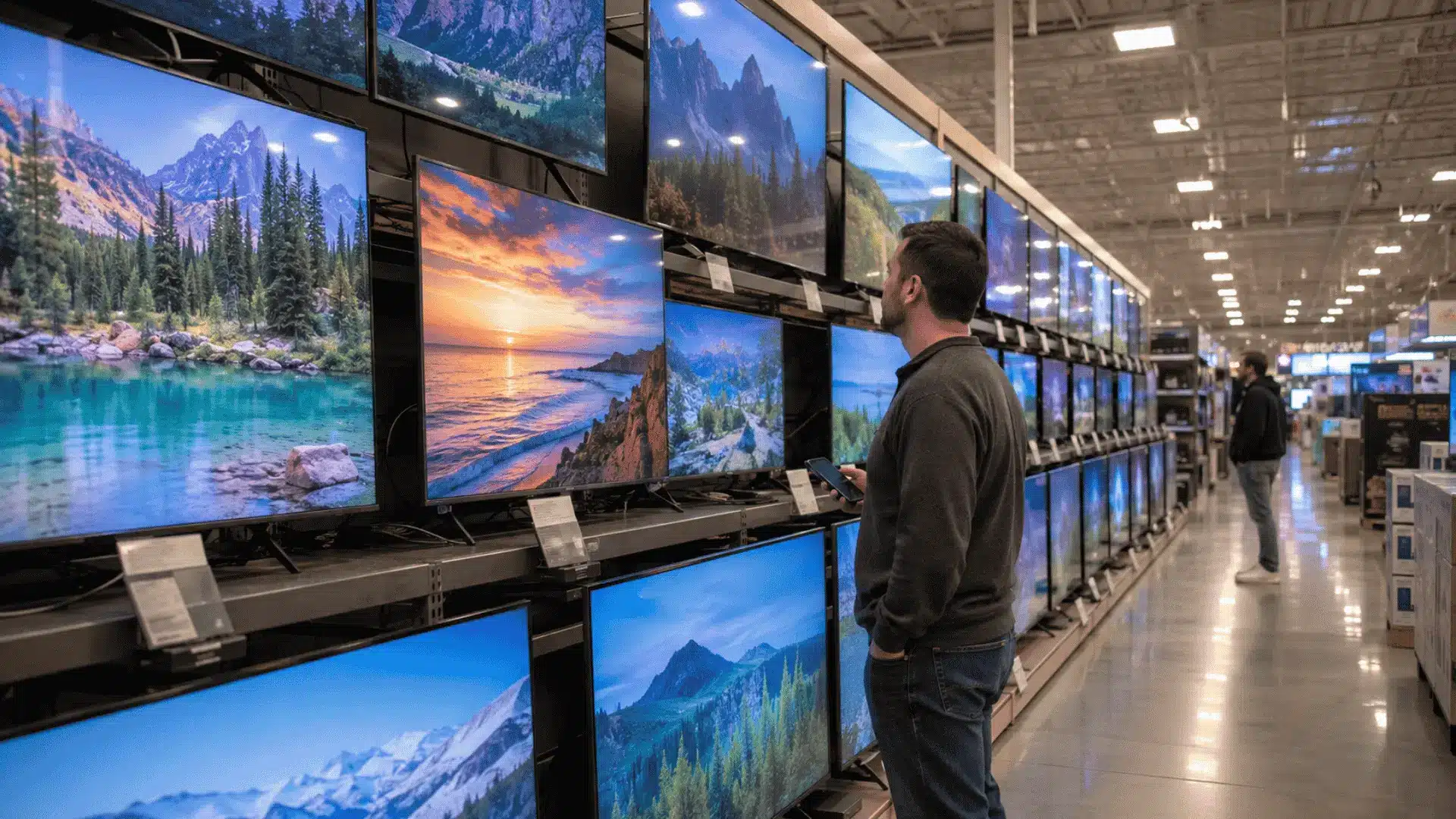
To maximize savings on your new television, time your purchase around major holidays and spring release cycles.
1. Super Bowl Sales
January and early February can be strong months for TV shoppers, especially those interested in larger screens. Retailers often promote televisions around the Super Bowl while preparing for newer models arriving later in the year.
An April 2026 shopper had already ordered a TCL QM6K during a Super Bowl promotion but considered waiting for post-game open-box stock or April model turnover.
Older inventory may receive price cuts as stores make room for upcoming releases, giving buyers another great time to buy a TV outside Black Friday.
Shopping for a game-day setup also requires good timing. Order early enough to allow for delivery, installation, and screen testing before guests arrive.
2. Spring Clearance
Spring clearance can be a smart time to buy for shoppers who prioritize price over owning the latest TV generation. As replacement models reach stores, retailers may reduce prices on previous-year sets to clear remaining inventory.
April 2026 Reddit discussions show shoppers specifically watching previous-generation OLED pricing as models entered clearance, including open-box LG C5 offers.
Waiting longer works best when the exact model matters less than the final price.
Before holding out, check stock at several retailers and decide which features are non-negotiable. If only a few units remain, a good current price may be safer than chasing the absolute lowest one.
3. Prime Day and Summer Sales
Prime Day and competing summer sales can work well for shoppers who do not want to wait until the holiday season. Summer promotions can also trigger purchases when the price already feels right.
A Hisense owner said Prime Day pricing helped convince them to buy rather than continue waiting, and their early ownership experience was positive.
Summer sales may make sense when:
- A preferred TV has already dropped below its usual selling price.
- Several retailers are competing on the same model.
- The needed screen size remains widely available.
- Buying before fall or winter is more practical than waiting.
Still, a sale label alone does not prove the price is unusually low. Compare the exact model across retailers and check its recent selling price before ordering.
4. Black Friday
Black Friday is one of the strongest periods for TV shopping because major U.S. retailers typically offer broad discounts across various screen sizes and price ranges.
Promotions often start before Friday, so waiting for that day isn’t always necessary.
Still, the cheapest listing is not automatically the best time to buy a TV deal. Popular sizes can sell out quickly, while some retailers use exclusive model numbers that make direct comparisons harder.
One TCL buyer purchased a 65-inch QM6K at a strong price the week before Black Friday. After prices changed, the buyer hesitated to exchange it for a larger model because the original deal had been so good.
When Waiting Costs You More When Buying a TV
Waiting for another price drop can backfire when timing, stock, or everyday use matters more than saving a little extra. Set a clear stopping point before delaying the purchase.
Late summer, especially August, tends to be the weakest stretch for TV promotions, as retailers shift shelf space toward back-to-school electronics instead.
- Your Current TV has Failed: Replacing it sooner may be more practical than spending weeks checking prices.
- You Need it for an Event: Delivery, installation, and testing all require time before a move, game, or gathering.
- Stock is Getting Low: Popular screen sizes and outgoing models may disappear before another discount arrives.
- The Price Already Fits Your Budget: A satisfactory deal can remove the risk of waiting for an uncertain reduction.
- Waiting Reduces Useful Time: Months without the wanted TV may outweigh a small future saving.
A good price on the right TV can matter more than chasing the lowest possible price.
Making the Correct Choices When Buying a TV
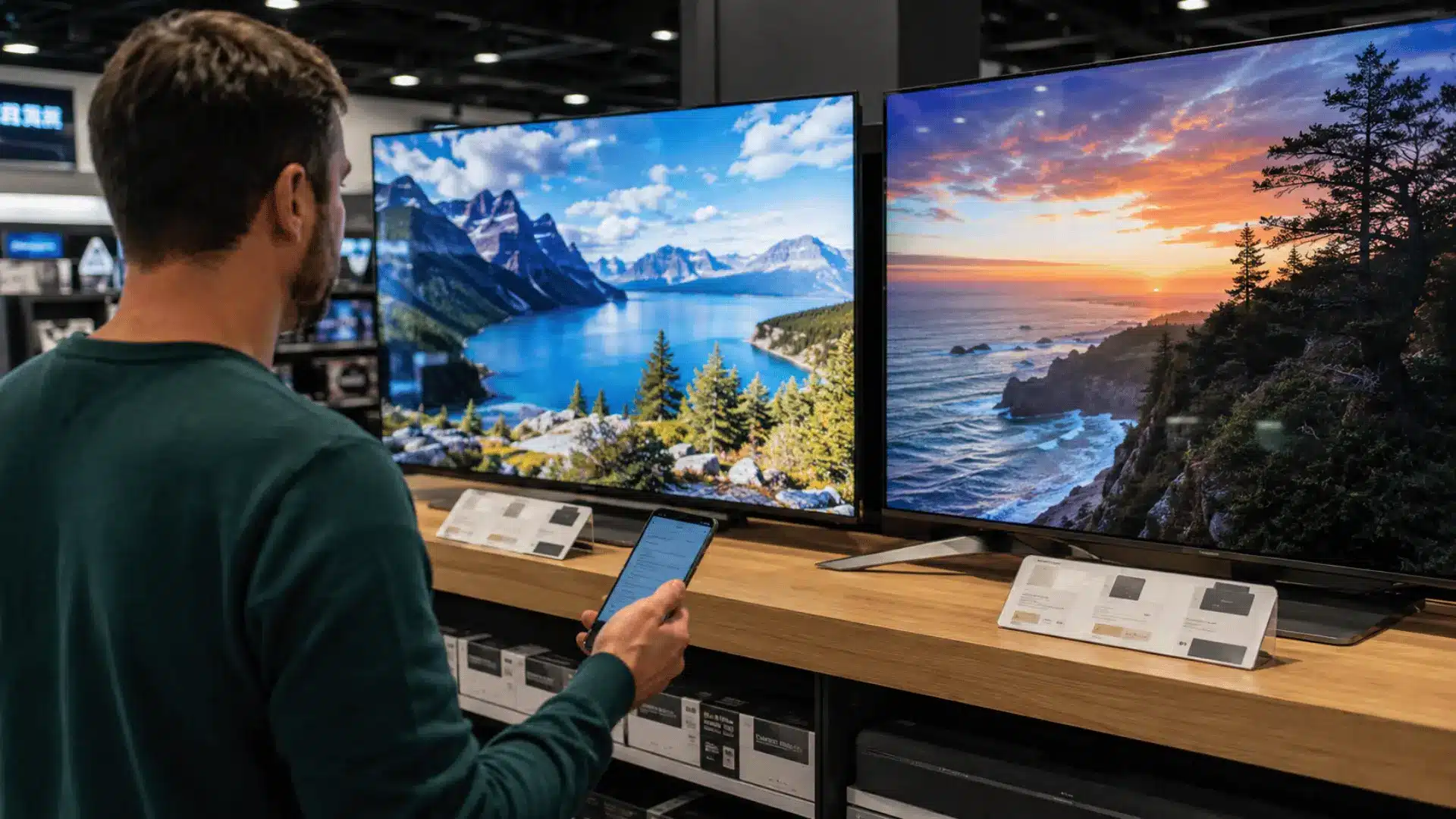
Finding the ideal television for your home requires carefully balancing screen size, display technology, smart features, and your overall budget.
1. Set a Buy Price
A set buy price gives shoppers a clear point to make the purchase, rather than repeatedly waiting for another discount. Decide on that number before major sales begin so that price changes do not affect the budget.
- Choose two or three acceptable TVs, then compare models that meet the required size and features.
- Record normal prices: Note what each model usually costs before promotions appear.
- Set the maximum budget: Decide the highest amount you’re willing to spend.
- Choose a target price: Pick a price that would make the purchase worthwhile.
- Buy when the target appears: Avoid delaying solely because another reduction might happen.
I prefer this requirements-based approach because it keeps the decision tied to defined needs rather than changing criteria with every sale.
2. Retailer Policies Matter
The lowest advertised price does not always mean the best purchase. Return rules, delivery terms, price adjustments, and warranty support can change how much value a retailer actually provides.
Before buying, check how the store handles damaged screens, late deliveries, returns, and price drops after purchase. This matters even more with larger TVs, which can be difficult and costly to return once unpacked.
A slightly higher price from a retailer with stronger protections may be worth more than the cheapest listing.
3. Check Special Model Numbers
Two TVs with nearly identical names may carry different model numbers, especially across warehouse clubs, major retailers, or promotional listings.
Those codes can point to differences in specifications, included accessories, or other product details.
Before comparing prices, copy the complete model number from each listing and check the specifications side by side.
Pay attention to HDMI ports, panel type, refresh-rate support, Wi-Fi features, remote controls, and warranty information.
I treat the complete model identifier like a technical reference number. Comparing product names alone can hide small specification differences.
Taking a few minutes to verify those details helps prevent an attractive sale price from influencing comparisons between TVs that are not identical.
Best TVs by Size and Budget
TV choice becomes easier when the screen size and budget are decided before shopping.
Premium models generally prioritize image quality and gaming features, while lower-priced sets focus on everyday streaming and basic viewing.
Here are some of my recommendations:
| TV Size | High Budget | Medium Budget | Low Budget |
| 32-inch | ($300–$450) | Samsung F6000 32-inch Smart TV ($150–$250) | Roku Select Series 32-inch FHD ($80–$150) |
| 43-inch | ($450–$600) | ($200–$400) | ($120–$220) |
| 55-inch | $1,500–$2,500+ | ($600–$1,100) | ($300–$600) |
| 65-inch | $2,000–$3,500+ | ($800–$1,500) | ($400–$800) |
Bottom Line
The best time to buy a TV depends on more than finding the lowest advertised price.
A better approach is to choose the right model first, learn its usual selling range, and decide what price feels reasonable before a major sale arrives.
Stock also matters. Waiting can lead to a lower price, but it can also mean losing the screen size or model that fits the original plan.
I recommend checking the complete model number and key specifications before placing an order. That small step helps confirm that two similar listings are actually comparable.
Which month gave you your best TV deal, or which upcoming sale are you planning to wait for?
Frequently Asked Questions
Are Membership-Only TV Deals Worth It?
Membership deals can be worthwhile when the savings outweigh the membership costs. Compare the identical model, warranty coverage, delivery, and included benefits before joining.
Should I Use Store Financing for a TV Sale?
Financing can help manage a large purchase, but check interest rates, promotional deadlines, and total repayment costs before letting monthly payments influence the decision.
Can Cashback Make a Higher TV Price Better?
Yes. Cashback, store credits, or rewards can improve the final value, but compare the amount actually paid rather than focusing only on advertised rewards.
Are TV Bundles Better than Straight Discounts?
Sometimes. Bundles containing soundbars, mounting services, or gift cards provide value only when those extras are already needed, and their individual prices are reasonable.