






Website ranking APIs have become essential for businesses, SEO agencies, and developers who need accurate search visibility data at scale.
Instead of manually tracking rankings, these APIs provide automated access to keyword positions, SERP data, competitor insights, and other SEO metrics through a simple integration.
Whether you’re building an SEO platform, creating custom dashboards, or monitoring keyword performance for clients, choosing the right ranking API can directly impact data quality, reporting accuracy, and costs.
In this guide, I’ll compare the 5 best website ranking APIs in 2026, including Semrush API, DataForSEO, Ahrefs API, SerpApi, and Zenserp.
I’ll cover their pricing, update frequency, keyword database size, and key strengths to help you determine which solution best fits your SEO and development needs.
Quick Comparison of the 5 Best Website Ranking APIs in 2026
Choosing the right website ranking API can be challenging, especially when multiple providers offer similar capabilities.
The comparison table below provides a high-level overview of the top solutions to help you evaluate them more efficiently.
| API | Best For | Keyword Database | Update Frequency | Starting Price | Free Trial |
|---|---|---|---|---|---|
| Semrush API | SEO Agencies & Marketing Teams | 26B+ Keywords | Daily | Custom API Pricing (Business Plan Required) | No |
| DataForSEO | Developers & SaaS Platforms | Global Search Data | Real-time | Pay-As-You-Go (From ~$0.0006 per request) | Yes |
| Ahrefs API | Enterprise SEO Teams | 28B+ Keywords | Daily | Enterprise Pricing (Custom Quote) | No |
| SerpApi | Real-Time SERP Monitoring | SERP-Based Data | Real-time | From $75/month | Yes |
| Zenserp | Small Businesses & Startups | SERP-Based Data | Real-time | From $29/month | Yes |
The table above provides a quick overview of the leading website ranking APIs available today.
While pricing and keyword coverage are important considerations, factors such as data accuracy, update frequency, scalability, and integration capabilities should also influence your decision.
What are Website Ranking APIs?
Website ranking APIs provide programmatic access to search engine ranking data, allowing businesses and developers to retrieve keyword positions, SERP information, search visibility metrics, and competitor rankings without manually collecting data.
These APIs serve as the foundation for many SEO tools, reporting dashboards, analytics platforms, and custom applications that rely on accurate search performance insights.
By integrating ranking data directly into existing workflows, organizations can automate keyword tracking, monitor competitors, and generate reports more efficiently.
Many website ranking APIs also support advanced capabilities such as local SEO tracking, mobile and desktop rankings, historical performance data, and real-time SERP monitoring.
As a result, businesses can save time, improve decision-making, and gain a clearer understanding of their search visibility across different markets and devices.
How We Evaluated these Website Ranking APIs
Choosing the right website ranking API requires more than comparing pricing plans or database sizes.
Factors such as ranking accuracy, update frequency, geographic coverage, and ease of integration can significantly impact the value an API delivers.
To create a balanced comparison, the evaluation focused on five key areas: accuracy, performance, data coverage, pricing, and developer experience.
These criteria help determine how well an API supports keyword tracking, SERP monitoring, SEO reporting, and large-scale data collection.
1. Accuracy and SERP Matching
Accurate ranking data is essential for measuring SEO performance and making informed optimization decisions.
APIs were evaluated based on how closely their results reflected actual search engine results pages (SERPs) and how consistently they tracked ranking changes.
Localization capabilities were also assessed, including support for country, city, and region-specific searches.
Additionally, mobile and desktop tracking functionality was reviewed to ensure comprehensive ranking visibility across different devices and user search experiences.
2. Speed and Performance
API performance can directly affect reporting workflows, dashboards, and SEO applications that rely on real-time or near-real-time data.
The evaluation considered average response times, reliability under heavy workloads, and overall system stability.
Bulk request capabilities were also reviewed because agencies and enterprise teams often need to process large keyword datasets simultaneously.
APIs that maintain strong performance while handling thousands of requests provide greater efficiency and scalability for growing organizations.
3. Data Coverage
The usefulness of a website ranking API depends heavily on the scope of its data.
Evaluation criteria included the number of supported countries, regional search markets, and search engines available through each platform.
APIs were also assessed based on their ability to provide localized ranking insights and historical performance data.
Access to broad geographic coverage and long-term ranking trends enables businesses to perform more accurate competitive analysis and track SEO progress over time.
4. Pricing and Scalability
Pricing structures vary considerably across website ranking APIs, making cost-effectiveness an important evaluation factor.
The comparison reviewed pay-as-you-go models, monthly subscriptions, and enterprise pricing options to understand the value offered at different usage levels.
Scalability was equally important, particularly for businesses expecting growth in keyword tracking and reporting requirements.
APIs that offer flexible pricing and support higher request volumes are generally better suited for long-term adoption.
5. Developer Experience
Developer experience plays a crucial role in determining how quickly an API can be implemented and maintained.
The evaluation examined the quality of documentation, setup instructions, code samples, and onboarding resources available to developers.
SDK support across popular programming languages was also considered, along with authentication methods and rate limits.
Top Website Ranking APIs Compared
The website ranking APIs featured in this guide serve different audiences, from SEO agencies and enterprise teams to developers building custom applications.
While some platforms prioritize keyword intelligence and competitor research, others focus on real-time SERP data and flexible integrations.
The following comparison uses the same evaluation criteria for each API, making it easier to identify the solution that best matches your SEO goals, reporting requirements, and budget.
1. Semrush API
- Accuracy: 9/10
- Speed: 8/10
- Ease of Use: 9/10
- Value for Money: 8/10
Semrush API is one of the most comprehensive SEO data solutions available, providing access to keyword rankings, competitor analysis, backlink intelligence, and domain analytics.
It is particularly popular among agencies and marketing teams that need large-scale SEO data for reporting and campaign management.
Its extensive database and established ecosystem make it a strong choice for businesses seeking an all-in-one SEO platform.
| Criteria | Details |
|---|---|
| Key Features | 26B+ keyword database, competitor analysis, backlink data, SERP tracking |
| Pros | Extensive SEO dataset, powerful reporting capabilities |
| Cons | Higher cost, API access requires qualifying plans |
| Pricing | Custom API pricing; Business plan required; Enterprise options available |
| Best For | SEO agencies and marketing teams managing multiple clients and campaigns |
2. DataForSEO
- Accuracy: 9/10
- Speed: 9/10
- Ease of Use: 7/10
- Value for Money: 9/10
DataForSEO is a developer-focused platform that delivers ranking, SERP, keyword, and backlink data through flexible APIs.
Its pay-as-you-go pricing model makes it attractive for SaaS companies and businesses that want complete control over their SEO data usage.
The platform is known for scalability, customization options, and support for large-volume requests.
| Criteria | Details |
|---|---|
| Key Features | Real-time SERP data, pay-as-you-go pricing, extensive API endpoints |
| Pros | Developer-friendly, highly scalable |
| Cons | Technical setup required, less beginner-friendly |
| Pricing | Pay-as-you-go; pricing varies by endpoint; enterprise plans available |
| Best For | Developers and SaaS companies building SEO applications |
3. Ahrefs API
- Accuracy: 9/10
- Speed: 8/10
- Ease of Use: 8/10
- Value for Money: 7/10
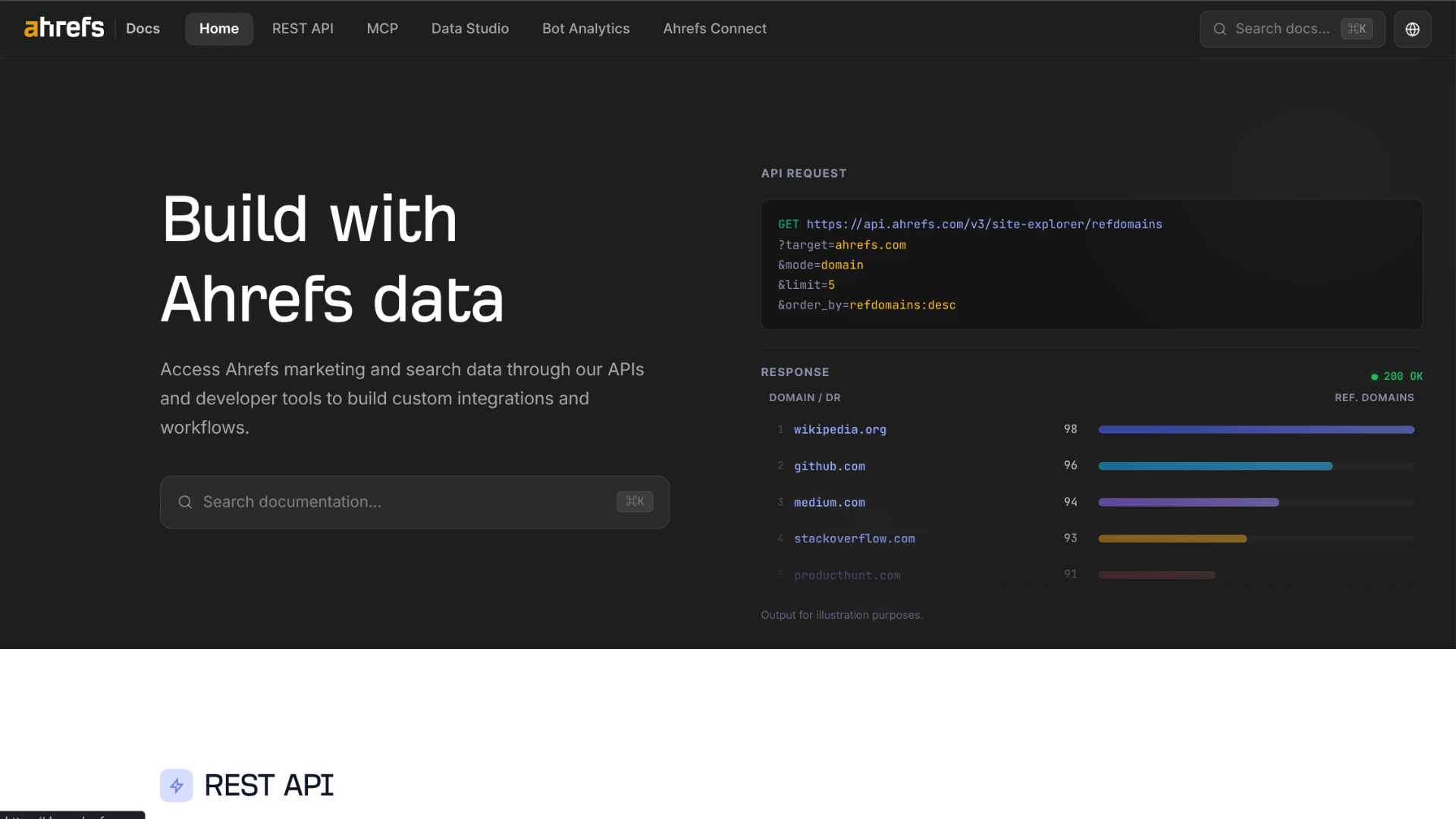
Ahrefs API is designed for organizations that require large-scale SEO intelligence, particularly backlink analysis and keyword research.
Backed by one of the industry’s largest databases, it provides valuable insights into search visibility, competitor performance, and link-building opportunities.
Enterprise users often choose Ahrefs for its data depth and reliability.
| Criteria | Details |
|---|---|
| Key Features | Large backlink index, keyword intelligence, competitor research |
| Pros | Industry-leading backlink data, reliable search insights |
| Cons | Enterprise-focused pricing, limited accessibility for smaller teams |
| Pricing | Custom enterprise pricing |
| Best For | Enterprise SEO teams and large organizations |
4. SerpApi
- Accuracy: 8/10
- Speed: 9/10
- Ease of Use: 9/10
- Value for Money: 8/10
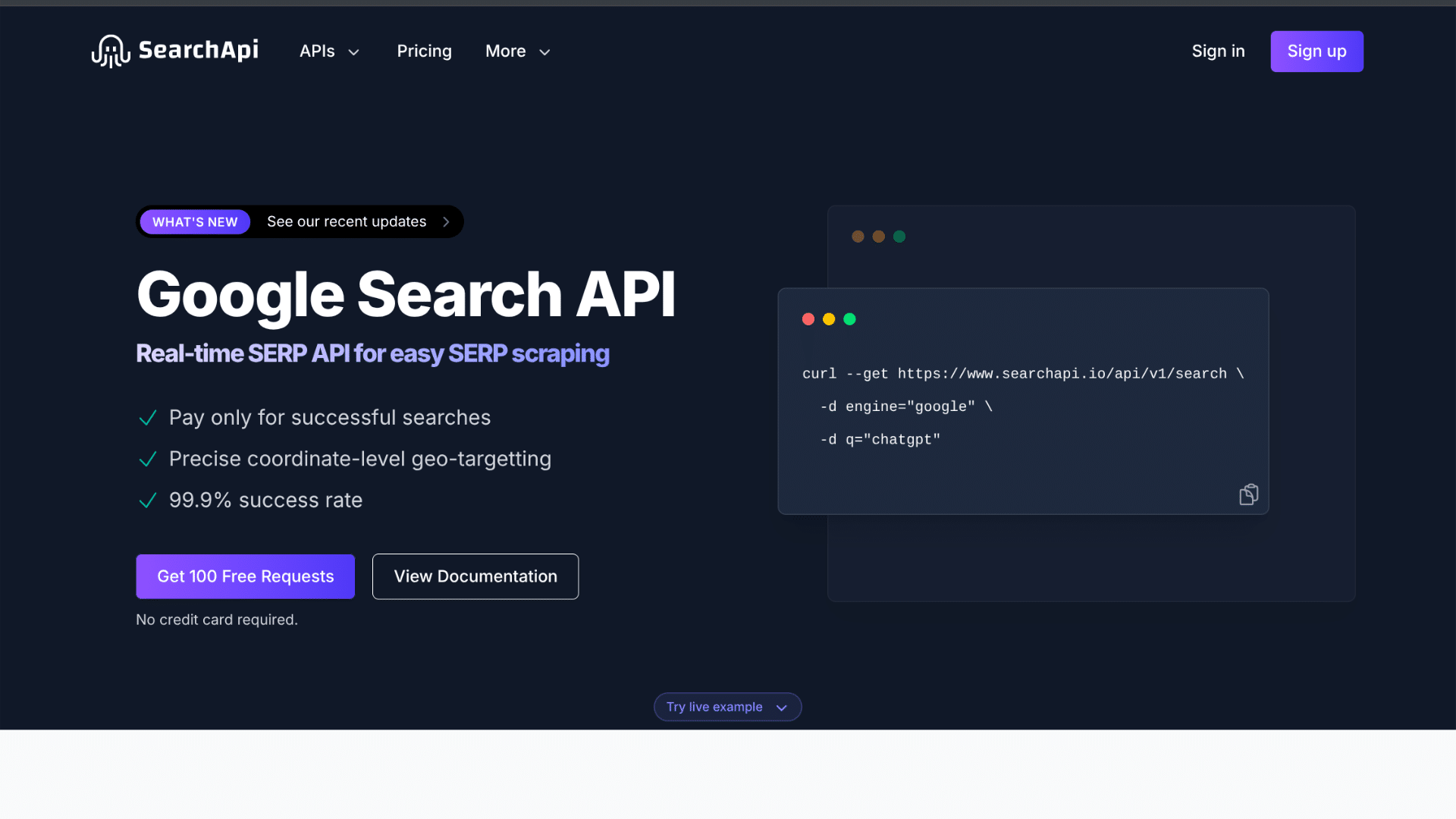
SerpApi specializes in delivering real-time search engine results without requiring users to manage scraping infrastructure, proxies, or CAPTCHA handling.
The platform supports multiple search engines and provides structured SERP data through a simple API.
Its ease of implementation makes it popular among developers building ranking tools and monitoring systems.
| Criteria | Details |
|---|---|
| Key Features | Real-time SERP retrieval, multi-search-engine support, structured responses |
| Pros | Easy implementation, reliable data delivery |
| Cons | Costs can increase with heavy usage, limited advanced SEO metrics |
| Pricing | Starts at $40/month |
| Best For | Businesses and developers requiring real-time SERP monitoring |
5. Zenserp
- Accuracy: 8/10
- Speed: 8/10
- Ease of Use: 9/10
- Value for Money: 9/10
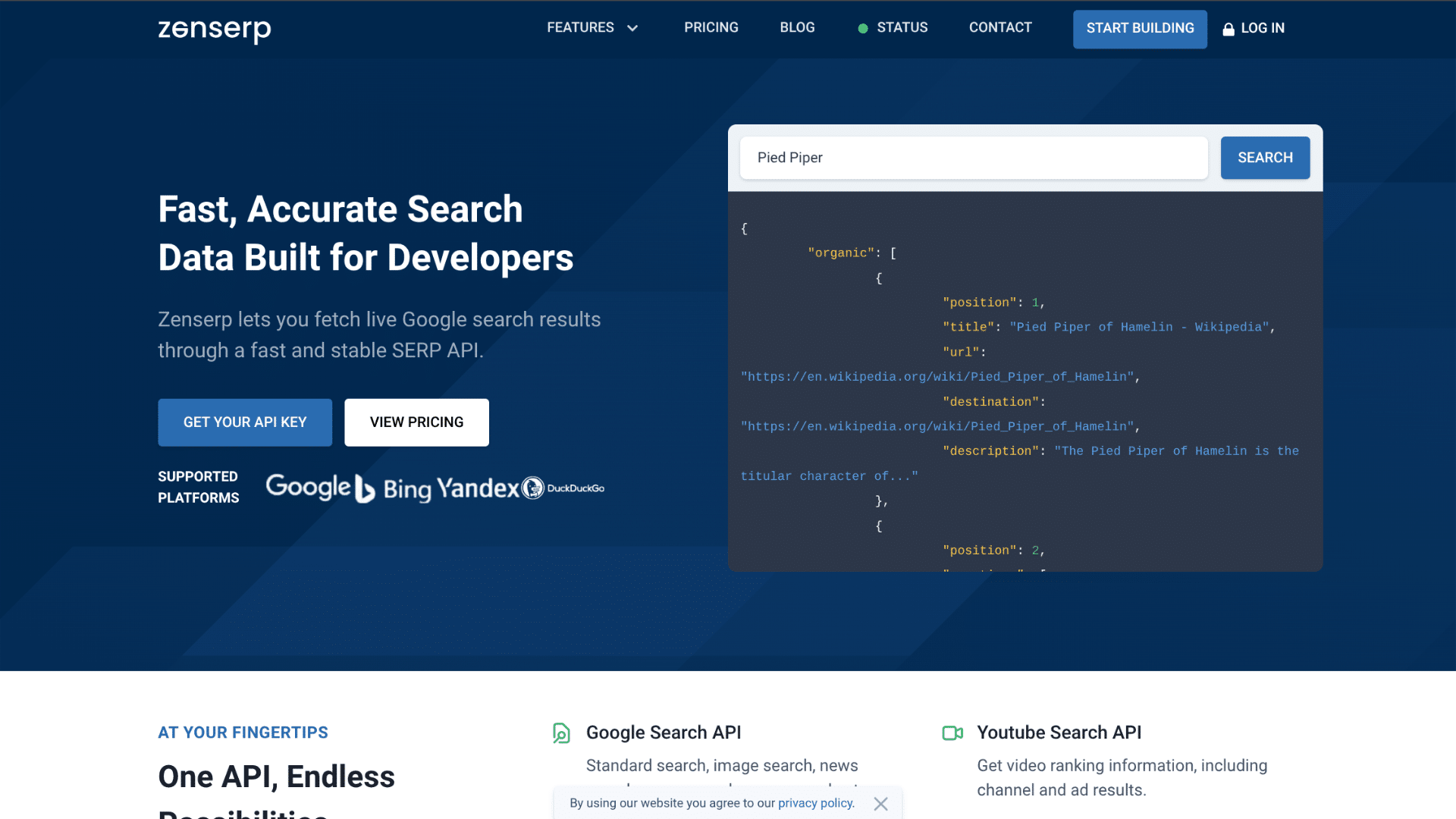
Zenserp offers an affordable way to access search engine ranking and SERP data.
It is designed for startups, small businesses, and developers seeking a lightweight API without enterprise-level pricing.
The platform supports localized search results and provides straightforward integration options for projects that require ranking data at a lower cost.
| Criteria | Details |
|---|---|
| Key Features | Localized SERP tracking, affordable pricing, simple integration |
| Pros | Cost-effective, easy to implement |
| Cons | Smaller feature set, less comprehensive data coverage |
| Pricing | Starts at $49.99/month |
| Best For | Startups and small businesses seeking affordable ranking data |
Feature by Feature Comparison
While all website ranking APIs provide access to search visibility data, their capabilities vary significantly in terms of accuracy, performance, pricing, and scalability.
Comparing these features side by side makes it easier to identify which platform aligns with specific business requirements.
The tables below highlight the key differences among Semrush API, DataForSEO, Ahrefs API, SerpApi, and Zenserp based on the criteria that matter most to SEO professionals, developers, and enterprise teams.
1. Accuracy Comparison
To better understand how these website ranking APIs perform in real-world SEO scenarios, the table below compares their support for local and mobile rankings, as well as historical data.
| API | Local Rankings | Mobile Rankings | Historical Data |
|---|---|---|---|
| Semrush API | Yes | Yes | Yes |
| DataForSEO | Yes | Yes | Yes |
| Ahrefs API | Yes | Yes | Yes |
| SerpApi | Yes | Yes | Limited |
| Zenserp | Yes | Yes | Limited |
The ability to track local and mobile rankings is essential for modern SEO campaigns.
Historical data adds another layer of value by allowing businesses to monitor trends, measure performance over time, and evaluate the impact of optimization efforts.
2. Speed Comparison
Performance can significantly impact reporting workflows, dashboard responsiveness, and large-scale keyword monitoring.
| API | Average Response Time | Bulk Requests |
|---|---|---|
| Semrush API | Fast | Yes |
| DataForSEO | Very Fast | Yes |
| Ahrefs API | Fast | Yes |
| SerpApi | Very Fast | Yes |
| Zenserp | Moderate | Yes |
Response speed becomes increasingly important when APIs are integrated into reporting platforms, dashboards, or applications.
APIs with strong bulk request support are particularly beneficial for agencies and enterprises managing thousands of keywords simultaneously.
3. Pricing Comparison
Pricing structures vary considerably across website ranking APIs, with some providers offering subscription-based plans and others using pay-as-you-go billing.
| API | Entry Plan | Pricing Model |
|---|---|---|
| Semrush API | Custom | Business Plan + API Access |
| DataForSEO | Pay-As-You-Go | Usage-Based Billing |
| Ahrefs API | Custom Enterprise Pricing | Enterprise Subscription |
| SerpApi | From $40/month | Subscription-Based |
| Zenserp | From $49.99/month | Subscription-Based |
Pricing structures vary considerably among providers.
While some APIs focus on predictable monthly subscriptions, others offer usage-based billing that may be more cost-effective for businesses with fluctuating data requirements.
Which Website Ranking API Should You Choose?
Choosing the best website ranking API ultimately depends on your budget, technical requirements, and SEO goals.
While some platforms are built for agencies managing large keyword portfolios, others focus on developer flexibility, real-time data access, or enterprise-scale SEO intelligence.
After comparing the leading options, I’ve found that each API excels in different areas, making it important to align your choice with your specific use
| API | Recommended For |
|---|---|
| Semrush API | SEO agencies and digital marketing businesses that need a large keyword database, competitor insights, advanced reporting features, and an all-in-one SEO data platform. |
| DataForSEO | Developers and SaaS companies looking for flexible pay-as-you-go pricing, real-time ranking data, scalable API access, and extensive customization options. |
| Ahrefs API | Enterprise organizations that require advanced SEO intelligence, comprehensive backlink analysis, historical data, and large-scale competitive research capabilities. |
| SerpApi | Businesses and developers need real-time SERP monitoring, fast search result retrieval, simple integrations, and a solution that eliminates the need for proxy management. |
| Zenserp | Startups and small businesses seeking an affordable ranking API with localized search data, straightforward implementation, and cost-effective pricing. |
Final Verdict
Choosing the best website ranking API depends on your goals, budget, and technical requirements. S
emrush API is ideal for agencies that need comprehensive SEO data and reporting, while DataForSEO offers excellent flexibility for developers through its pay-as-you-go model.
Ahrefs API is well-suited for enterprise organizations seeking advanced SEO intelligence and backlink analysis.
SerpApi stands out for real-time SERP tracking, and Zenserp provides an affordable option for startups and small businesses.
Based on this comparison, I recommend evaluating your data needs, scalability requirements, and budget before making a decision.
By matching the right API to your use case, you can streamline SEO workflows, improve reporting accuracy, and gain more actionable search insights over the long term.
Frequently Asked Questions
What is the Most Accurate Ranking API?
Semrush API, DataForSEO, and Ahrefs API are widely regarded as highly accurate due to their extensive databases, frequent updates, and reliable SERP tracking capabilities.
Which Ranking API is Best for SEO Agencies?
Semrush API is often the preferred choice for SEO agencies because of its comprehensive keyword data, competitor analysis tools, and advanced reporting features.
Are there Free Rank Tracking APIs?
Most ranking APIs are paid services, but some providers offer free trials, limited credits, or pay-as-you-go plans that reduce upfront costs.
Which API Supports Local SEO Tracking?
Semrush API, DataForSEO, Ahrefs API, SerpApi, and Zenserp all support localized ranking data for tracking performance in specific regions and markets.
How Often Should Rankings be Updated?
For most businesses, daily updates are sufficient. However, highly competitive industries may benefit from real-time or multiple daily ranking updates.