


If you are comparing home internet plans, you may be wondering: Is 1 gig internet good, or is it more speed than you actually need?
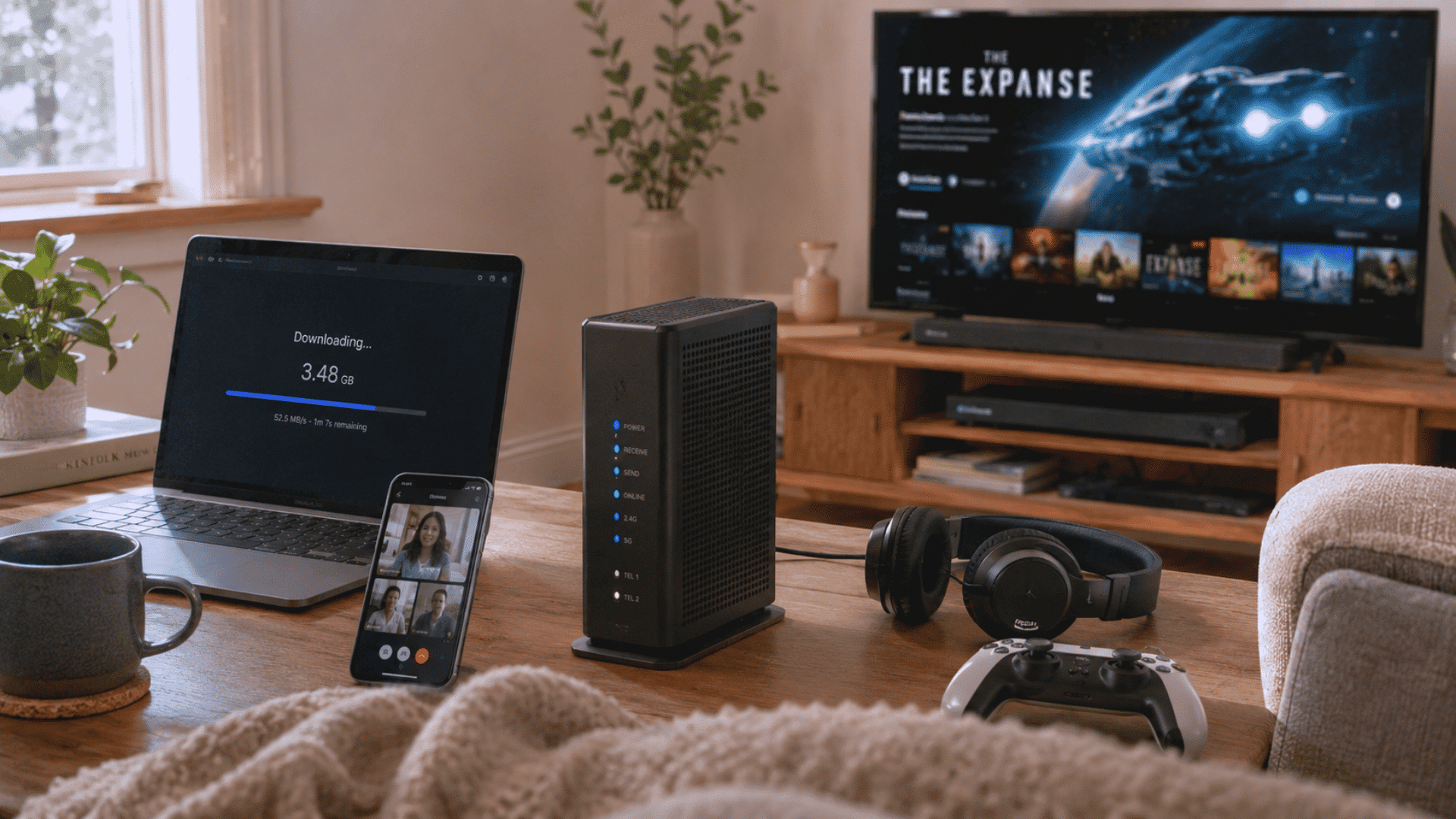
A 1 Gig internet plan usually offers speeds of around 1,000 Mbps, which is very fast for everyday home use. It can handle streaming, gaming, video calls, browsing, downloads, and many connected devices at the same time.
Whether you need that much speed depends on your household usage, equipment, and the price difference between 1 Gig and lower-speed plans.
For some households, the extra capacity can be useful, while others may not notice a major difference. Below, I will break down what 1 Gig is, how it works, costs, and whether you really need it at home.
Is 1 Gig Internet Good?
Yes, 1 Gig internet is very good and more than fast enough for most homes. However, that does not mean every household needs it.
A gigabit connection can easily support several 4K streams, video calls, browsing, smart home devices, and everyday apps at the same time.
For context, Netflix recommends about 15 Mbps for one 4K UHD stream, while YouTube suggests around 20 Mbps for 4K playback.
From my experience working with engineering teams, I’ve found that 1 Gig is most useful when several people are doing bandwidth-heavy tasks at the same tme.
For a single person, though, a solid 300–500 Mbps plan is ideal.
What does 1 Gig Internet Actually Mean?
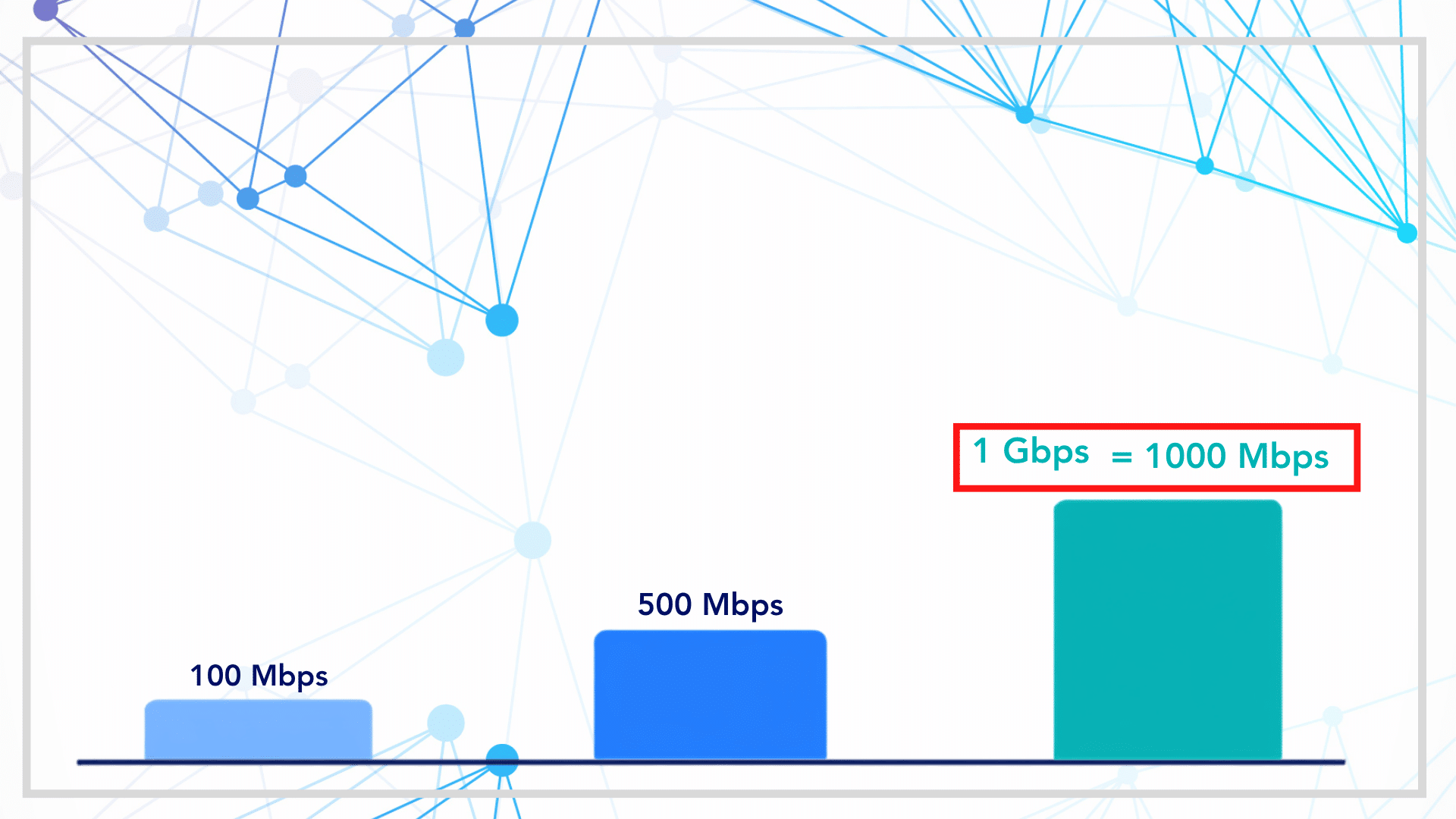
1 Gig internet usually means a plan with download speeds of about 1 Gbps, or 1,000 Mbps.
Mbps measures how quickly data can move across your connection, but the full advertised speed may not reach every device at all times.
Actual performance can vary due to Wi-Fi conditions, router capabilities, device hardware, and network congestion.
Note: 1 Gigabit is not the same as 1 Gigabyte. A gigabit measures connection speed, while a gigabyte measures data capacity.
Since 8 bits equal 1 byte, a 1 Gbps connection can theoretically transfer up to about 125 MB per second. So, when a provider advertises “1 Gig internet,” it is referring to the speed of the connection, not 1 GB of data.
How does 1 Gig Internet Work?
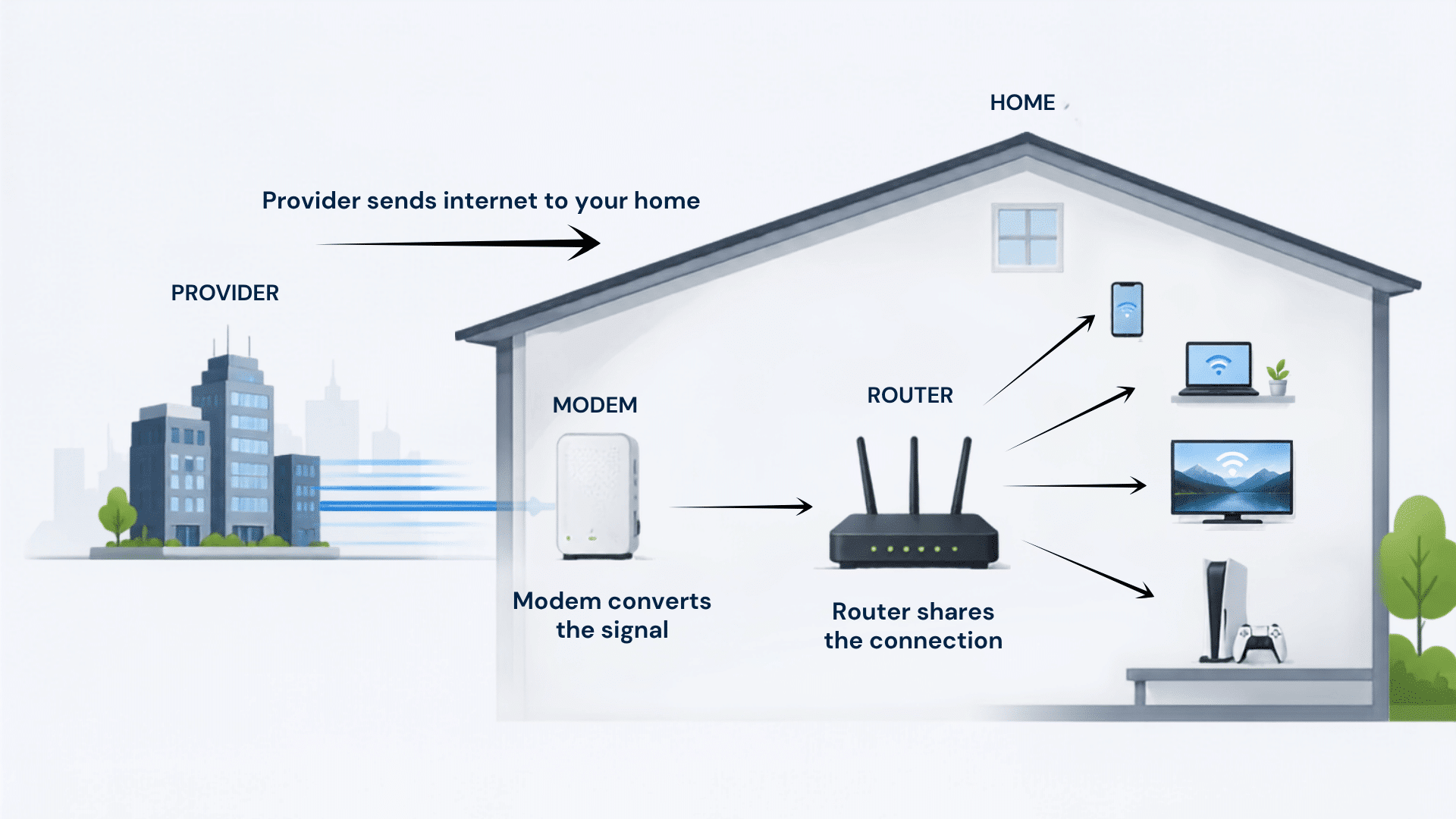
A 1 Gig internet connection moves data between your internet provider and home network at high capacity. From there, your network equipment distributes the connection to the devices you use.
Here’s how a 1 Gig connection works from the provider to your devices:
Step 1: Data Travels from the Provider to Your Home
The first step depends on your connection type. With fiber internet, data travels through fiber-optic cables as pulses of light.
With cable internet, providers typically use a hybrid fiber-coaxial (HFC) network, combining fiber and coaxial cable with DOCSIS technology to deliver broadband service.
Step 2: Your Modem or ONT Converts the Signal
Once the connection reaches your home, the incoming signal must be prepared for your home network.
Fiber connections typically use an optical network terminal (ONT) to convert optical signals into electrical signals and pass them to the router.
Cable connections use a compatible modem to receive and transmit data over the cable network.
Step 3: Your Router Shares the Connection
Your router then distributes the internet connection to laptops, phones, TVs, consoles, and other devices through Wi-Fi or Ethernet.
The available capacity is shared among active devices, so individual speeds can be lower due to router capability, Wi-Fi interference, distance, device hardware, and simultaneous network activity.
What Can You do with 1 Gig Internet?
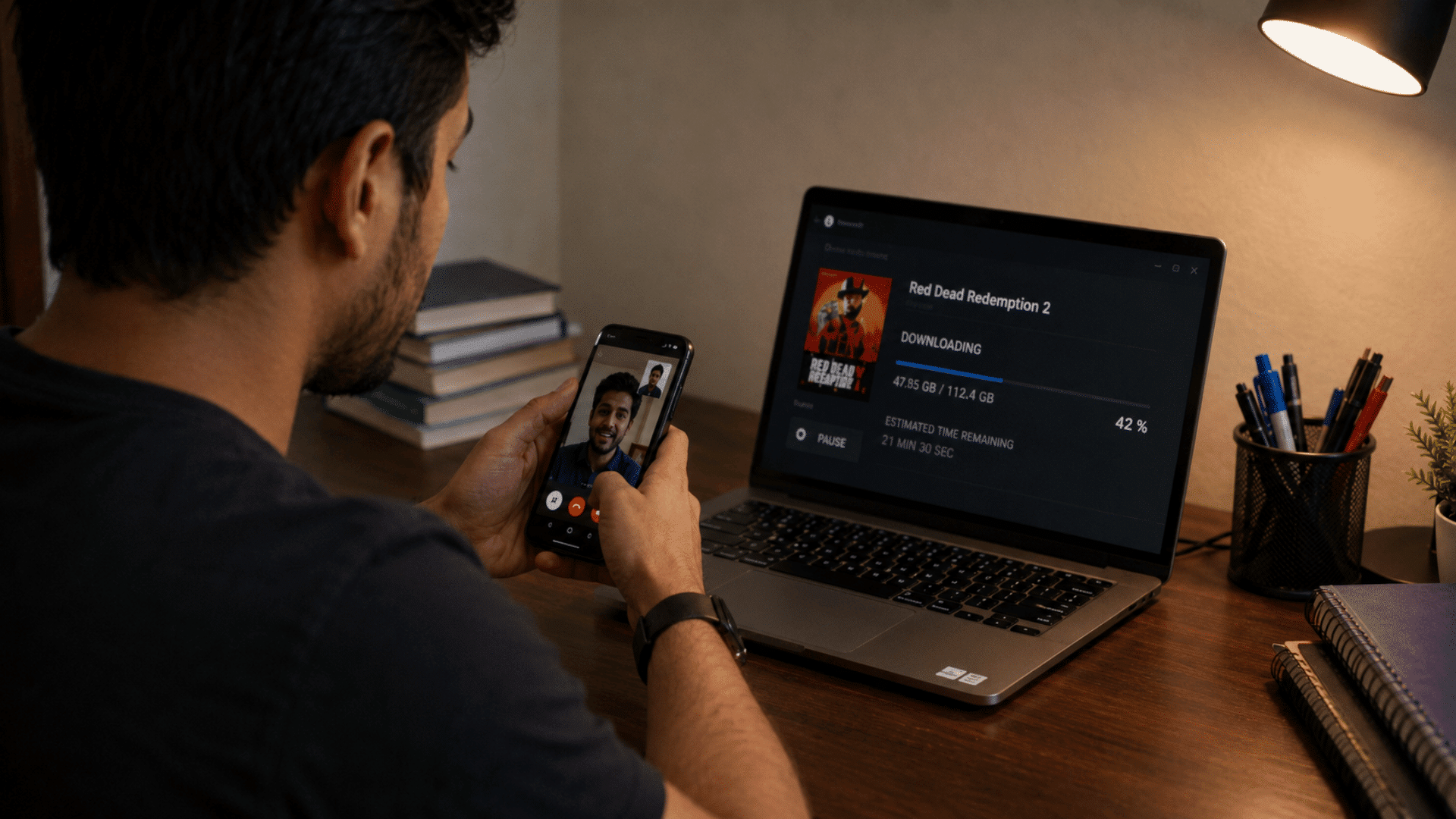
With 1 Gig internet, you can comfortably stream, game, join video calls, browse, and download large files across a busy household.
The main benefit is having enough capacity for several demanding activities to happen at once without competing heavily for bandwidth.
The table below shows where gigabit speed makes the biggest practical difference.
| Activity | Typical Bandwidth Demand | Does 1 Gig Help? |
|---|---|---|
| Web browsing | Low | Usually unnecessary |
| 4K streaming | Around 15–20 Mbps per stream | Mainly with many streams |
| Video calls | Low to moderate | Plenty of capacity |
| Online gaming | Relatively low bandwidth | Ping matters more |
| Large game downloads | High during download | Major benefit |
| Multiple heavy users | Combined demand can grow | Strong use case |
Actual speeds may be lower than 1,000 Mbps, especially over Wi-Fi due to router, distance, or device limitations.
Do You Really Need 1 Gig Internet at Home?
Whether you need 1 Gig internet depends on how heavily your household uses the connection at the same time.
It can be useful for larger families that regularly stream in 4K, download large files, work in the cloud, or run several demanding activities at once.
Smaller households with lighter usage may get a similar everyday experience from a 300–500 Mbps plan.
If your current plan already performs well during busy hours, paying more for 1 Gig may offer little practical benefit.
One more thing: Before upgrading, compare the price with lower-speed plans, check upload speeds, and make sure your router and devices can support faster connections.
1 Gig vs 500 Mbps: Will You Notice the Difference?
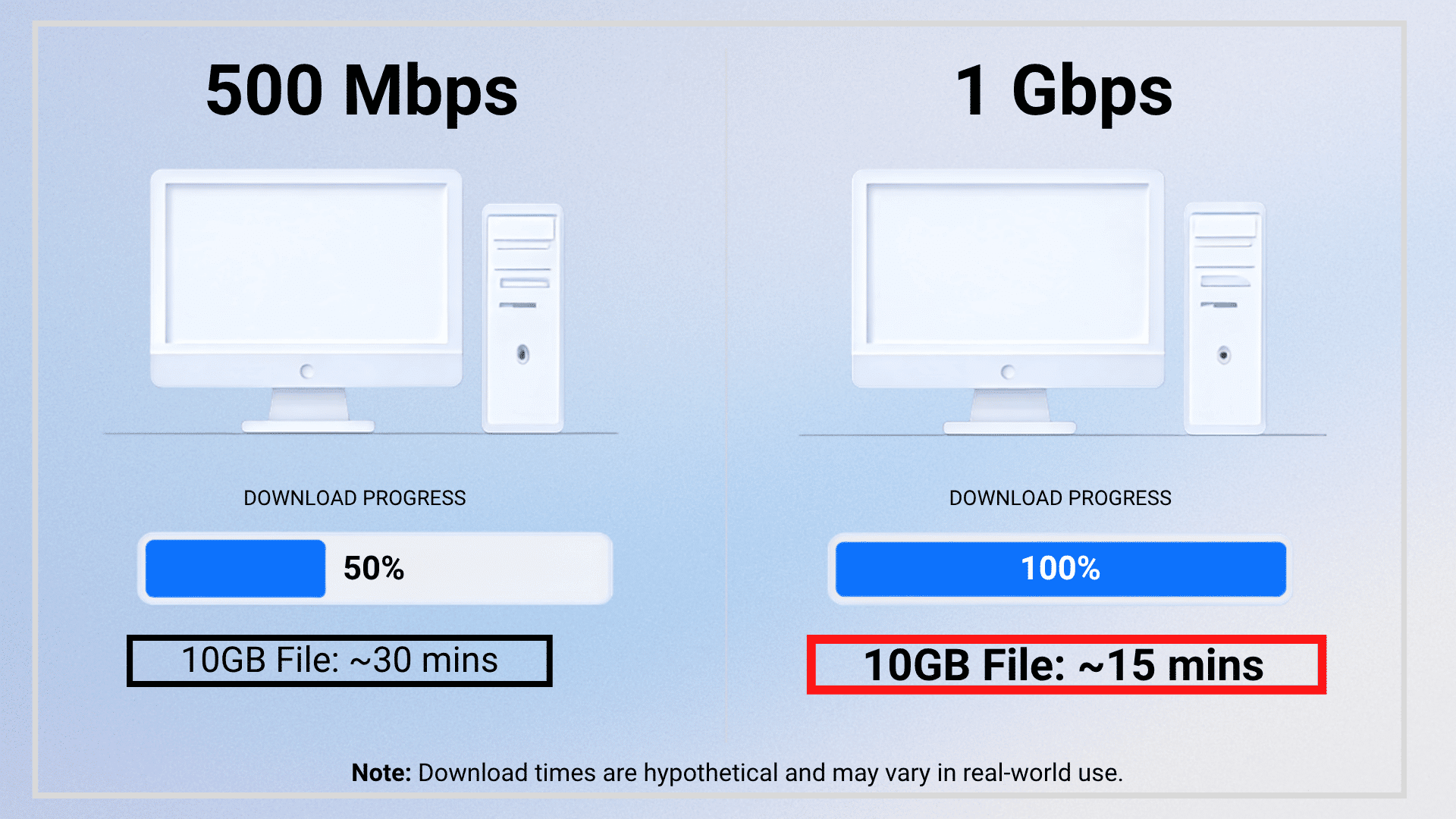
For everyday use, 500 Mbps and 1 Gig can feel very similar.
The difference becomes more noticeable when your household handles large transfers or several demanding activities at once.
| Factor | 500 Mbps | 1 Gig |
|---|---|---|
| Everyday browsing | More than enough | Similar experience |
| Large downloads | Fast | Noticeably faster |
| Heavy multi-user use | Usually sufficient | More headroom |
| Cloud file transfers | Good | Better for large files |
For example, opening websites may feel nearly identical on both plans, while downloading a 100 GB game can show a clearer difference.
Doubling your maximum speed does not make every online task twice as fast. In most cases, 1 Gig is mainly an upgrade in capacity and large-file transfer speed.
How Much Does 1 Gig Internet Cost?
Gigabit plans usually fall between $50 and $90 per month, though what you actually pay depends on your provider and location. Here are a few current examples:
- Google Fiber (Core 1 Gig): $70/month, with installation, Wi‑Fi router, and unlimited data included.
- AT&T Fiber (Internet 1000): Around $65/month at the standard rate, with extra discounts for AutoPay and new customers.
- Verizon Fios (1 Gig): Roughly $90/month standalone, dropping to about $65/month when bundled with an eligible mobile plan.
- Cable gigabit plans (e.g., Xfinity): Commonly $50–$70/month on promotional pricing
Note: There is no universal price for 1 Gig internet. Rates vary by location, promotions, equipment fees, and bundles, so always confirm the current price for your address.
Is 1 Gig Internet Worth It?
Whether 1 Gig internet is worth it depends on how much extra value you get for the higher price.
1 Gig May Be Worth it If:
- The 500 Mbps and 1 Gig plans are priced fairly close together.
- Your current connection slows noticeably during peak household usage.
- You frequently download large games, software, or work files.
- The gigabit plan also provides noticeably faster upload speeds.
- Your household regularly pushes the limits of its current plan.
It may not be worth it if your current service already runs smoothly, the upgrade costs much more, or your main problem is weak Wi-Fi coverage or high latency.
Final Takeaway
So, is 1 gig internet good? Yes.
A 1 Gig connection offers roughly 1,000 Mbps of bandwidth and provides plenty of capacity for large downloads, demanding households, and simultaneous online activities.
However, many homes do not need that much speed. If a 300–500 Mbps connection already handles your streaming, gaming, browsing, and video calls comfortably, upgrading may make little difference during normal use.
Compare your current usage, equipment, upload speeds, typical plan performance, and total monthly cost before deciding.
What internet speed does your household use? Share your experience in the comments!
Frequently Asked Questions
Is 1 Gig Internet Good for Streaming and Gaming?
Yes. 1 Gig is excellent for streaming and gaming. If 1 Gig isn’t available, 200 Mbps is still fast for most households, while latency matters more for gameplay.
Does 1 Gig Internet Use More Data?
No. A faster connection does not automatically use more data. It simply allows data to transfer faster, although it may make high-bandwidth activities easier to use more often.
Is 1 Gig Internet Available Everywhere?
No. Availability depends on your location and provider infrastructure. Gigabit service is commonly delivered through fiber or upgraded cable networks, but coverage varies by area.
How Many Devices Can 1 Gig Internet Handle?
There is no fixed device limit. What matters more is what each device is doing, since streaming, downloads, browsing, and smart devices use different bandwidth.