




For three weeks, I kept two tabs open side by side. Perplexity on the left, ChatGPT on the right. Every day I asked them the same questions, expecting one to clearly win.
Neither did. What happened was more interesting. Each one struggled with things the other handled easily.
Perplexity caught ChatGPT making up a statistic. ChatGPT cleaned up an answer Perplexity had buried under citations.
If you’ve been trying out the best AI tools for everyday work, you’ve probably felt this same pull in both directions.
So this blog isn’t a scoreboard. It’s an answer to a better question: which one is right for you? And that depends on one thing most comparisons skip completely.
Continue reading to understand the comparison.
Is Perplexity Better than ChatGPT? Quick Answer
Perplexity isn’t better than ChatGPT, and ChatGPT isn’t better than Perplexity. They’re built for two different jobs, and that’s the distinction most comparisons never make clear.
Perplexity was designed to find and prove information; it searches live and cites every source. ChatGPT was designed to produce and shape; it drafts, codes, rewrites, and handles long back-and-forth work.
Both have added features that blur the line, and both ship updates monthly.
So ask yourself one question: do I need to know something, or do I need to build something? Long story short:
- Perplexity for research, fact-checking, current news, cited answers
- ChatGPT for writing, coding, brainstorming, multi-step tasks
Perplexity vs ChatGPT (All the Differences at a Glance)
The real difference isn’t in the answers. It’s in how each tool reaches them.
Perplexity first searches the web, then writes a reply based on what it finds. There’s a Pro model (Perplexity Pro) where the tool stops being a search box and becomes a research instrument.
Perplexity also lets you switch the model that answers your question among its own Sonar model, GPT, Claude, and Gemini.
ChatGPT skips that choice. It auto-selects from its own GPT-5.6 family, Sol, Terra, and Luna, based on what you ask.
Refer to the table below for a complete side-by-side comparison.
| Feature | Perplexity | ChatGPT |
|---|---|---|
| Main purpose | Finds information | Creates and reasons |
| Searches the web | Always by default | Only when needed |
| Shows sources | Yes, with links on every answer | Sometimes, when it searches |
| Best for | Research, facts, news, verification | Writing, coding, planning, ideas |
| Answer style | Short, factual, citation-heavy | Conversational, detailed, flexible |
| Long conversations | Weaker, loses the thread faster | Stronger, holds context much longer |
| Writing quality | Functional but plain | More natural and adaptable |
| Coding help | Basic | Strong, with dedicated tools |
| File uploads | Yes | Yes, with deeper analysis |
| Free plan | Generous, most people may not need to pay | Usable, but limits can arrive quickly |
| Feels like | A research librarian | A capable assistant |
| Biggest weakness | Can bury simple answers in citations | Can state incorrect information confidently |
Perplexity vs ChatGPT: Which is Better for Different Tasks?
Most people don’t need a better AI. They need to know which one to use for the thing in front of them right now.
That’s a different question, and it has seven different answers. Here’s what I found when I put both tools on the same tasks.
1. Research and Fact-Checking
Ask Perplexity a question, and the links appear right under the answer. I can click one and check the claim in five seconds.
ChatGPT can search the web too, but it doesn’t always do so. And when it guesses, it sounds just as sure as when it knows. That is the risk.
For anything you need to trust, Perplexity is the winner in my opinion.
2. Writing and Content Creation
ChatGPT writes like a person. It follows your tone, keeps the sentences smooth, and rewrites happily when you change your mind.
Perplexity writes like a report. The facts are right, but it reads flat and includes citations you did not request.
What I do is collect the facts in Perplexity, then paste them into ChatGPT and let it write.
All in all, ChatGPT wins here.
3. Coding and Technical Work
ChatGPT writes code that runs, explains what broke, and remembers your project throughout a long chat. That memory matters more than you would expect when you have been fixing one bug for an hour.
Perplexity helps with one thing here. It finds current documentation and tells you if a library is still being updated.
For the actual building, ChatGPT is a clear winner again.
4. Studying and Learning
ChatGPT explains hard ideas in plain words. It changes the explanation when you say you are lost, and it will test you if you ask. Perplexity gives the right answer but rarely teaches how to get it. One warning, though.
Never trust ChatGPT with dates, names, or numbers for an assignment. In fact, AI responses are experimental, and your oversight matters more than you think.
Learn the idea there, check the facts in Perplexity, then submit.
Winner here: ChatGPT
5. Everyday Questions and Quick Answers
For fast, up-to-date information, Perplexity feels more direct. Ask about a price, store hours, a sports score, or a recent news update, and it usually gives you the answer along with a source you can check.
ChatGPT can answer the same kinds of questions, but it is not always as focused on current information unless it searches the web. That makes Perplexity more convenient when the main goal is simply to get a fact and verify it quickly.
For these everyday lookups, I would pick Perplexity.
Winner: Perplexity.
6. Business and Professional Work
Emails, reports, slides, spreadsheets, meeting notes. ChatGPT turns messy input into finished work, which is most of what an office day looks like. Perplexity earns its spot in one place.
If you can only pay for one, ChatGPT wins, and Perplexity’s free plan covers the rest. Worth knowing there are other AI chat platforms too, though most teams settle on these two.
Final count: ChatGPT four, Perplexity two. But the two Perplexity wins are the ones where being wrong actually costs you something.
7. Agentic Browsers and AI Agents
Perplexity ships Comet, a free browser with a built-in research assistant, and Perplexity Computer, which splits a project across several models and hands back a finished file or app.
ChatGPT ships Atlas, its own AI browser, and ChatGPT agent, which can click through websites to book, buy, or fill out forms on your behalf.
Comet is better suited for research in the browser. The ChatGPT agent is built to complete a task end-to-end, though it is still slower than doing the task yourself.
The Results Are In!
Final count across seven tasks:
- ChatGPT: four (4)
- Perplexity: two (2)
- One split (1)
Perplexity and ChatGPT: Strengths and Limitations
Every tool is good at something and bad at something else. Here is what each one does well and where it falls short.
Perplexity Strengths and Limitations
Perplexity does one job well, and that focus cuts both ways. The search-first design is exactly what makes its answers verifiable and up to date, but it also leaves the writing thin, and longer conversations lose direction.
The table below sets both sides against each other so the trade-off is easy to see.
| Strengths | Limitations |
| Sources under every answer | Citation overload on simple questions |
| Always current, searches live | Writing feels flat |
| Fast and direct replies | Loses the thread in long chats |
ChatGPT Strengths and Limitations
While ChatGPT offers clear advantages in speed, accessibility, and fluent language generation, these strengths come with important trade-offs.
The same design that makes it versatile also creates limitations, such as factual inaccuracies and a lack of genuine understanding.
The table below sets out both sides side by side for a clearer comparison.
| Strengths | Limitations |
|---|---|
| Writes naturally and matches your tone | Wrong answers can sound just as convincing as correct ones |
| Holds context across long chats and sessions | Answers can be outdated if it does not search the web |
| Writes, explains, and fixes code | Can be more verbose than necessary |
Notice the pattern. Perplexity’s weakness is style. ChatGPT’s weakness is truth. Style you can fix yourself. Truth, you cannot.
Perplexity vs ChatGPT: Pricing and Value
Price is often the deciding factor, and the good news is that both free plans are usable, so you can test each before spending anything.
For Perplexity
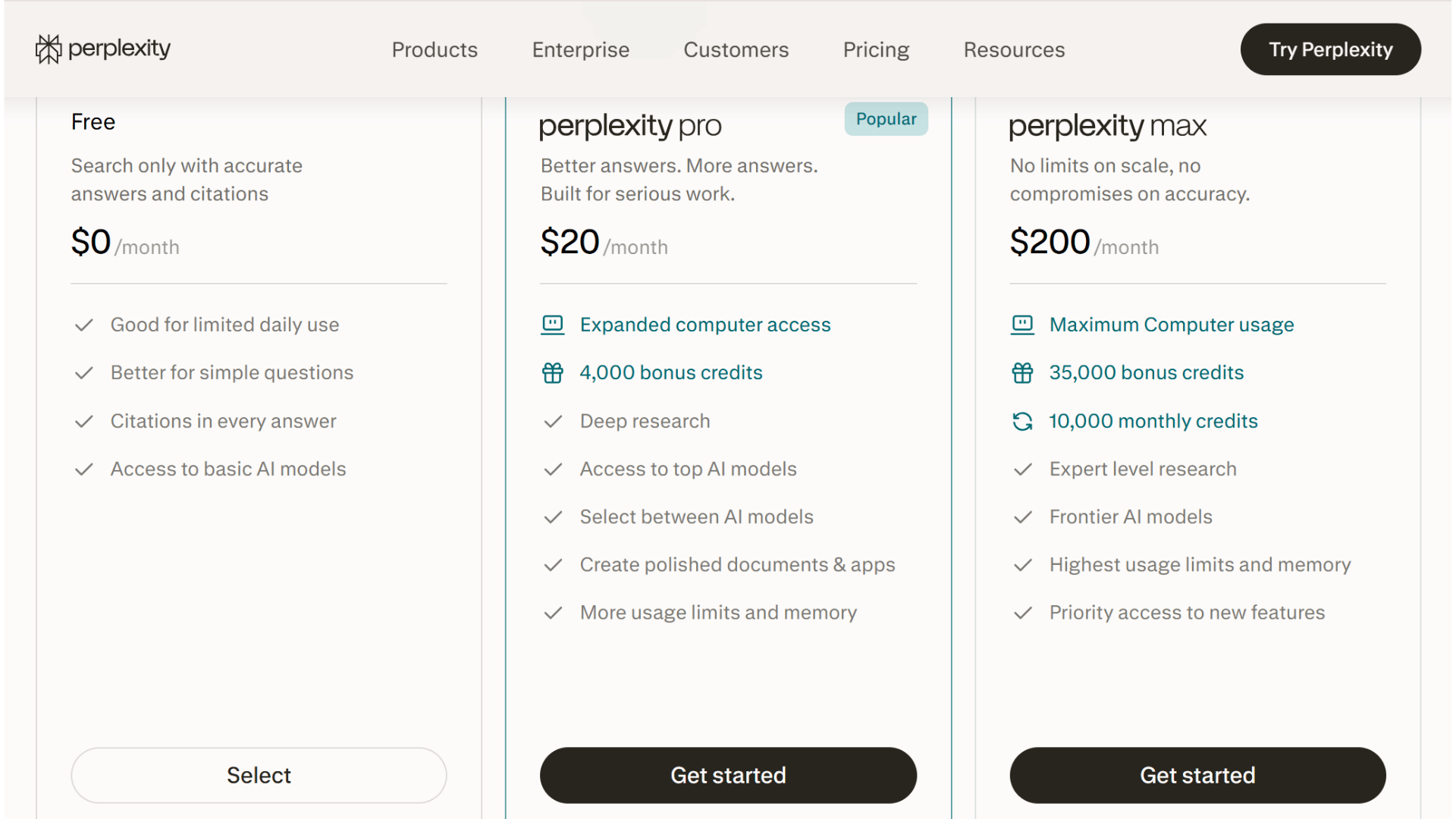
Perplexity is free to use, and the free plan is generous enough that many people never pay. If you want more, there are a few paid plans above it.
Pro is $20 a month and is the main paid option. It gives you higher limits and lets you pick which model answers you. Paying yearly brings it down to about $16.67 per month, or $200 per year. Max sits at $200 a month and is built for heavy research work.
Students and teachers get Pro for $10 a month once verified, and teams pay $40 per user per month for Enterprise Pro.
For ChatGPT
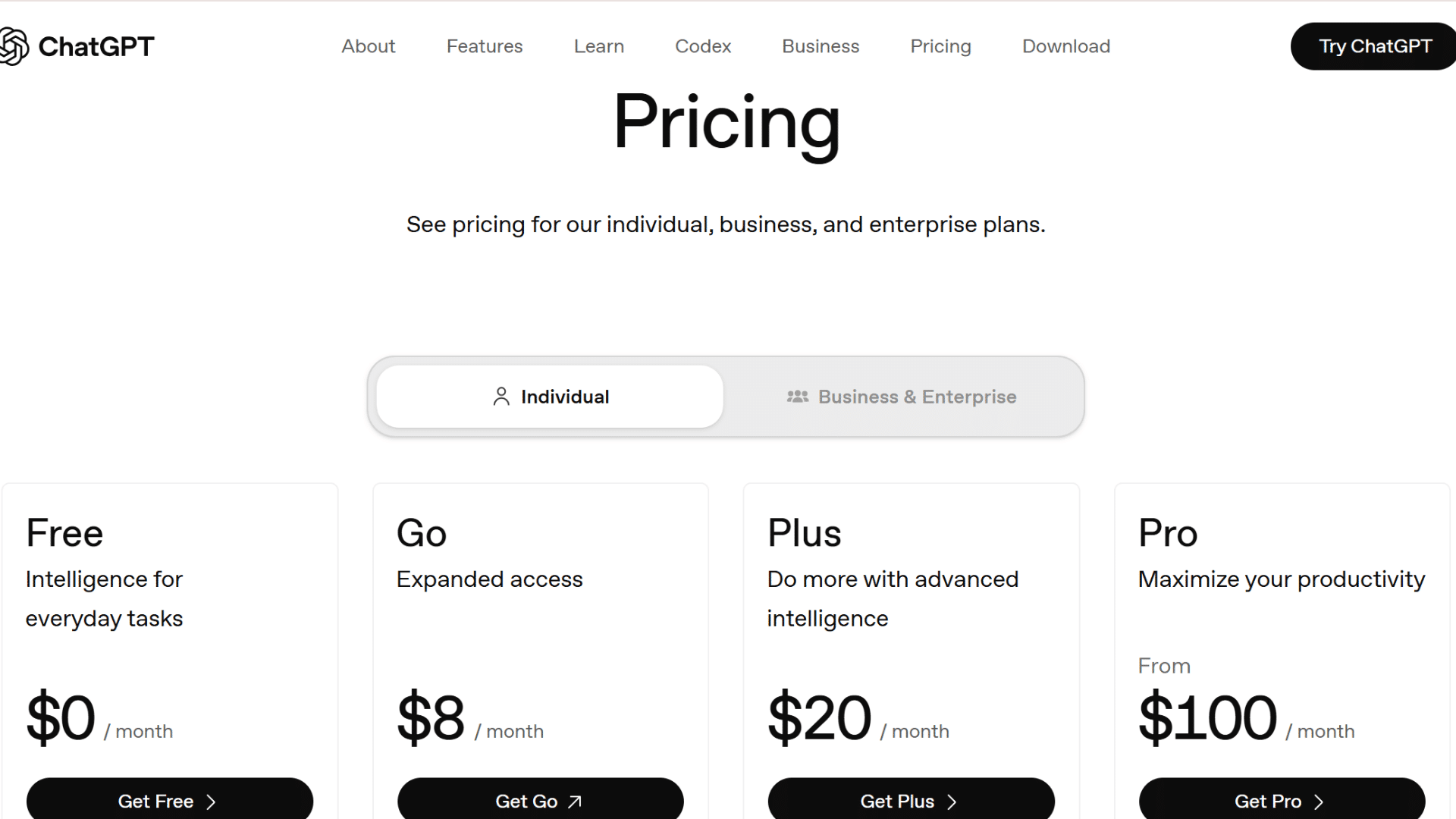
The free version of ChatGPT is enough for everyday use. Beyond that, five paid tiers are available.
Go is $8 a month and simply raises the limits. Plus, at $20, the plan most regular users pick, since it unlocks the better models and tools. Pro at $100 is for heavy daily work.
One thing to keep in mind! AI pricing changes fast, so check the official page before you pay.
Refer to the table below to check the pricing at a glance.
| Plan / Tier | Perplexity Price | ChatGPT Price |
|---|---|---|
| Free | $0 | $0 |
| Entry Paid | — | $8 |
| Standard | $20 | $20 |
| Top Individual | $200 | $100 |
| Teams per User | $40 | $20 |
| Students | $10 | — |
My Verdict on the ChatGPT and Perplexity Faceoff
So, is Perplexity better than ChatGPT? My answer is no, and the question itself started to feel wrong. Neither tool won because they were never doing the same job.
Here’s the suggestion that came out of it.
Use Perplexity when the facts have to hold up, whether that’s a number, a date, or a claim. Use ChatGPT when something has to be made, such as a draft, code, or a plan. Together, in that order, they cover almost everything.
If only one is affordable, pick ChatGPT and let Perplexity’s free plan handle the checking.
The Bottom Line
I went in expecting a clear winner and came out with a system instead. Perplexity finds and proves. ChatGPT builds and shapes.
That distinction explains almost everything else, from citations and writing quality to the types of tasks each tool handles best and how their pricing compares.
Maybe the better question isn’t which tool is best overall, but which one is best for the task in front of you. Need to find and verify information? Perplexity. Need to create, develop, or refine something? ChatGPT.
My recommendation is simple: try both side by side on their free plans and see which one consistently gives you the quality you need.
Which one did you find better overall? Let me know in the comments. I’d love to turn the responses into a poll in a future update.
Frequently Asked Questions
Does Perplexity Replace Google?
Only for factual questions. Google is still better for local searches, finding specific websites, and images or videos. Perplexity replaces informational search, not all search.
Is Perplexity Pro Worth It?
Only if you research daily. Professional users get real value from higher limits and better models. For occasional use, the free plan handles almost everything.
Does Perplexity Use ChatGPT?
No. Perplexity offers several third-party models on paid plans, including OpenAI’s, but its search and citation system is its own.
Can I Use Both Perplexity and ChatGPT Together?
Yes, and it’s the most common setup. Perplexity’s free plan covers research and current facts, while ChatGPT Plus at $20 handles writing and code.